The most common lunchtime disappointment in downtown San Francisco is not a bad salad. It is a closed door. The Financial District and SoMa now run on a hybrid working week, and the counters that serve them have adjusted accordingly: many open Tuesday through Thursday only, most close by two or three in the afternoon, and a good number that survived the past few years did so by cutting Mondays and Fridays entirely. Anyone searching salad near me in SF from a downtown desk needs to check the day as much as the distance, because the map is genuinely different depending on which day of the week it is.
Karpo can tell you which downtown San Francisco counters are open today, how long the queue is, and which take order-ahead.
The three-day week is real
Tuesday, Wednesday and Thursday carry the overwhelming majority of downtown foot traffic, and the food supply has consolidated around them. On those days the district functions much as it always did — full counters, queues at half past twelve, everything open.
Monday and Friday are different. A meaningful number of counters close entirely, others open with reduced hours, and the ones that do trade are quieter. If you work a Monday or a Friday in the district, the useful habit is to have two or three known-open fallbacks rather than assuming your usual place is trading.
Everything closes earlier than you expect
Downtown lunch counters are lunch businesses. Many close at two, most by three, and some stop taking orders fifteen minutes before that. A one-forty-five meeting that runs over is the standard way people end up eating a packet of crisps at their desk.
The workaround is ordering ahead for a set collection time rather than deciding when you are free. Almost every counter in the district takes app or web orders, and a bowl reserved for 1:40 will be there whether or not the meeting has finished, which is not true of a queue you were planning to join.
Skipping the queue properly
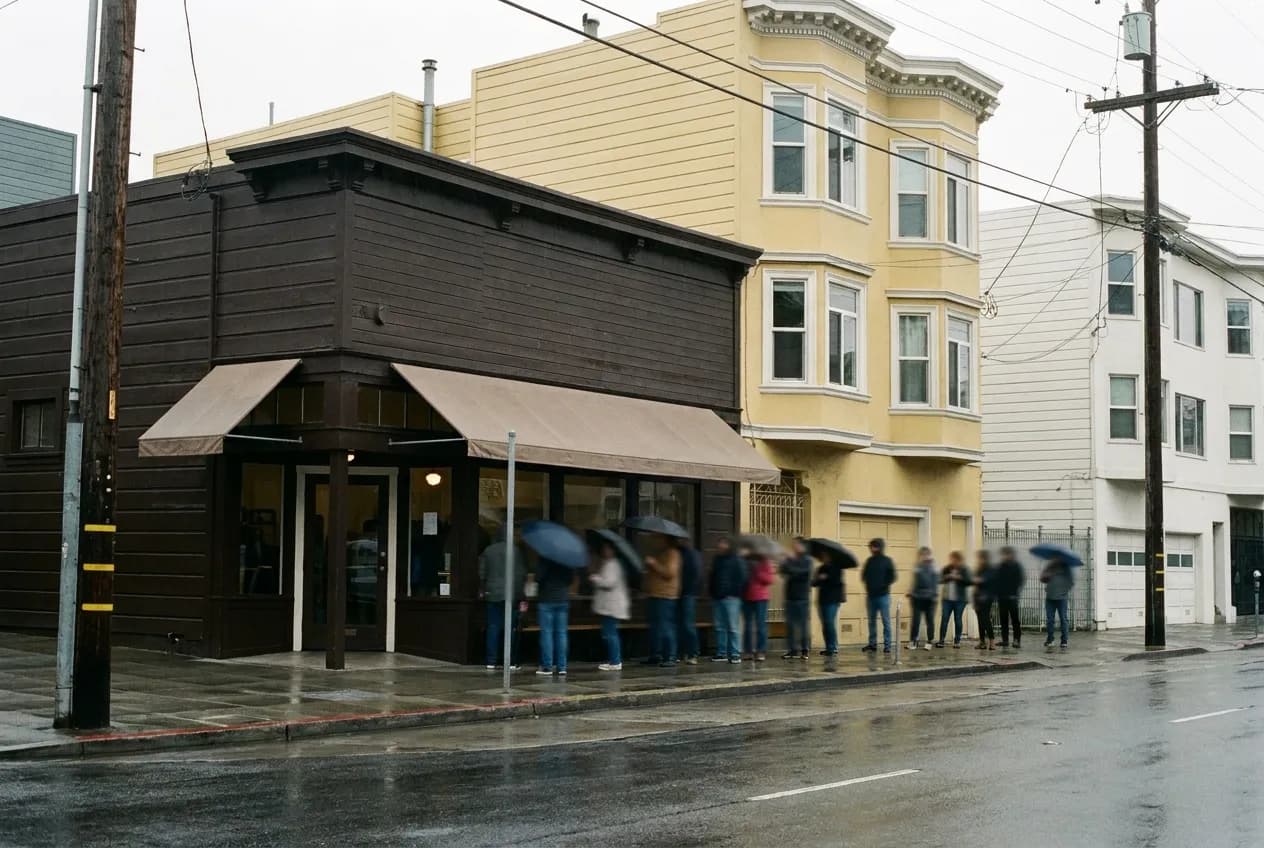
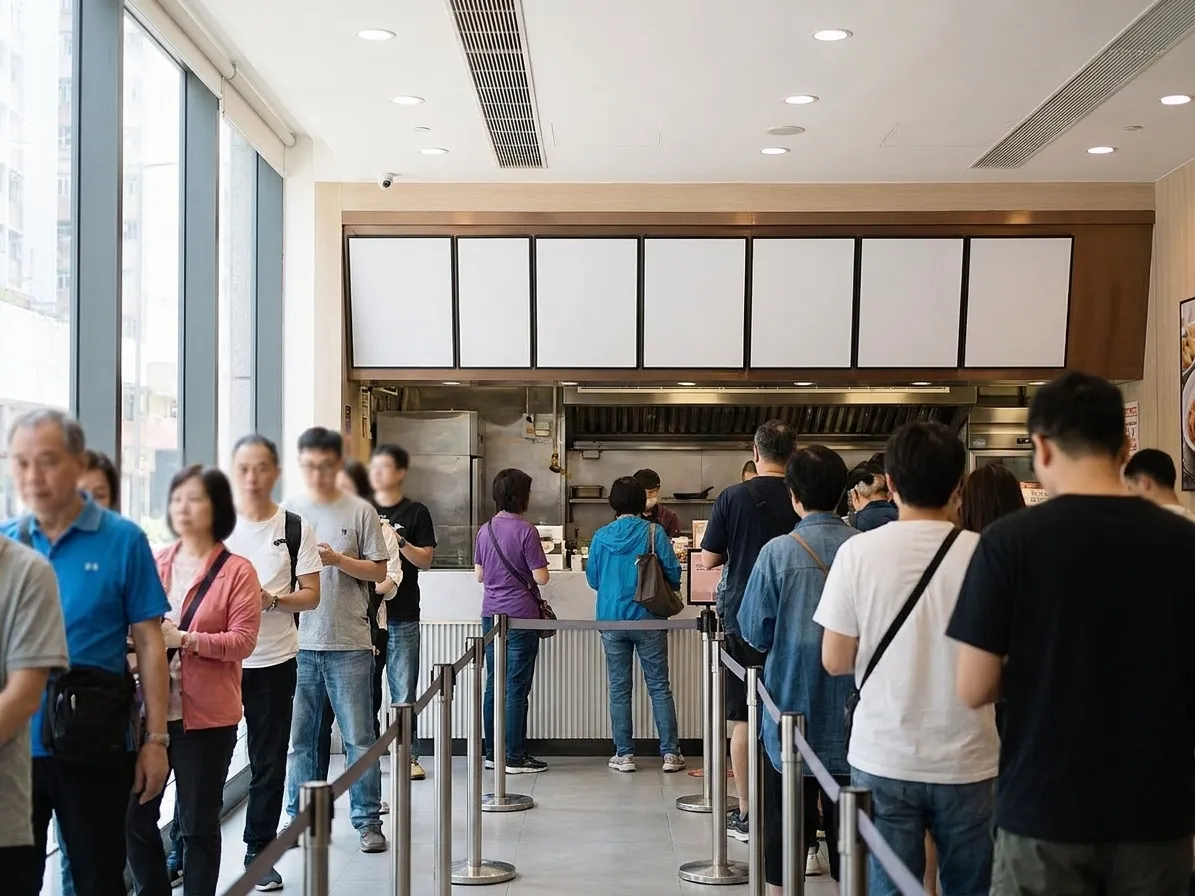
The peak is narrow and brutal: roughly 12:15 to 12:50. Twenty minutes either side of that is a different district. If your schedule is flexible at all, going at noon or at one is the single most effective change available.
If it is not flexible, order ahead. The counters with a dedicated pickup shelf are the ones to prefer, because a shelf means the operation is genuinely set up for it rather than treating app orders as an interruption. Look for the shelf when you are next in a place at a quiet moment; it tells you whether ordering ahead will actually work there.
It is worth knowing which places take card only, because a growing number of downtown counters have stopped handling cash entirely. That is fine until you are somewhere that has gone the other way — several of the older delis and Chinatown counters remain cash-first — so carrying a small amount covers both.
Where to look on a Monday
When the counters are closed, the reliable downtown categories are the ones serving people other than office workers: the food halls and market buildings, which trade seven days; the hotel-adjacent cafés; the counters along the Embarcadero serving visitors as well as workers; and Chinatown, which is a short walk from the Financial District and is open every day.
That last option is consistently the best of them. A ten-minute walk from most downtown offices puts you in a district where lunch is cheaper, better and entirely indifferent to what day of the week it is, and the walk is the most pleasant part of a desk-bound day.
Group ordering is worth mentioning because it is where downtown counters are most flexible. Most will take an order for six or eight with an hour's notice and have it ready on a shelf, which turns the worst possible lunch scenario — a team trying to eat between meetings — into something that takes one person four minutes. Several will also deliver to a lobby for a modest fee, which in this district works better than an app.
The service charge, even at lunch
San Francisco's surcharges apply at counters as well as restaurants, and a percentage added for healthcare or benefits will appear on a fifteen-dollar salad the same way it appears on a dinner bill. It is disclosed, usually on a small card at the till or a line on the menu.
Factor it in when comparing places. A counter charging fourteen dollars with no surcharge is cheaper than one charging thirteen with a five per cent addition, and the boards do not make that easy to see. It is a small amount per transaction and a noticeable one across a working month.
Eating it somewhere better than your desk
The one genuine advantage of the current downtown is that it is less crowded, which means the public spaces are usable in a way they were not before. The plazas, the roof gardens on several of the towers that are open to the public, and the waterfront along the Embarcadero are all within a short walk of most of the district.
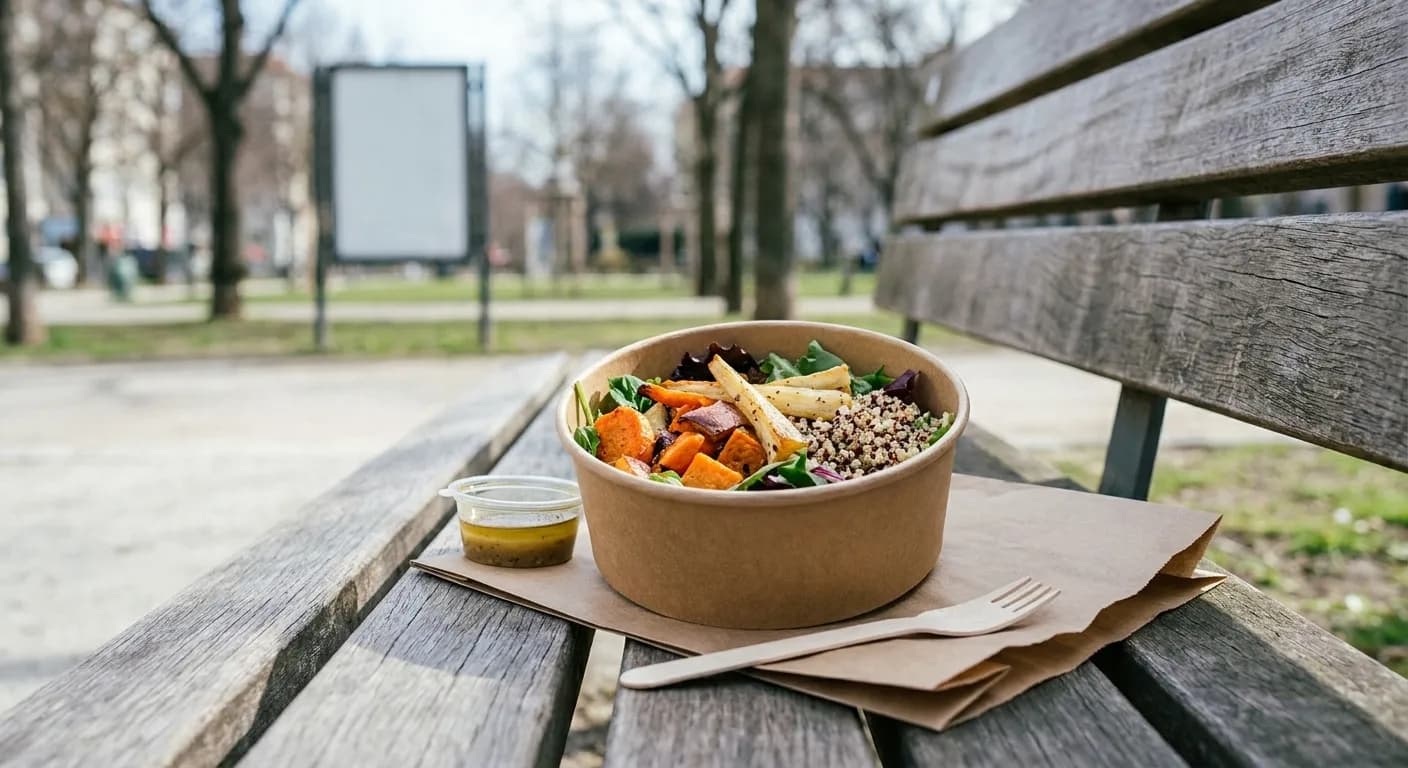
A salad eaten outside in Financial District sunshine is a materially better lunch than the same salad at a keyboard, and downtown San Francisco gets more sun than the rest of the city because it sits on the sheltered eastern side. That is the argument for collecting rather than delivering, and it is the best one available.
A last word on the district itself. Downtown San Francisco is in the middle of a genuine transition, and the counters that have survived did so by adapting — shorter weeks, tighter menus, order-ahead systems. Using them on the quiet days rather than only at the Wednesday peak is, in a small way, what determines which of them are still there next year.
Tags: #SFLunch #SaladNearMe #FinancialDistrict #SoMa #SanFranciscoFood #DeskLunch #Chinatown #Embarcadero #SFEats #LunchBreak #HybridWork #FoodGuide #Downtown #CityLiving
Please drink responsibly. Must be of legal drinking age.
All trademarks are the property of their respective owners.
Ask Karpo first
Want to know which downtown San Francisco counters are open today, how long the queue is, and which take order-ahead? Ask Karpo before you go down.