The Los Angeles salad has an image — a large bowl of chopped kale on a Westside patio, eaten by someone in activewear, costing nineteen dollars — and that image describes perhaps a fifth of what the city actually eats. Move ten miles in any direction and the format changes completely: the vegetable course arrives as a spread of small dishes, or as a shaved cabbage plate with sesame dressing, or as something you order through a car window. All of them answer the same question. They differ enormously in price, and the expensive one is not obviously the best.
Karpo can tell you which Los Angeles districts near you do the vegetable-forward lunch best, and what it actually costs in each.
The Westside: the chopped bowl in its natural habitat
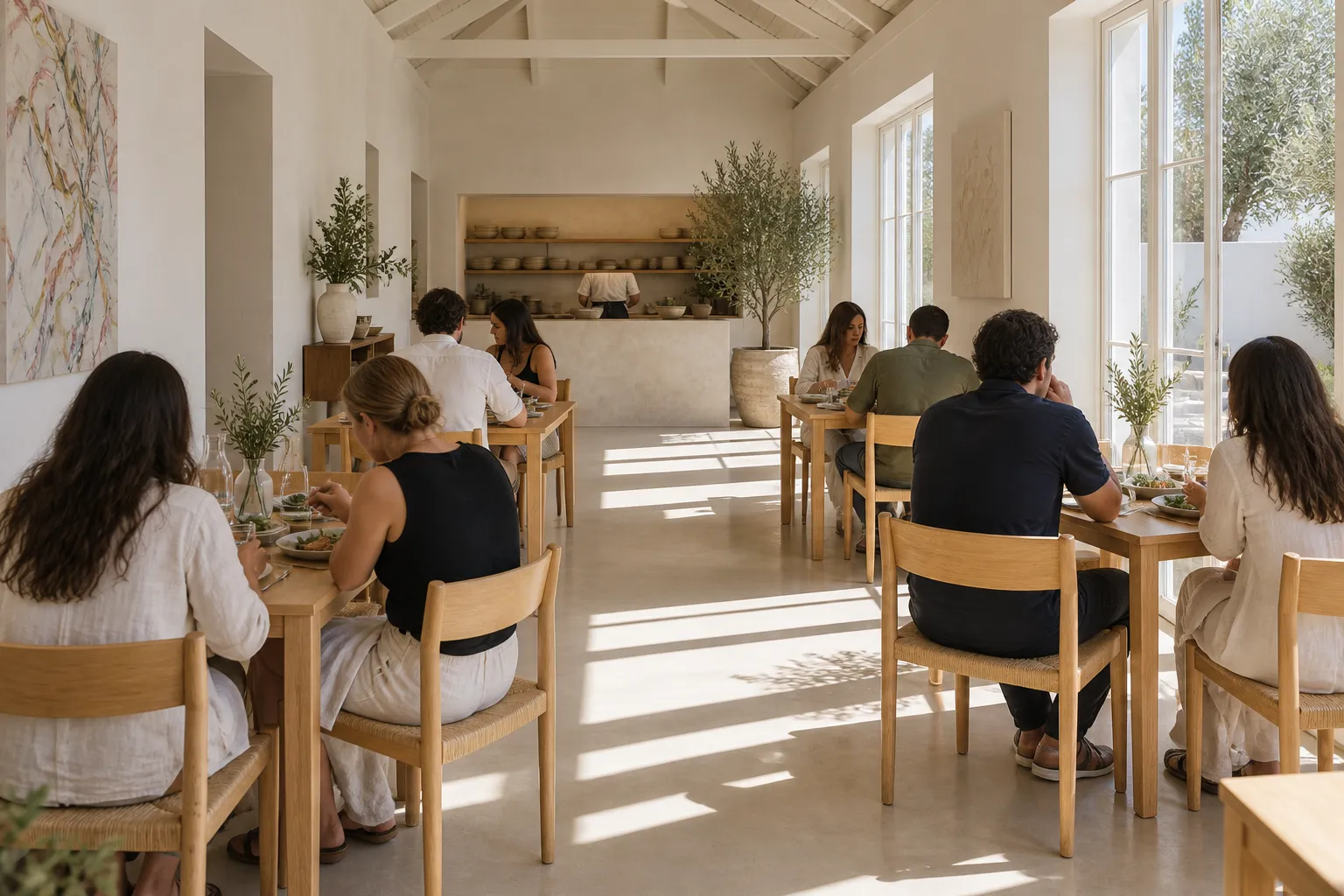
Santa Monica, Venice, Brentwood and the surrounding blocks are where the modern chopped salad reached its final form: a large bowl, a sturdy base, a long list of premium add-ons, and a price that climbs steeply as you use them. The quality is genuinely high — the produce is good, the counters turn over fast, and the operations are well run.
What you are paying for is partly the produce and substantially the postcode. The same build fifteen minutes inland is several dollars cheaper. If you are already on the Westside it is a good lunch; it is not worth driving across the city for, because the format is not scarce.
Koreatown: the vegetable course you did not order
Order almost anything at a Korean restaurant in K-Town and a spread of banchan arrives without being asked for — seasoned spinach, bean sprouts, cucumber, radish, seaweed, several kinds of kimchi. It is a substantial vegetable course, it is included, and it is refilled.
Nobody calls this a salad and functionally it is one, prepared with more skill and variety than most bowls on the Westside. For a vegetable-forward lunch at a genuinely low price, a Korean lunch set in K-Town is one of the best values in Los Angeles, and the prepared-food counters in the district's markets sell banchan by weight to take away, which is the cheapest way to eat well from this category all week.
Sawtelle and the Japanese salad tradition
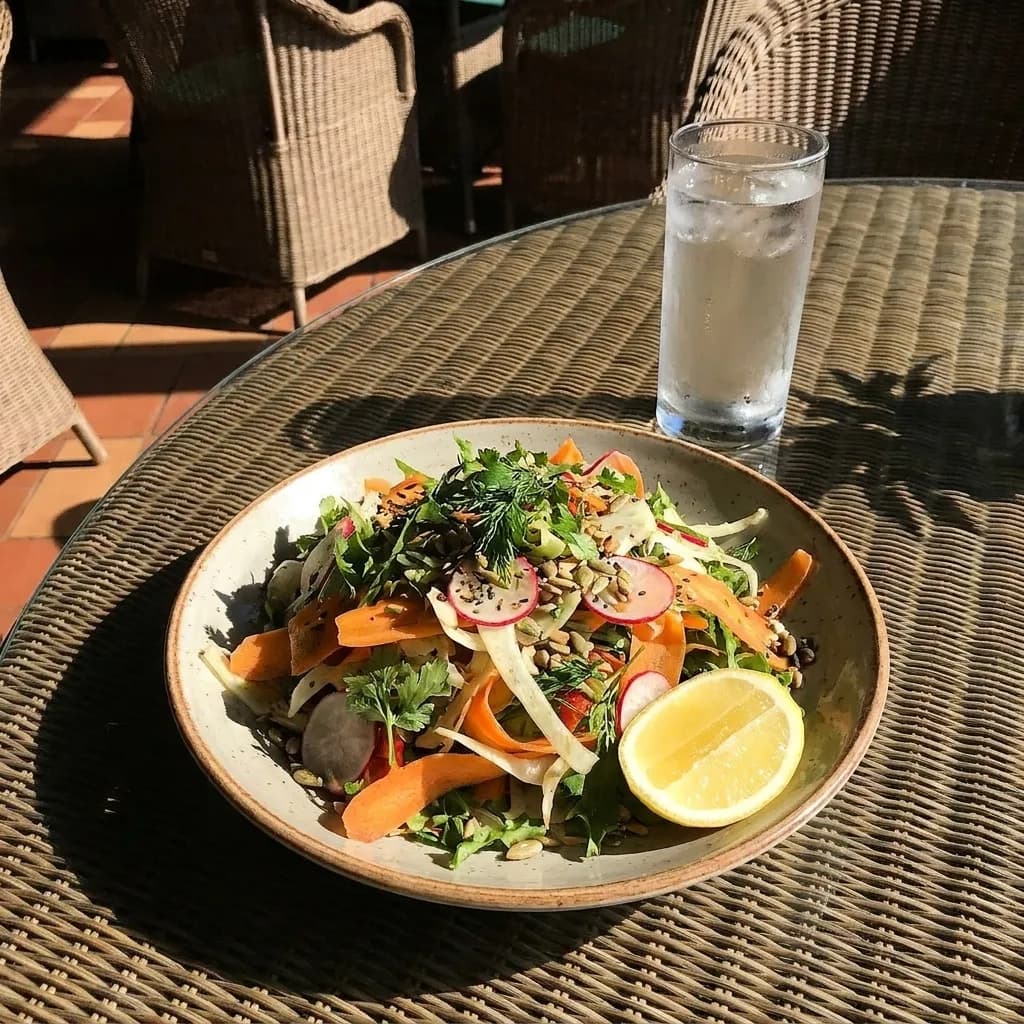
Sawtelle's Japanese restaurants run a completely different idiom: shaved cabbage with sesame dressing, seaweed salads, cold spinach with sesame, and the vegetable elements built into set meals. The portions are smaller and more precise, the dressings are more interesting, and the price is modest.
The district is also compact and walkable with parking structures, which makes it one of the easier lunch destinations on the Westside. For anyone who finds a large chopped bowl monotonous, this is the district that fixes it.
Portion expectations differ across these districts and it catches people out in both directions. The Westside chopped bowl is enormous and often more food than one person needs; the Japanese and Korean vegetable dishes are sized as components of a larger meal rather than as a standalone lunch. Ordering one of each format the way you would order the other produces either waste or hunger.
Downtown and the counter culture
Downtown has the widest range and the least consistency: modern salad counters serving the office trade, food halls with a dozen operators, and the older Mexican and Central American counters where a plate arrives with rice, beans, salad and avocado for a fraction of the Westside price.
The last of those is the underrated option. A combination plate at a downtown Mexican counter delivers more vegetables, more protein and more satisfaction than most fifteen-dollar bowls, and it costs less. Downtown is also the district with the best parking supply of the five, which matters more here than the food does.
Parking shapes this more than the food does, as it does with everything here. The Westside counters mostly have structures or validated lots; Koreatown is valet or nothing at peak; Sawtelle has structures; downtown has plenty of parking and the worst signage; and the Valley is the only one of the five where you simply park outside and walk in. For a weekday lunch with forty minutes, that is frequently the deciding factor.
The Valley, and the drive-through reality
The San Fernando Valley runs on convenience, and its version of this category is heavily weighted toward drive-throughs, fast-casual chains and strip-mall counters. The quality range is wide and the good operators are genuinely good — the Valley has excellent Middle Eastern, Armenian and Mexican food, all of which produce serious vegetable dishes.
The Armenian and Levantine counters in particular are worth knowing: tabbouleh, fattoush and mezze plates made properly, in generous portions, at prices that would be impossible on the Westside. If you are in the Valley and looking for a salad, that is where to look rather than at a chain.
Choosing between them
Two rules. Eat in the district you are already in, because none of these formats is scarce enough to justify a cross-town drive at lunchtime. And when you have a genuine choice, take the one where the vegetables are the tradition rather than the product — the banchan, the mezze, the Japanese sides — because those kitchens have been making vegetable dishes for a very long time and have got good at it.
The nineteen-dollar chopped bowl is not bad. It is simply the most expensive way this city sells a plate of vegetables, and four other districts sell a better version for less.
The last thing worth saying is that Los Angeles has better produce available to it than almost any American city, and the places that make the most of that are frequently not the ones charging the most. A farmers-market salad assembled at home, a Korean vegetable spread, or a plate from an Armenian counter in the Valley all use the same California produce as the nineteen-dollar bowl. The difference in price is not a difference in ingredients.
Tags: #LAFood #SaladNearMe #Koreatown #Sawtelle #SantaMonica #DowntownLA #SanFernandoValley #Banchan #HealthyEating #LunchBreak #LAEats #NeighborhoodGuide #FoodGuide #CityLiving
Please drink responsibly. Must be of legal drinking age.
All trademarks are the property of their respective owners.
Ask Karpo first
Want to know which Los Angeles district near you does the vegetable-forward lunch best, and what it costs there? Ask Karpo before you drive anywhere.