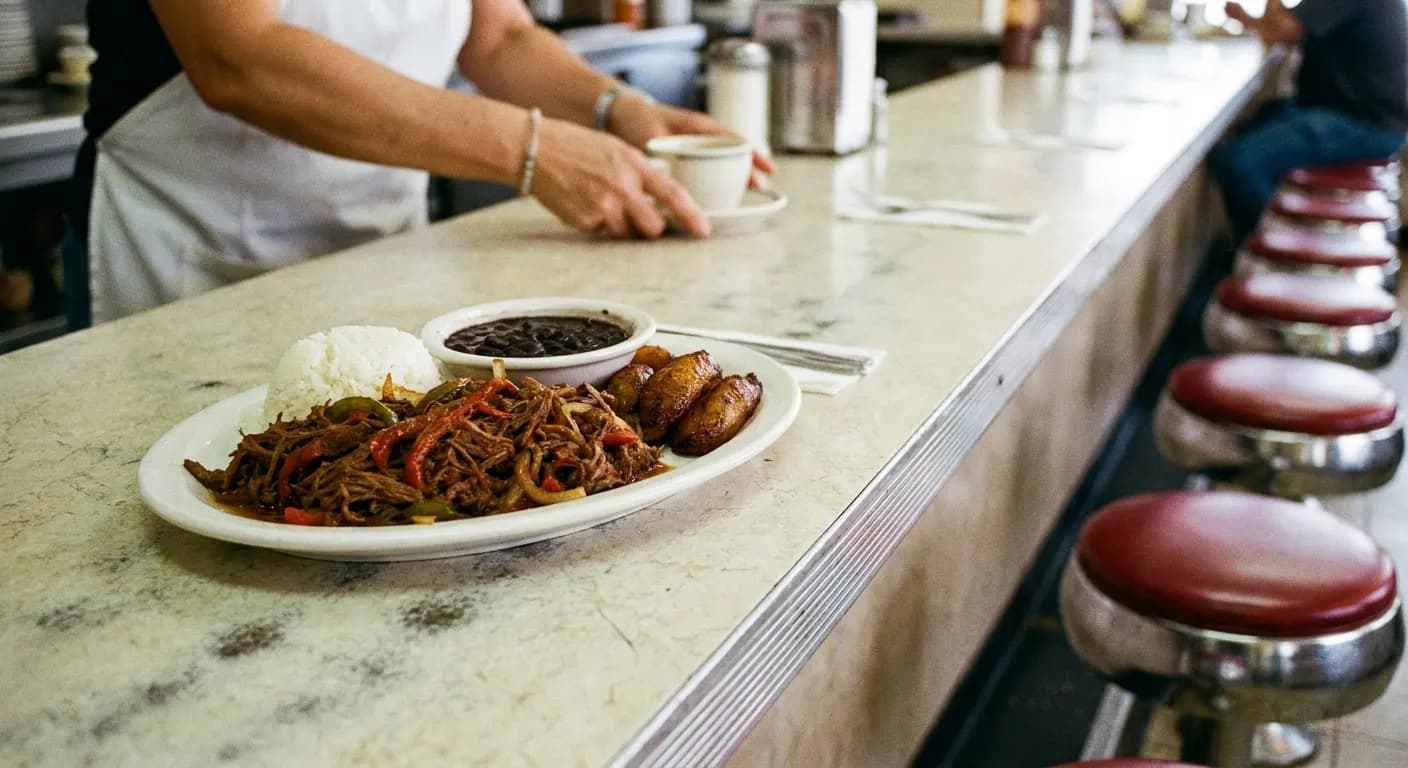
Every Cuban menu in Miami lists ropa vieja, and that is exactly the problem: when a dish is everywhere, mediocre versions hide in plain sight. Cuba's national plate — flank steak braised until it pulls apart into ribbons, dragged through a sofrito of tomato, onion, and pepper — rewards kitchens that give it time and punishes the ones that don't. This is a working map of who braises it properly, who sells it honestly from a steam tray, and how to tell the difference before you've paid.
Craving the real braise tonight? Text Karpo and it will point you to the nearest ropa vieja worth ordering, matched to your side of town and your budget.

Old clothes, five centuries in the pot
The name means 'old clothes,' and the recipe is older than Cuba's claim to it. Food historians trace it to the Iberian peninsula — a slow-cooked stew Sephardic cooks assembled the night before the Sabbath — and it traveled from Spain to the Canary Islands, then crossed the Atlantic with Canarian emigrants. It shows up in Cuban records by 1857, where island cooks rebuilt it around tomato, sweet pepper, and cumin. The Canarian original still leans on chickpeas and potatoes; the Cuban version that conquered Miami is beef-first and sauce-forward, plated with white rice, black beans, and sweet plantains.
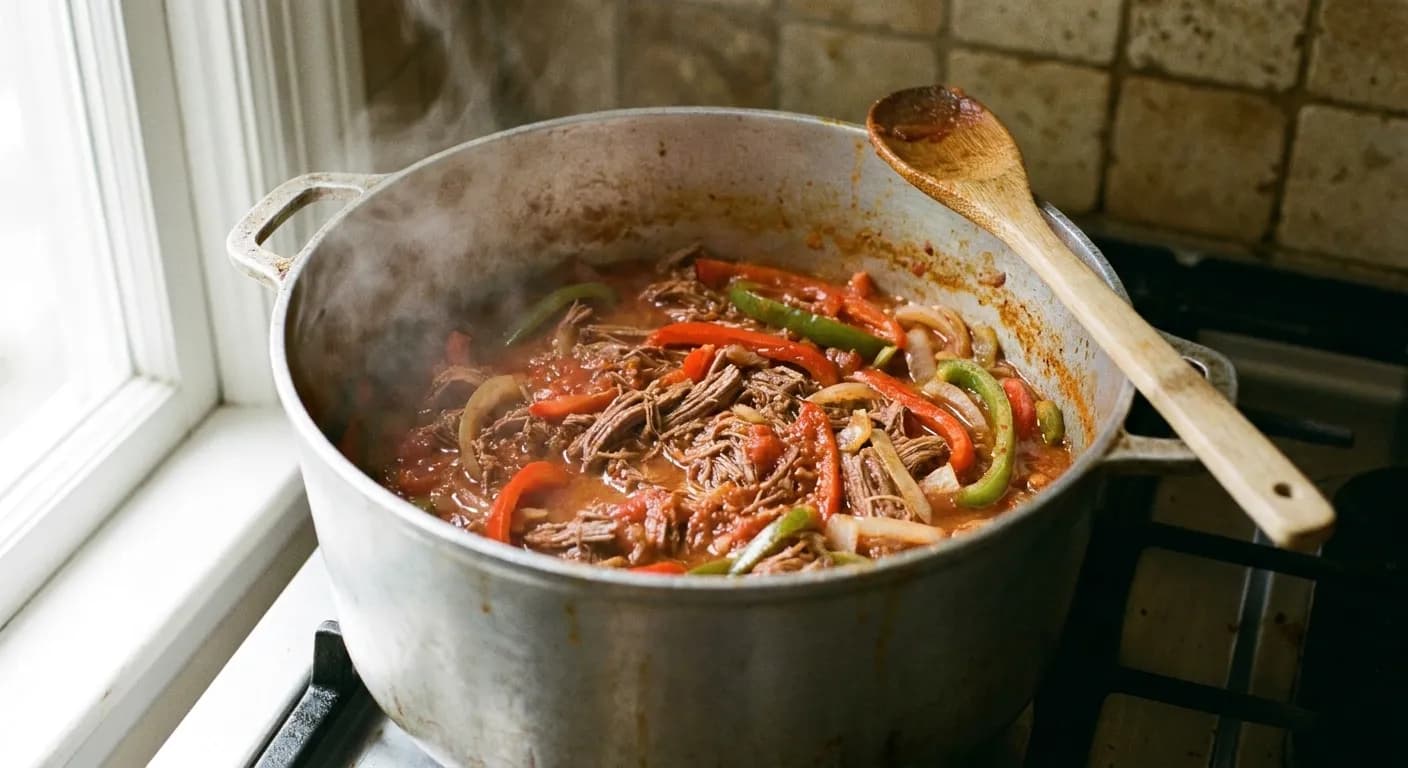
What separates a great plate from a forgettable one is texture and cling. The beef should shred along the grain into long threads — the 'old clothes' — and the sofrito should coat them rather than pool underneath. When the meat sits in chunks, or the sauce runs watery orange, the kitchen rushed the braise. You can taste the shortcut in one forkful.
La Casita: the family-recipe benchmark
When Miami New Times went looking for the city's most iconic version of each Cuban dish, its ropa vieja pick was La Casita Cuban Cuisine at 3805 SW 8th Street, where Calle Ocho slides into Coral Gables. The paper credits generations-old family recipes, and the plate backs it up: tender threads, deep seasoning, a sauce that tastes like a home kitchen rather than a hotel banquet. The room has run this play since 1990 — tablecloths and homestyle cooking, an unusual combination on this stretch of Eighth Street.
Doors open at 11am daily, which makes La Casita a lunch-first move; it holds dinner service until 10pm most nights and 11pm on Saturdays. Come with an appetite, because portions follow the Cuban grandmother standard and the rice keeps coming.
Versailles: the referendum plate
Versailles, at 3555 SW 8th Street since 1971, calls itself the world's most famous Cuban restaurant, and its ropa vieja — $17.25 at last check — is the version most visitors measure everything else against. The insider move is the combination platter: yellow rice, black beans, ropa vieja, fried pork chunks, a ham croqueta, sweet plantains, a tamal, and cassava with mojo on one plate. It is the single best A/B test in Miami for figuring out which Cuban classic is actually yours, and the dining room opens at 8am most mornings if you want to beat the tour groups to it.
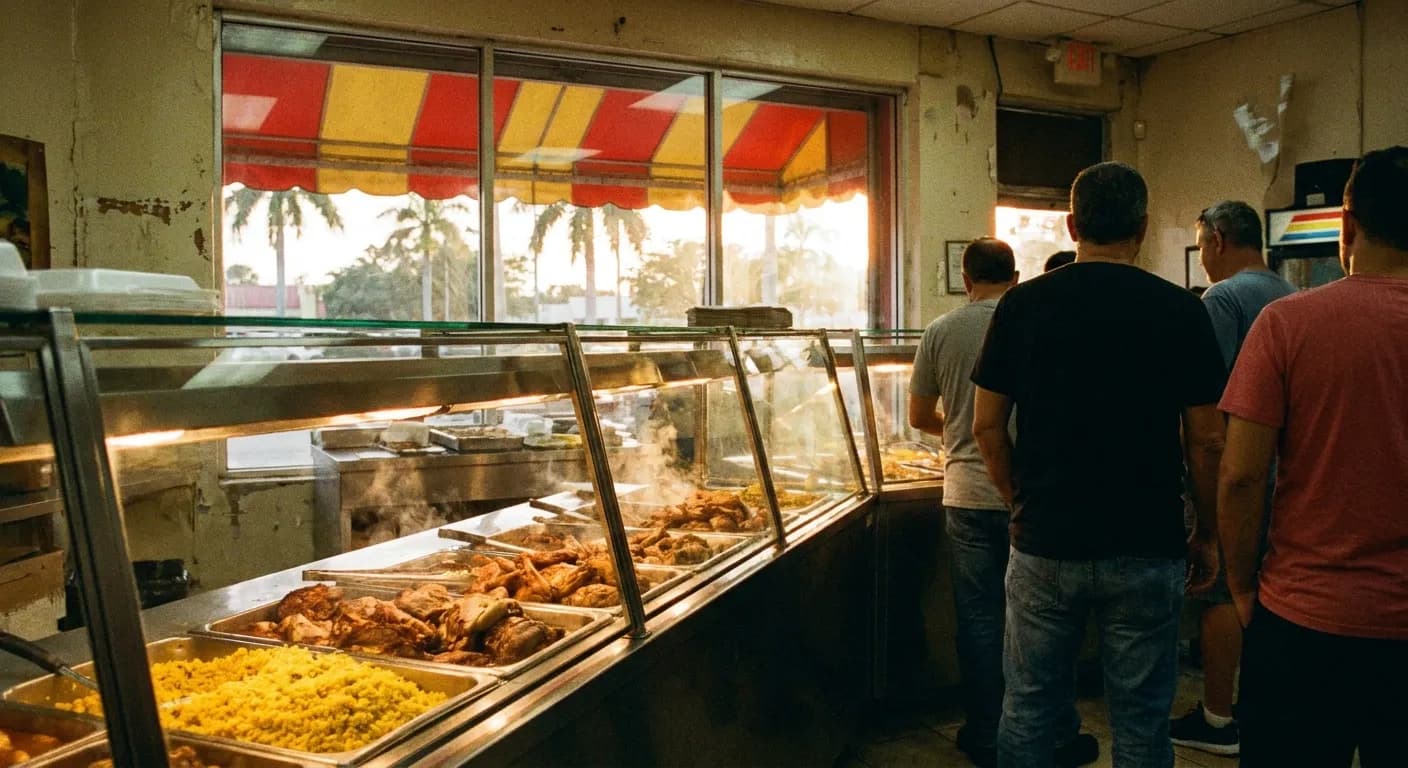
Steam tables done honestly: El Palacio and Islas Canarias
A steam table is not automatically a crime. At El Palacio de los Jugos — the red-and-yellow-awning markets that grew from the original West Flagler Street juice stand into locations across the city — ropa vieja sells from glass display cases, by the pound if you want it that way. That format is the honest version of the steam-table economy: you see exactly how saucy, how shredded, and how fresh the day's batch looks before committing a dollar to it. Doors open at 6am daily, and a fresh mamey or guarapo juice from the press covers the beverage question.
Then there is the name that closes the historical loop. Islas Canarias, family-run in Westchester at 13697 SW 26th Street since 1977, is literally named for the islands that gave Cuba the dish. Its ropa vieja runs $18.99, the counter opens at 7:30am daily with a drive-thru attached, and the croquetas are famous enough that Miami New Times crowned them separately. Ordering the old-clothes plate at a restaurant named for the Canary Islands is the kind of full-circle move that earns a nod from the counter staff.
- Versailles: 3555 SW 8th St, Little Havana. Dining room from 8am most mornings. Order the combination platter to test ropa vieja against the rest of the canon.
- La Casita Cuban Cuisine: 3805 SW 8th St, Coral Gables line. Open from 11am daily. The family-recipe braise Miami New Times calls the city's benchmark.
- Islas Canarias: 13697 SW 26th St, Westchester. From 7:30am daily, drive-thru included. Ropa vieja at $18.99; add a croqueta on principle.
- El Palacio de los Jugos: multiple locations, original on W Flagler St. From 6am daily. Sold from the display case by the pound, so look before you commit.
Ropa vieja or vaca frita: settle it once
Miami menus love to seat these two next to each other, and confusing them ruins expectations in both directions. Same animal, opposite philosophies: ropa vieja is braised low and slow, then finished wet in tomato sofrito — it should be glossy and saucy. Vaca frita skips the tomato entirely; the shredded beef gets hit with citrus and garlic, then crisped flat on a hot plancha until the edges crackle. If your 'ropa vieja' arrives dry and crunchy, you were served the wrong dish. If your vaca frita arrives swimming in red sauce, same problem, other direction. Plate math is nearly identical across this list — white rice, black beans, sweet plantains, entrees running roughly $14 to $19 — so the choice is purely about whether tonight is a sauce night or a crisp night.
Practical notes
Ropa vieja is built for leftovers — the braise tastes better on day two — so a takeout box is a plan, not a defeat. Prices quoted here were current at this writing but move without ceremony; treat them as a band, not a contract. Hours shift on holidays, and the early-opening counters serve breakfast first, so if you arrive at 7:30am expecting braised beef, the safe move is to check the day's board or call ahead. Parking is easiest at the Westchester and Flagler locations, which sit beside their own lots; on Calle Ocho, expect to circle the block or pay for a lot near Versailles. Weekday lunch is the calm window at every spot on this list, and portions everywhere are sized for sharing if you order a side of extra rice.
Tags: #ropavieja #cubanfood #miamieats #littlehavana #calleocho #westchester #coralgables #versaillesmiami #steamtable #cubanclassics #miamifood #lunchmiami #shreddedbeef #pullupachair
Sources consulted: miaminewtimes.com · versaillesrestaurant.com · lacasitacubancuisine.com · islascanariasrestaurant.com · jugosmiami.com · yelp.com · en.wikipedia.org
All trademarks are the property of their respective owners.
Ask Karpo first
Want to know which of these kitchens has the deepest braise today, or whether the lunch rush has cleared? Ask Karpo for the latest ropa vieja updates, a smart plate-by-plate plan, and a live route around Little Havana and Westchester before you head out.