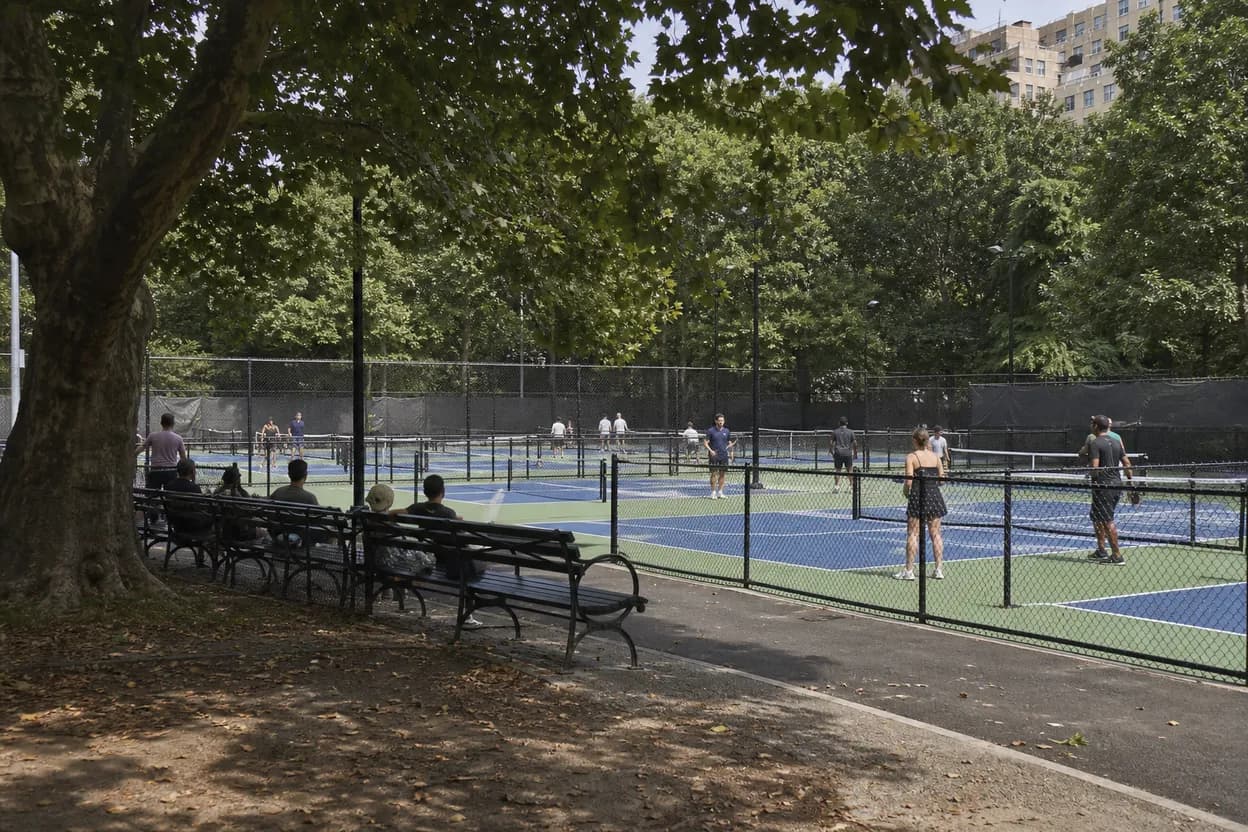
Riverside Park’s pickleball draw near West 110th Street works best when four friends want a real game without turning the evening into a reservation chase. The public-court upside is simple: no paid indoor slot, no league commitment, and an easy Upper West Side meeting point near the 1 train at Cathedral Parkway-110th Street. The tradeoff is equally real in mid-July 2026: court demand, heat, and wildfire-smoke air quality can change the plan fast. Treat this as a decision route, not a guarantee. Arrive with paddles, water, a rotation rule, and permission to swap the match for a riverside walk if the fence is already crowded.
Want a cleaner call before everyone leaves home? Text Karpo with your time, group size, court patience, and backup radius, and ask for the play-wait-walk version.
Make The Court The Test
The right expectation is not “we have a court.” It is “we have a first option.” NYC Parks lists Riverside Park as a public park with multiple recreation facilities, and Riverside Park’s 110th-to-111th Street area is already a busy recreation pocket, not a controlled private club. That makes it useful for spontaneous doubles, but weak for anyone who needs certainty. If the group includes a punctual planner, assign that person to arrive first and report the actual queue.
For four friends with uneven experience, the best format is one short warmup, then games to 7 or 9 instead of dragging every point to tournament seriousness. The competitive friend gets enough stakes, the beginner gets repeated touches, and nobody stands around pretending this is a clinic. Bring your own paddles and balls unless you have confirmed shared gear with the specific group on site. Public-court evenings are smoother when your plan does not depend on borrowing anything.
Use 110th As The Meet Point
For subway access, Cathedral Parkway-110th Street on the 1 line is the cleanest mental map: meet at Broadway and West 110th Street, then walk west toward Riverside Drive and down into the park. The MTA station is not currently something to assume is fully step-free; public accessibility listings have identified elevator work as future capital-plan work, not a completed feature. Anyone avoiding stairs should verify the live MTA station page and elevator status before committing.
That transit detail matters because Riverside Park is layered, with paths, slopes, stairs, and entrances that can feel longer than they look on a map. If one friend is carrying gear, has knee trouble, or is arriving by bus, do not bury the meet-up at the court fence. Meet on the street grid first, then move together. It adds five minutes, but prevents the classic split-group problem where two people are courtside and two are wandering below Riverside Drive.
Read The Fence Before You Commit
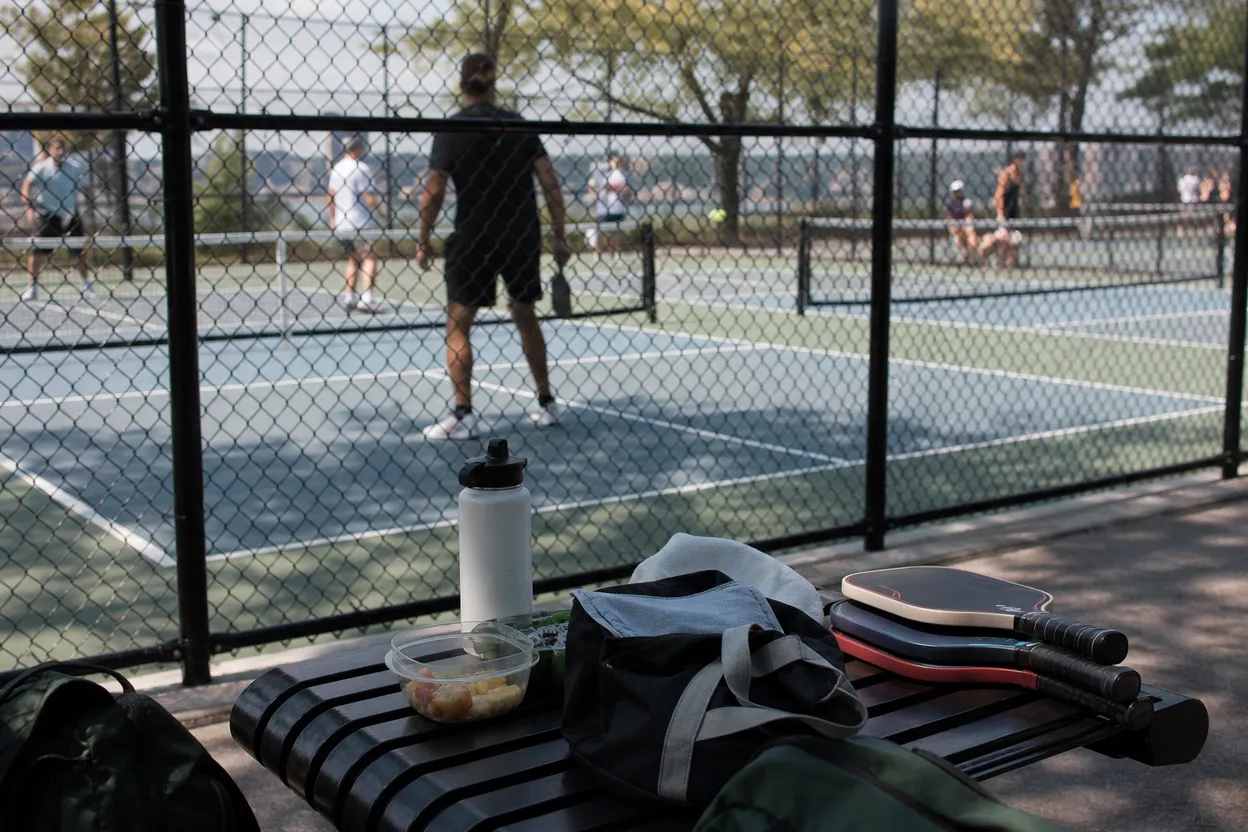
The first five minutes decide the evening. Count active games, visible waiting groups, and whether people are rotating naturally or holding courts in closed clusters. A friendly public-court scene usually has paddles lined up, people calling next, or players willing to explain the local order. If nobody can describe the queue and every court looks locked into private sets, do not spend thirty minutes getting annoyed. Set a wait limit before anyone starts stretching.
A practical rule for this plan is twenty minutes. If your group can get into a rotation within twenty minutes, stay and play. If the wait is unclear after twenty minutes, split the evening into a short skills hit only if space exists, or pivot west for a Hudson River walk. This protects the mood. The goal is competitive but not serious, and nothing turns casual doubles sour faster than arguing over an unwritten queue system.
Keep Uneven Skills Playable
Uneven racket-sport experience is not a problem if you design the first game around it. Pair the strongest player with the newest player, use normal serving, and call kitchen faults lightly but consistently. Avoid coaching every miss. One useful rule is one tactical note per side change, not after every point. The experienced players still get angles, resets, and net play, while the newer players learn by repetition instead of being turned into a group project.
If the court culture is crowded, make your games shorter and your exits cleaner. Public pickleball works because players rotate; it breaks when a group acts like a paid booking. Announce your score, finish the agreed game length, and clear the court without a debate. If you rotate in with strangers, keep the stronger shots away from obvious beginners unless they ask for pace. The social win is a game that feels fair enough for everyone to want one more.
Check Heat And Air First
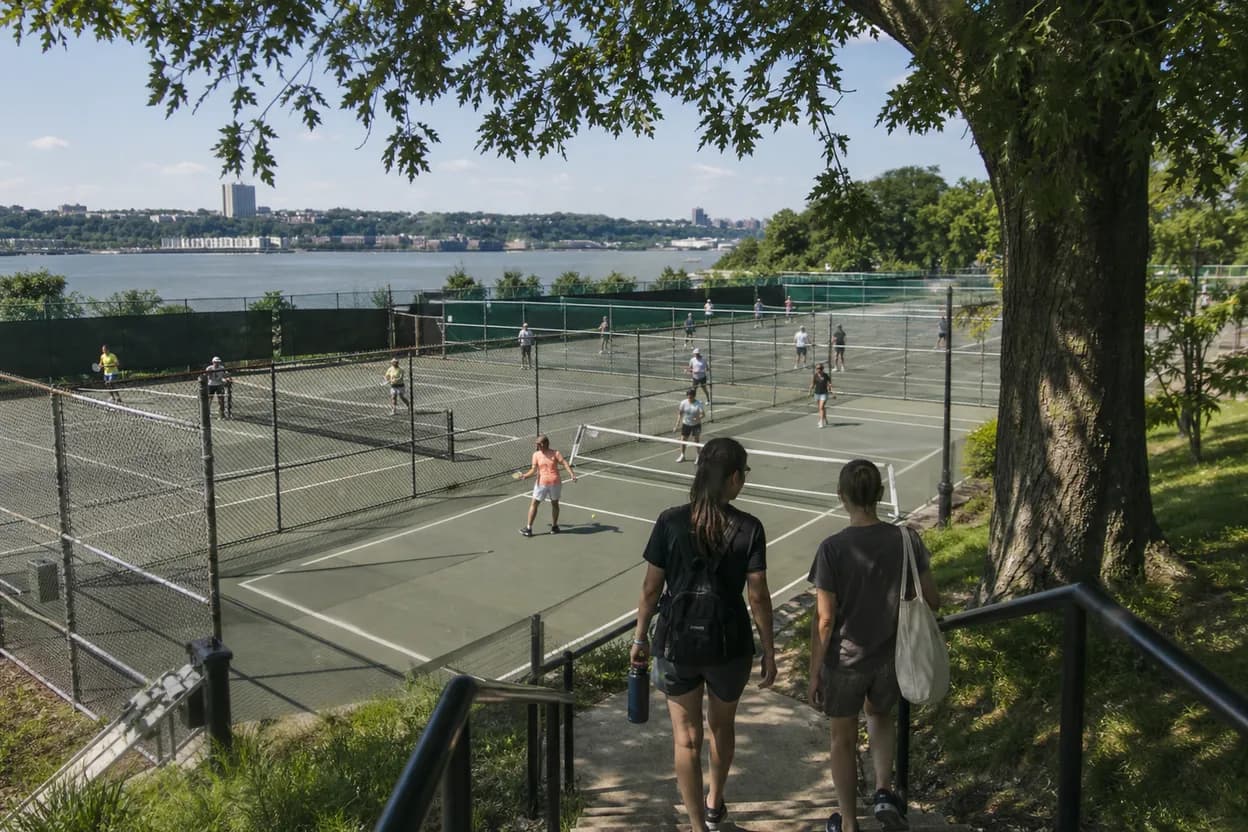
July 16, 2026 is not a normal “just show up and sweat” date for outdoor exertion. Current reporting has described New York City dealing with wildfire-smoke air quality concerns and dangerous heat this week, with official advisories pointing residents to limit strenuous outdoor activity when conditions worsen. Before playing hard, check AirNow, NYC emergency alerts, or a current weather app for AQI, heat index, and any advisory language covering Manhattan.
Use the result as a go-no-go filter, not trivia. If AQI is unhealthy, if anyone has asthma or heart-lung sensitivity, or if the heat index still feels punishing near sunset, downgrade the plan. That can mean dinking only, one short game, shaded walking, or bailing entirely. Bring more water than you think, skip alcohol before play, and stop when someone gets lightheaded. The river breeze is pleasant, but it is not a medical plan.
Know The Backup Walk
The strongest backup is already built into the location. Riverside Park is part of Manhattan’s west-side waterfront network, with paths that can turn a failed court attempt into a real evening instead of a canceled hangout. From the 110th Street area, aim for a relaxed southbound or northbound walk depending on light, crowding, and everyone’s shoes. Keep it conversational, not a march, especially after heat exposure or a long wait at the fence.
This pivot works because it preserves the social point of the plan. Four friends still get movement, river air, and a reason to stay uptown without paying for a court they did not want to book. The failure mode is pretending the walk is second-best and letting the competitive person sulk. Name the decision before arrival: play if rotation is reasonable, wait briefly if promising, walk if packed or unhealthy. Then the backup feels intentional.
Verify Before Riverside Park Pickleball
Final checklist: confirm the court location near Riverside Park’s West 110th Street recreation area, check NYC Parks or current local postings for closures, check MTA service for the 1 train to Cathedral Parkway-110th Street, and verify accessibility needs against live station information. Pack paddles, balls, water, light layers, and a small towel. Do not assume lights, loaner gear, bathrooms, or a posted queue system unless you have confirmed them that day.
Also verify the day’s air and heat picture before the group commits. If the AQI or heat advisory makes hard play a bad idea, switch to the Hudson River walk without treating it as a loss. If the courts are full and the rotation is vague, use the twenty-minute rule. If the group gets a court quickly, keep games short, rotate cleanly, and leave while people still want another round rather than after the evening has gone flat.
Tags: #RiversidePark #UpperWestSide #NYCPickleball #PublicCourts #PickleballNYC #HudsonRiver #ManhattanPlans #OutdoorNYC #SummerInNYC #NYCParks #GroupPlans #AskKarpo #BeforeYouGo #KarpoNYC
All trademarks are the property of their respective owners.
Ask Karpo first
Tell Karpo your date, group size, budget, and starting neighborhood. We’ll check current access, timing, transit, and the cleanest plan for Riverside Park pickleball courts near 110th Street, Upper West Side, Manhattan before you head out.


