Six is the threshold. Below it, almost any restaurant in Miami can take you with a day's notice. At six and above, a different set of constraints appears — deposits, set menus, minimum spends, and the quiet practice of seating your group at two tables across a room. The rooms that handle it well handle it because they were built to, and the ones that do not will still take the booking. Here is how to tell them apart.
Booking for six in Miami usually means a deposit, a set menu or a room that will quietly seat you at two separate tables. Text Karpo the size of your group and the night, and get the rooms near you that can actually take you, what the minimum is, and which will let you order off the normal menu.
The Cuban institutions, which never blink
Versailles and La Carreta in Little Havana are family Cuban institutions serving lechón, black beans and tostones to big tables all day, and that is not a coincidence of size — the whole format is built around large families eating together at unpredictable hours. A table of eight is a normal Tuesday for them, not an event.
That makes them the correct default for a group with no particular occasion and no consensus. The food is shareable, the price per head is low, the hours are long, and nobody is going to make the size of your party into a problem.
The Wynwood rooms designed for sharing
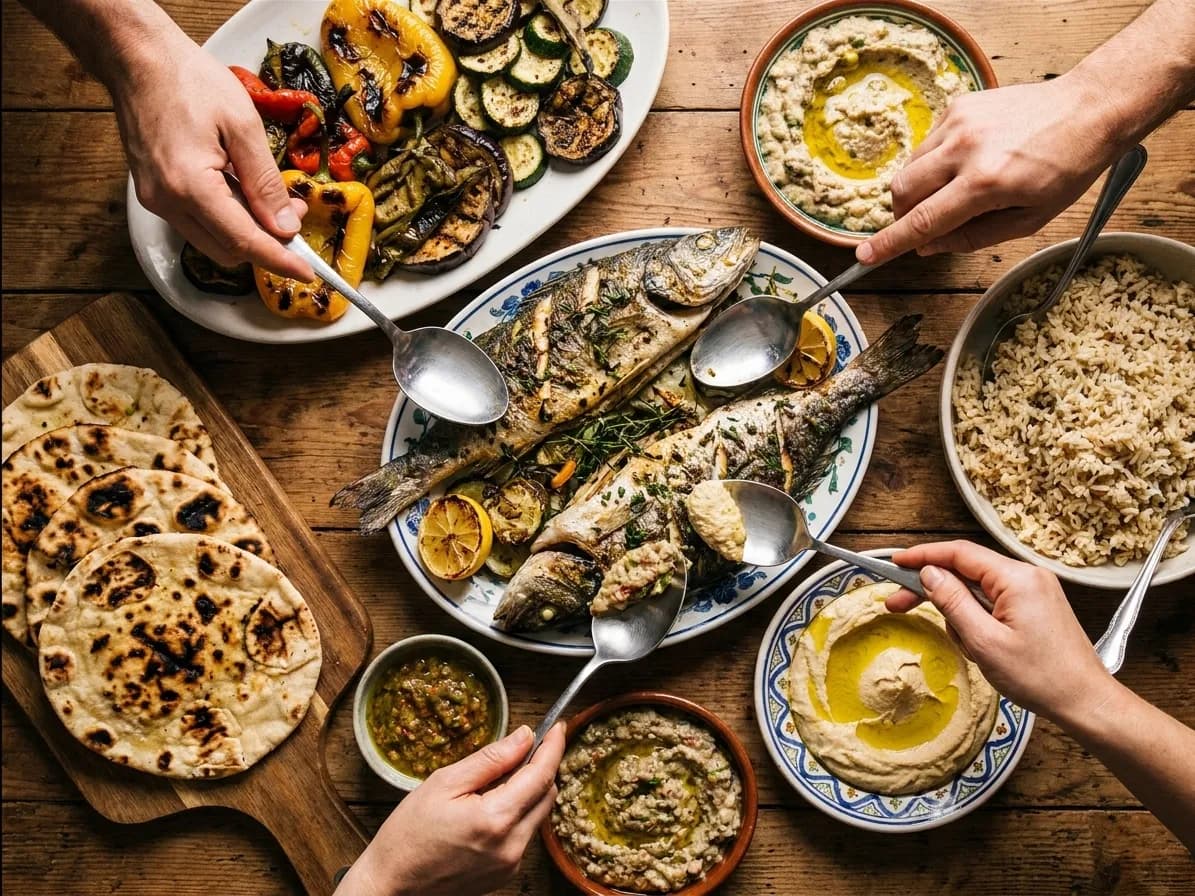
Doya in Wynwood is a meze restaurant, which structurally means everything arrives in the middle of the table and the group eats as one unit rather than as six separate orders. That is the single most important property for a big table — the food format does the social work that the seating plan otherwise has to.
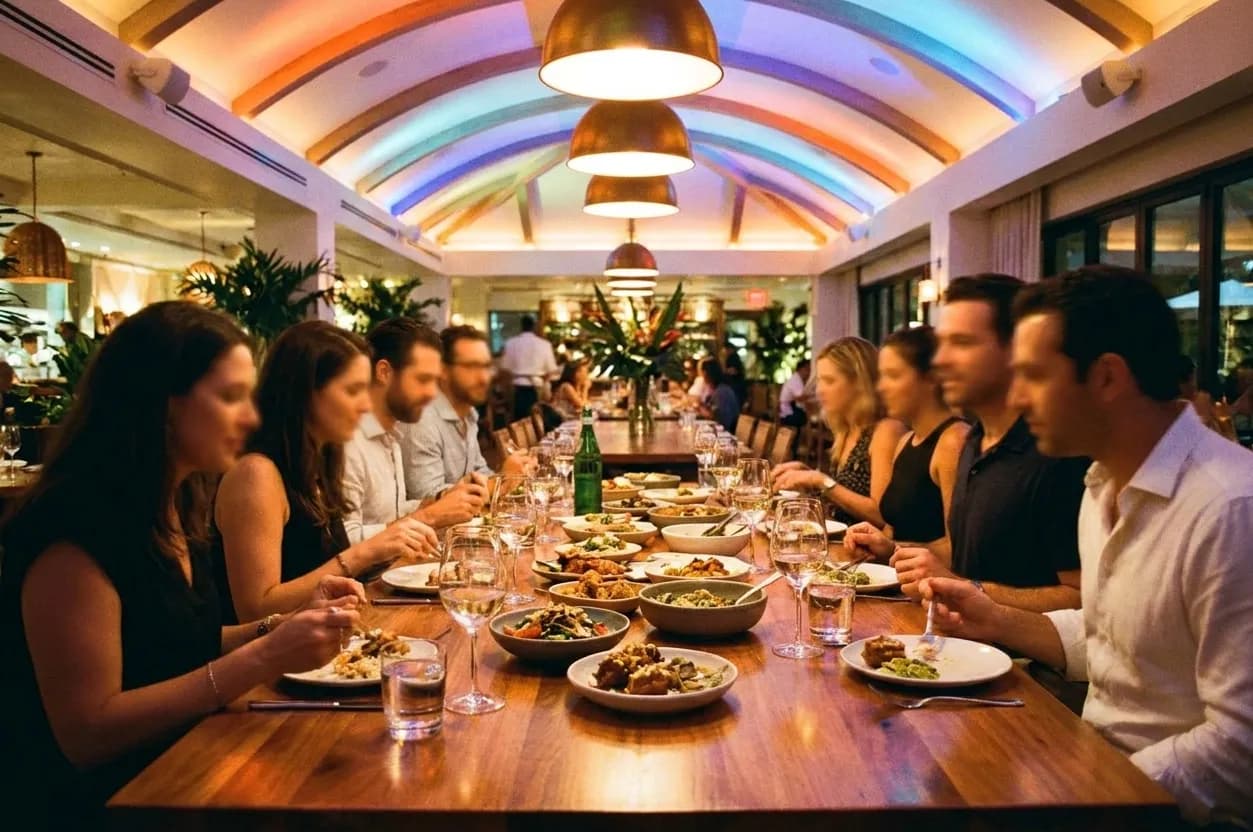
Double Knot, also in Wynwood, is the more designed version: a long table under a mosaic-lit vaulted ceiling and a consistent menu of Japanese small plates. It is a room where a group of eight looks like it belongs, which matters more for a birthday than the menu does.
When a package is actually the right answer
Several Miami restaurants run explicit group packages — Doce Provisions in Little Havana and Chimba in Wynwood both offer event packages starting around forty dollars a head. People instinctively resist set pricing, and for a group over about eight that instinct is wrong.
A set menu is faster, usually cheaper than what a large table orders unsupervised, and it eliminates the twenty minutes at the end where everyone tries to work out who had the second bottle. It also means the kitchen can fire the whole table at once, which is the actual reason large groups get bad food: eight à la carte mains at eight different cooking times is a service problem no restaurant solves well.
The questions to ask when you book
Four questions, in this order. Can we sit at one table — not can you take eight, but is it one table. Is there a deposit; many Miami restaurants require one for groups of fifteen or more and some set the bar lower. Is there a minimum spend or a required set menu. And is service automatically added for large parties, which in this city it very often is.
Ask all four when you book rather than when you arrive. Every one of them is a normal question that a well-run restaurant answers immediately, and a vague answer to any of them is a reliable signal that the evening will involve a conversation you did not want to have in front of your friends.
The food-hall escape hatch
If the group cannot agree, stop trying. 1-800-Lucky in Wynwood is an Asian food hall where everyone orders from a different counter and sits together, and that model solves the hardest version of this problem — six people with six different requirements, one of whom is vegetarian and one of whom is late.
Food halls also fix the payment problem, which is the second-worst part of a large dinner. Everybody pays for their own thing as they order it, and nobody spends the end of the night doing arithmetic.
Timing a big table
Book earlier than the group wants to eat. A table of eight at seven is a normal service; the same table at half nine on a Saturday competes with the peak and is far more likely to be split or delayed. Being seated at seven and staying until ten is a better evening than being seated at nine-forty.
And give the restaurant a real head count the day before. Restaurants in Miami are used to groups shrinking by two on the night and they plan for it, which means an accurate number gets you a better table than an optimistic one. It is the single cheapest thing you can do to improve a large dinner.
Tags: #restaurantsopennearmeinmiami #groupdining #bigtable #miamirestaurants #versailles #lacarreta #doya #doubleknot #doceprovisions #wynwood #littlehavana #familystyle #birthdaydinner #miamifood
All trademarks are the property of their respective owners.
Ask Karpo first
Groups of six or more in Miami run into deposits, set menus and split tables, and none of that is on the booking page. Ask Karpo which rooms near you take a table your size on the night you want, whether there is a minimum spend, and which ones are genuinely built for sharing.