There is a reliable economic pattern around every landmark in Miami and it is worth knowing in a sentence: prices are set by proximity to a thing people will only visit once. Within two blocks of any major attraction, the restaurants are priced for a customer who will not return and therefore cannot punish them. Three blocks out, the same food is priced for people who live there. The distance is short, the saving is large, and the food is better. Here is where the line sits at each of the big ones.
The good food near a Miami landmark is rarely on the same block and the walk is only worth it if the place is actually open when you finish. Text Karpo which landmark you are at and get what is open right now within a few blocks, roughly what it costs, and which direction to walk to leave the tourist pricing behind.
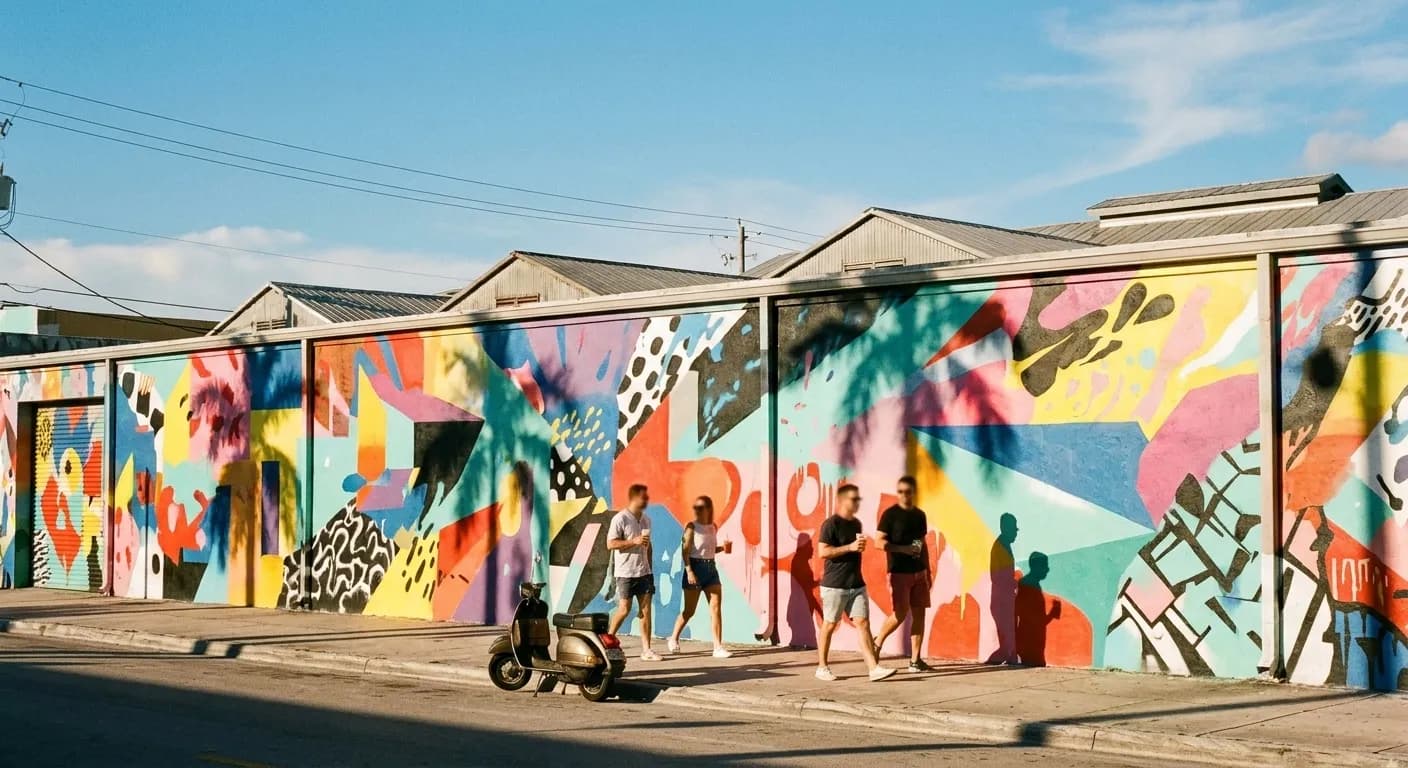
Wynwood Walls: go north and east
The blocks immediately around the Walls are the highest-pressure retail environment in Miami — bars with hosts outside, menus in four languages, and prices that reflect the fact that a hundred thousand people a month walk past. The rest of Wynwood, north and east of that core, is where the neighbourhood actually eats.
For a group with no consensus, 1-800-Lucky is the reliable answer — an Asian food hall in Wynwood, several counters under one roof, everyone orders separately, and it is one of the better lunch options in the neighbourhood. Doya, also in Wynwood, is the other direction: meze built for sharing across a table, and a room with more hospitality than the strip outside it.
Calle Ocho: the institutions are still the answer
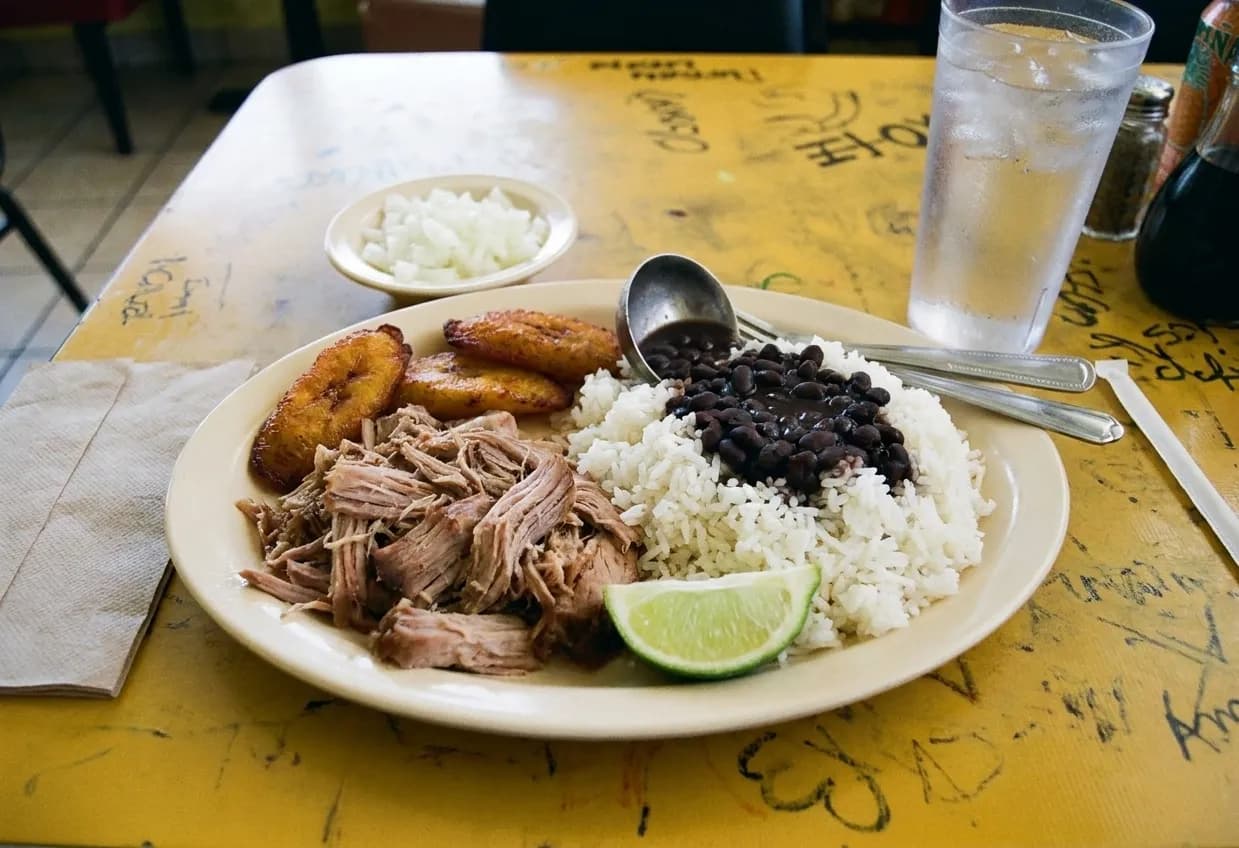
Little Havana is the exception to the rule, because its landmarks are restaurants. Versailles and La Carreta are family Cuban institutions serving lechón, black beans and tostones to big tables all day, and they are simultaneously the tourist stop and the place the neighbourhood eats. That combination is rare and it is why they have lasted.
The adjustment here is timing rather than geography. Both are busiest when the tour buses are, and both are excellent at three in the afternoon and late at night when they are not. Go off-peak and you get the same food in a room full of regulars.
Ocean Drive: walk west, always
Ocean Drive has the most aggressive restaurant economics in Florida, including the well-documented practice of automatic service charges and drink pricing that surprises people at the end of the meal. The correct response is not to negotiate with it but to walk two streets west, where South Beach becomes a neighbourhood with normal restaurants serving people who live in it.
One habit protects you anywhere along that strip: ask for the printed menu with prices before you sit, and check whether service is included. A place that is uncomfortable with that question has answered it.
The Design District and downtown
The Design District is expensive by design rather than by exploitation, which is a different problem — the food is generally good and the price reflects the rent. The value move here is lunch rather than dinner, and it is one of the few parts of Miami where a midday menu is meaningfully cheaper than the evening one.
Around the downtown museums and the bayfront, the same three-block rule applies with a twist: the good eating is inland towards Brickell rather than along the water. Waterfront frontage in Miami carries a premium that has nothing to do with the kitchen behind it.
Stadiums and arenas: eat before
The large venues out at Miami Gardens and the downtown arena are the one case where the answer is to solve the problem before you arrive. There is no three-block rule at a stadium because there is no neighbourhood — there is a car park, and then there is a highway.
Eat properly somewhere real on the way, arrive later than you planned, and accept that anything you buy inside is a concession purchase rather than a meal. Trying to find a good restaurant near a stadium in South Florida is the one version of this problem that does not have a solution.
The rule, generalised
Look at who else is eating. If every table is holding a phone up at the same thing you just photographed, you are inside the ring. If half the room is speaking Spanish to the waiter about something other than the menu, you are outside it. That single observation is more reliable than any rating.
And check the hours before you walk. The neighbourhood restaurants three blocks out keep neighbourhood hours — several close between lunch and dinner, several close a day a week — while the ones at the gate are open continuously precisely because they are built for people who did not plan. That convenience is what you are paying for, and it is the most expensive item on the menu.
Tags: #restaurantsopennearmeinmiami #wynwoodwalls #calleocho #designdistrict #oceandrive #vizcaya #miamibeach #brickell #littlehavana #miamifood #wheretoeat #touristtrap #miamidining #localeats
All trademarks are the property of their respective owners.
Ask Karpo first
Every Miami landmark has a price gradient running away from it, and the good rooms sit just past the edge of it. Ask Karpo where you are and get what is open near you now beyond the tourist ring, how far the walk is, and what a meal there actually costs.