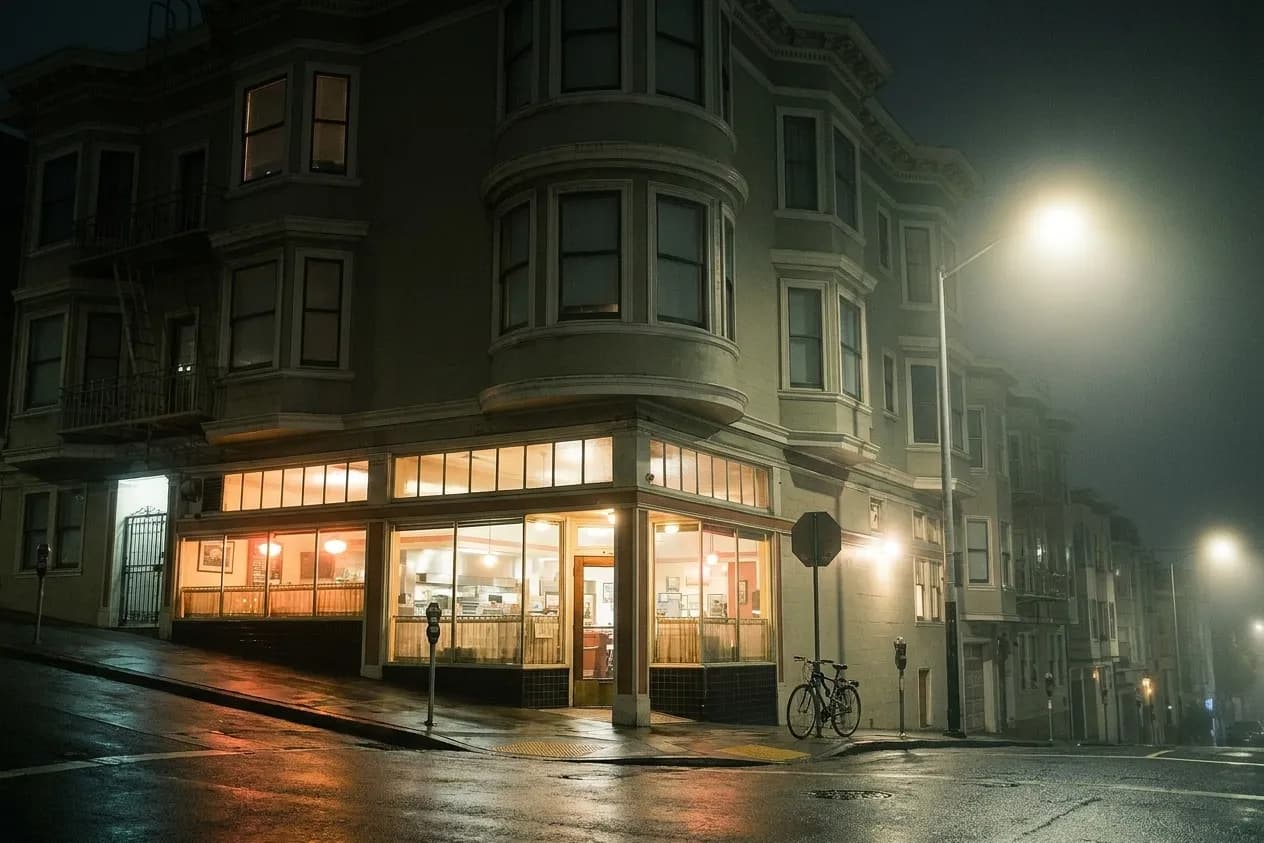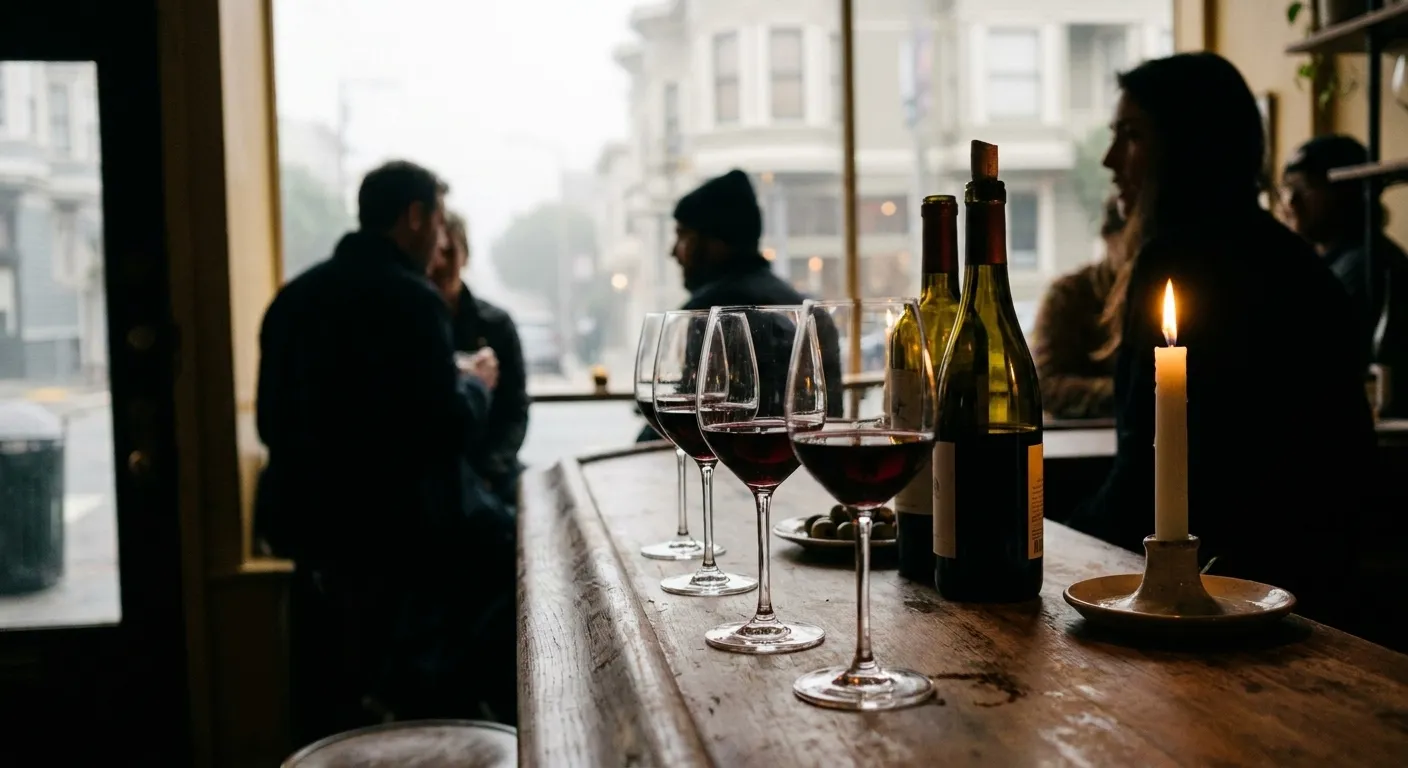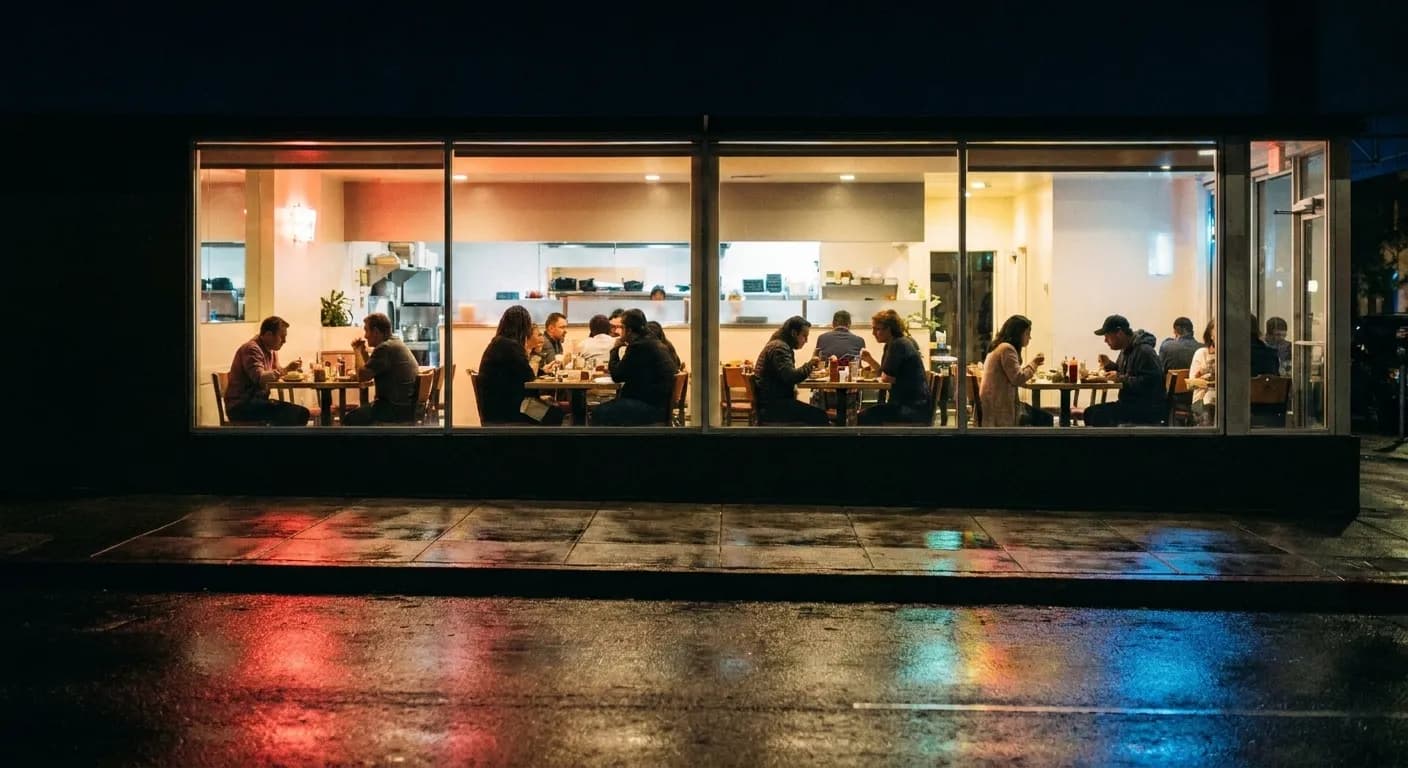
San Francisco closes early, and complaining about it has been a local sport for thirty years. But the blanket version of that complaint is wrong in a way that costs people dinner. The city does not shut at ten; it shuts at ten for one particular category of restaurant — the mid-range sit-down room with a wine list — while several other categories carry on. If you are searching for restaurants open near me in San Francisco at eleven at night, the useful move is to stop searching by cuisine and start searching by business model.
Posted hours and actual last orders are different numbers, and the gap is where late dinners die. Ask Karpo what is genuinely still serving right now near you.
The four categories that stay open
First, Thai. This is the most reliable late-night cuisine in San Francisco by a wide margin — Muukata runs to midnight every day doing tabletop barbecue, King's Thai Cuisine keeps a midnight close, and the pattern holds across a lot of smaller rooms. Second, taquerias, where El Farolito in the Mission is the reference point and the queue at midnight is a genuine cross-section of the city. Third, izakayas and late Japanese rooms — Ryoko's has built its entire identity on being open when nothing else is. Fourth, the surviving diners, of which the Nob Hill train car is the outlier that runs past three in the morning.
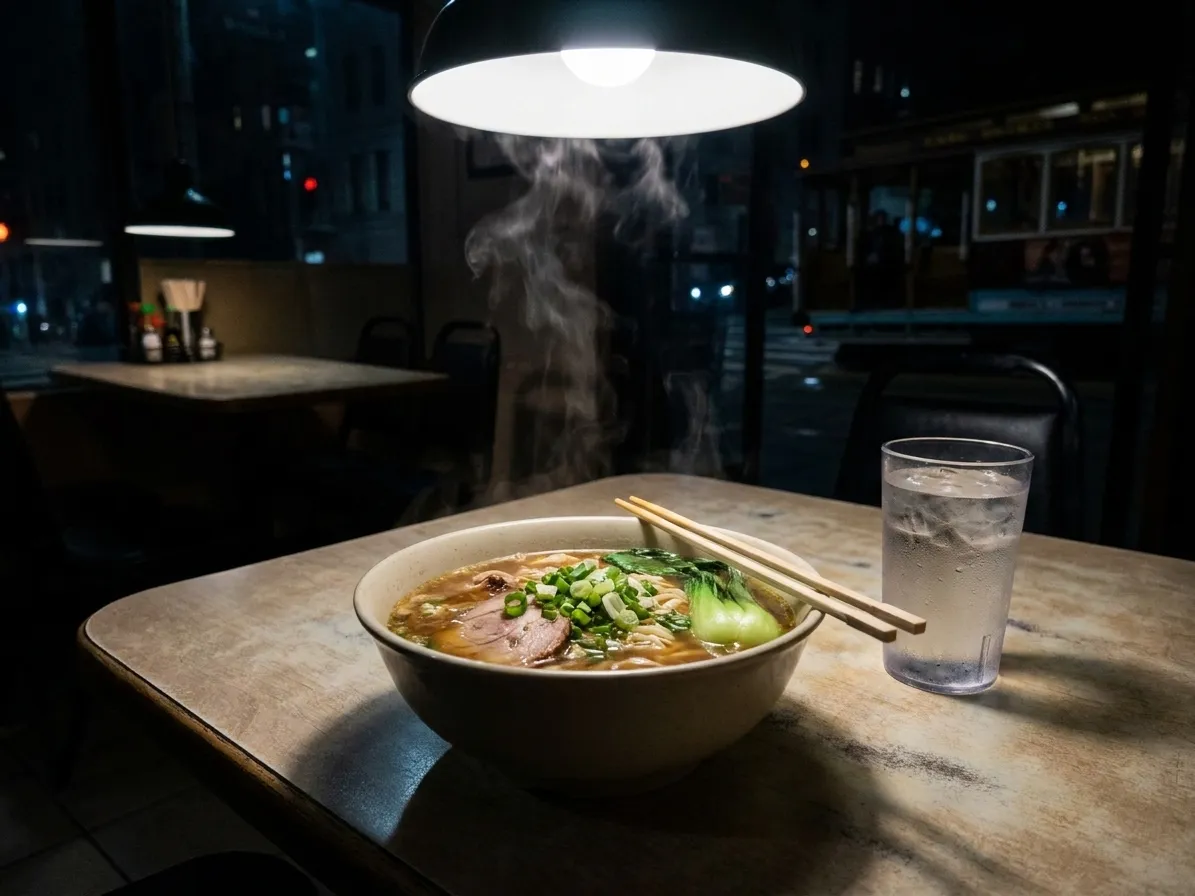
What these have in common is that late trade is the business rather than an extension of it. A restaurant that closes its kitchen at ten does so because the last two hours lose money; a restaurant built around eleven-to-two has a different cost base and a different customer.
Posted hours versus last order
The single most useful thing to understand about late dining here is that the closing time on the door is when the room shuts, not when the kitchen stops. The gap is routinely thirty to forty-five minutes and occasionally an hour. A place listed as closing at midnight may take its last food order at eleven-fifteen, which means arriving at eleven-forty gets you a drink and an apology. The reverse also happens: bar-forward rooms sometimes keep a short late menu going well past the posted kitchen close. Neither is discoverable from a listing, which is why calling is still the highest-yield thing you can do at half past ten.
The nights that break the rules
Late-night availability in San Francisco is much more day-dependent than city-dependent. Friday and Saturday are straightforward almost everywhere. Sunday through Tuesday is where it collapses, and Monday in particular is the hardest night to eat late in this city — a large share of independent kitchens take Monday as their closed day, which thins the field before you even start. If you are planning around a late arrival, a Monday flight into SFO is materially worse than a Thursday one, and that is worth knowing in advance.
Why the city closes early, and why that is changing slowly
The structural reason is worth knowing because it predicts which rooms will still be serving. San Francisco has never had a large late-night workforce the way New York or Los Angeles does, and the industries that dominate here keep early hours. Add a restaurant labour market where a late shift is expensive to staff and a public transport system that thins out sharply after midnight, and the maths for staying open until two rarely works unless late trade is the entire point of the business.
What has shifted recently is that the late-night trade has concentrated rather than disappeared. Instead of a lot of rooms serving until midnight, the city now has a smaller number serving properly late and doing well out of it, because everyone looking for a late dinner ends up in the same few places. That is why El Farolito at midnight feels busier than most restaurants at eight. Practically, it means you should think in terms of a handful of reliable destinations rather than expecting your neighbourhood to have an option — and it means the good late rooms are busier and slower than their quiet-looking hours would suggest.
Where to actually go, by neighbourhood
The Mission is the strongest bet in the city after eleven, mostly on the strength of its taquerias, and it has the added advantage of being dense enough that a closed door is not a catastrophe. The Tenderloin and lower Nob Hill carry the late Japanese and diner trade. Chinatown and North Beach are weaker than their reputations suggest at this hour. The Richmond and Sunset, excellent at eight, are almost entirely finished by eleven. And SoMa depends entirely on whether there is an event on — a show at one of the larger venues will keep several nearby kitchens running late that would otherwise be dark.
The realistic summary is that eating after eleven in San Francisco is a solved problem if you are in the right two or three neighbourhoods and a genuinely hard one if you are not. Plan the location rather than the restaurant, and the rest tends to work itself out. If you know in advance that you will be eating late — a show, a shift, a delayed flight — the single best move is to decide on the neighbourhood before you are hungry and travel there directly, rather than working outward from wherever you happen to finish the evening. Late-night San Francisco rewards the person who planned twenty minutes ahead and punishes improvisation more than almost any other American city its size.
Tags: #SanFrancisco #SFEats #LateNightSF #OpenLate #MissionSF #Tenderloin #SFFood #AfterHours #NightOwl #ElFarolito #BayArea #SFDining #LateNightEats #FoodGuide #SFNightlife
All trademarks are the property of their respective owners.
Ask Karpo first
Ask Karpo which restaurants near you in San Francisco are still taking food orders right now, how long the kitchen has left, and what the nearest backup is if you are cutting it fine.