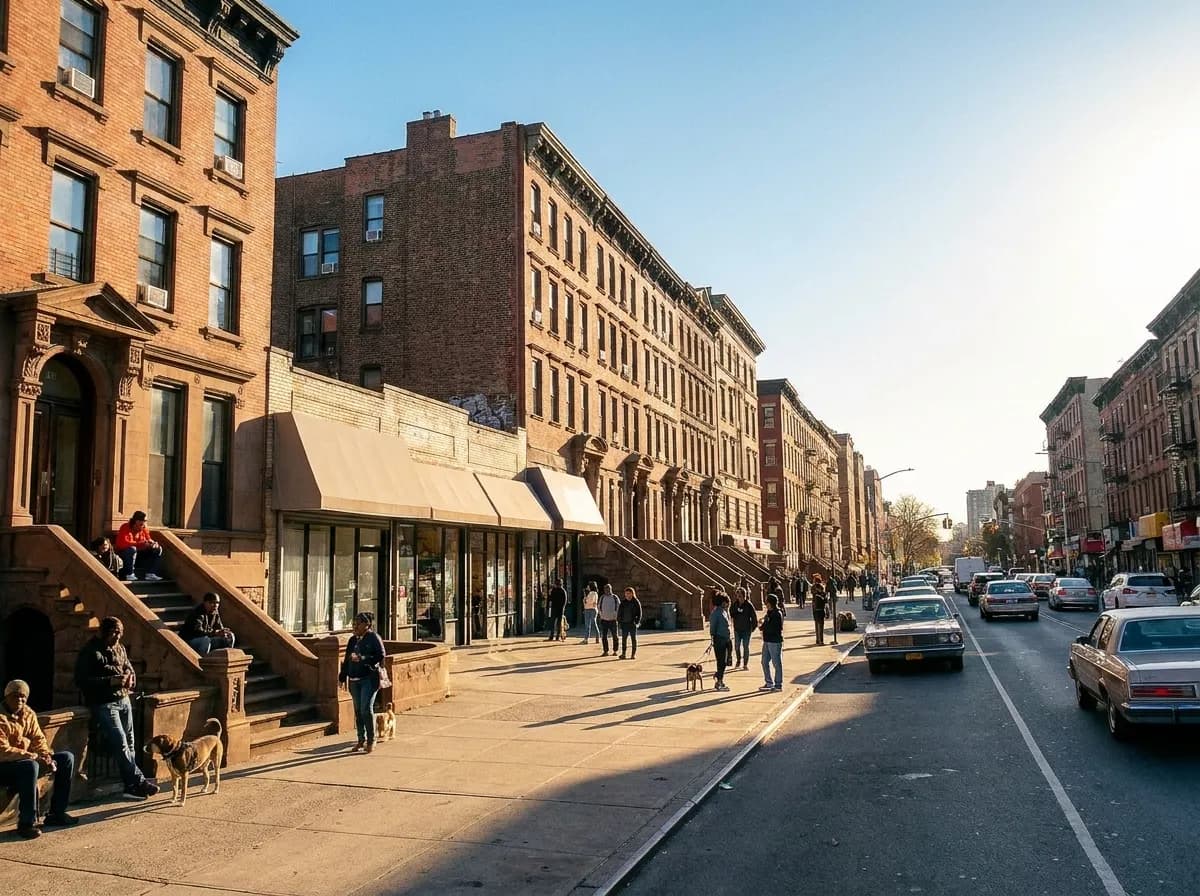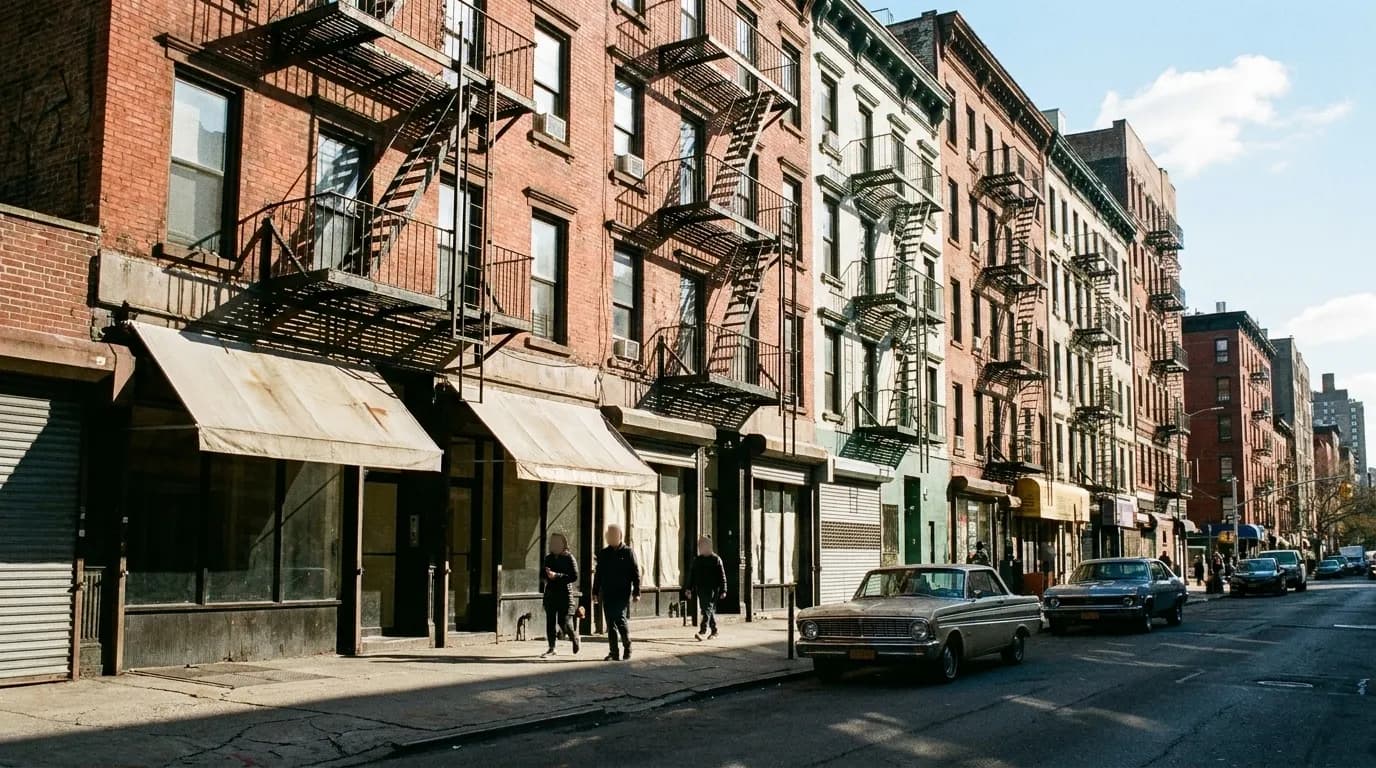
The restaurant closest to where you are standing right now is probably not the best value within reasonable walking distance. In Manhattan, that first block of storefronts facing a numbered avenue pays commercial rent calibrated to foot traffic that cannot be bothered to turn a corner. The kitchen behind that rent pays for it with portion size, ingredient quality, or both. Six to eight minutes of walking—almost always east or west, perpendicular to the avenue grid—moves you into a different rent band where the cooking is better and the check is lower.
Need a table in the next hour without the tourist tax? Ask Karpo which blocks to walk and which directions actually deliver better food for less.
How the Rent Gradient Actually Works
Manhattan below 96th Street operates on a predictable pattern. The avenues carry the highest visibility and the highest rent. Landlords on those blocks lease to chains, to operators with proven ability to turn tables fast, or to restaurants willing to run thin margins on high volume. The side streets—the numbered cross streets running east-west between avenues—charge less because they do not capture impulse traffic. A restaurant on a side street needs to be worth finding, which means the food has to do the work.
The distance between avenues in Midtown and most of the Upper East and Upper West Sides is about four minutes at normal walking pace. If you are standing on Sixth Avenue and walk east to Fifth, or west to Seventh, you cross into a different commercial ecosystem. The rent drops by enough that a serious kitchen can afford to stay open. The drop is steeper if you walk two blocks off the avenue, onto a side street with no through traffic at all.
This gradient compresses below 14th Street, where the grid breaks down and the avenues are closer together. In the West Village and the East Village, two blocks can still move you from tourist-facing to neighborhood-serving, but the distance is shorter and the rent differential is smaller. The principle holds: the restaurant on the corner of a major intersection is paying for location, and you are paying for the fact that it is easy to find.
In the outer boroughs, the gradient works along the main commercial drags rather than the avenue grid. In Brooklyn, the blocks directly on Smith Street, Fifth Avenue in Park Slope, or Court Street in Carroll Gardens carry higher rent than the parallel residential streets one block over. In Astoria, the difference between a restaurant on 30th Avenue and one on a side street two blocks south is the same spread you see in Manhattan: the avenue location pays for visibility, the side street pays for repeat business.
Which Directions Pay Off From a Given Station
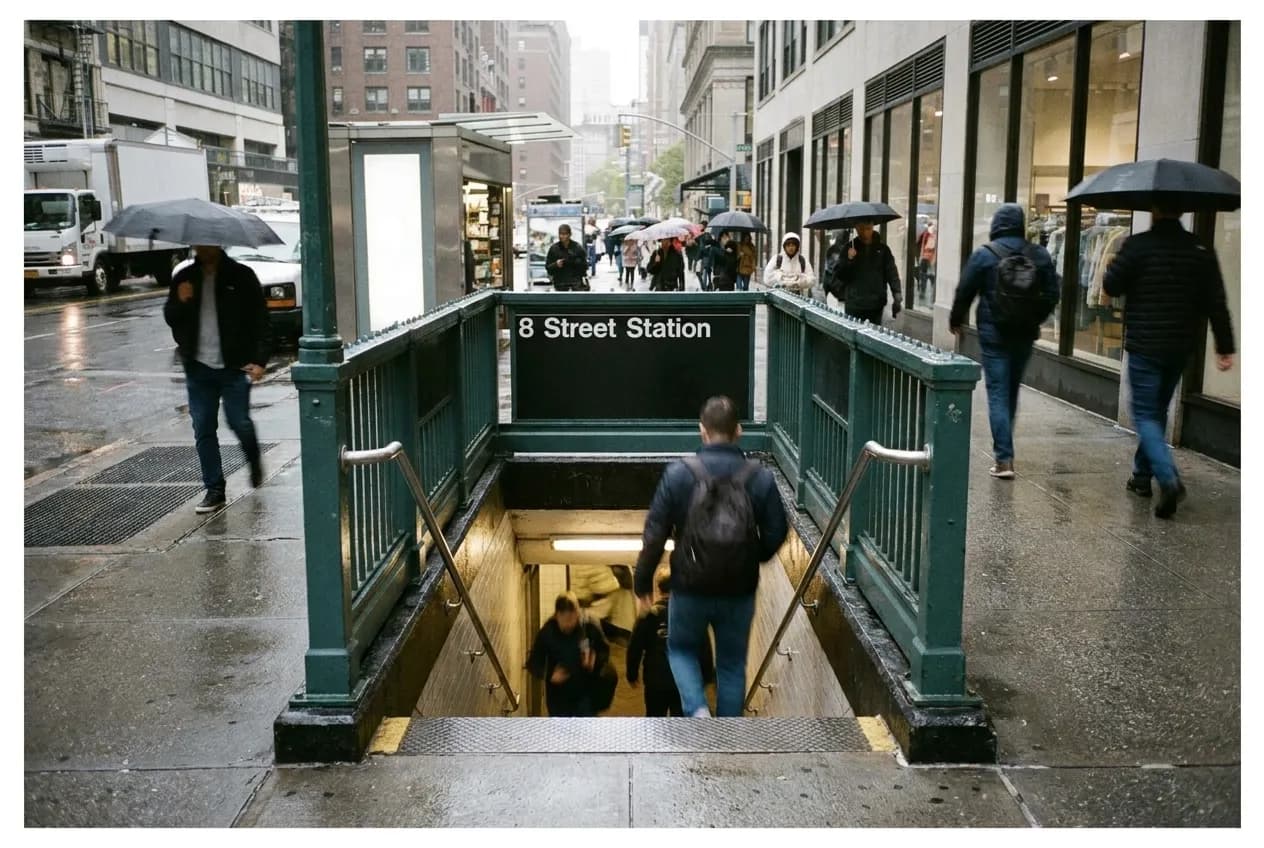
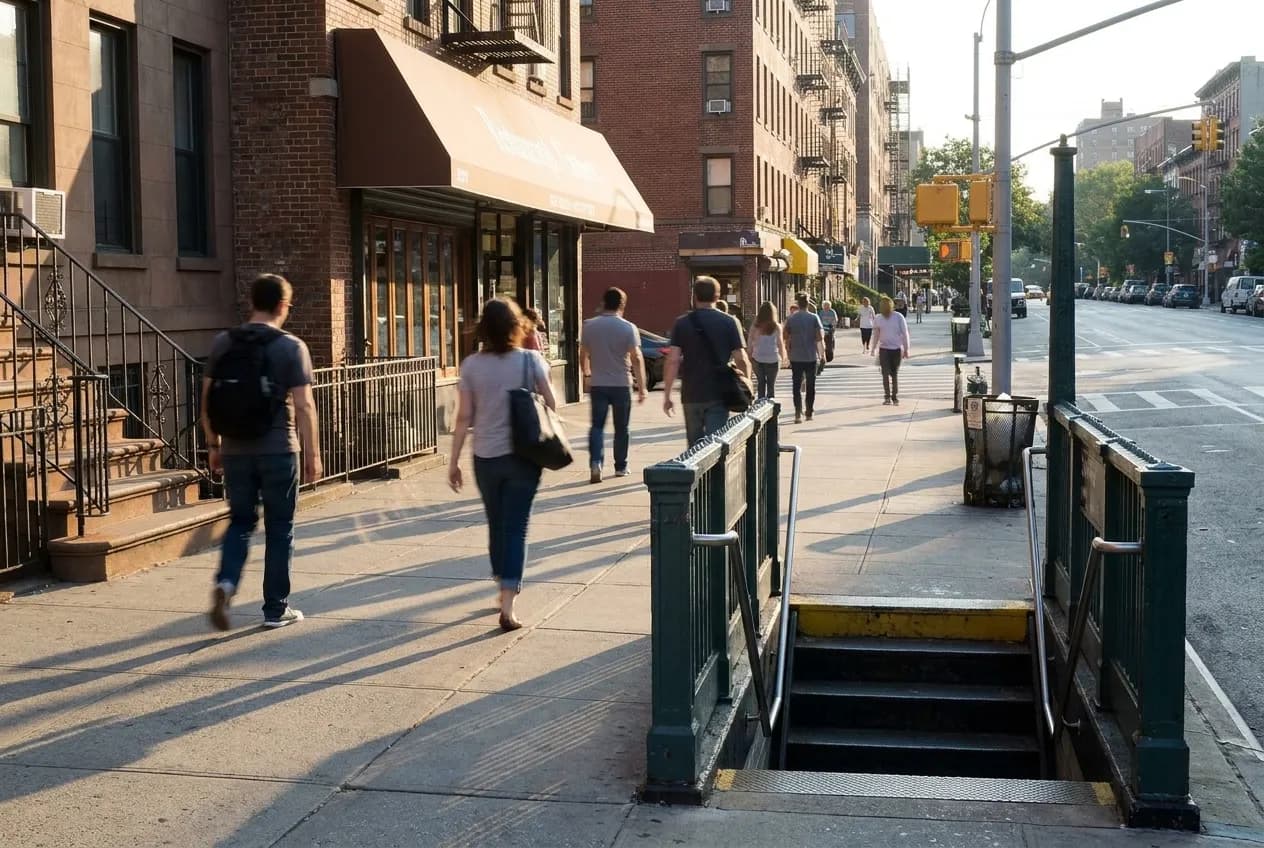
Subway exits drop you onto specific corners, and not all directions from that corner are equal. The blocks immediately surrounding a major station—Times Square, Union Square, Herald Square—are the most expensive retail real estate in the city. Walking away from the station, in any direction, improves your odds. But some directions improve them faster.
From most Midtown stations, walking east gets you to quieter blocks faster than walking west, because the density of office towers and hotels thins out as you approach the East River. From a station on the Upper West Side, walking west toward the park often means better cooking than walking east toward the commercial spine of Broadway and Amsterdam. The park blocks carry less foot traffic, which means lower rent and kitchens that can afford to take time.
In Lower Manhattan, the pattern flips depending on the time of day. During lunch hours, walking away from the Financial District office core—south and west toward Battery Park, or north toward Tribeca—gets you out of the desk-lunch rush and into places that serve a dinner crowd. After six, the same blocks near the office towers empty out, and the side streets that were quiet at noon are now the better bet.
In Brooklyn, the rule is to walk perpendicular to the commercial strip. If you are on Fifth Avenue in Park Slope, walk east or west onto the residential cross streets. If you are on Franklin Avenue in Crown Heights, walk one block off the avenue in either direction. The restaurants on those blocks are serving the people who live there, not the people passing through, and the pricing reflects it.
When the Closest Option Is Actually Correct
There are times when walking farther does not help. If you are inside a major transportation hub—Penn Station, Grand Central, the Oculus—the restaurants inside the station are the only realistic option if you have a train to catch in the next thirty minutes. The food will be worse and more expensive than anything six blocks away, but six blocks away does not solve the problem of being on a platform in twenty minutes.
Late night, after midnight, the closest open kitchen is often the right call regardless of quality. The number of restaurants open after one in the morning drops sharply, and the ones that are open are clustered in specific neighborhoods: the East Village below 14th Street, Koreatown in the West Thirties, parts of Williamsburg and Bushwick. If you are outside those zones, the diner or bodega closest to you is the meal you are getting.
In residential neighborhoods far from commercial strips—most of Staten Island, large parts of eastern Queens, the outer reaches of the Bronx—the rent gradient flattens because there is no high-rent core to walk away from. The restaurant closest to you is probably paying the same rent as the one four blocks over, which means proximity is a reasonable tiebreaker.
Weather changes the math. In heavy rain or snow, six minutes of extra walking is six minutes of being cold and wet, and the marginal improvement in food quality is not worth it. The same applies in extreme heat. If it is above ninety-five degrees, the closest air-conditioned room with food is the right answer.
The Transferable Habit
The skill to build is not memorising which specific blocks are good in which neighborhoods. The skill is recognising the gradient in real time, wherever you are. When you step out of a subway station or walk out of a meeting, look at the block you are on. If it is a major avenue or a corner with clear sightlines in multiple directions, you are standing in the high-rent zone. The restaurants here are optimised for people who will not walk farther.
Turn perpendicular to the main flow of foot traffic. Walk two blocks, or six minutes, whichever comes first. Look for the blocks where the pedestrian density drops and the storefronts are not part of a national chain. Those blocks are where the rent is low enough that the kitchen can afford to cook. The food will be better, the check will be lower, and the time cost is trivial.
This works in every American city with a grid and a rent gradient, which is most of them. The distance changes—in some cities the gradient is steeper, in others it is shallower—but the principle does not. Proximity is expensive. Six minutes of walking is cheap. Price it out every time.
Tags: #RestaurantsNearMe #NYCEating #ManhattanDining #BrooklynFood #NYCNeighborhoods #CheapEatsNYC #WhereToEatNYC #NYCFoodGuide #NeighborhoodDining #LocalRestaurants #NYCFoodScene #WalkingForFood #BetterBlocks #NYCLunch #NYCDinner
All trademarks are the property of their respective owners.
Ask Karpo first
Open the Karpo app right now and ask what is open within eight minutes of where you are standing, sorted by the blocks where rent does not eat the budget. You get live kitchen hours, current wait times, and which direction to walk from your exact location.