Every map app answers the phrase restaurants near me the same way: it draws a circle around you, half a mile or so, and fills it in. That is a reasonable shape for a suburb and a bad one for New York. The distribution of good eating in this city is not smooth. It clumps. There are single blocks carrying more genuine choice than the twenty blocks around them combined, and there are long, respectable-looking avenues where you can walk ten minutes and pass nothing you would cross the street for. A circle averages those two things together and hands you the average, which is exactly the thing you do not want.
The useful question is not what is within half a mile but which direction the density runs, because in New York those are different questions and only one of them has a good answer. Tell Karpo where you are standing and it will point you at the cluster rather than the circle - the block worth the eight-minute walk instead of the nearest thing with a menu.
One block, a hundred businesses, five floors up
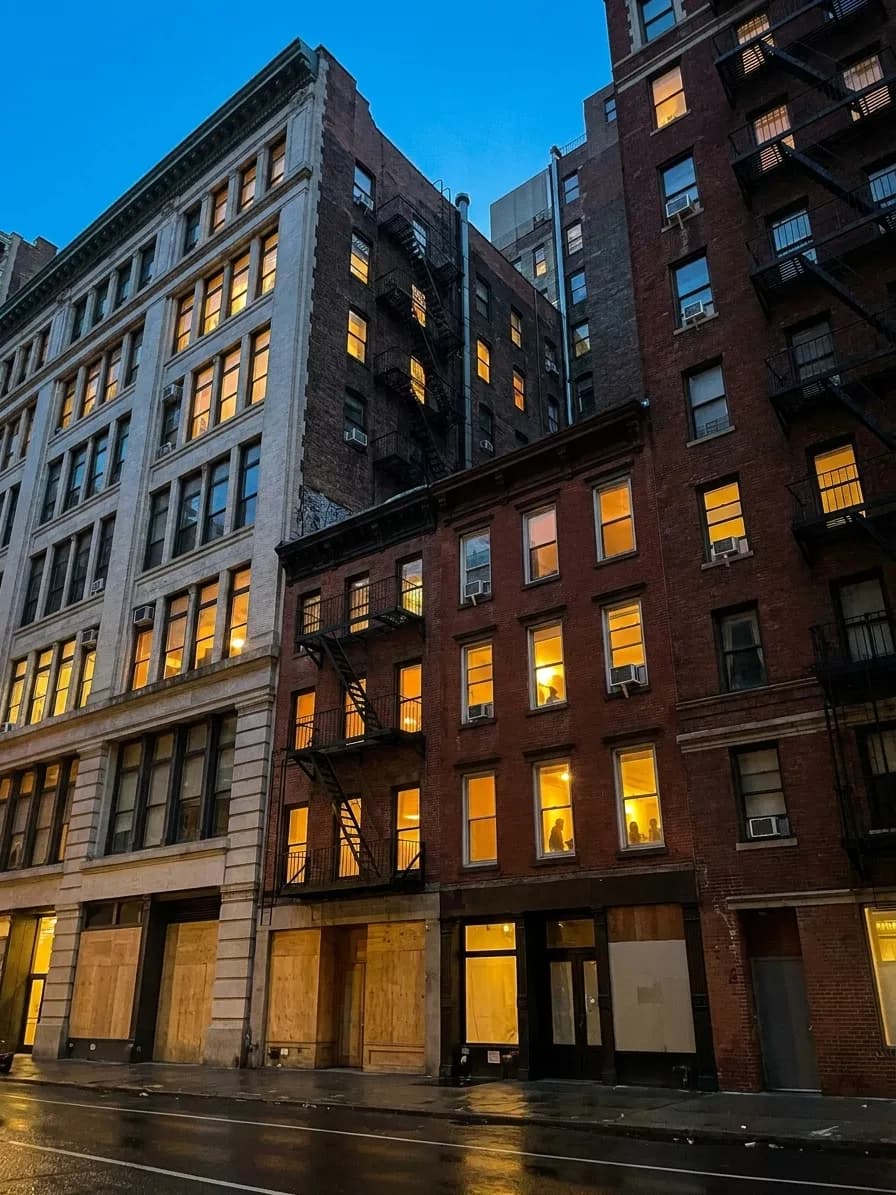
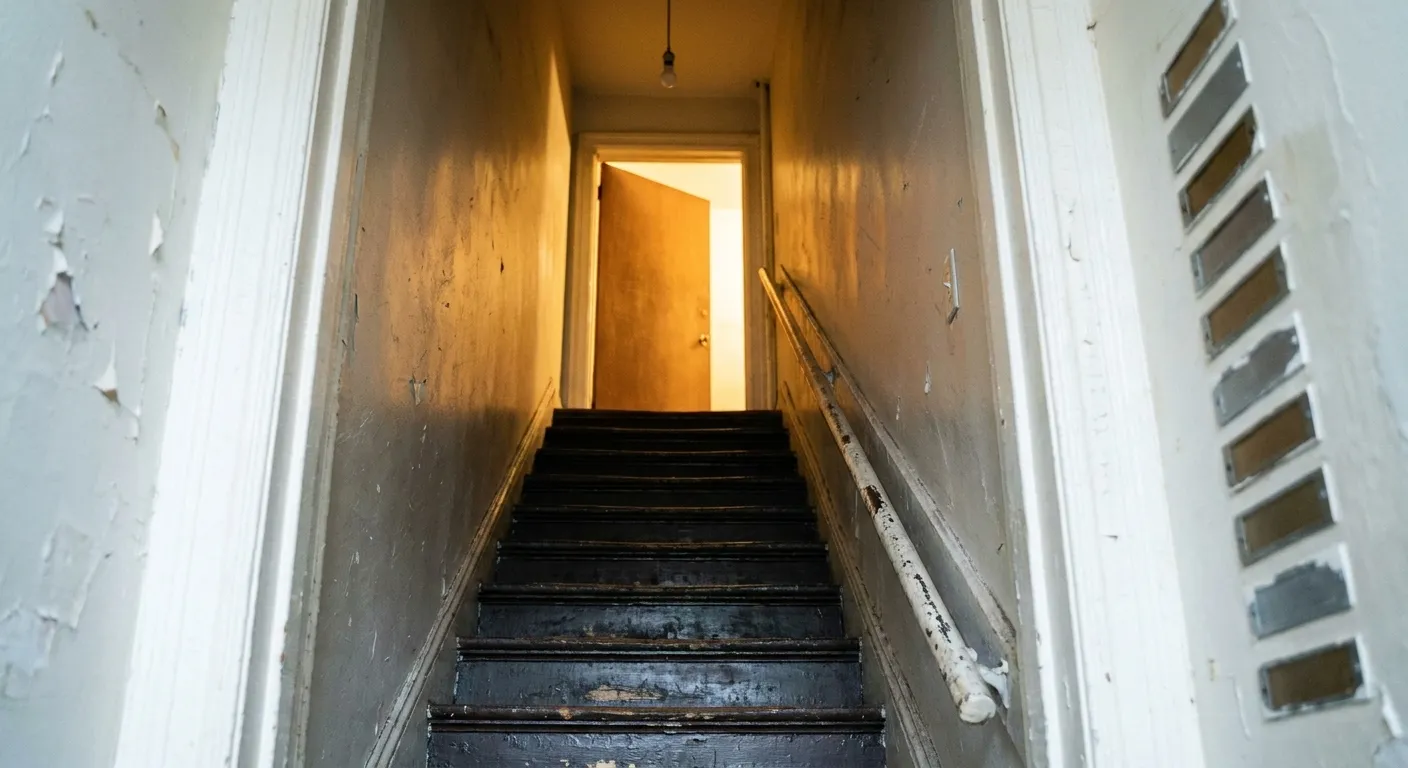
The clearest example in Manhattan is West 32nd Street between Fifth and Sixth. The stretch has been known as Korea Way for decades and carries well over a hundred Korean businesses on a single block - restaurants, bakeries, karaoke rooms, bars, spas, groceries. What makes it useful is not just the count but the axis. In most of America a restaurant occupies a ground floor and that is the end of it. On 32nd Street the ground floor is roughly a third of the inventory. The rest is upstairs, second and third and fourth floor, reached by a door between two other doors and a narrow stairway with a column of small signs beside it.
This is why a phone map undersells the block so badly. Upper-floor rooms are inconsistently listed, frequently placed at the building's street address rather than their own, and almost never photographed from outside in a way that tells you anything. The block reads as busy on a screen and overwhelming in person, and the gap between those two impressions is the part worth knowing about before you go. It also stays open late in a way very little else in Midtown does, which changes what the block is for depending on the hour you arrive.
Curry Hill is two blocks long, and that is the point
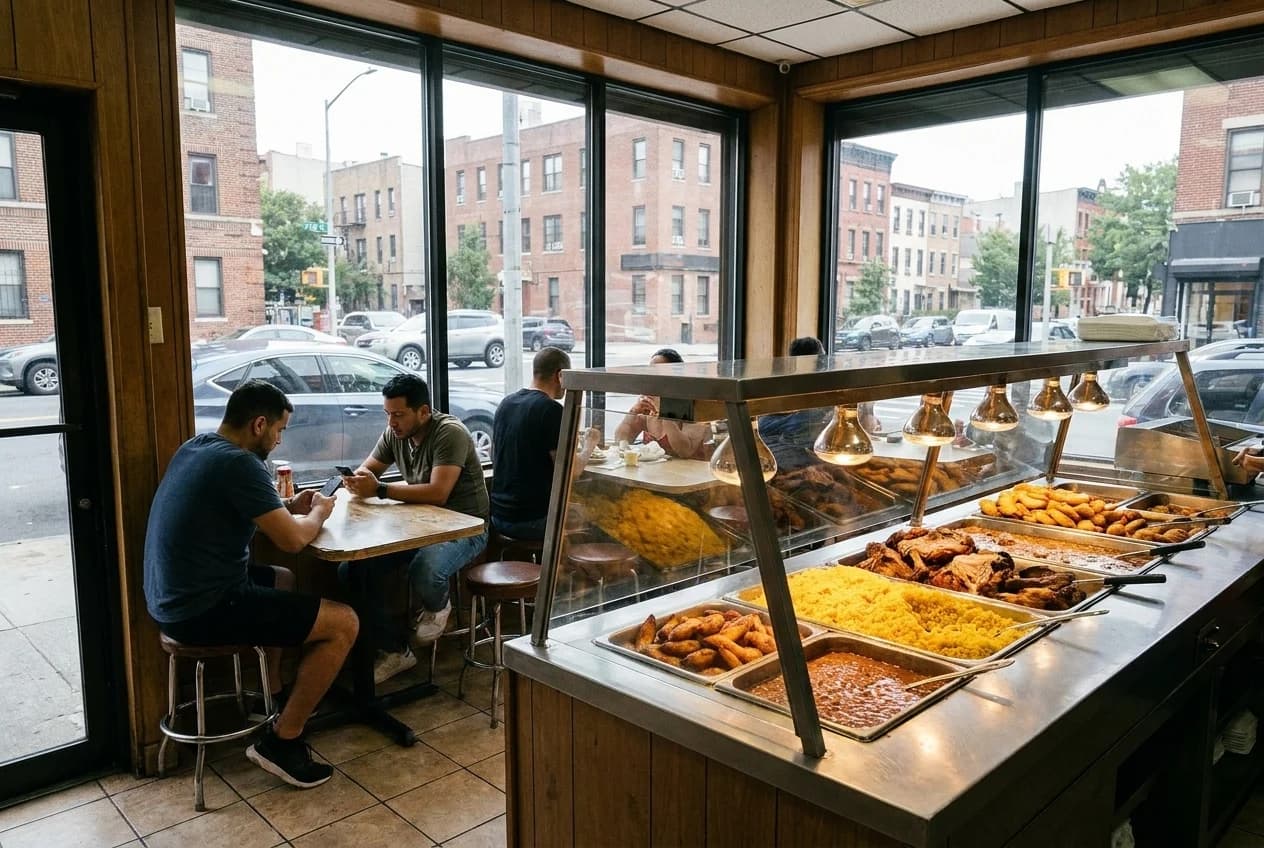
Twenty streets south, Lexington Avenue between roughly 27th and 28th does something similar at a smaller scale. Curry Hill is a compact run of South Asian restaurants, sweet shops and grocers - dozens of them inside a walk that takes under four minutes end to end. The concentration is the feature. You are not choosing between two Indian restaurants in a neighbourhood, you are choosing between a specific Gujarati thali, a specific South Indian dosa counter and a specific Pakistani grill within sight of each other, which is a completely different kind of decision and a much better one.
Clusters like this form for reasons that have nothing to do with food quality - immigration patterns, a cheap lease decades ago, one successful business that made the block legible to the next arrival. But once formed they are self-reinforcing, because specialists cluster where customers already know to look. The practical consequence is that a two-block run tends to be deeper than a two-mile spread, and it is worth reorganising a walk around that.
Restaurant Row exists because a mayor said so
The stretch of West 46th Street between Eighth and Ninth is worth knowing about for a slightly different reason. It became Restaurant Row by municipal decision - Mayor John Lindsay designated it in 1973, honouring the sixteen restaurants then on the block. Dozens operate there now, and the block still does the one job it was named for: feeding people on a clock, before a curtain.
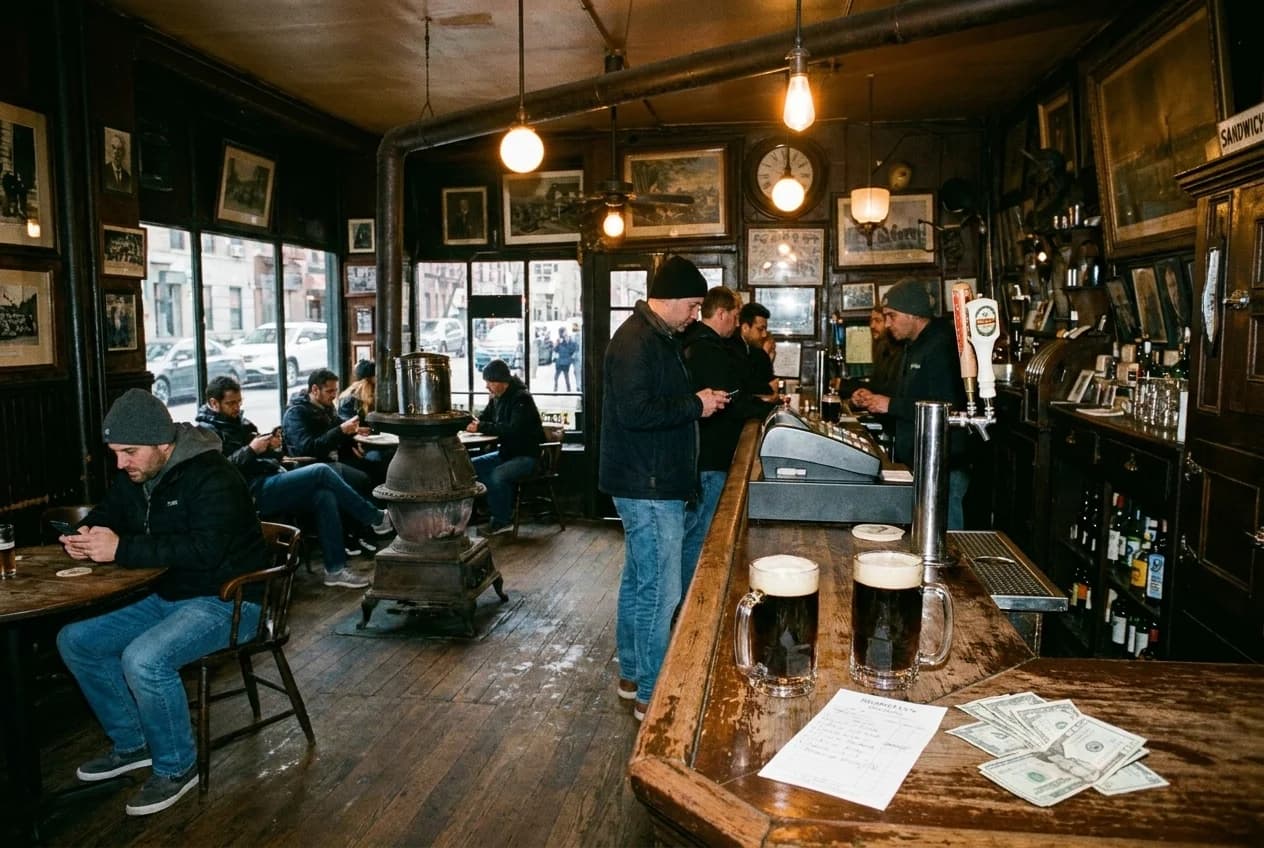
That last part matters more than the count. A block built around theatre timings runs a different service pattern from a block built around dinner. Kitchens there are set up to turn a table inside ninety minutes and to be genuinely calm at ten-fifteen at night, when most of Midtown has gone quiet and every good room downtown is full. If your evening has a hard start time in it, that operational fact is more useful than any ranking.
The dead ground is real and it is predictable
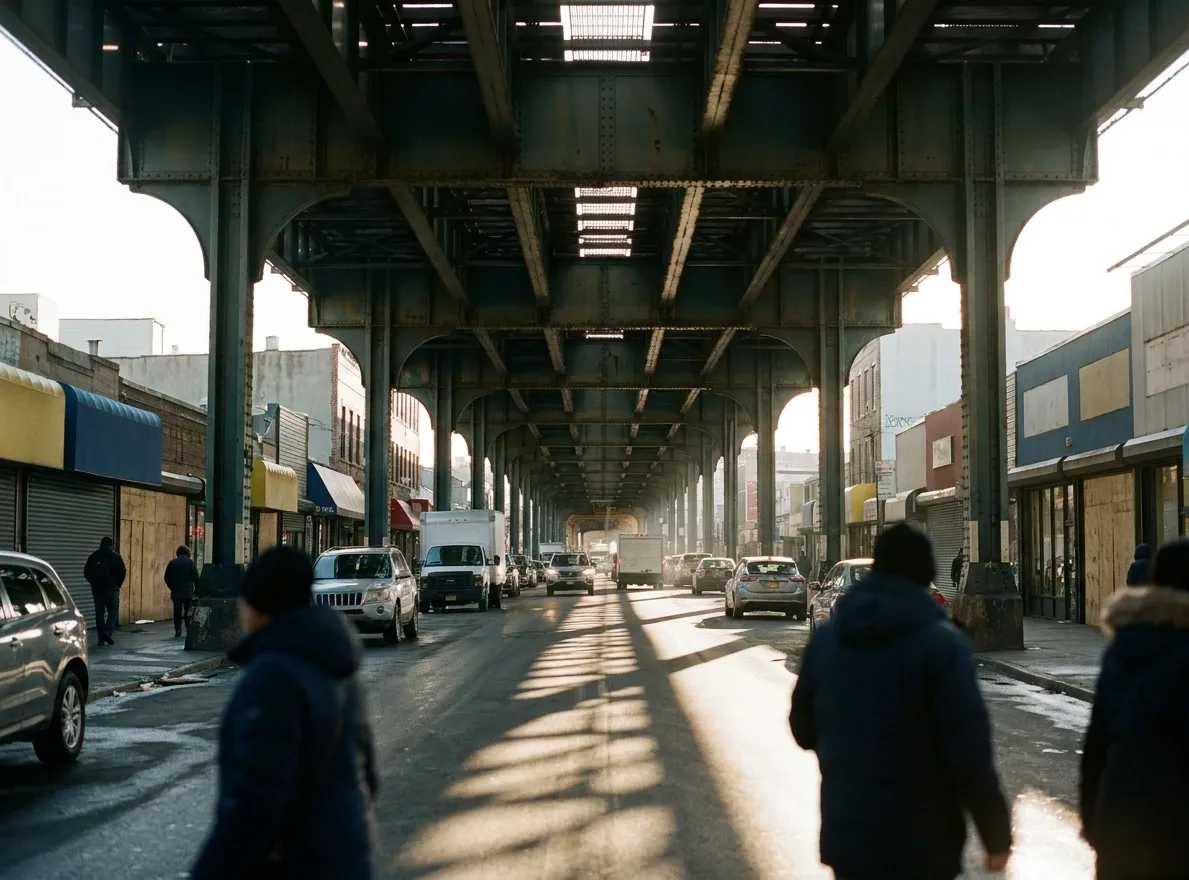
The corollary of clustering is that the space between clusters is mostly empty, and it is empty in patterns you can learn. Long stretches of the wide north-south avenues in Midtown are ground-floor bank branches, pharmacies, lobbies and chain coffee - frontage that is expensive, generic and turns over slowly. The eating tends to sit one block east or west of those avenues, on the narrower cross streets where rent drops and a small operator can survive.
Financial-district blocks empty out on weekends for the same structural reason: the demand was commuters, so Saturday service is thin and unpredictable even where the listing says open. And the immediate two or three blocks around a major tourist landmark are usually the weakest food in any direction, because those rooms are priced against footfall rather than repeat custom. None of this is a moral judgement about neighbourhoods. It is just where the incentives put the doors.
How to actually use a cluster map
The habit that works is to stop asking what is nearest and start asking which cluster you are closest to, then walk to it deliberately. In Manhattan the honest walking radius is bigger than people assume - fifteen north-south blocks is about three-quarters of a mile and takes fifteen minutes, and crosstown blocks are longer but there are far fewer of them. That radius will usually contain two or three genuine clusters, and picking the right one first makes every subsequent decision easier.
Two smaller rules. If a block has three restaurants doing the same regional cuisine within sight of each other, it is almost always a better bet than a block with one of everything, because the competition is specific rather than general. And if you are looking at an upper-floor room in a dense block, check the door before you commit - a stairway with eight small signs beside it is a good sign, and a stairway with none is worth a phone call first.
Practical notes
Korea Way, West 32nd Street between Fifth and Sixth Avenues: over a hundred Korean businesses on one block, a large share of them above street level, and the latest reliable service in Midtown. Curry Hill, Lexington Avenue between 27th and 28th: a four-minute walk containing dozens of South Asian restaurants, grocers and sweet shops. Restaurant Row, West 46th Street between Eighth and Ninth: designated by Mayor Lindsay in 1973 with sixteen restaurants, dozens today, and kitchens built around theatre timings rather than leisurely dinners.
One general note on hours. Cluster blocks tend to run later than their neighbourhoods and their listings, and single-outlet restaurants tend to close earlier than theirs. Neither error is random, and both are worth a check on the day rather than a guess from the map.
Tags: #RestaurantsNearMe #NYCFood #Koreatown #KoreaWay #CurryHill #RestaurantRow #Midtown #NewYorkCity #NeighborhoodGuide #WhereToEatNYC #ManhattanEats #NYCDining
All trademarks are the property of their respective owners.
Ask Karpo first
New York rewards knowing which way the density runs, and that is not something a radius search can tell you. Ask Karpo which cluster is closest to where you are standing, what is genuinely open on it at the hour you are asking, and whether the room you are walking towards is on the ground floor or three flights up.