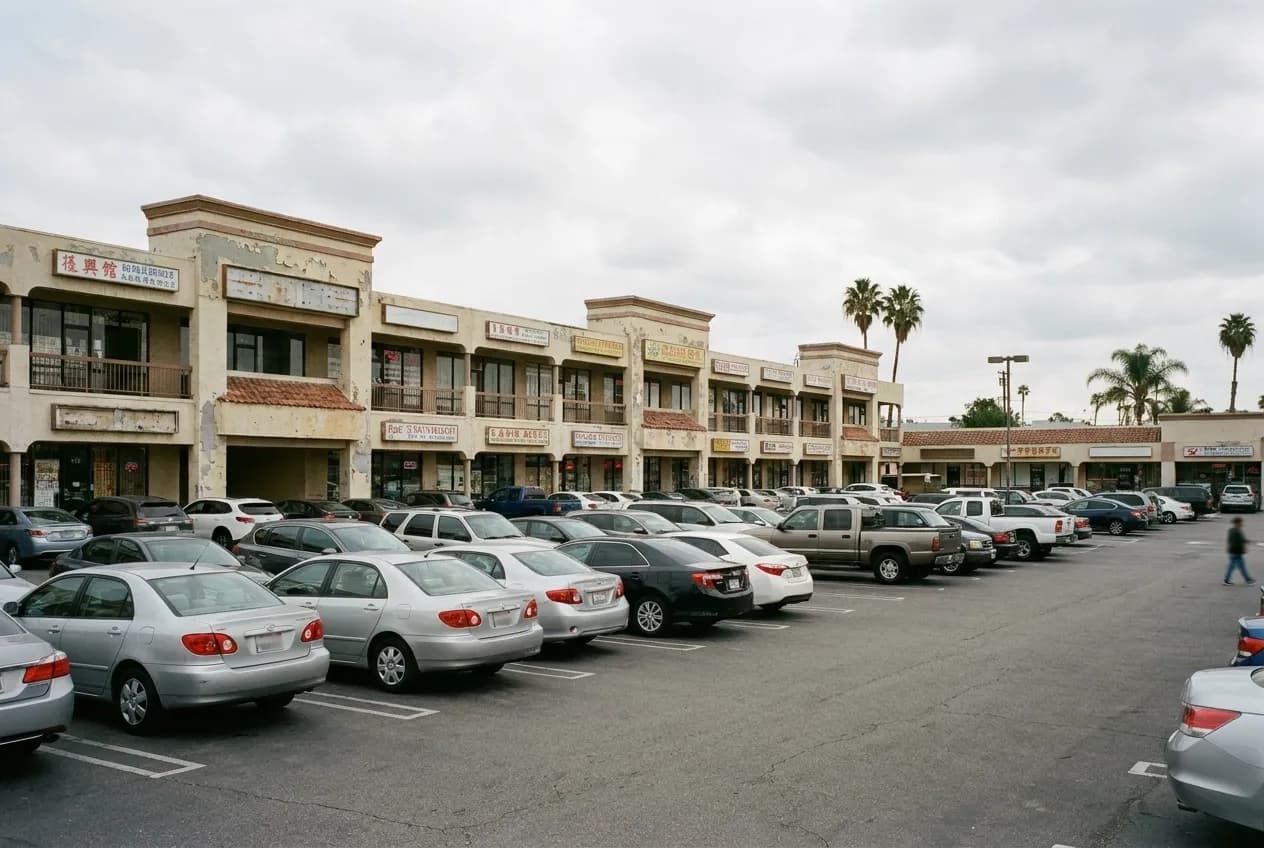
Los Angeles has a restaurant reputation built on celebrity chefs and coastal dining rooms, but the city's actual eating infrastructure is the strip mall. The gap between what visitors expect and what locals rely on is wide enough to drive through. The best cooking in the city happens behind hand-lettered signs in plazas anchored by coin laundries and tax preparers, and if you wait for a polished storefront you will eat worse and pay more for it.
Open the Karpo app right now and ask where the good strip mall clusters are within ten minutes of you. You'll get live routes, what's open this hour, and which plazas fill up before seven.
The strip mall is not a compromise. It is the format. Rent is lower, build-out costs are minimal, and the landlord does not care what language your menu is in. This is why the most accomplished cooks from Oaxaca, Sichuan, Tehran and Manila open here rather than on a corner lot with valet parking. The food is the point, and the plaza's anonymity is a feature. What looks like neglect from the car is actually a reliable signal system if you know how to read it.
The Myth: You Need a Recommendation
The prevailing belief is that you cannot find good food in Los Angeles without inside knowledge, a saved list, or a local friend. This is half true. You do need to know what you are looking at, but the information is on the street. The mistake is treating every unmarked plaza as equally opaque. They are not. Some have been serving the same neighborhood for twenty years. Others turn over every nine months. The difference is readable from the parking lot.
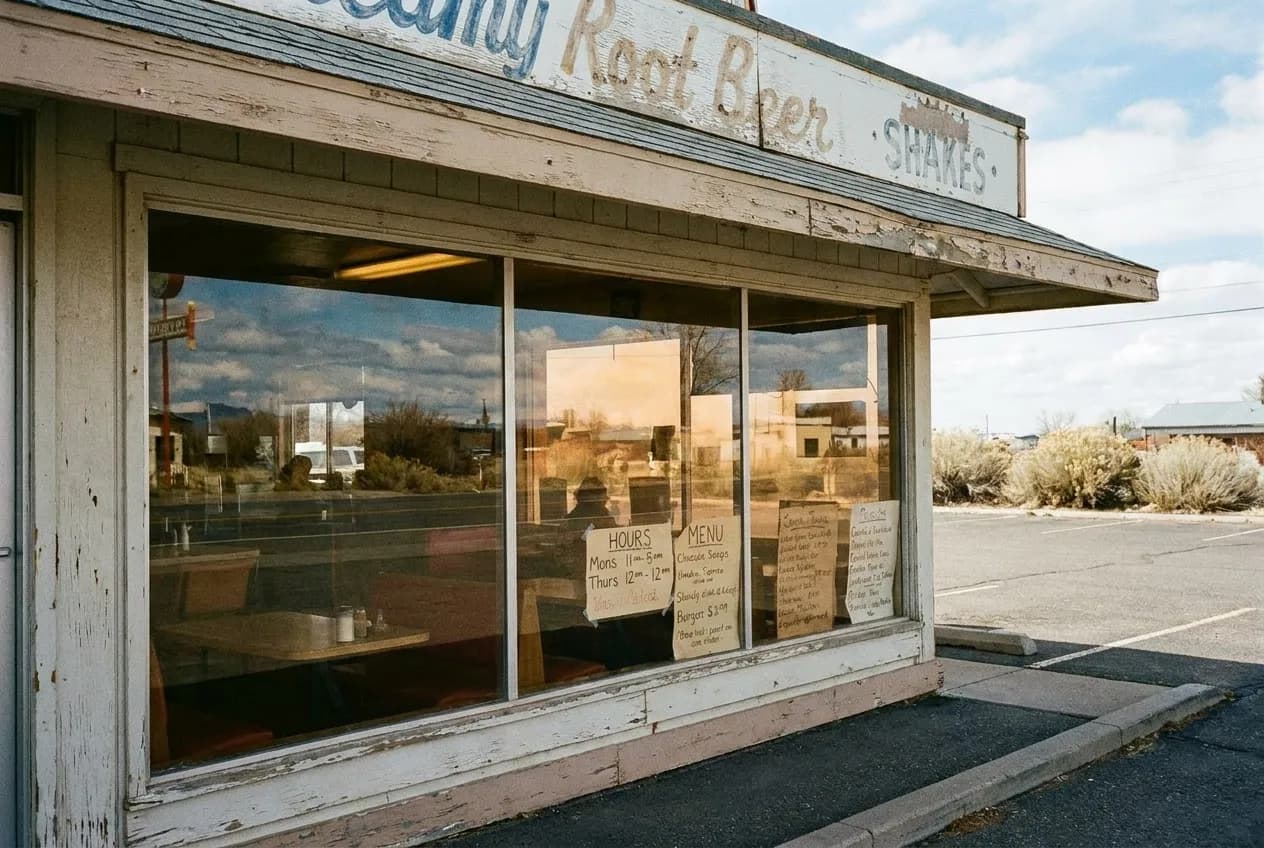
Start with the sign. If it lists the restaurant name in two or three languages, the kitchen is cooking for a specific community and the menu will reflect actual regional food rather than a concept. If the hours are printed on a piece of paper taped inside the window, the restaurant is new or the owners are still testing demand. If the sign is weathered but the windows are clean and the door is propped open during service, you have found a place with repeat customers. These are not secret indicators. They are just overlooked.
The neighboring tenants matter more than the restaurant's own frontage. A plaza with a busy Asian supermarket, a bakery that opens before dawn, and a phone repair shop that has been there for a decade is a plaza with foot traffic and spending. The restaurant in that row is cooking for people who live within two miles and return weekly. A plaza anchored by a shuttered Blockbuster and a vape shop with no cars is a different proposition. The food might still be good, but the odds are longer and the hours are unpredictable.
The Corridors That Concentrate Them
Strip malls are not evenly distributed. They cluster along specific corridors where immigrant communities have settled and commercial rents have stayed workable. You can drive east on Valley Boulevard from Alhambra through San Gabriel and Rosemead and pass a hundred serious restaurants in twenty minutes, almost all of them in squat stucco plazas with hand-painted signs. The same is true along sections of Western Avenue, Vermont Avenue, and Pico Boulevard west of downtown. These are not dining destinations in the conventional sense. They are working neighborhoods where the food happens to be exceptional because the customer base demands it.
The San Gabriel Valley corridor is the most discussed because the density is highest and the regional specificity is sharpest. You can eat Chengdu-style cold noodles, Hong Kong-style roast duck, and Taiwanese beef noodle soup within a three-block radius, and none of the restaurants will have a design concept or a publicist. The interior will be fluorescent-lit and the tables will be laminate, and the cooking will be more careful than what you find in restaurants that charge twice as much on the west side. This is not an accident. The rent structure allows the kitchen to focus on ingredients rather than buildout, and the customer base will not tolerate shortcuts.
Koreatown operates the same way, though the plazas are taller and the parking is worse. Olympic Boulevard and Vermont Avenue have the highest concentration, and the hours run later because the neighborhood works late. If you are looking at a plaza at nine on a weeknight and the lot is full, you have found a place that serves the people who live and work there rather than the people passing through. That is the meal you want.
Why the Interior Never Matches the Food
The disconnect between the dining room and the plate is deliberate. Strip mall restaurants do not spend money on interiors because the margin is in the kitchen. A new hood system costs more than new chairs, and the customer base is not selecting on ambiance. This is why you will walk into a room with folding tables and acoustic tile and eat one of the best meals available in the city. The budget went to the wok station and the fish supplier, not the lighting designer.
This also means the experience is more variable. Service can be minimal or distracted because the dining room is not the priority. Menus are often partial or translated unevenly, and the specials are sometimes only listed on a board in a language you do not read. None of this is hostile. It is efficient. The restaurant is running on narrow margins and the kitchen is doing the work that matters. If you want a polished dining room with a host stand and a wine list, you are shopping in the wrong format.
The flip side is that strip mall kitchens often cook more ambitious food than their interiors suggest. A Oaxacan restaurant in a Van Nuys plaza might be making its mole from scratch every morning and grinding its own masa, and the only indication will be the line at noon. A Thai restaurant in an East Hollywood mini-mall might be serving boat noodles and northern larb that you cannot find in any polished restaurant in Silver Lake. The interior tells you nothing about the cooking, and that is the point. You are there for the food, and the restaurant is not pretending otherwise.
How to Read the Street and Decide in Ten Seconds
The fastest read is the parking lot at the hour you are hungry. If it is noon on a weekday and the lot is full of work trucks and sedans with local plates, the food is reliable and the price is reasonable. If it is seven on a weekend night and there is no wait for a table, you are either early or the restaurant has a problem. A line out the door is not always a good sign—it can mean understaffing or a single viral post—but a steady flow of customers arriving and leaving within forty-five minutes is a sign of operational competence and repeat business.
The second read is the menu in the window. If it is printed in color on glossy paper with stock photos, the restaurant is probably new or aiming at a broader audience, and the food will be less specific. If the menu is laser-printed on plain paper or handwritten on a whiteboard, the kitchen is more likely to be cooking the food it knows rather than the food it thinks you expect. Look for prices that make sense for the neighborhood. If the entrees are twelve to eighteen dollars and the restaurant has been open for more than a year, the math is working and the food is probably worth your time.
The final read is your own judgment about whether you are willing to eat in a room that does not flatter you. Strip mall dining is transactional. You are there for the food, and the restaurant is there to serve it. If you need a designed experience or a dining room that photographs well, you will be disappointed. If you want to eat the most accomplished cooking available at a fair price, you will be satisfied. The choice is legible from the curb, and it takes less than ten seconds to make it.
Tags: #RestaurantsNearMe #LosAngelesEats #StripMallDining #SanGabrielValley #Koreatown #LAFoodScene #NeighborhoodGuides #LocalEats #AuthenticFood #LosAngelesRestaurants #WhereToEatLA #LADining #FoodCorridors #HiddenGems #StreetFood
Please drink responsibly. Must be of legal drinking age.
All trademarks are the property of their respective owners.
Ask Karpo first
Open the Karpo app and ask which strip mall plazas near you are busy right now. You will get live routes to the corridors that are actually open, what time the lunch or dinner rush peaks, and which blocks to start with when you are hungry and deciding from the car.


