The most expensive mistake people make when searching for restaurants near me in Los Angeles is trusting the reservation app. A screen full of red X marks does not mean the room is full. It means the *tables* are spoken for. Almost every serious dining room in LA holds back its bar seats and counter seats for walk-ins, which means the real availability map looks nothing like what you see on your phone. Those counter seats turn over differently, seat solo diners and pairs on a different cadence, and often deliver a better sight line to the kitchen or the bar program than the main floor. Learning to read a floor plan and knowing when to arrive turns a night of scrolling into a night of eating.
Ask Karpo which counters in your neighborhood are seating walk-ins right now and what time the next turn opens up.
How to Tell If a Room Has a Real Counter
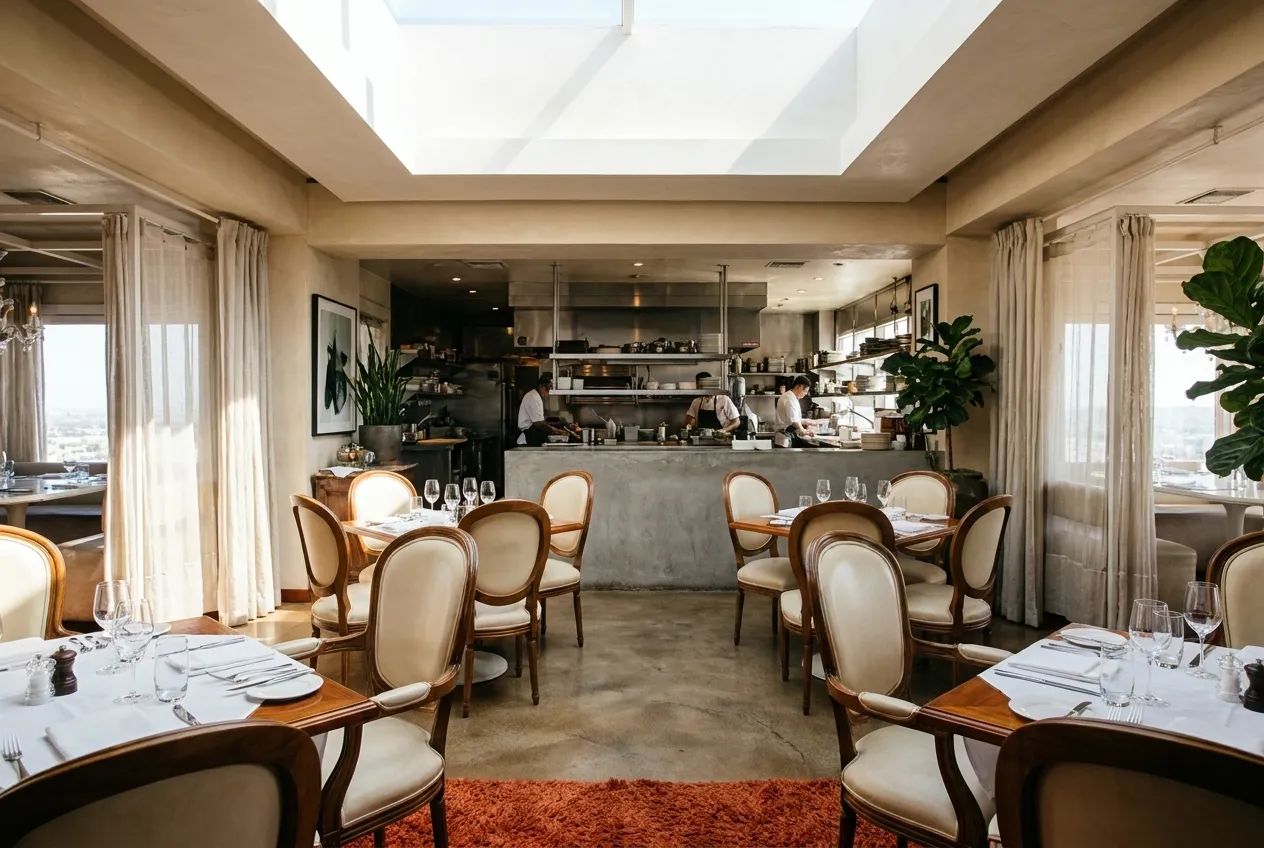
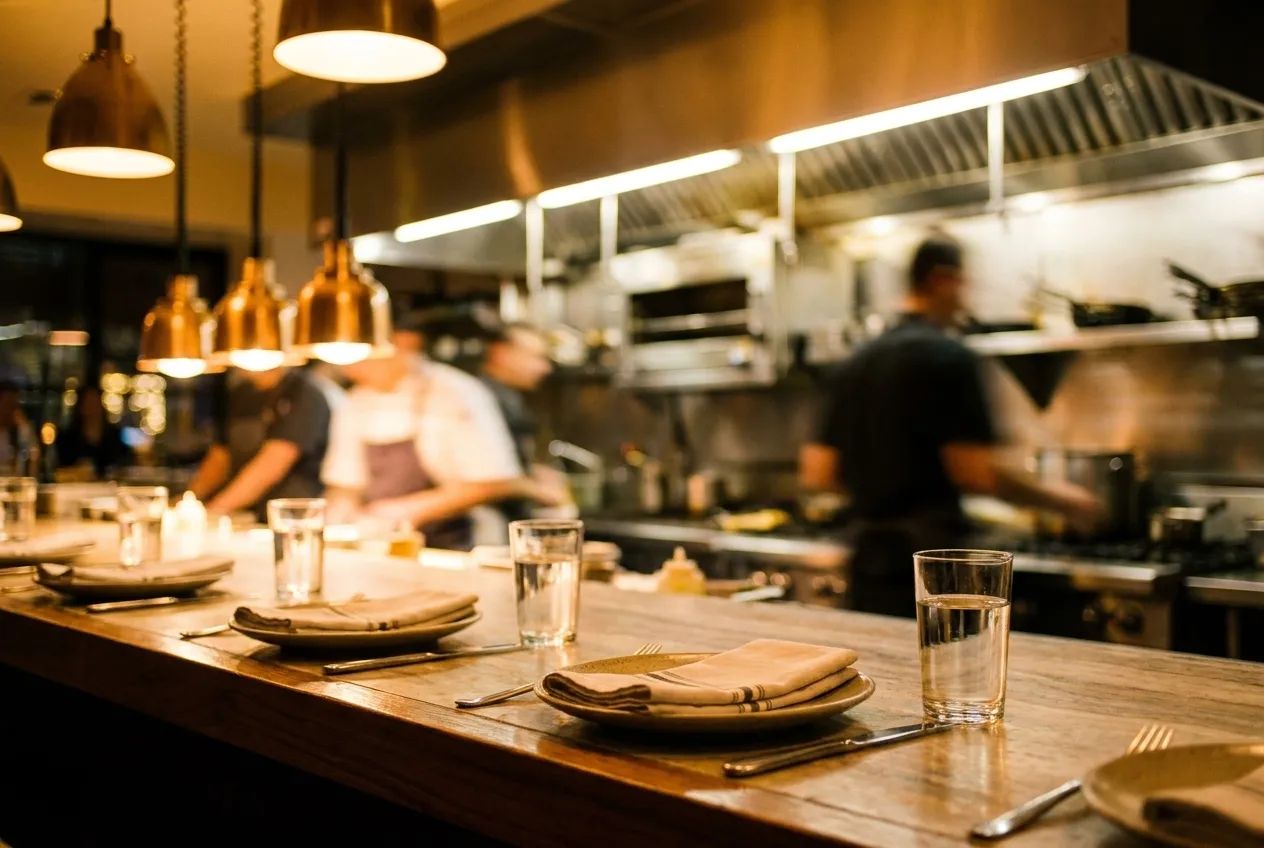
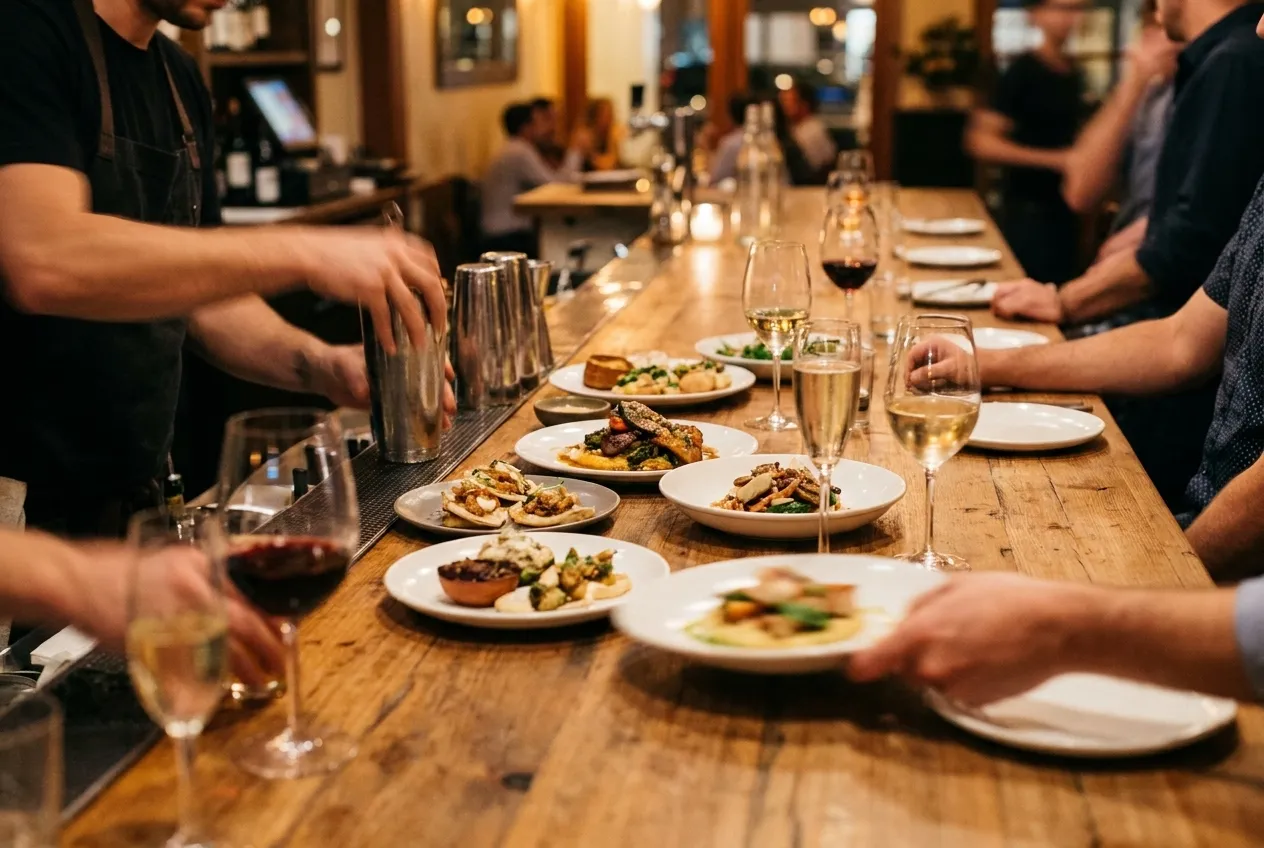
Not every bar is a counter you can eat at. The distinction matters because a service bar with no seats does nothing for you, and a cocktail bar with four stools and no food service is a different play. What you want is a counter with dedicated seats, a sight line to the kitchen or the bartender working, and a menu that matches the dining room. In LA this setup appears most often in neighborhood restaurants with open kitchens, wine bars that added a serious food program, and any room where the chef or owner worked in Japan or spent time at the French Laundry.
Look for photos that show a long counter with built-in seating, not loose stools tucked against a wall. The counter should run parallel to the kitchen line or the back bar, and the seats should face the action. If the restaurant's website or social feed shows plates being passed directly over the counter or a chef talking to seated guests, that is a real counter. If the photos show only tables or a bar shot from behind the bartender with no customers visible, the counter either does not exist or does not get used for full service.
Floor plans posted for private events or accessibility compliance often show the counter layout clearly. A straight or L-shaped bar with eight or more seats is almost always available for walk-ins. A small bar with four seats in a room that seats sixty is usually reserved for drinkers waiting for their table. The ratio matters. In West Hollywood, Los Feliz, Silver Lake, and Culver City, where neighborhood restaurants skew small and chef-driven, a ten-seat counter in a forty-seat room is the tell that walk-ins are part of the model.
First Turn Versus the Late Gap
Counters in LA seat on two rhythms. The first turn starts when the kitchen opens, usually five-thirty or six on weeknights, five on weekends. Doors unlock, and the counter fills within twenty minutes. If you want a first-turn counter seat, arrive fifteen minutes before the posted opening time. The host will see you waiting and seat you as soon as the kitchen is ready to fire. This is the move for solo diners and anyone who wants to be out by eight.
The late gap opens between eight-thirty and nine-thirty, after the early reservations finish and before the room closes. Most counters turn at least once during a weeknight service, sometimes twice on weekends. The gap is when the first-turn guests pay and leave, and the host has not yet cut the floor. Arriving at eight-forty-five on a Wednesday or nine-fifteen on a Saturday puts you in position for that second seating. The kitchen is warm, the bar is in rhythm, and you are not fighting the door crowd.
The gap does not work everywhere. Restaurants that run one long seating from six to ten—common in Koreatown, downtown, and parts of the Eastside—do not turn their counters the same way. In those rooms the counter is either open when you arrive or it is not. The first-turn strategy is the only strategy. But in neighborhood spots west of La Brea and through the Eastside, the gap is real and predictable.
How Solo Diners and Pairs Get Seated Differently
A solo diner asking for a counter seat will almost always get one before a party of four asking for the same thing. The math is obvious but the implications are not. Counters are linear, and hosts Tetris them in real time. One seat is easier to find than two adjacent seats, and two is easier than four. If you are alone, you can ask for a counter seat even when the host says the wait is forty-five minutes for a table. The counter wait is usually fifteen minutes or less.
Pairs get seated almost as quickly as solo diners if they are willing to sit anywhere along the counter. Asking for two seats together at the end or in the middle, where you can see the pass or the bartender, adds time to the wait. Saying you will take any two seats cuts it back down. Groups of three or four rarely get counter seats unless the restaurant has a long straight counter with no corners, because hosts do not want to break up a four-top reservation to seat a walk-in party that could take a table.
Solo diners also get preferential treatment during the late gap. A single seat opens up faster than two or four, and the kitchen would rather keep firing than stand down early. If you are eating alone and you arrive during the gap, you are often seated within ten minutes even in a busy room. Pairs should expect fifteen to twenty minutes. Four should reconsider the strategy entirely and look for a bar with a high-top or a patio table instead.
Etiquette That Gets You a Second Round Instead of a Polite Bill
Counter service in LA is participatory. The bartender or the chef is working two feet from your face, and the transaction is more direct than it is at a table. Making eye contact when you arrive, saying thank you when a plate lands, and asking one or two questions about what you are eating signals that you understand the format. Sitting in silence while scrolling your phone signals the opposite. You will get fed either way, but the former gets you better pacing and the offer of a second drink or a dessert menu. The latter gets a check as soon as you finish your entree.
Pacing matters more at the counter than at a table. You are in the kitchen's sight line, and the chef can see when you are ready for the next course. If you want to slow down, say so. If you want to keep moving, finish what is in front of you and the next plate will appear. Asking to hold a course while you finish your wine is fine. Asking the bartender to time your drink to arrive with your entree is fine. What does not work is ignoring the rhythm and then complaining that the food came too fast.
Tipping at the counter follows table-service norms in LA, which means twenty percent on the total before tax. Some counters pool tips with the kitchen, some do not, but the baseline is the same. If the bartender or chef is talking you through the menu, making adjustments for allergies, or pouring you a taste of something off-menu, twenty-five percent is the move. That discretionary five percent is what turns you from a walk-in into a regular, and regulars get the call when a reservation cancels or a new dish comes off the line.
When the obvious choice is full or closed, the counter strategy still works if you widen the search radius by ten minutes. Most LA neighborhoods with a destination restaurant also have two or three smaller spots within walking distance that hold counter seats. If the room you wanted in Los Feliz is booked, the wine bar three blocks east probably is not. If the Culver City spot is closed Monday, the bistro two streets over is open and has six counter seats facing the kitchen. The reservation app will not tell you this, but the walk will.
Tags: #LosAngelesRestaurants #RestaurantsNearMe #LADining #CounterSeats #WalkInDining #LosAngelesFoodie #LAEats #BarSeating #DiningAloneLA #NeighborhoodRestaurants #LAFoodScene #RestaurantStrategy #KitchenCounter #LANightOut #LocalDining
Please drink responsibly. Must be of legal drinking age.
All trademarks are the property of their respective owners.
Ask Karpo first
Ask Karpo which counters near you are seating walk-ins right now, whether the first turn or the late gap is the better play tonight, and how long the walk is from where you are. The Karpo app tracks real-time counter availability and kitchen hours across LA, so you know before you leave whether to head out now or wait thirty minutes.