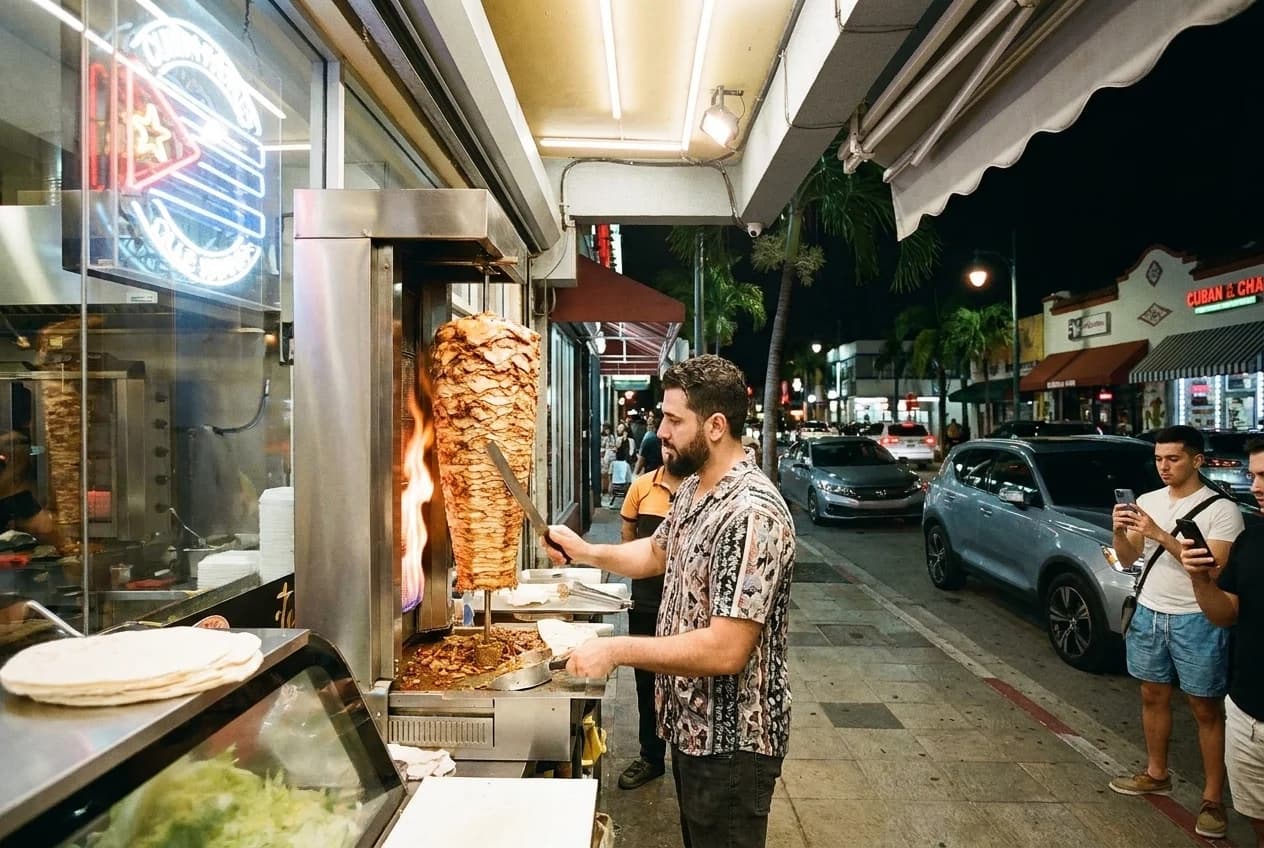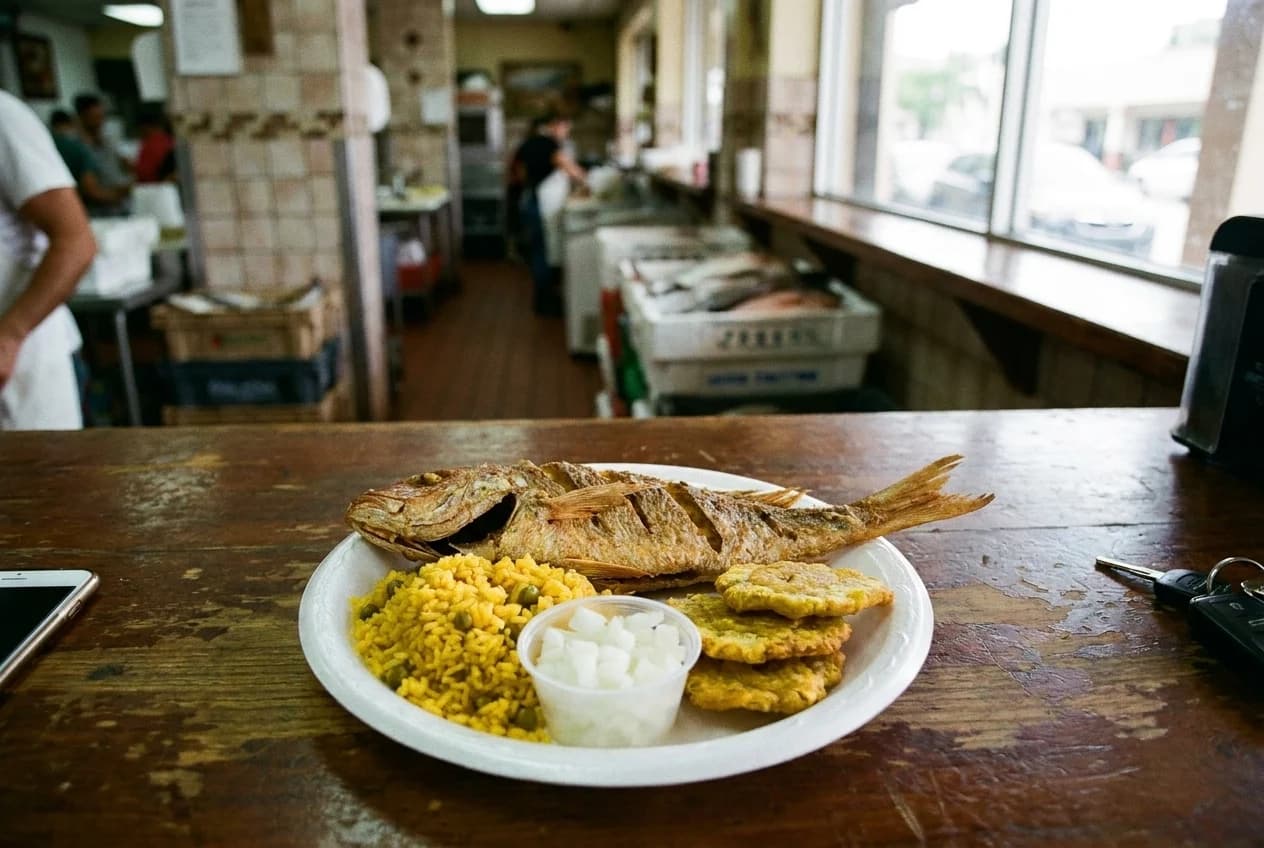
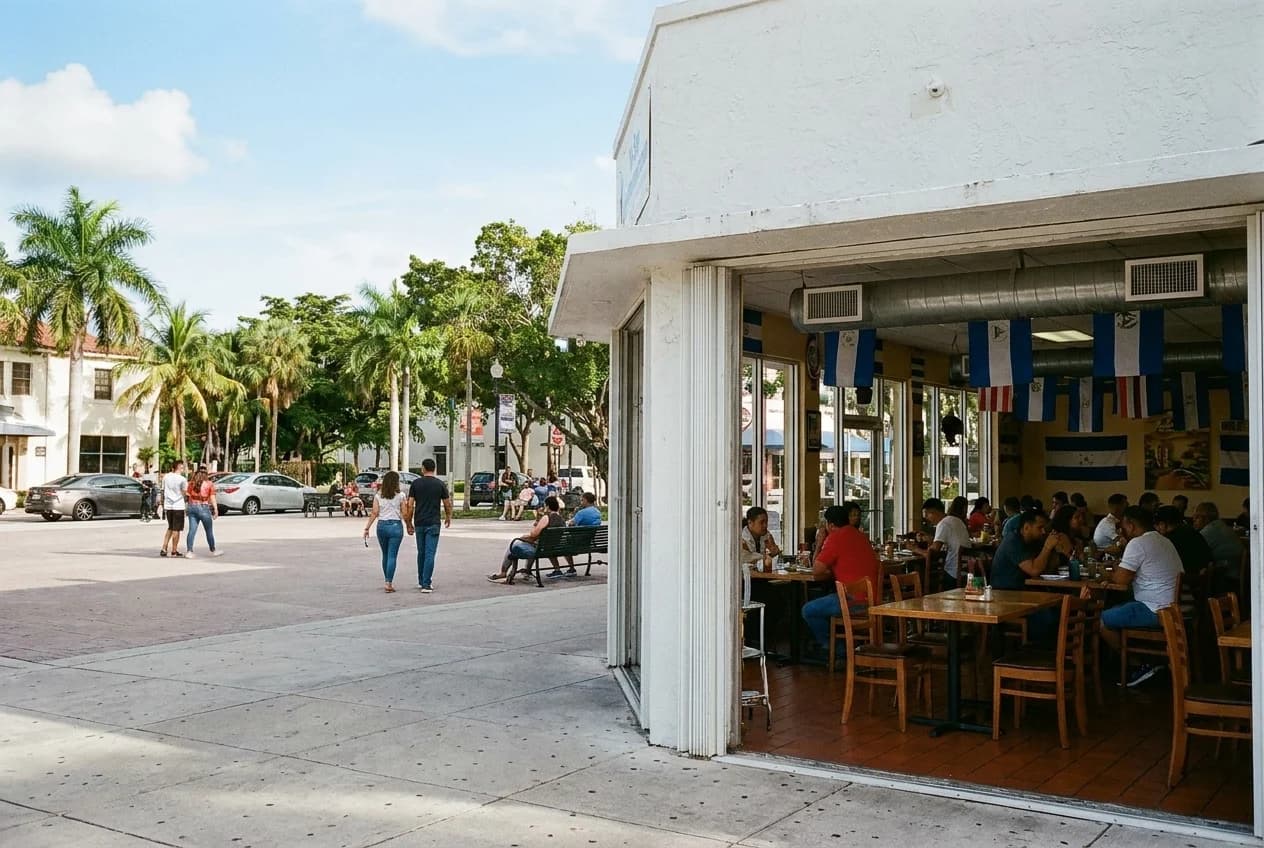
When you search for restaurants near me in Little Havana, the top results are Cuban cafés serving medianoche sandwiches and ventanita cortaditos. But the neighbourhood's majority population has been Nicaraguan, Honduran, and Salvadoran since the mid-nineties, and the Central American kitchens—fritangas, baleada counters, pupuserías—operate on different hours, different price points, and different ordering conventions. They open earlier, close later, and charge less. The food sits in steam tables at Nicaraguan fritangas, comes off a griddle at Honduran counters, and arrives with a cabbage slaw called curtido at Salvadoran pupuserías. The menus are often not translated. The workers speak Spanish. The regulars point at what they want.
Karpo maps the fritangas, baleada counters, and pupuserías within walking distance of wherever you are in Little Havana, with current hours and the dishes regulars order. Ask about a specific cuisine or let Karpo route you to three in one morning.
The Nicaraguan fritanga counter
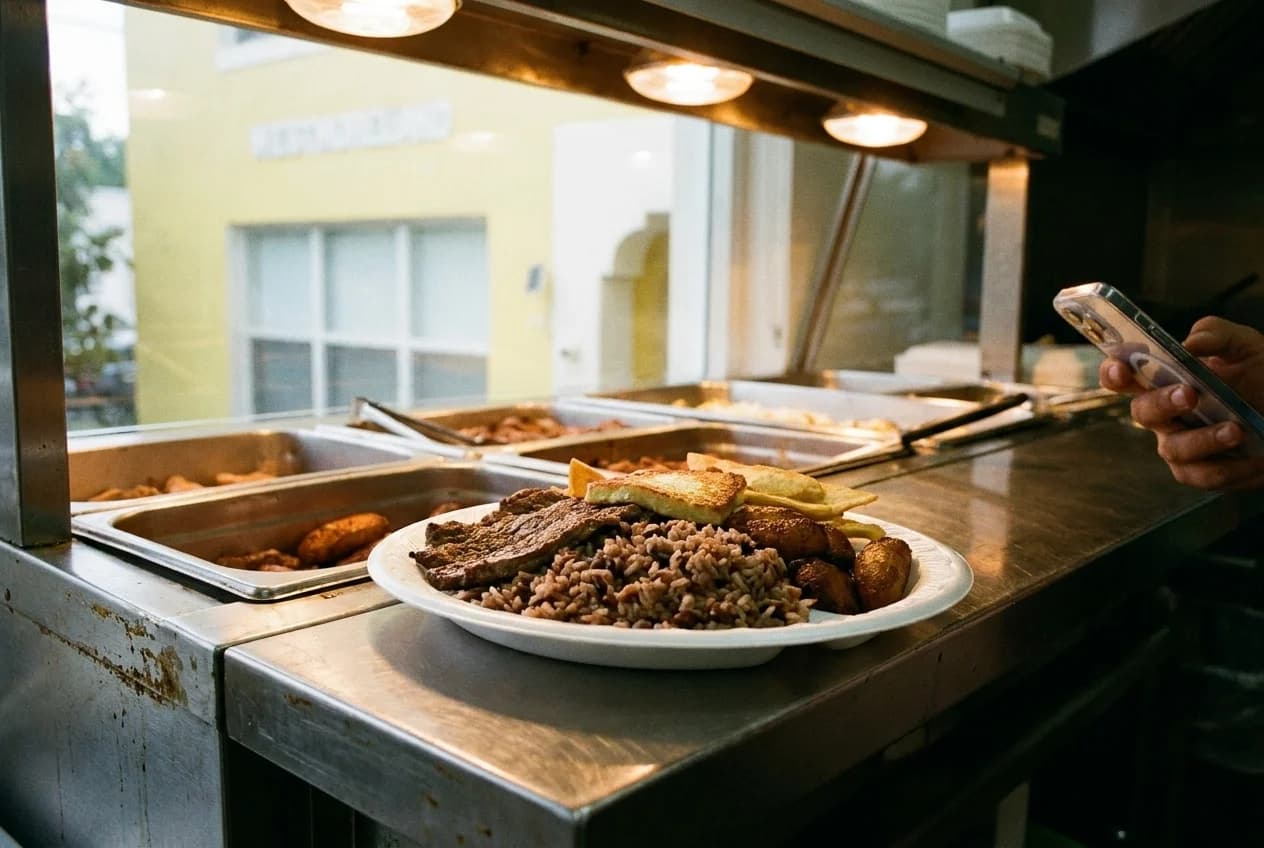
A fritanga is not a restaurant in the seated-service sense. It is a steam-table counter where you point at what looks good: gallopinto, carne asada, queso frito, maduros, yuca frita, tajadas. The food sits in hotel pans under heat lamps. You ask for a plate, the worker loads it, you pay at the register. Most fritangas open by six in the morning and close by nine or ten at night. Some do not label the dishes. You point and nod.
Fritanga La Leonesa at 2361 NW 7th Street runs from five in the morning until ten at night every day. The gallopinto—rice and beans fried together with onion and pepper—comes with a choice of meat. The queso frito is a block of salty white cheese, deep-fried until the outside crisps and the inside stays soft. A full plate with two sides runs eight to twelve dollars. The workers will reheat anything on request. There is no table service. You carry your own tray.
Rinconcito Nicaragüense at 1661 SW 8th Street operates as a sit-down restaurant but keeps the fritanga steam-table tradition alive in its lunch service. The counter displays gallopinto, carne asada, pollo frito, and tajadas under heat lamps from eleven in the morning through early evening. A full lunch plate with rice, beans, meat, and two sides runs nine to thirteen dollars. The dining room has table service for dinner, but the lunch counter operates on the point-and-order model. The restaurant is open seven days a week, closing around nine or ten at night depending on the day.
Honduran baleadas and why they cost three dollars
A baleada is a thick flour tortilla folded over refried beans, crema, and crumbled cheese. The sencilla version is just beans, crema, and cheese. The especial adds scrambled egg, avocado, and sometimes meat. They are made to order on a flat griddle. Most Honduran counters charge between three and five dollars for a sencilla, five to eight for an especial. They are breakfast food but available all day.
Típico Hondureño at 3002 NW 7th Avenue is open from six in the morning until seven at night on weekdays, with no printed menu and no signage. You walk to the counter and point at what you want or ask for a baleada sencilla. The kitchen makes them fresh. The soups—sopa de mondongo, sopa de res—are ladled from stock pots and cost four to six dollars. The place operates as a takeaway counter with a few stools. Most customers order in Spanish. If you do not speak Spanish, pointing works.
Paseo Catracho at 824 SW 8th Street serves baleadas and pupusas—the Salvadoran corn-dough pockets filled with cheese, beans, or pork. It is open from ten in the morning until eleven at night on Fridays and until ten on other days. The baleadas cost around four dollars. The pupusas are three for five dollars or six for nine dollars, depending on filling. The restaurant has table service, unlike the Nicaraguan fritangas, and the menu is printed in Spanish with some English.
Salvadoran pupuserías and the curtido rule
A pupusa is a hand-pressed corn tortilla stuffed with cheese, refried beans, chicharrón, or loroco—a Central American flower bud. They are griddled until the outside crisps and the cheese melts. They come with curtido, a lightly fermented cabbage slaw dressed in vinegar, and salsa roja, a thin tomato sauce. You eat them with your hands. The curtido is not optional; it cuts the richness of the cheese and pork.
Yo Soy Centroamericano at 1351 SW 1st Street opened in 2024 and serves Salvadoran, Honduran, and Nicaraguan dishes. The pupusas are made to order and cost around two dollars each. The carne asada plate is eight dollars. The restaurant is open from six in the morning until nine at night Monday through Wednesday, and until ten-thirty Thursday through Saturday. Sunday hours start at seven. There is a parking lot behind the building. The menu is in Spanish, with photographs on the wall. The dining room is air-conditioned and larger than most fritangas.
Pupusería y Restaurante San Miguel at 1516 SW 8th Street specializes in Salvadoran pupusas and operates from early morning until late evening seven days a week. The pupusas cost between two and three dollars depending on filling. The restaurant makes curtido fresh daily and serves it in small bowls alongside salsa roja. The menu includes larger plates—carne asada, pollo guisado, yuca con chicharrón—that run eight to twelve dollars. The dining room has booths and table service, and the kitchen will make pupusas to order even during slow afternoon hours.
The demographic engine behind the kitchens
Little Havana has been majority Central American since the nineteen-nineties. The Nicaraguan population grew after the Sandinista revolution and the Contra war. Hondurans and Salvadorans arrived in waves through the nineteen-eighties and two-thousands, many as economic migrants and some as asylum-seekers fleeing gang violence. The Cuban population remains significant, but the neighbourhood's restaurant economy now reflects the newer immigration.
The fritangas and baleada counters serve the workers who live in the interior streets west of SW 12th Avenue, where rents have stayed lower than the Calle Ocho corridor. These are breakfast-and-lunch places, not dinner destinations. They open early because their customers work construction, landscaping, and service jobs that start at seven or eight in the morning. The ten-dollar lunch plate is designed to fuel a physical work day. The three-dollar baleada is a to-go breakfast eaten in a car or on a job site.
What to order when the menu is not translated
If the menu is only in Spanish and you do not speak Spanish, look for these words: gallopinto is rice and beans, carne asada is grilled beef, pollo asado or frito is chicken grilled or fried, tajadas are fried plantain slices, maduros are sweet plantains, yuca is cassava root fried or boiled, queso frito is fried cheese. Mondongo is tripe stew. Sopa de res is beef soup. Baleada is the Honduran bean tortilla. Pupusa is the Salvadoran stuffed corn cake. Curtido is the cabbage slaw that comes with pupusas.
At a fritanga, point at two or three items in the steam table and say 'plate' or 'plato'. The worker will load a styrofoam container. At a baleada counter, say 'baleada sencilla' for the plain version or 'baleada especial' for the version with egg and avocado. At a pupusería, order by filling: 'queso' is cheese, 'frijol' is beans, 'chicharrón' is pork, 'revueltas' is mixed. Three pupusas is a standard order. The curtido and salsa come automatically.
Practical notes
Fritanga La Leonesa, 2361 NW 7th Street, opens at five in the morning every day and closes at ten at night. A full plate runs eight to twelve dollars. Rinconcito Nicaragüense, 1661 SW 8th Street, serves fritanga-style lunch from eleven in the morning, closing around nine or ten at night. Típico Hondureño, 3002 NW 7th Avenue, is open six in the morning to seven at night, no menu, counter service only. Baleadas cost three to five dollars. Paseo Catracho, 824 SW 8th Street, serves baleadas and pupusas from ten in the morning until eleven at night on Fridays, ten on other nights. Yo Soy Centroamericano, 1351 SW 1st Street, opens at six or seven depending on the day and closes at nine or ten-thirty. Pupusería y Restaurante San Miguel, 1516 SW 8th Street, operates early morning until late evening seven days. Pupusas are around two to three dollars each. Most of these places take cash; some take card. None take reservations. The lunch rush is noon to one-thirty.
Tags: #LittleHavana #CentralAmericanFood #NicaraguanRestaurants #HonduranFood #SalvadoranFood #Fritanga #Baleadas #Pupusas #MiamiRestaurants #CalleOcho #GalloPinto #QuesoFrito #Curtido #SteamTable #CounterService
All trademarks are the property of their respective owners.
Ask Karpo first
Ask Karpo to map the Nicaraguan fritangas, Honduran baleada counters, and Salvadoran pupuserías within ten minutes of your current location in Little Havana, filtered by what opens before seven in the morning or what serves pupusas after nine at night. Karpo lists current hours, price ranges, and whether the menu is translated, and will route you to two or three in sequence if you are comparing.