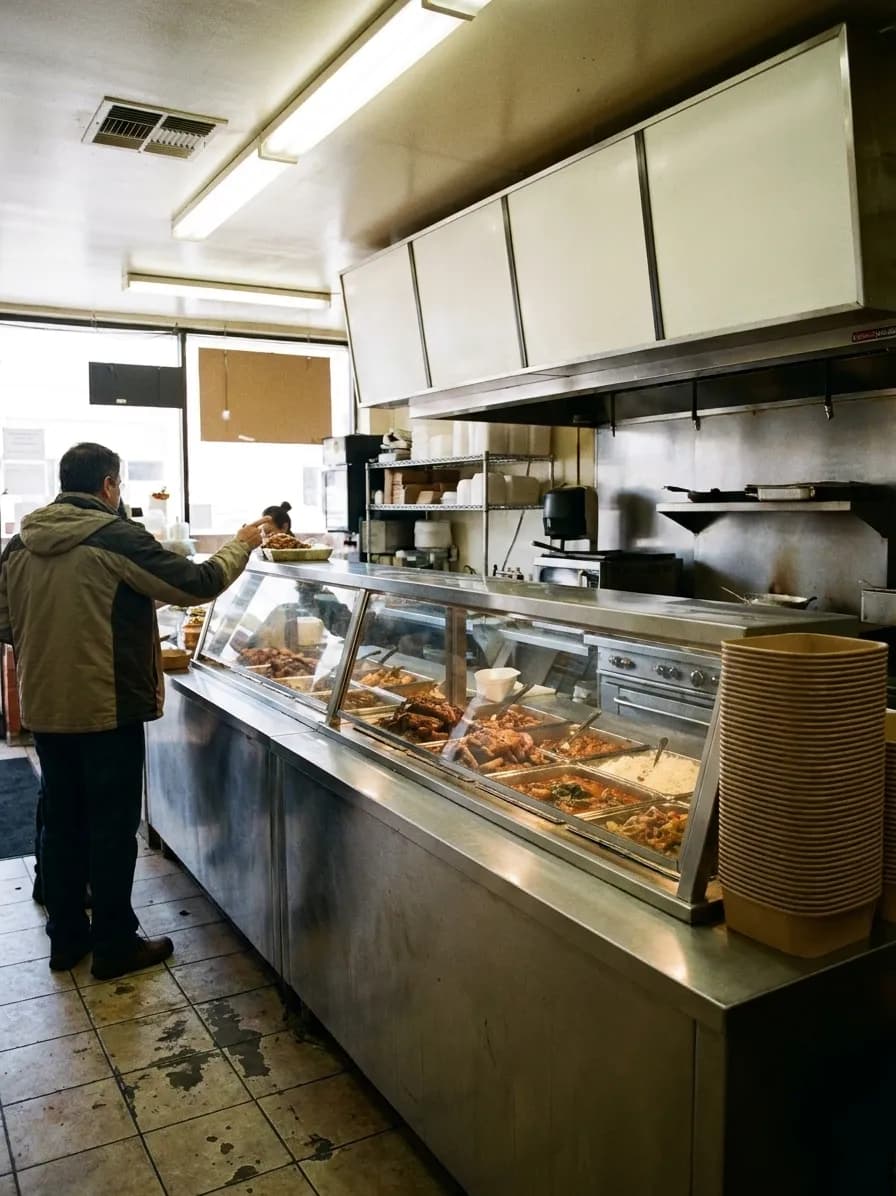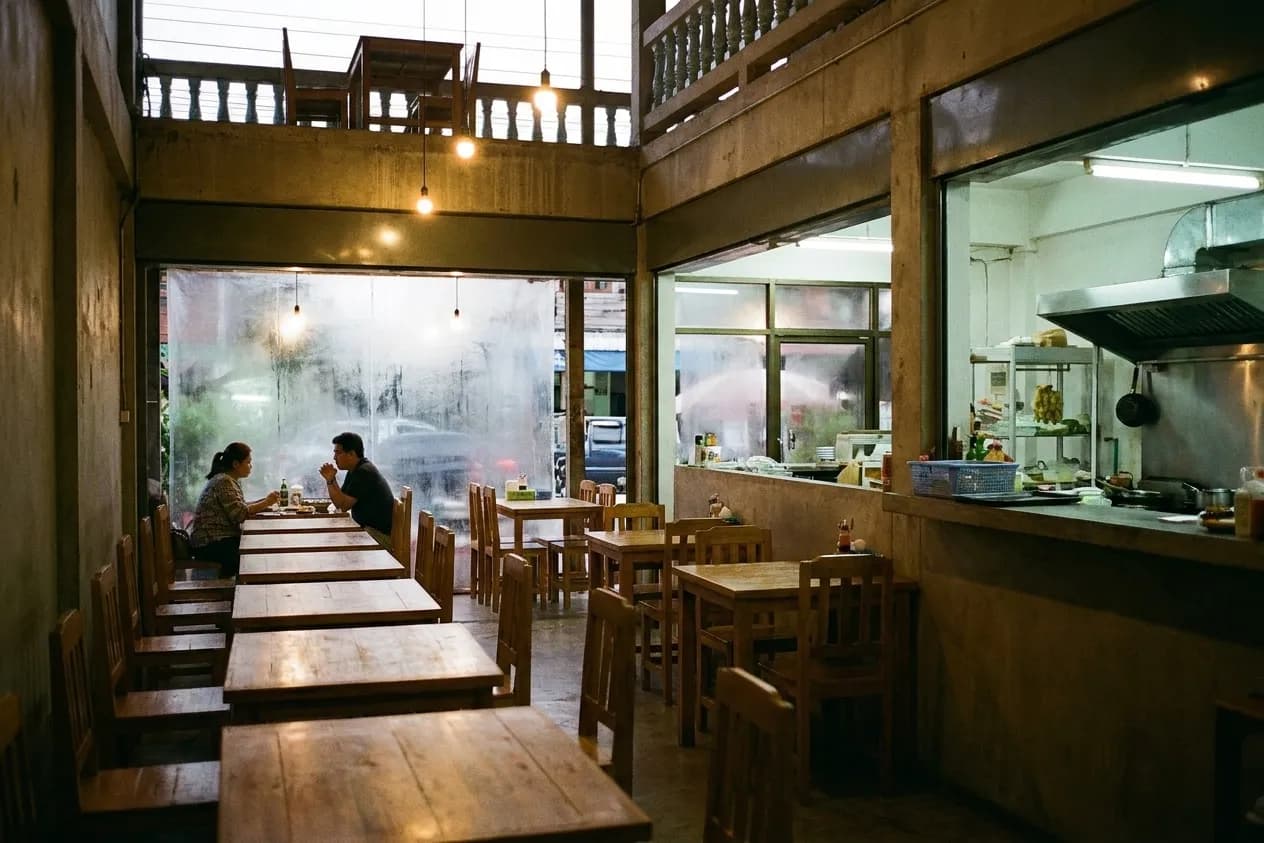
Forty dollars for two people is not a lot of money in San Francisco, and it is enough to eat genuinely well here — just not anywhere. The bill in this city is decided by four structural things that have nothing to do with how good the food is: what you drink, how the menu is portioned, when you go, and what the restaurant is paying in rent. Get those four right and a very large part of the city's restaurant stock comes into range. Get them wrong and forty dollars will not cover two entrées and a tip in a mediocre room.
Two people under forty dollars in this city is achievable at a lot of very good restaurants and impossible at a lot of mediocre ones. Tell Karpo the number and it will work backwards from the bill instead of from a rating.
Drink is the first and largest decision
Two glasses of wine at San Francisco prices is fifteen to twenty-four dollars — half the budget, before food. The restaurants where forty dollars works for two are almost always ones where you drink tea, water, a soft drink or nothing. This is not a deprivation argument. It is an observation that the same money buys either two drinks and two small plates, or a full meal for two with tea, and the second is more food and more of an evening.
Shared-plate cuisines do the arithmetic for you
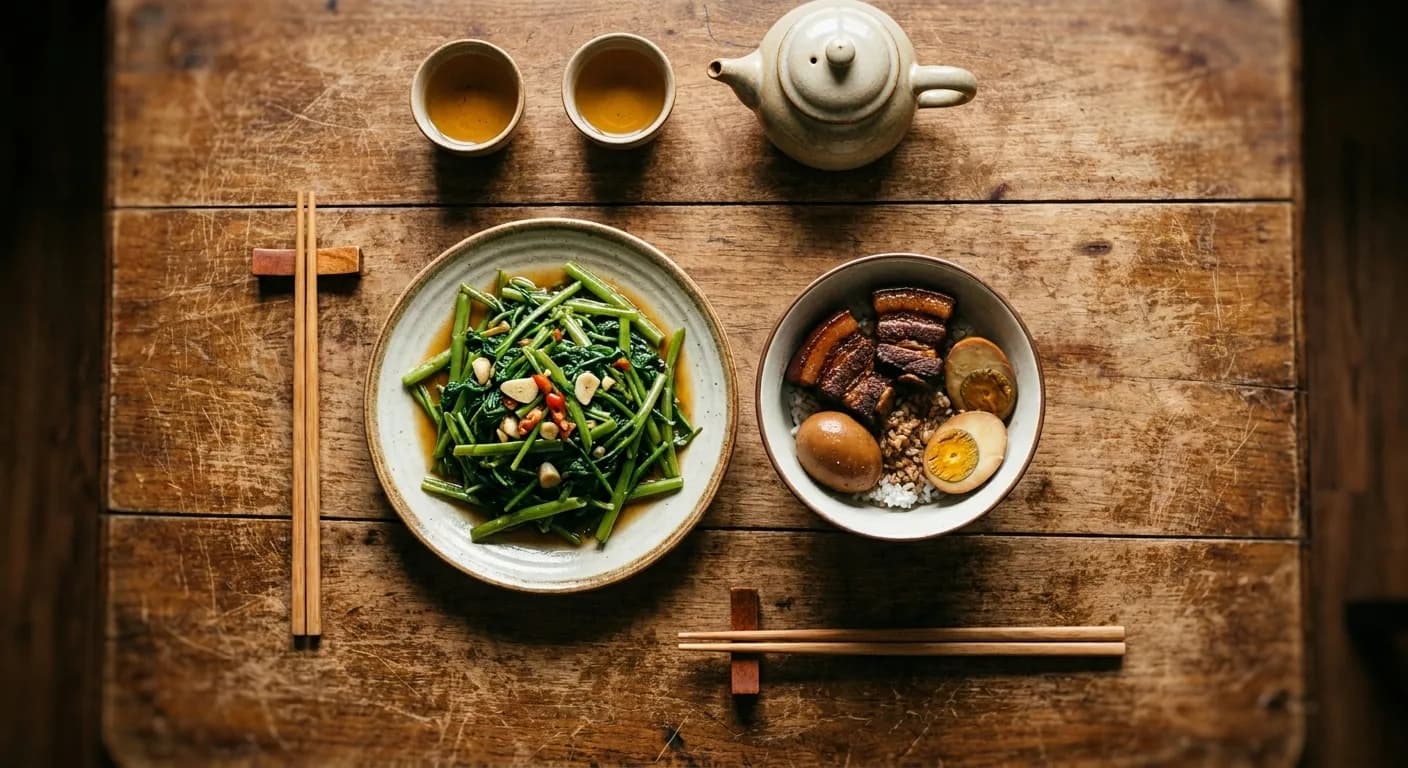
A menu built around dishes meant to be shared is structurally cheaper for two people than a menu of individual entrées, because you are buying the amount of food you need rather than two of a fixed unit. Cantonese, Vietnamese, Thai, Mexican, Salvadoran, Burmese and Korean kitchens across this city all work this way, and two dishes and rice between two people frequently lands between twenty-four and thirty-two dollars before tip. That is the core of how this budget works.
Time of day changes the same kitchen's prices
Lunch specials, early set menus and happy-hour food menus are the same cooking at a different price, and San Francisco has all three in quantity. A restaurant that is firmly out of range at eight on a Saturday can be comfortably inside it at noon on a Wednesday. If the budget matters more than the timing, moving the meal is the single most effective adjustment available.
Rent geography, which is the honest explanation
Restaurants pass through what they pay for space. The neighbourhoods where forty dollars for two is routine — the outer Richmond and Sunset, the Excelsior, parts of the Mission and Chinatown — are the ones with lower commercial rents and long-established community kitchens. Downtown, the waterfront and the newer development corridors are not worse-value in the sense of being greedy; they are simply paying more before a single plate goes out. Travelling twenty minutes on a bus is worth about a third of the bill.
The three additions that break the budget
Tip is not optional and should be in the number from the start — forty dollars all-in means roughly thirty-two on the menu. The San Francisco health mandate surcharge appears on a lot of bills and is typically a few percent. And a shared dessert plus two coffees is often ten to fourteen dollars, which is a quarter of the budget for the least distinguished part of the meal. Skip it and buy something at a bakery on the walk home for a third of the price.
Prices, surcharges and set-menu availability shift frequently in this city, so check current menus before committing to a specific number.
Three formats that reliably land under the number
A noodle or rice-plate meal for two with tea, which is the most dependable option in the city and frequently comes in under thirty. A taquería meal — two burritos or four tacos each with a drink — which is fast, filling and close to twenty-five. And a shared plate meal at a small kitchen where you take two dishes and a rice or bread rather than two entrées, which is where the budget produces the most interesting food.
The format that almost never works at this number is a European-style restaurant with individual entrées, because a single main course in that format is now routinely twenty-eight to thirty-eight dollars in San Francisco before anything else. That is not a criticism of those rooms. It is simply a different price tier, and the honest move is to save them for the evenings when the budget is a different number.
Where the number stretches furthest
If you want the maximum meal for forty dollars in this city, the answer is almost always a neighbourhood kitchen away from the central corridors, at lunch or early evening, ordering to share, drinking tea. That combination routinely produces three dishes and rice for two people with change, and it is a substantially better meal than the same money buys in a room downtown.
The other reliable stretch is the counter at a more expensive restaurant. A bar seat at a good room, two smaller plates and no drinks frequently lands inside the budget and gets you into a kitchen you could not otherwise afford, which is the trick people use here when they want the restaurant rather than the volume.
Tags: #SanFrancisco #SF #BayArea #FreeThingsToDo #CheapEats #BudgetFriendly #SFEats #SFGuide #ExploreSF #SFLocal #SFWeekend #SFNights #SFFood #SFLife
Sources consulted: sfchronicle.com · sf.eater.com · sfgate.com
All trademarks are the property of their respective owners.
Ask Karpo first
Karpo is a proactive AI assistant that lives in iMessage. Give it the budget for two and it will find rooms where that number works.