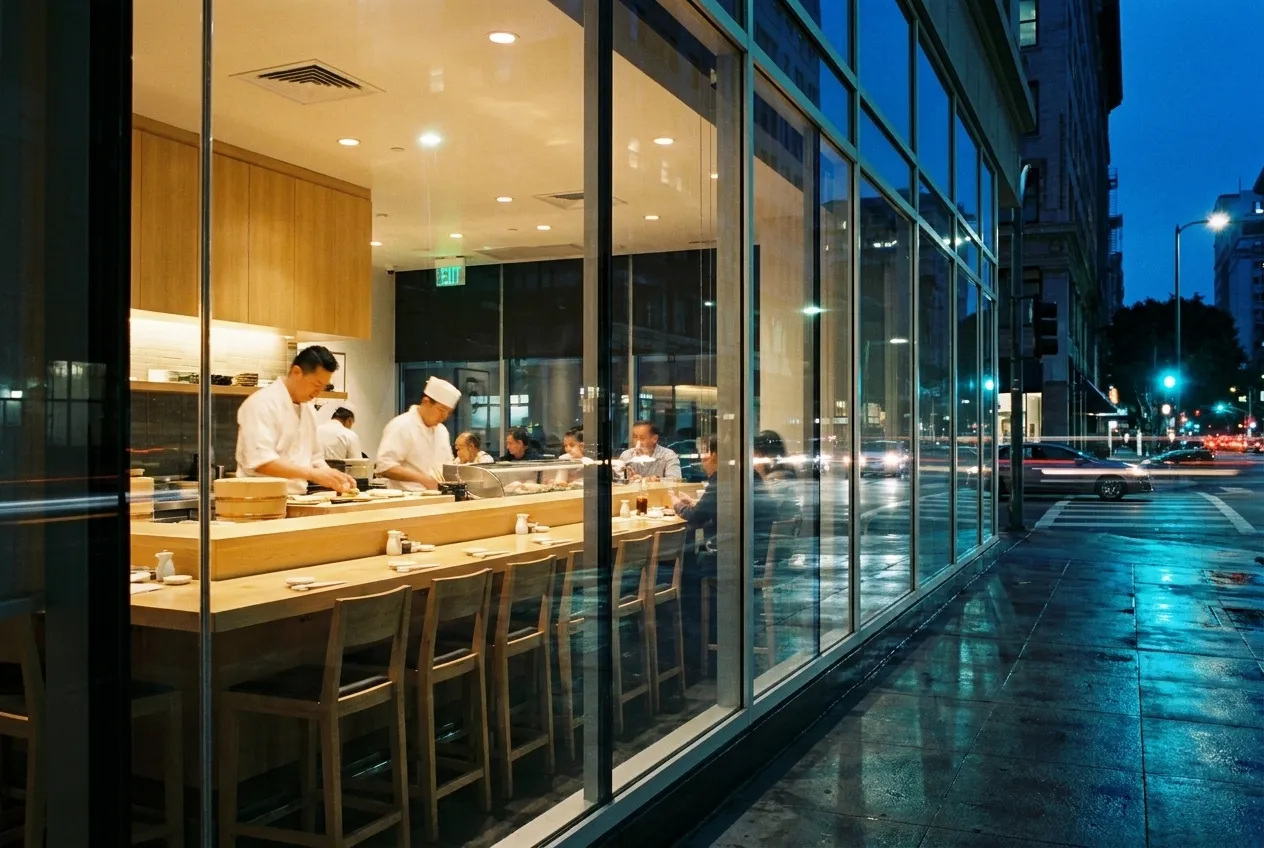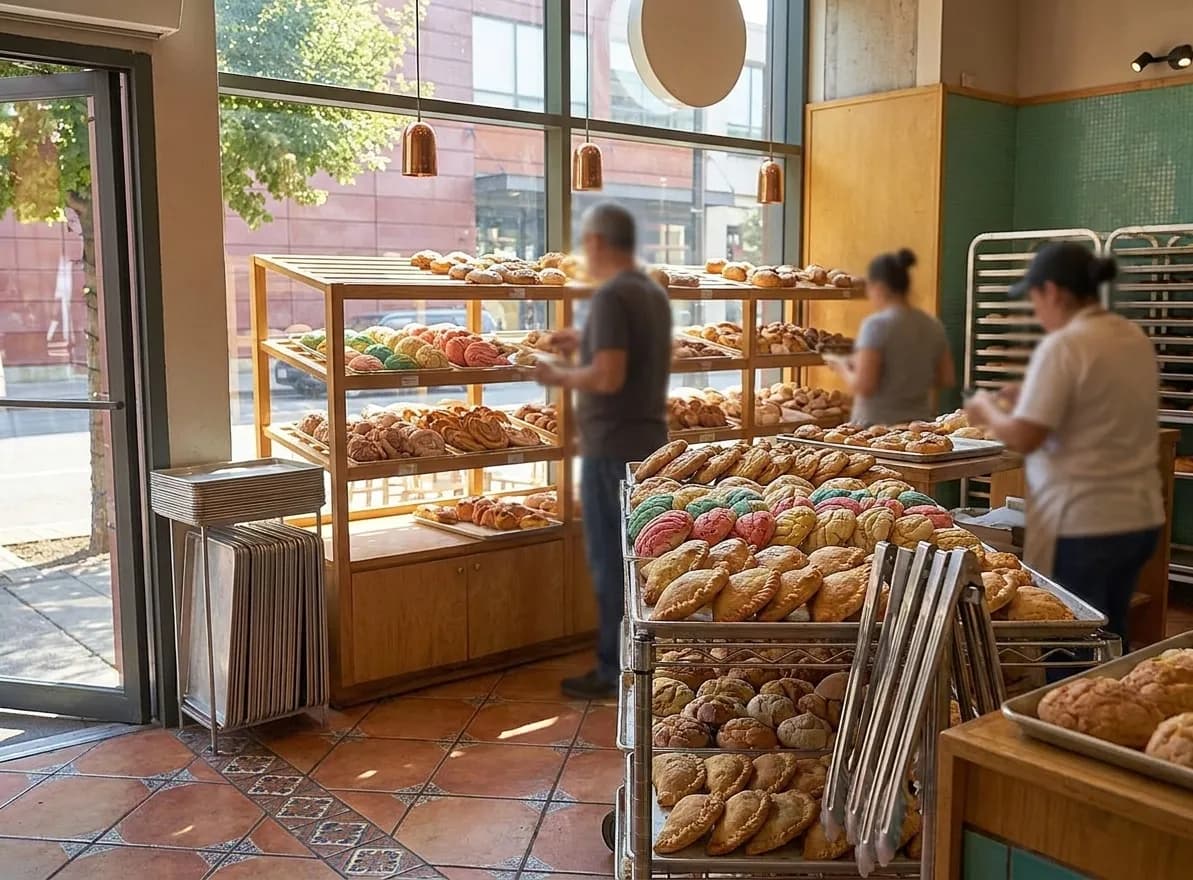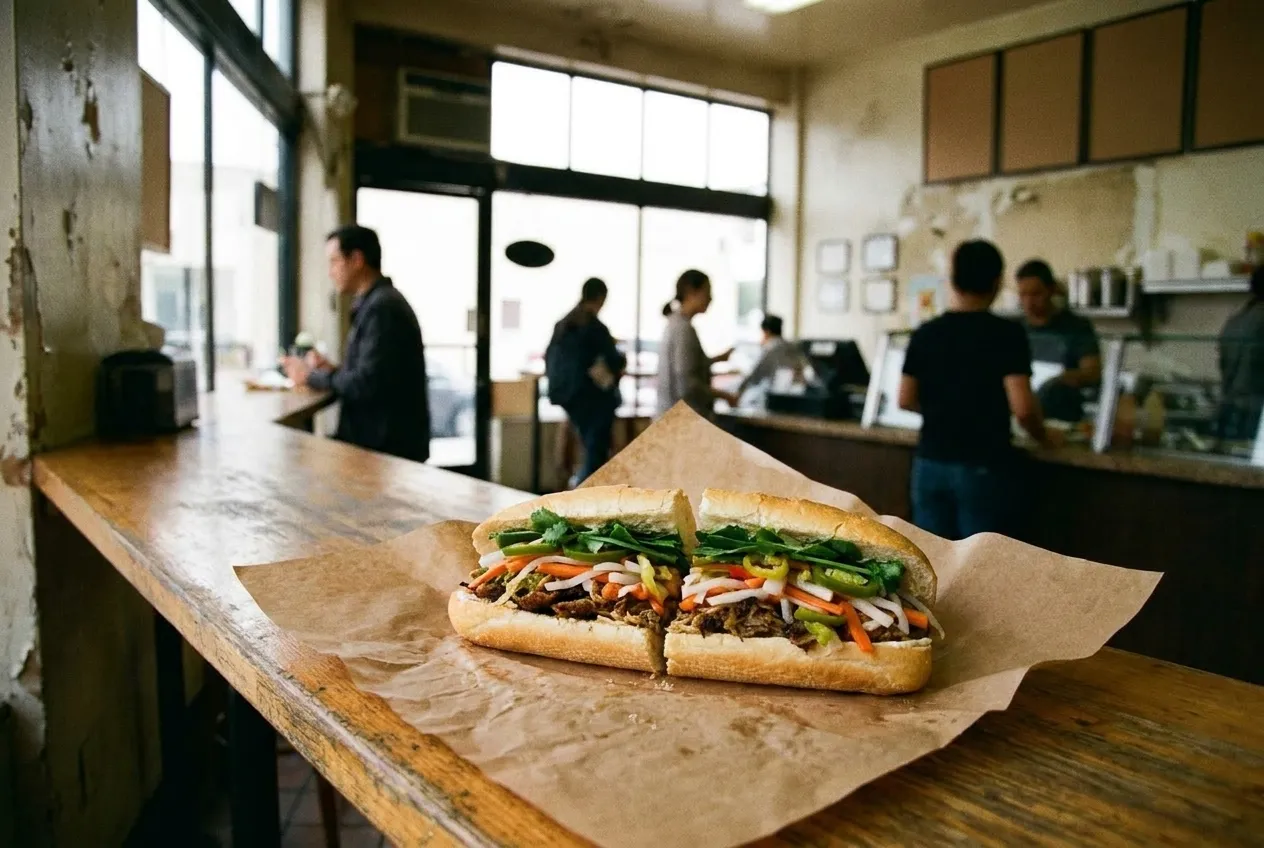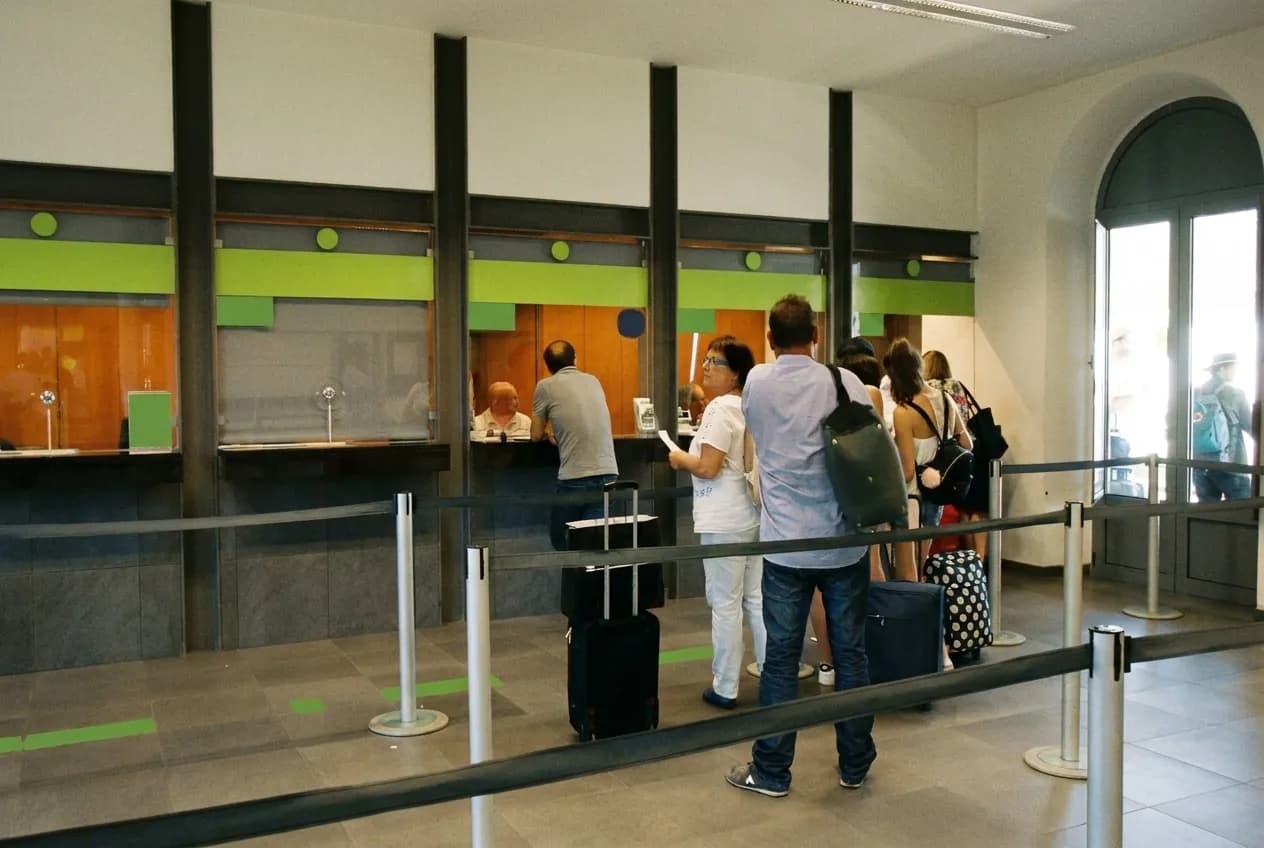
In most cities counter service means a compromise: cheaper, faster, worse. In Los Angeles it means something closer to the opposite. A very large share of the best food in this county is served over a counter, from a window, or off a truck, and the reasons are structural — rent, immigration history, car culture and a climate that makes eating outside viable all year. Treating counter service as a lesser category here means missing most of what the city does well.
Most of the best food in this city is served over a counter and the good ones are easy to miss. Ask Karpo which counters near you are worth the queue.
Why the format dominates here
Counter service removes the two most expensive things in a restaurant: floor staff and table turnover risk. That lets an operator put the money into the food and the ingredients instead, and it lets a family business survive on a margin that a full-service restaurant could not.
It also suits the city physically. Los Angeles is warm enough that outdoor seating works most of the year, spread out enough that a lot of eating happens in transit, and built around a car culture that makes a window and a parking space a viable restaurant. The taqueria, the walk-up window, the strip-mall counter and the truck are not lesser forms of restaurant here. They are the native form.
How to spot a good one
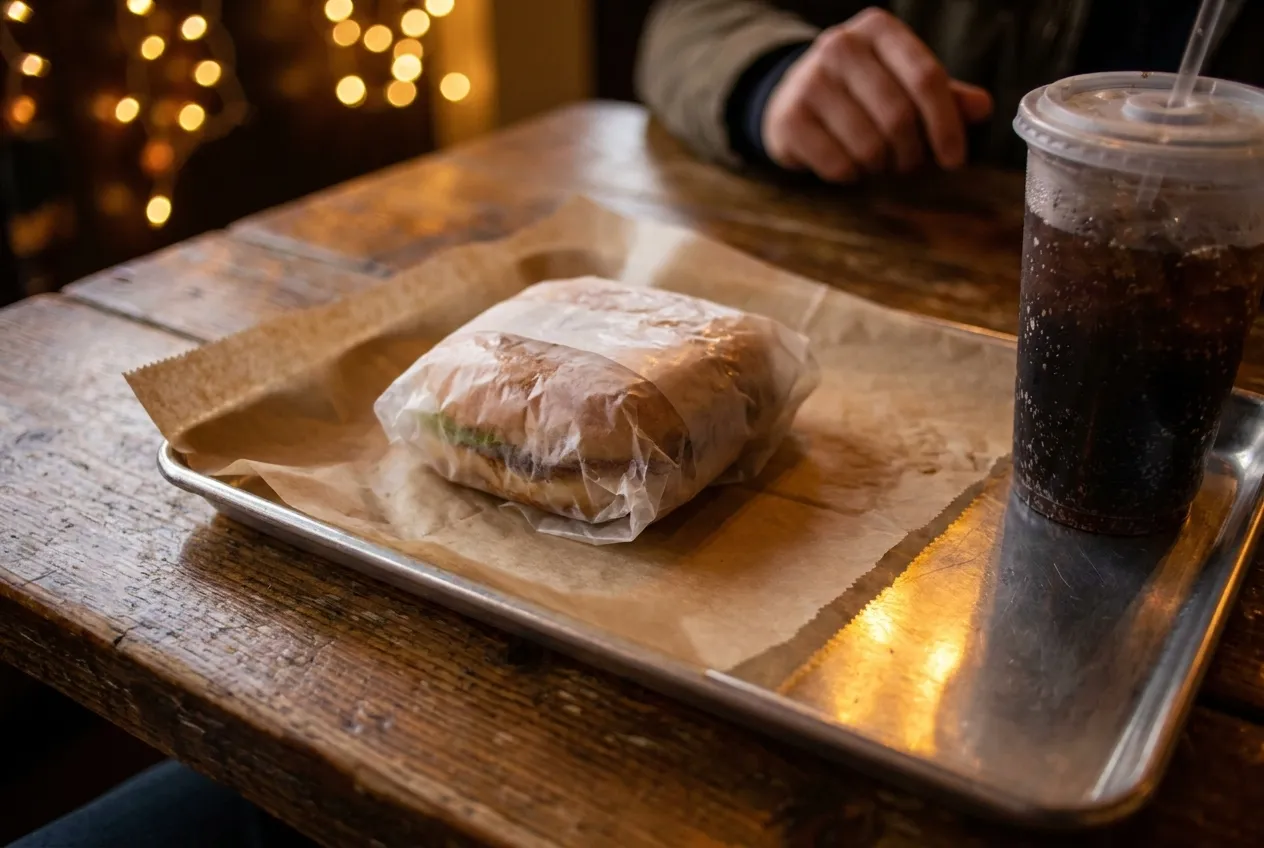
Four signals. A short menu, because a counter kitchen cooking properly cannot run sixty items. Visible cooking — a grill, a plancha, a spit, a fryer you can see — rather than a service line assembling from trays. A queue of people who are clearly regulars, which is different from a queue of people photographing the sign. And a specialism: the best counters in Los Angeles do one thing, and the menu tells you which.
The negative signal is a counter that has expanded to cover several cuisines. A place selling tacos, burgers, teriyaki and pastrami is buying most of it in, and that is fine for what it is, but it is not the category this is about.
The conventions, which are worth knowing
Decide before you get to the front. The line at a good counter moves at a specific rhythm and the person deliberating at the register is the one holding everyone up. Have your order and your payment ready.
On tipping: counter service in Los Angeles now almost universally presents a tip screen, and the convention has genuinely shifted. Ten to fifteen percent at a counter where someone cooked to order is normal and appreciated; nothing at a place where you took a pre-made item off a shelf is also normal. It is your call, and the useful frame is whether a person did something specific for you.
Take a number if there is one. Do not stand at the pass. And clear your own table if the room works that way, which most of them do.
Where the good counters are
They are concentrated in the eastern and southern halves of the county, in commercial strips rather than restaurant districts: Boyle Heights and East LA, the corridors through South LA and the southeast cities, the San Gabriel Valley along Valley Boulevard and Garvey Avenue, and the Valley boulevards. Little Tokyo, Chinatown and the Sawtelle corridor all run counter-first formats at high quality.
Downtown, Grand Central Market on Broadway, open since 1917, is the concentrated version — dozens of independent counters under one roof with shared seating and no host. It is the easiest place in the city to understand the format in a single visit.
Eating well on a small budget
This is where the format pays off hardest. A counter meal in Los Angeles routinely costs between eight and fifteen dollars for something genuinely excellent, which is a third of what a comparable sit-down meal costs and frequently better food. For anyone on a student or a starting budget, the practical strategy is straightforward: learn the four or five good counters within walking or short driving distance of where you live and work, use them properly, and reserve the full-service restaurant for the occasions where the room is the point. Done that way, eating well in this city is genuinely affordable, which is not true of many places.
Reading a counter menu board
One skill worth developing: the item at the top of a handwritten board, or the one written larger, is almost always what the kitchen wants to sell and is usually what it does best. Specials written on paper taped over the printed board are the day's actual recommendation. And a board with prices that have been hand-corrected rather than reprinted tells you the place is run by the people cooking in it, which is the single most reliable quality signal in this entire category.
Practical notes
Counter service dominates in Los Angeles because it removes floor staff and turnover risk, letting operators put money into ingredients, and because the climate and car culture support windows, trucks and outdoor seating year-round. Four signals of a good counter: a short menu, visible cooking rather than an assembly line, a queue of regulars, and a clear specialism. A counter covering several unrelated cuisines is buying most of it in. Conventions: decide before reaching the front, have payment ready, take a number if offered, do not stand at the pass, and clear your table. Tipping around 10 to 15 percent is normal where someone cooked to order. Clusters: Boyle Heights and East LA, South LA and the southeast cities, the San Gabriel Valley along Valley Blvd and Garvey Ave, the Valley boulevards, Little Tokyo, Chinatown and Sawtelle. Grand Central Market on Broadway, open since 1917, is the concentrated version. Expect $8 to $15 for a genuinely good meal.
Tags: #RestaurantNearMe #LosAngeles #CounterService #CheapEats #GrandCentralMarket #BoyleHeights #SanGabrielValley #LittleTokyo #Sawtelle #Taqueria #BackToSchool #StudentFood #LAEats #FoodTrucks
All trademarks are the property of their respective owners.
Ask Karpo first
The best counters in Los Angeles are the ones nobody has written about and half of them keep unpredictable hours. Ask Karpo which are near you, what each is known for, and whether the queue is moving before you join it.