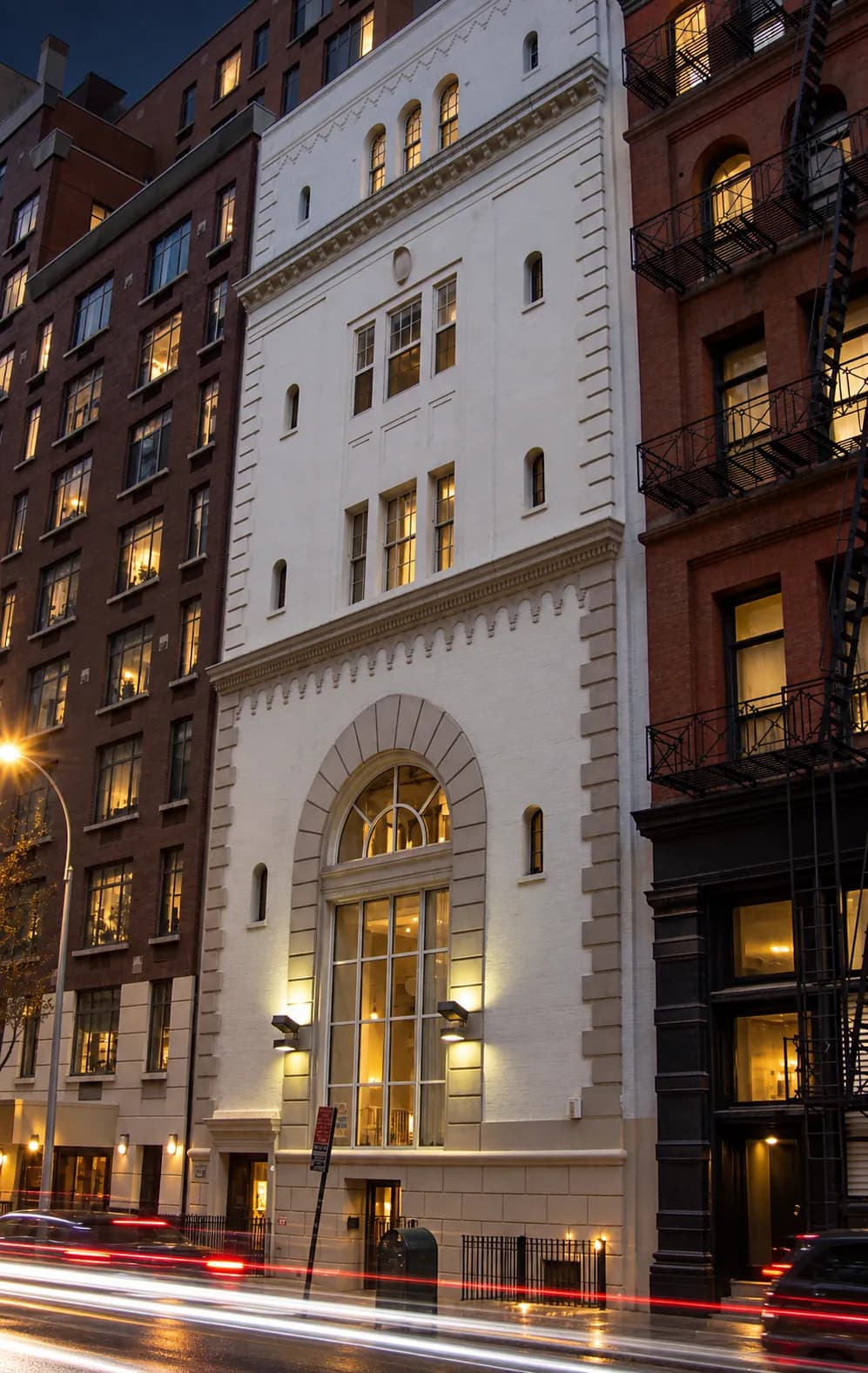
Cote is at 16 West 22nd Street in the Flatiron and it is the first and only Michelin-starred Korean steakhouse in America. That combination — a star, and grills built into the tables — is unusual enough that it is worth explaining what actually happens when you sit down.
Karpo can tell you whether the Butcher's Feast or ordering off the card suits your table, and what a Flatiron evening around it should cost.
What a Korean steakhouse means here
The restaurant blends the conviviality of Korean barbecue with the hallmarks of a classic American steakhouse. In practice that means USDA Prime beef, dry-ageing, a serious wine list running past twelve hundred labels, and a grill in the middle of your table.
The two traditions pull in different directions and reconciling them is the whole idea. A steakhouse serves you a large piece of meat cooked by someone else; Korean barbecue gives you thin cuts and a fire. This does both, with the kitchen's cuts and the table's grill.
The Butcher's Feast
This is how most people eat here. It is a set menu of four cuts of beef, an egg souffle, and enough banchan to cover the table, and it is the reason the restaurant is as easy to recommend as it is — the ordering decision is made for you.
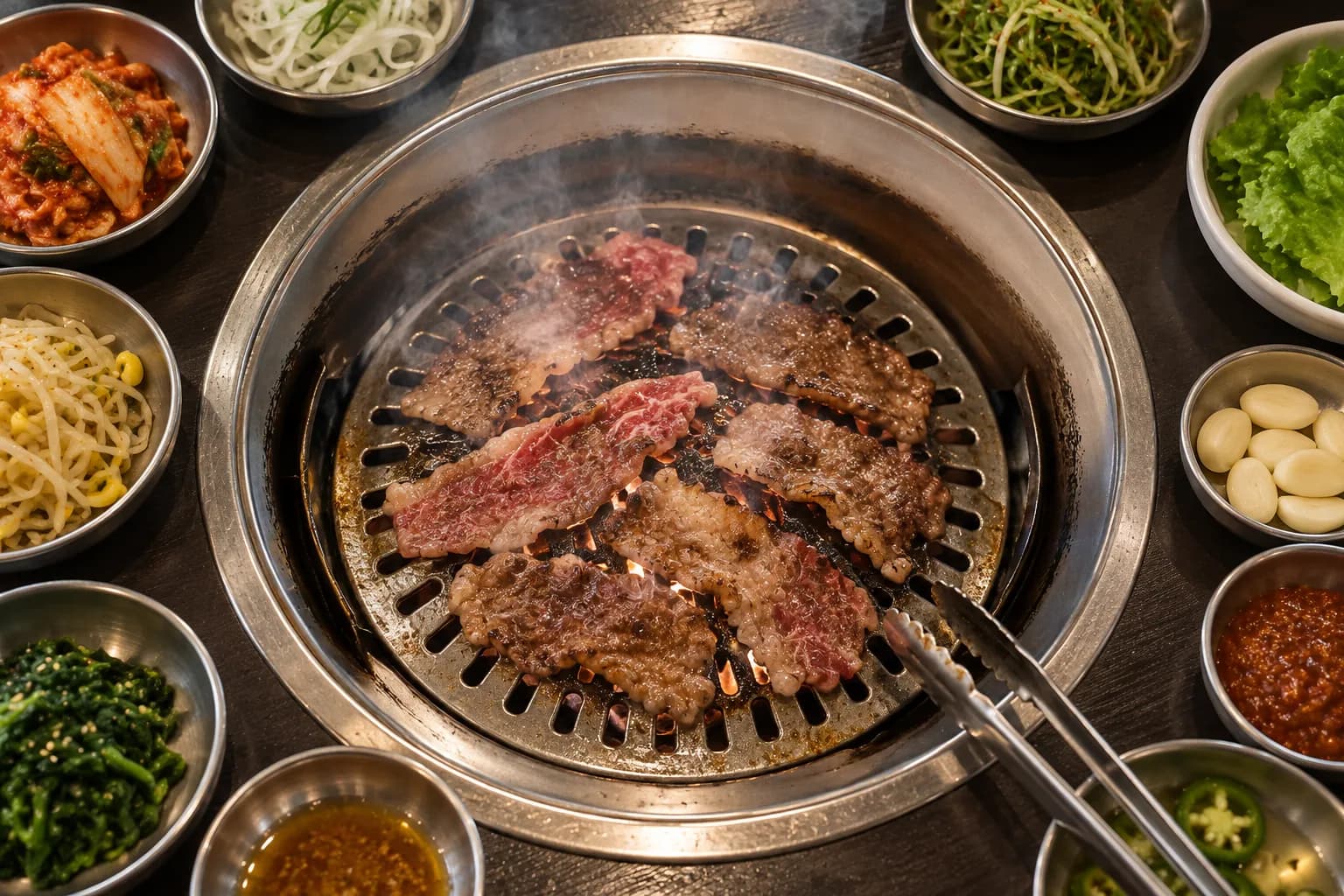
Published prices for the feast vary depending on when a review was written, with figures in the sixties and seventies per person appearing across recent accounts. Check the current price when you book rather than relying on a number from a guide, because it has moved.
How the grilling works
The meats are brought to the table raw so you can see them, and then the server oils the grill and cooks them for you. That last part is worth knowing — this is not a restaurant where you are handed tongs and left to it.
The advantage is obvious: the cuts are expensive and dry-aged, and the difference between correctly and incorrectly grilled beef at this level is substantial. Having someone who does it a hundred times a night handle it is the right arrangement.
The banchan
The side dishes are not garnish and treating them as such is a mistake. Banchan is the structure of a Korean meal — the pickles, the vegetables, the fermented things that cut through fat and reset the palate between cuts of beef.
Eating the beef and ignoring the small dishes produces a heavy, one-note meal out of something designed to be balanced. Alternate deliberately, and ask for more of whatever you finish.
Booking
The restaurant manages its own bookings rather than sitting on the main third-party networks, so contact it directly. That is a small friction and it is also why searching the usual platforms and finding nothing does not mean there is no table.
The Flatiron location is busy across the week and weekend evenings go first. Earlier seatings and the start of the week are the reliable route in, as at every restaurant of this profile.
Why the star matters here
Michelin has historically been slow to recognise this kind of restaurant, and a grill-in-the-table format is about as far from the guide's traditional comfort zone as it gets. A star for a Korean steakhouse is therefore a genuine signal rather than a formality.
What it recognises is the sourcing and the ageing programme more than the ceremony. The beef here is handled with the seriousness a steakhouse applies and served in the format a Korean restaurant uses, and doing both properly is harder than doing either.
The Flatiron around it
Twenty-Second Street between Fifth and Sixth is central in a way that makes the rest of the evening easy. Madison Square Park is a few minutes away, the neighbourhood has plenty of places for a drink afterwards, and the subway options are good in every direction.
It is also a neighbourhood that works for a group coming from different parts of the city, which suits the format. This is a restaurant that rewards four or six people considerably more than two.
What dry-ageing does to beef
Dry-ageing holds beef in controlled cold air for weeks, during which moisture leaves the muscle and enzymes break down connective tissue. The meat concentrates in flavour and tenderises, and it also loses weight and develops a crust that has to be trimmed away and discarded.
That loss is why aged beef costs what it does — you are paying for the meat that was thrown away as well as the meat on the plate, plus weeks of refrigerated space. It is also why the flavour is different in kind rather than degree: nuttier, deeper, closer to cheese than to fresh beef at the far end of the process.
Practical notes
Take the feast on a first visit. Ordering a la carte requires knowing the cuts well enough to build a progression, and the set menu is designed by people who do, at a price that is competitive with assembling something similar yourself.
Wear something you do not mind smelling of smoke. There is a grill on your table and extraction only does so much — this is the standard trade at every Korean barbecue and it applies here despite the tablecloths.
- Cote Korean Steakhouse, 16 West 22nd Street, New York, NY 10010 — Flatiron
- The first and only Michelin-starred Korean steakhouse in America
- The Butcher's Feast: four cuts of beef, egg souffle and full banchan; confirm the current price when booking
- Meats are presented raw, then grilled at the table by your server
- USDA Prime beef with a dry-ageing programme, and a wine list past 1,200 labels
- Bookings are handled by the restaurant directly rather than the big third-party networks
- Better for four or six than for two; expect to smell of smoke afterwards
Tags: #RestaurantNearMe #NYC #Cote #KoreanSteakhouse #ButchersFeast #Flatiron #KoreanBBQ #MichelinStar #DryAged #NYCDining #Banchan #GroupDinner #Manhattan
All trademarks are the property of their respective owners.
Ask Karpo first
Ask Karpo whether Cote has a table this week, what the Butcher's Feast works out at per person, and what else in the Flatiron is open afterwards.