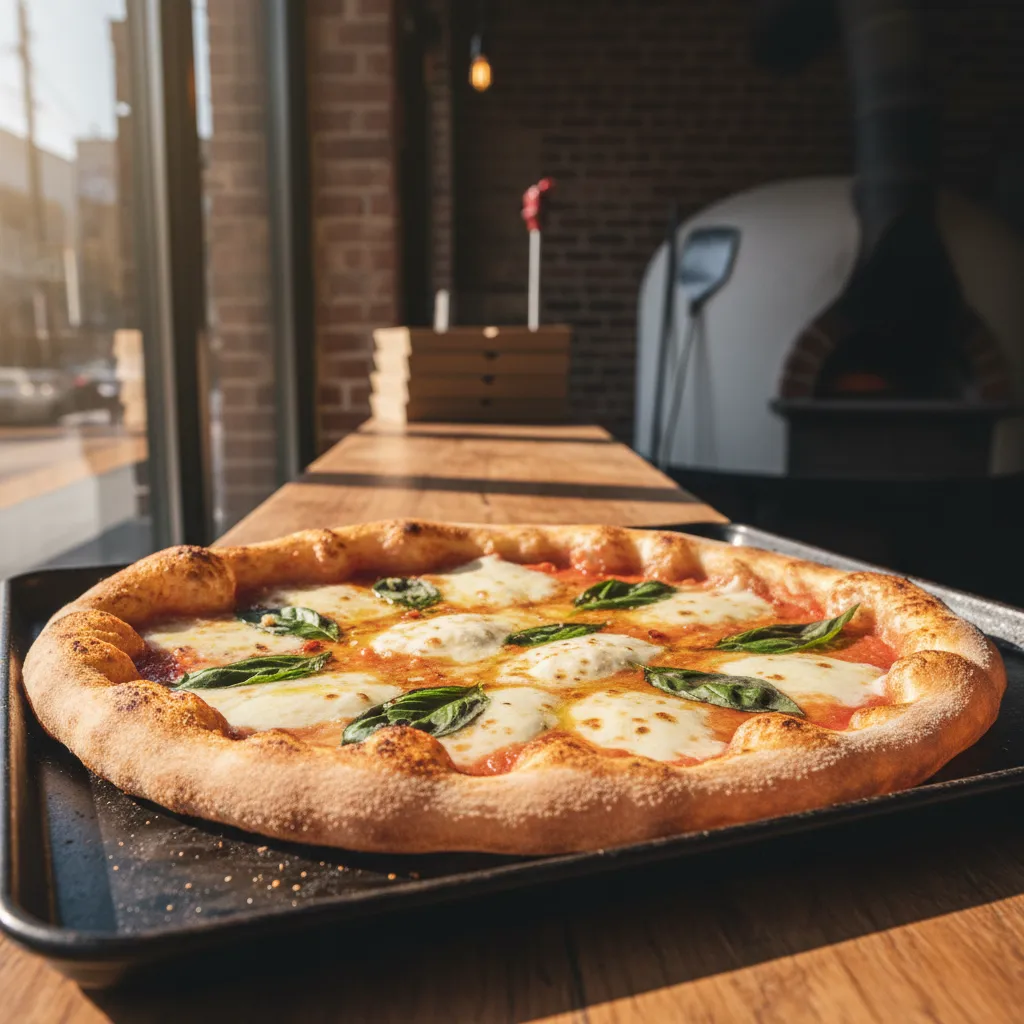
 L'Industrie vs Lucali: Brooklyn's Best Pizza Compared
Restaurants

Restaurant Chain NYC Locations: Neighborhood Independent Alternative Discovery Map for Chain Avoiders
A weekday dinner guide for visitors who want Times Square convenience without defaulting to a familiar logo. Use a one-block verification method to compare independent restaurants by cuisine, seating signals, transit ease, and confidence before committing.
Times Square makes the restaurant chain decision feel almost automatic: bright signage, predictable menus, and entrances placed exactly where visitors slow down. For discerning diners, the better move is not wandering aimlessly away from the lights; it is using a compact alternative map that checks one block at a time for independent restaurants with comparable cuisine cues, seating signals, and easy return routes. The goal is low difficulty, especially on a weekday dinner when a visitor may be tired, hungry, and unwilling to manage a reservation hunt. This guide treats chain locations as reference points, not destinations. From each visible chain, you verify nearby independent alternatives using public-facing evidence: storefront name, posted menu, table format, host stand, NYC Health ABCEats search, and MTA route tools for the trip back.
Text Karpo your current location, your cuisine preference, and whether you're avoiding chains for quality or principle—we'll send you the three closest independent restaurants that aren't chains, one backup with guaranteed seating, and a local dessert spot so your visitor leaves with a real NYC food memory instead of a chain receipt.
Start From the Chain, Then Turn It Into a Reference Point
The fastest way to avoid a chain near Times Square is to stop treating the chain as a failure and start treating it as a locator. If you are standing near a recognizable burger, pizza, coffee, noodle, or casual dining brand, identify what need it is solving: speed, seating, familiar cuisine, group comfort, or a visible entrance. Then look across the same block face and the next nearest side street for independent storefronts that solve the same need. This keeps the search grounded. You are not asking, “What is the best restaurant in NYC?” You are asking, “What can replace this specific restaurant chain within a short walk?”
For visitors, the one-block rule matters because Times Square’s energy can distort judgment. A place may feel far away if it requires crossing dense pedestrian flow, even when the map distance is short. Keep the first pass simple: one avenue edge, one numbered street edge, and one return point you can recognize. Favor restaurants with clear exterior identity, posted menus, visible seating format, and a way to ask about walk-in timing before entering fully. Do not assume independence from decor alone. Check the name, website, menu language, and public listing consistency before deciding the chain alternative is actually local.
Match the Need, Not the Cuisine Label
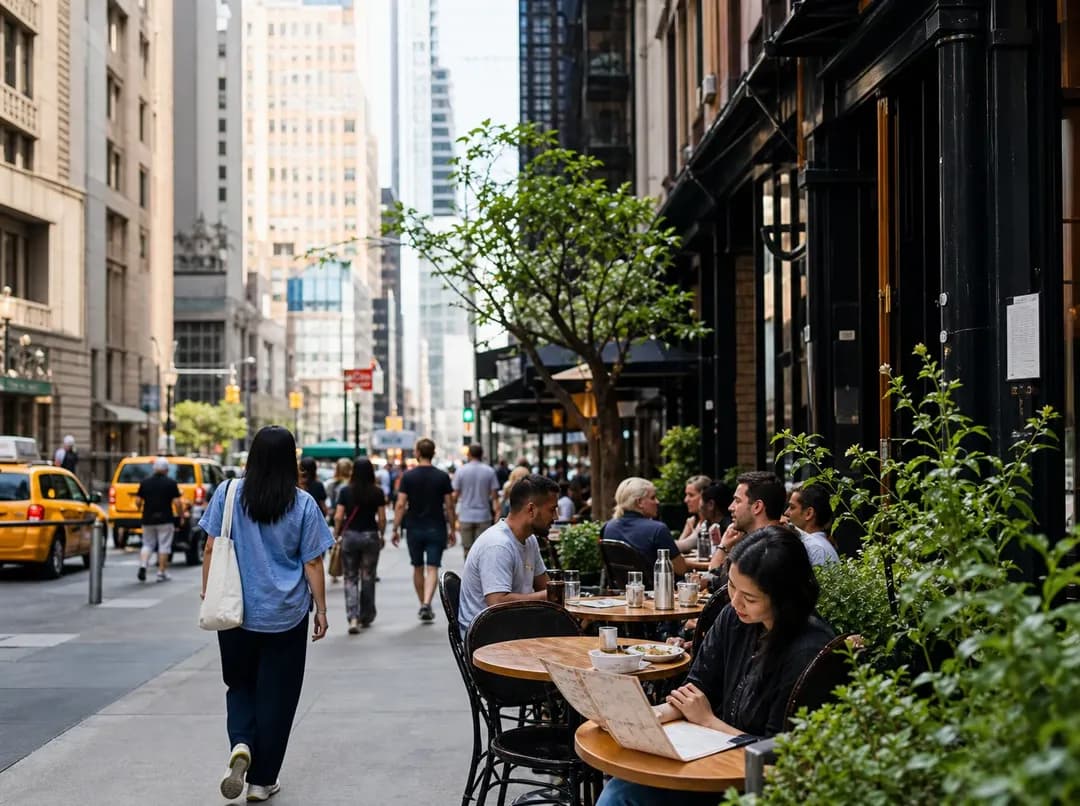
A useful alternative map does not replace “Italian chain” with “any Italian restaurant.” It replaces the reason the diner was considering the chain. If the visitor wanted pasta because it felt safe for a mixed group, nearby independent options should be screened for broad menu readability, table service clues, and enough familiar dishes to reduce friction. If the chain was attractive because it looked fast, the better independent comparison may be counter-service falafel, ramen, dumplings, tacos, pizza by the slice, or a cafe with prepared items. The category match is secondary to the dinner job: quick, understandable, low-pressure food before the next plan.
This is where discerning diners should use tradeoffs instead of rankings. A highly distinctive independent restaurant may be more memorable but slower to evaluate from the sidewalk. A simpler independent counter may offer less atmosphere but better fit a weekday visitor who wants dinner without a reservation. A sit-down spot may feel calmer, but only if the host can give a clear walk-in expectation. Because this article cannot guarantee prices or availability, treat every menu board, table setup, and host answer as live evidence. The best alternative is the one that matches the chain’s convenience while adding local character you can verify before committing.
Use Public Checks Before You Spend the Walk
Before leaving the bright main corridor, run a three-part check. First, confirm identity: the storefront name should match the search result or official-looking listing you find, and the menu should appear current at the door or on the restaurant’s own channel. Second, confirm fit: look for cuisine signals, service style, and seating type that match your group’s patience level. Third, confirm confidence: use NYC’s ABCEats-Restaurants search as one public verification layer for restaurant records, while understanding that a directory check is not a promise about tonight’s service, wait, or quality.
Transit should be part of the same verification, not an afterthought. The MTA provides schedules, maps, planned service changes, nearby stations and stops, real-time alerts, and elevator and escalator status. For a visitor, those tools help decide whether moving one block farther is still low difficulty. If service changes or accessibility needs matter, check them before walking deeper into the side streets. A good Times Square alternative route keeps a visible return path to a station, hotel corridor, theater area, or major avenue. The dinner choice should feel more local without making the rest of the evening harder.
Read the Block Like a Visitor With Standards
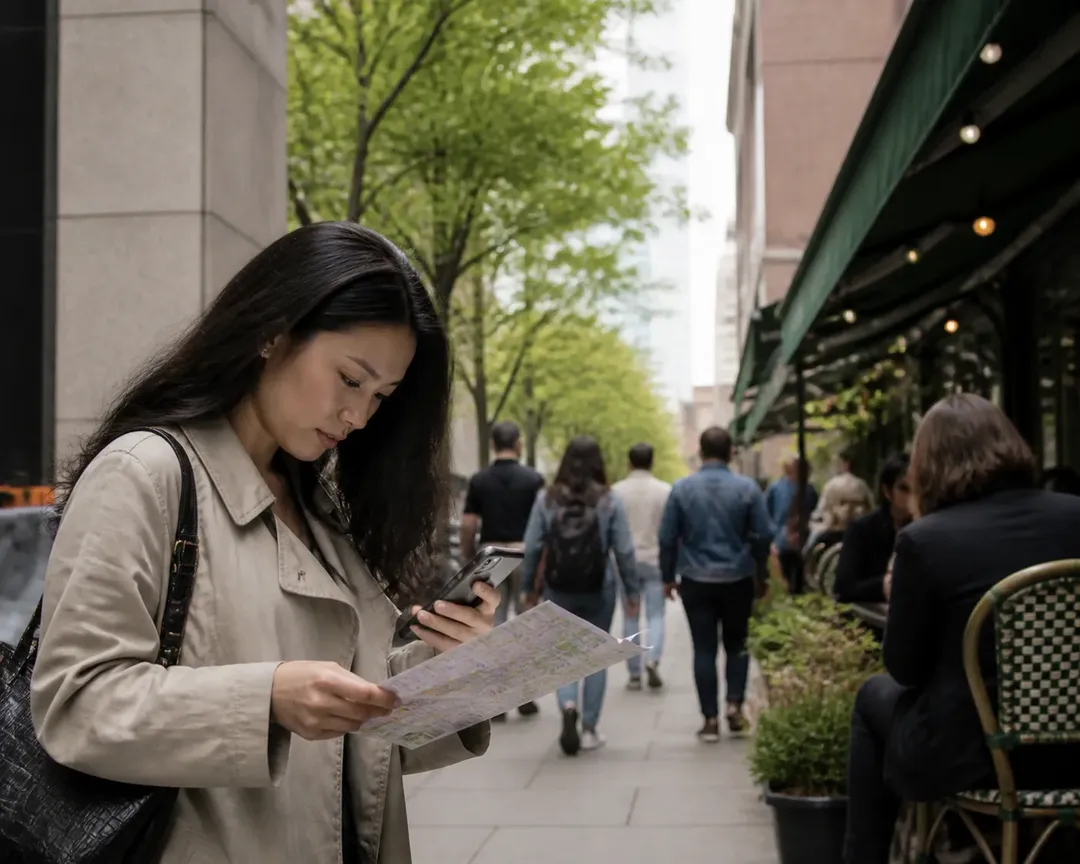
Times Square blocks can contain tourist traps, useful independents, hotel dining rooms, delivery-focused counters, and genuinely neighborhood-serving places in close range. Read the block in layers. The loudest sign is not always the most practical choice, and the quietest doorway is not automatically better. Look for cues that reduce uncertainty: menus that name dishes clearly, windows that reveal seating layout, staff who can answer walk-in questions directly, and a crowd pattern that matches your tolerance. Visitors who are discerning are not being fussy; they are protecting a limited dinner window from vague promises and avoidable confusion.
The most reliable map behavior is a short loop, not a straight escape. Start at the chain reference point, walk one side street, cross only when the pedestrian flow is manageable, then return along the opposite side. This gives you a comparison set without turning dinner into a search expedition. If two independent restaurants look similar, choose based on the constraint that matters most: calmer seating, faster ordering, clearer menu, easier return route, or better fit for the companion. If none passes the test within one block, widen the map deliberately instead of settling from fatigue.
Who This Alternative Map Works For
This plan fits visitors who want a more independent NYC meal but do not want a complicated food itinerary. It is especially useful for weekday dinner near Times Square, when the group may include someone who values predictability and someone who wants to avoid a chain. The map gives both people a shared method: begin with the familiar option, define what made it attractive, and look nearby for a locally identifiable replacement. It also works for solo diners who want to keep movement simple and for pairs who need to make a quick decision without turning the evening into a debate.
It is less useful for diners chasing a destination restaurant, a rare cuisine, or a guaranteed table at a specific time. Those goals require advance research and direct confirmation. For this low-difficulty alternative map, success means finding a credible independent option close enough that the visitor can inspect it, verify it, and still recover easily if it is not right. In Times Square, avoiding a restaurant chain is not about proving taste. It is about using the chain’s visibility as a starting grid, then making one disciplined local choice with enough evidence to feel confident.
Tags: #NYCrestaurants #TimesSquaredining #independentrestaurants #visitordining #weekdaydinner #chainalternatives
Sources consulted: Source 1: nycgovparks.org · Source 2: new.mta.info · Source 3: nypl.org · Source 4: a816-health.nyc.gov
All trademarks are the property of their respective owners.
Ask Karpo first
Ask Karpo to turn this NYC idea into a current plan for your date, budget, companion, transit preference, and energy level. Karpo can narrow the route and flag what to verify before you go.
Ask Karpo for more information.
Keep reading
- L'Industrie vs Lucali: Brooklyn's Best Pizza Compared
 Cervo's on Division Street: Portuguese Seafood Without Reservations
 Randazzo's Clam Bar in Sheepshead Bay: Red Sauce Since 1932