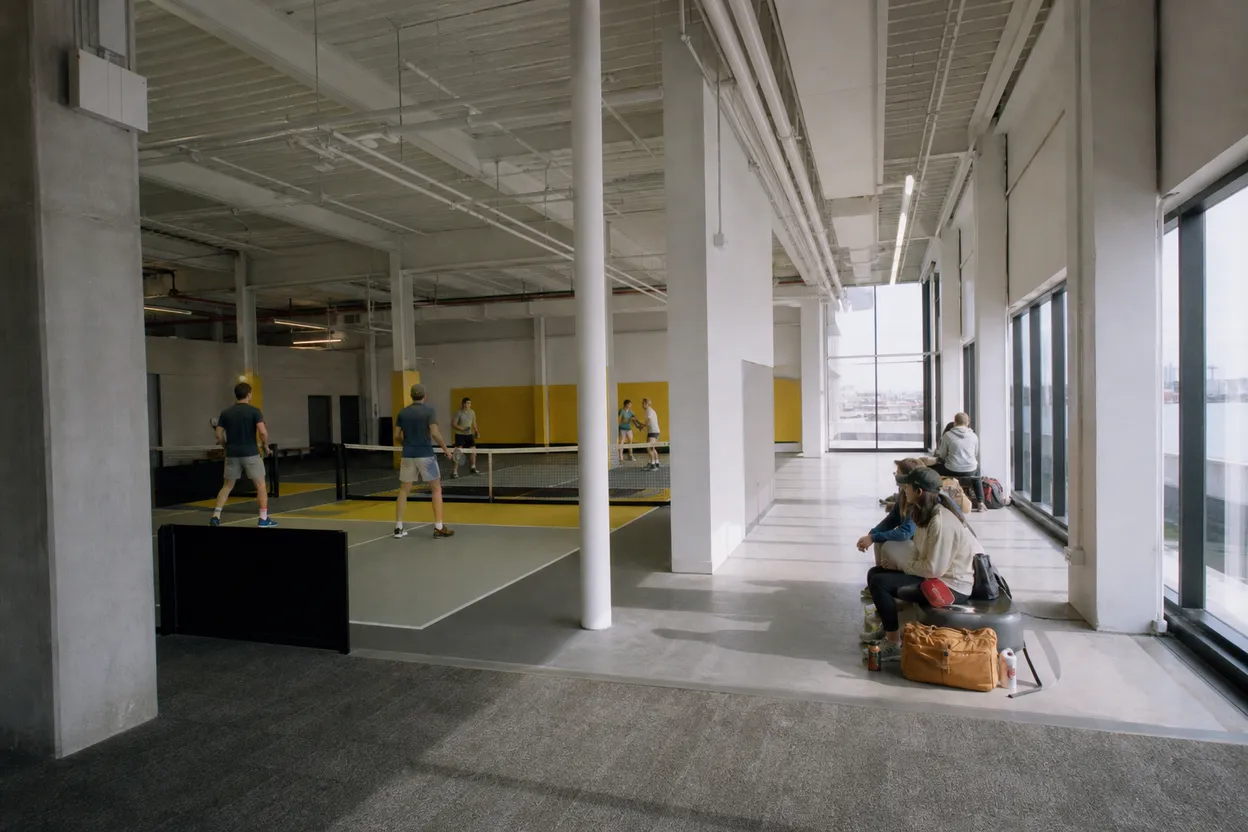
For four friends trying to turn a weekday evening into a low-pressure match, Court 16 works best as a booked-court plan, not a spontaneous Red Hook drop-in. The official Court 16 pickleball page says members and non-members are welcome, rentals are booked in 60-minute increments, and courts can be booked for two or four players, with paddles and balls provided at the club. That makes it useful when humidity, rain, or uneven skill levels would make an outdoor park court harder to manage. The Red Hook angle should stay practical: use ferry timing and waterfront plans as the frame, then verify the exact club location, route, and booking before anyone leaves work.
Want a doubles plan that survives rain, ferry delays, and mixed skill levels? Text Karpo before booking and ask for a tighter Brooklyn route, timing check, and backup sequence.
Start With the Booking, Not the Ferry
The reliable part of this plan is the court reservation. Court 16 states that pickleball court rentals are booked in 60-minute increments and can be made for two or four players, with no coaching included. That fits a four-person after-work match because nobody has to join a league or commit to a recurring clinic. Treat the booking as the anchor, then build transit, food, and waterfront time around that fixed hour.
Do not market this as a casual walk-up plan. Court 16 uses Mindbody-style account booking for adult programming, and its policies say adults must create individual profiles before purchasing classes. For a simple rental, each group should still verify the booking flow, cancellation terms, and exact location shown at checkout. If the reservation screen says Downtown Brooklyn rather than Red Hook, follow the reservation address and treat Red Hook as the surrounding evening idea.
Who This Works For
This is strongest for four adults with uneven pickleball experience who still want real points. Court 16 describes beginner clinics for levels 1.0 to 3.0 and intermediate clinics for 3.0 to 4.0, while open play is listed for 2.5-plus players. A private rental sidesteps that sorting problem. Friends can rotate partners, soften serves, and agree on house rules without worrying that strangers expected a faster competitive session.
The group should be honest about pace before booking. If two players are brand new, a clinic may be more useful than a rental because Court 16 says beginner classes cover grip, strokes, serving, rules, and point play. If everyone already knows scoring and basic court movement, a rental keeps the evening social. The goal is not maximum athletic output; it is a clean hour where nobody feels trapped above or below their level.
Weather Protection Is the Main Advantage
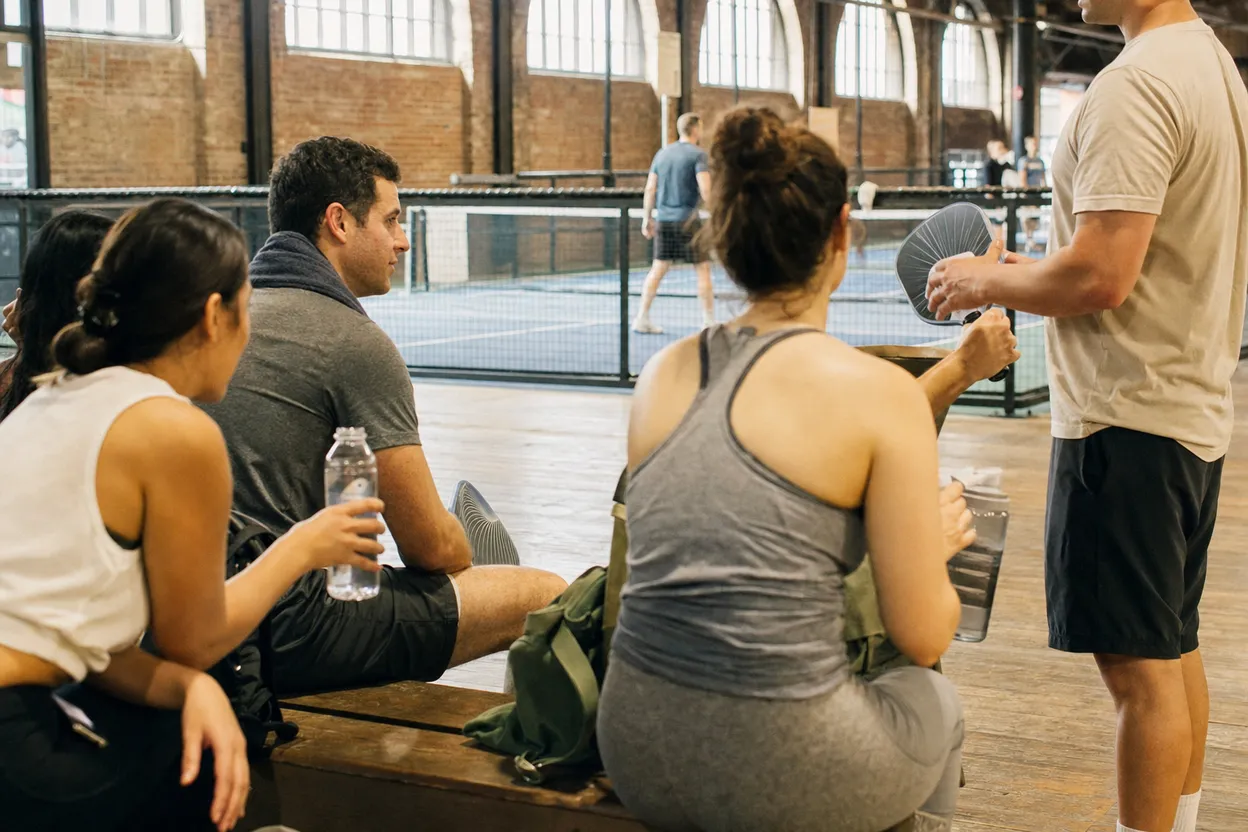
The main reason to choose Court 16 over an outdoor court is weather control. The source file identifies the Brooklyn club as an indoor tennis and pickleball facility, and Court 16’s own pickleball page supports indoor-style booking, clinics, rentals, and equipment availability. On a humid July evening or during rain, that matters more than novelty. Nobody has to monitor puddles, wind, fading light, or whether a public net is still available.
There is still a failure mode: indoor does not mean frictionless. If one person arrives late, Court 16’s policy page says class arrivals more than five minutes late may have to wait until the next ball pickup, and reschedules must be made 24 hours in advance. Even if that language is written for classes, use it as a warning. Build a ten-minute lobby buffer and do not plan the ferry connection too tightly.
Build the Red Hook Leg as Optional
Because the official Court 16 material in the source file confirms Downtown Brooklyn and does not confirm a Red Hook branch, keep the Red Hook portion optional unless the live booking page shows otherwise. A ferry-friendly evening can still include Red Hook as a pre- or post-game waterfront move, but the court address should come from the active reservation confirmation. This avoids sending a group toward the wrong neighborhood with paddles and a fixed court time ticking down.
NYC Ferry information changes by route season and operating plan, so readers should verify same-day service rather than relying on a static schedule. The available ferry source indicates South Brooklyn service includes Atlantic Avenue and Red Hook stops, but timing and stop patterns need current confirmation. The practical play is simple: if ferry timing lines up cleanly, use it for atmosphere; if not, treat subway, bus, bike, or rideshare as the punctuality layer.
Use Sixty Minutes Like a Match Clock
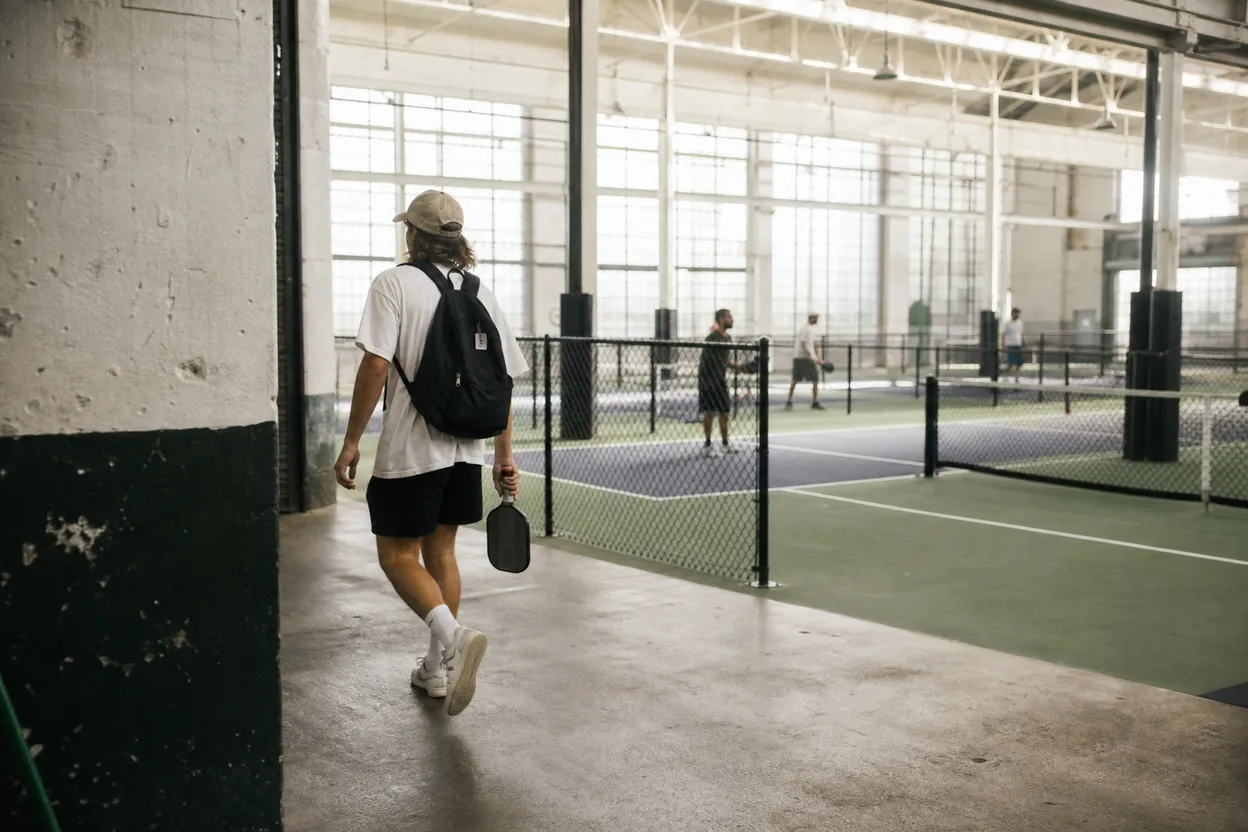
A 60-minute rental sounds generous until four players start warming up, changing partners, checking rules, and taking water breaks. Use the first ten minutes for dinks, serves, and a quick agreement on scoring. Then play three short games with rotating teams, or one longer game followed by a rematch with swapped partners. That structure gives weaker players repeated touches while keeping the competitive friends from turning the hour into a lecture.
Do not overpack the court hour with instruction. Court 16 says coaching is not included with rentals, so any teaching must stay informal and consensual. If one player wants real feedback, book a clinic, private lesson, or semi-private lesson instead of turning friends into unpaid coaches. A good doubles night has a rhythm: warm up, play, rotate, hydrate, and leave while people still want another round next time.
Accessibility and Comfort Checks
The source file includes third-party listings that describe the Downtown Brooklyn venue as accessible, but the safest production wording is to have readers verify elevator access, restroom access, and any mobility accommodations directly with Court 16 before booking. Indoor sports venues can still involve building entrances, upper-floor navigation, locker areas, or check-in steps. Anyone managing an injury should also confirm court surface, footwear requirements, and whether sitting space is available nearby.
Court 16’s official policy requires athletic shoes with non-marking soles for adults playing on court. That is a small detail that can break the evening if someone arrives in street shoes after work. Paddles and balls are listed as provided at the club, which lowers gear pressure, but players should still bring water and clothing they can move in. For glasses, braces, or joint supports, plan comfort first and performance second.
What to verify for Court 16 Brooklyn, Red Hook
Verify the active Court 16 booking page, exact club address, reservation time, player count, and whether the rental is for pickleball rather than tennis. Confirm that all required profiles or accounts are ready before checkout. Check the current cancellation or reschedule policy, because the official source mentions 24-hour rescheduling for group classes and email handling for private lessons. Do not assume the same terms apply to every rental product without reading the final screen.
Then check NYC Ferry’s same-day route map, weather, and return options. If the reservation address is Downtown Brooklyn, use Red Hook only as a flexible waterfront add-on, not as the court location. Assign one person to own timing, one to confirm footwear, one to screenshot the reservation, and one to choose the post-game stop after the match. That keeps the plan low-stakes without making it loose enough to fail.
Tags: #RedHook #Brooklyn #Pickleball #Court16 #NYCFerry #AfterWorkNYC #BrooklynWaterfront #IndoorPickleball #Doubles #NYCPlans #RainBackup #SportsSocial #AskKarpo #BeforeYouGo
Sources consulted: Source 1: court16.com · Source 2: americanosports.com · Source 3: court16.com · Source 4: daisydink.com · Source 5: pickleballscoop.com
All trademarks are the property of their respective owners.
Ask Karpo first
Tell Karpo your date, group size, budget, and starting neighborhood. We’ll check current access, timing, transit, and the cleanest plan for Court 16 Brooklyn, Red Hook before you head out.


