 Fast Food Near Me in the East Village: Crif Dogs Deep-Fries Its Franks
Free Things to Do
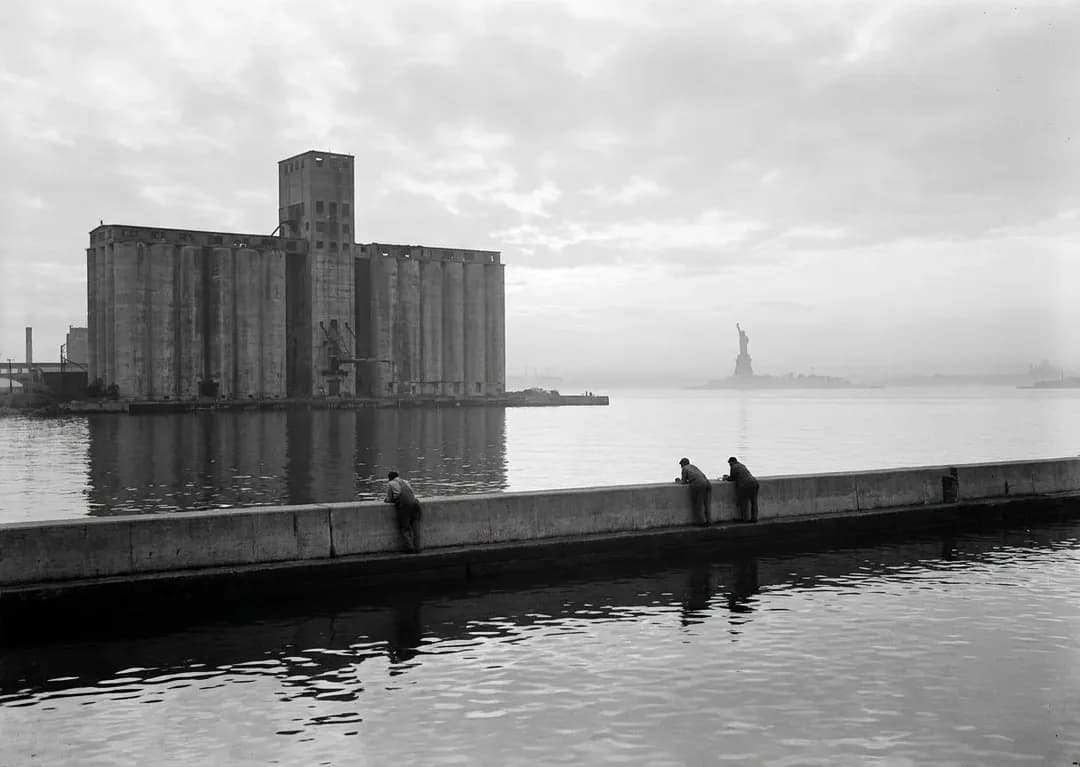
Red Hook Grain Terminal Waterfront Path and Erie Basin Park Overlook
A quiet Brooklyn waterfront walk past 1922 grain terminal silos, open harbor lawns, and one perfect Statue of Liberty sight line—best savored at dawn before the weekend crowds arrive.
Red Hook's waterfront unfolds in industrial increments: rusted gantry shadows, ship horn echoes bouncing off concrete, and the sudden sweep of open harbor framed by structures that once fed the city. The walk from Louis Valentino Jr. Park south to Erie Basin Park threads past the abandoned grain terminal—a cathedral of silos rendered silent in 1965—and ends at a lawn where the Statue of Liberty floats between pier columns like a carefully staged surprise. It is one of the city's quieter free things to do, a place where infrastructure becomes backdrop and the water does most of the talking.
The arrival window
Getting to Red Hook without a car requires patience or strategy. The B61 bus from downtown Brooklyn runs to Red Hook with reasonable frequency, though weekend service slows to contemplative intervals. Take the 8am weekend bus to arrive at Valentino Park by 8:30am, and you'll have the waterfront path nearly to yourself as you walk south. By 10am the park crowd thickens—joggers, families staking out picnic ground, cyclists looping the perimeter—but before then the path belongs to early risers and the gulls.
Valentino Park itself makes a serviceable starting point: small, scrubbed clean, with benches facing the harbor and Governors Island beyond. But the real draw lies farther south, where the grain terminal rises like a monument to obsolescence and the path opens onto views that justify the bus transfer.
The grain terminal silhouette
The 1922 grain terminal silos dominate the mid-walk stretch, twelve concrete cylinders that once stored wheat and corn bound for the city's bakeries and breweries. They are fenced and inaccessible now, wrapped in chain-link and caution, but the waterfront path provides the closest public viewing angle available without trespassing. Morning side-light between 7am and 9am renders the clearest silhouette, the low sun carving shadow into every seam and turning the silos into stark geometry against pale sky.
By late morning the light flattens and the silos lose definition, becoming merely large and gray. But in that early window they feel almost cinematic, a set piece from another century holding its ground while the neighborhood gentrifies around it. Developers have circled for years; proposals surface and sink. For now the terminal remains frozen, and the path offers an unobstructed portrait of industrial decay rendered almost elegant by time and weather.
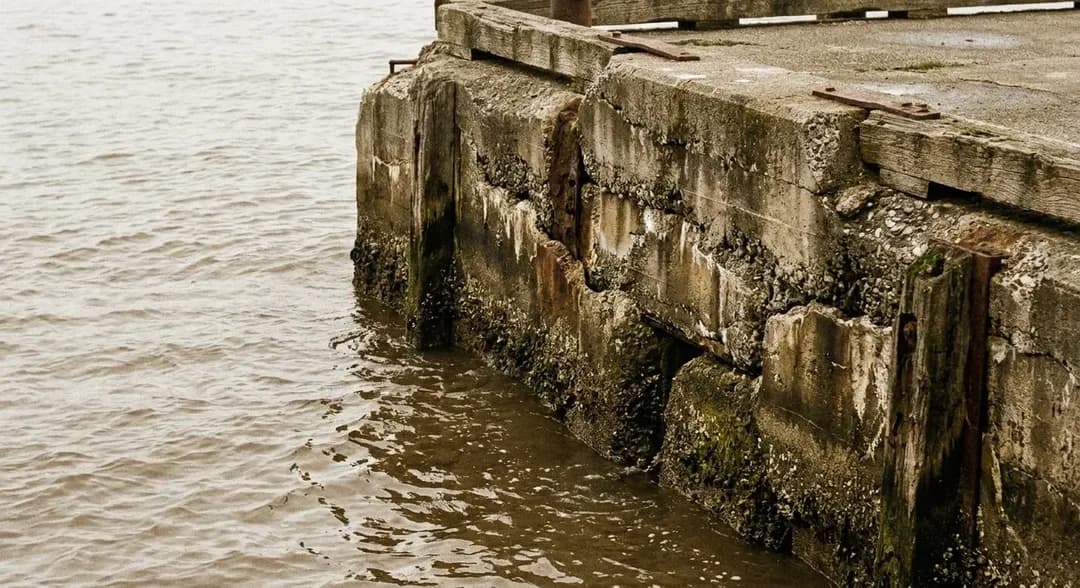
The path itself is paved, wide enough for pedestrians and cyclists to coexist without negotiation. On spring mornings the air carries salt and a faint diesel note from the working piers to the south. Cormorants dry their wings on wooden pilings. The occasional container ship glides past, improbably silent for its size.
Erie Basin Park and the harbor lawn
Erie Basin Park is at the southern end of the walk, a broad lawn that slopes gently toward the water and invites sprawling. It is newer than Valentino and was redesigned in the 2000s—and lacks the scruffy charm of older waterfront parks, but the views compensate. The harbor spreads wide here, with Governors Island to the east, the Verrazano-Narrows Bridge spanning the horizon to the south, and lower Manhattan's skyline stacked to the north.
Benches line the perimeter, and most offer some version of the same panorama. But the bench at Erie Basin Park's southeast corner offers the only unobstructed sightline to the Statue of Liberty between the grain terminal and pier structures. It is a narrow gap, easily missed, and from most other vantage points the statue vanishes behind foreground clutter. That single bench frames her perfectly, a green sliver holding her torch above the water, distant enough to feel iconic rather than touristic.
On weekends the lawn fills with picnickers, soccer games, and the low hum of multiple languages. Dogs chase frisbees. Teenagers claim the shaded benches. But early on a spring morning the park holds a different quality: open, un-curated, still catching its breath before the day's activity begins.
The quiet hours
Red Hook in daylight feels like a neighborhood still deciding what it wants to be—part working waterfront, part artisan enclave, part residential holdout resisting the full Brooklyn transformation. The grain terminal sits at the center of that tension, a relic too expensive to demolish and too unstable to renovate, while around it cafés and distilleries and design studios stake small claims.
The waterfront path sidesteps most of that negotiation. It is purely functional infrastructure repurposed for leisure, and it succeeds precisely because it does not try too hard. No food vendors, no programmed events, no signage explaining what you are supposed to feel. Just pavement, water, and the slow accumulation of details that reward attention: the way light shifts across the silos, the rhythm of waves against concrete, the surprise of the Statue framed just so.
What the walk offers
This is not a destination that demands hours. The walk from Valentino to Erie Basin covers roughly a mile, manageable in twenty minutes at a purposeful pace, longer if you linger at the grain terminal or claim that southeast bench for a while. It pairs well with a larger Red Hook exploration—the neighborhood has earned its reputation for good coffee and weekend food markets—but it also functions as a self-contained loop for those seeking air and open sky without leaving the city.
Spring 2026 finds the waterfront path in good repair, the parks maintained, the views unchanged by recent development. The grain terminal still looms, the Statue still appears in that single sightline, and the morning light still carves the silos into something worth photographing. It is the kind of place that exists quietly in the margins of the city's attention, reliable and unspectacular and, for exactly those reasons, worth the bus transfer.
Practical notes
Louis Valentino Jr. Park sits near Coffey Street and Ferris Street; Erie Basin Park is in the Red Hook waterfront area near Dwight Street and Beard Street The nearest subway is the F/G to Smith-9th Streets, then the B61 bus toward Red Hook. Street parking exists but fills on weekends. Both parks are open dawn to dusk; verify hours directly for seasonal adjustments. The path is paved and accessible, though Erie Basin's lawn slopes. Bring water, sunscreen, and layers—harbor wind cuts through even mild spring days. No restrooms at Valentino; Erie Basin has seasonal facilities.
Tags: #RedHook #BrooklynWaterfront #ErieBasinPark #GrainTerminal #NYCParks #FreeThingsToDo #StatueOfLiberty #NYCWalks #IndustrialHistory #Spring2026 #HarborViews #HiddenBrooklyn #NYCOutdoors #WaterfrontWalks #KarposFinds
Sources consulted: Red Hook, Brooklyn · NYC Parks - Red Hook · Erie Basin Park · Red Hook Grain Terminal · NYC Waterfront Planning
All trademarks are the property of their respective owners.
Ask Karpo for more information.
Keep reading
- Fast Food Near Me in the East Village: Crif Dogs Deep-Fries Its Franks
 Things To Do Near Me in NYC: Riding the Roosevelt Island Tram
 Things To Do Near Me in Washington Heights: The Cloisters' Medieval Galleries