San Francisco can make a baseball viewing night easy, but only if you treat the plan as something to verify, not something to assume. A search for rays vs mariners may point you toward the matchup, yet it does not prove that any local bar, restaurant, hotel lounge, public plaza, or private room is showing it with sound, taking walk-ins, or holding space for fans. As of Monday, August 10, 2026, the practical move is to build a public city plan around checks you can complete yourself: what the venue will show, whether audio is available, how you will arrive, whether seating is realistic, and where you will go if the first choice is too crowded or not carrying the game.
Want a faster pregame check without chasing stale posts? Text Karpo with your neighborhood, preferred crowd level, and backup radius before you head out in San Francisco.

Confirm what fans can actually watch
Start with the part most people skip: confirm the actual viewing product. The phrase rays vs mariners tells you what you want to watch, not what a San Francisco venue is able or willing to put on a screen. Before you choose a place, check the official team, league, broadcaster, or venue page that applies to your situation, then contact the public venue directly. Do not rely on an old event page, a clipped social post, or a third-party listing that does not name the current game.
Your verification script should be plain: ask whether the venue expects to show the game, whether it can put that game on a specific screen, whether sound is planned, and whether any other programming could take priority. Avoid asking, “Are you a baseball bar?” That answer is too broad. You need the narrower answer: “Can a walk-in public customer watch this specific matchup here tonight, and under what conditions should I arrive?”
If the answer is uncertain, treat that venue as a maybe, not your anchor. A watch-party plan should not depend on private access, staff favors, or assumed affiliation. Unless a venue’s own official channel clearly says it is hosting a watch party, describe it to your group as a possible viewing spot, not as a guaranteed event.
Choose the room by crowd energy
Once the screen is plausible, choose the room by the night you actually want. A louder sports-bar environment can be useful if you want crowd energy, standing-room tolerance, and quick momentum when the game gets tight. A calmer restaurant bar or hotel lounge may be better if conversation, food, and a seat matter more than volume. Neither option is automatically better; the right choice is the one whose likely crowd energy matches your group.
Crowd risk is not just about popularity. It is about competing demand. In San Francisco, a venue may be dealing with after-work traffic, neighborhood regulars, another sport, a private reservation, or a non-sports event. You do not need to predict the whole city. You need to ask the venue what else is happening in the room and whether baseball will be a priority on the screens you can see from public seating.
For a group, assign one person to verify the first-choice room and another to identify a lower-pressure fallback within a reasonable distance. That prevents the classic mistake: everyone arrives hungry, the room is packed, the game is muted, and the only backup is a long cross-city move.
Call ahead about the exact screen and sound
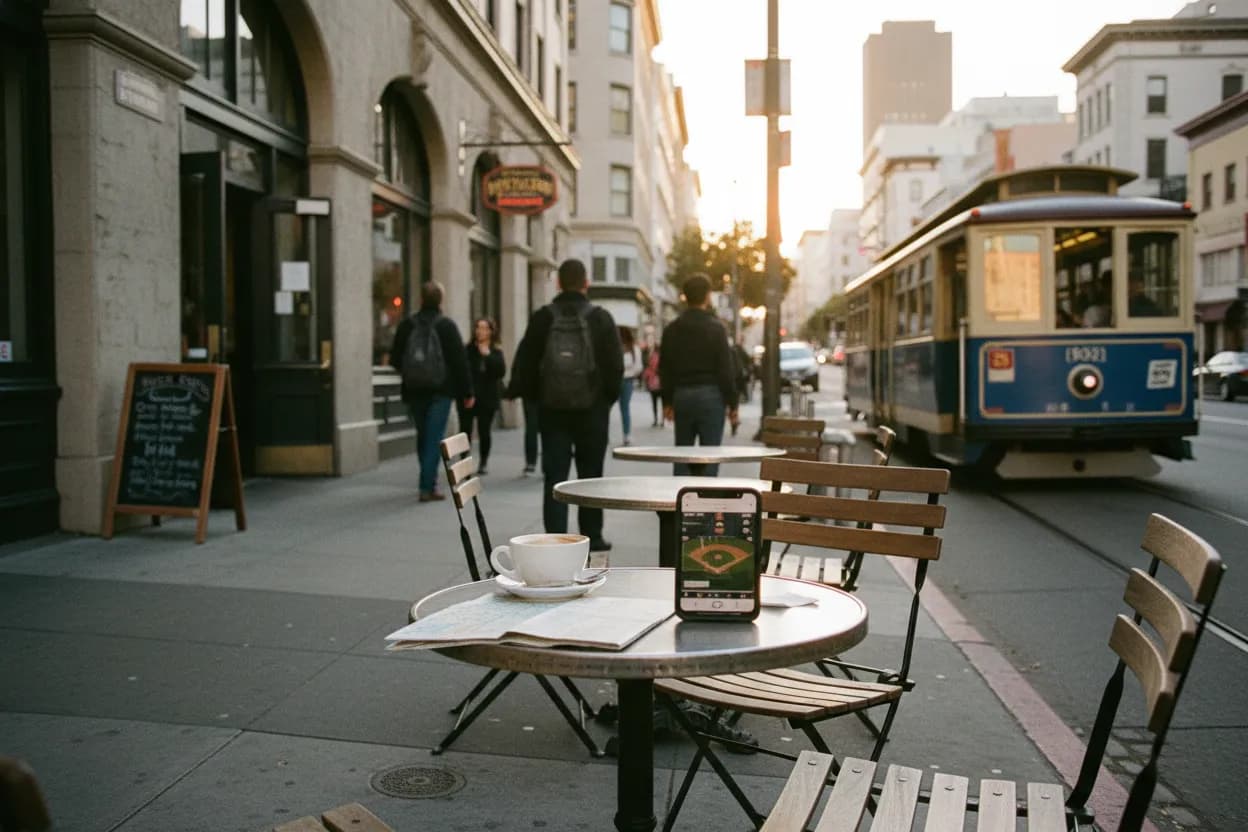
Calling ahead is still the most efficient watch-night tool. Ask for the exact screen location, not just whether “the game is on.” A corner television behind the bar is different from a central screen with clear sight lines. If audio matters, ask whether sound is expected for the game, whether sound changes during other programming, and whether captions are available if audio cannot be used.
Keep the call short and specific. Try: “Hi, I’m planning to come in for rays vs mariners tonight. Are you expecting to show that game on a visible screen for public customers, and is sound likely?” If the staff member cannot confirm, thank them and ask when a manager or shift lead might know. That is more useful than pressing for a promise they cannot make.
Do not treat a friendly answer as a guarantee. Staffing, equipment, channel access, crowd size, and competing requests can change. The value of the call is that it lowers uncertainty before you spend time crossing the city. Reconfirm later if your arrival time is close to first pitch or if you are bringing more than a couple of people.
Use transit and seating as tiebreakers
If two venues look equally good, let access decide. The San Francisco Municipal Transportation Agency provides a Trip Planner with options for Muni, biking, walking, driving, and parking-related planning. Use it before committing to a destination, then check current travel and transit updates. SFMTA also maintains information on Muni routes and stops, neighborhood service, and Muni Metro elevator status, all of which can matter if someone in your group needs a more predictable route.
Build your arrival time backward from seating, not just from first pitch. If the venue does not take reservations or cannot confirm space, plan to arrive early enough to handle a line, a full bar, or a screen that is already claimed by regulars. If your group includes someone who cannot stand for long, ask about public seating realities before you go. A place can be technically open and still be a poor fit for your group’s access needs.
Driving should not be the default tiebreaker unless you have verified the parking plan through official or venue-provided information. A transit-first plan usually gives you more flexibility if you need to pivot to the backup location. If a route changes or an alert appears, re-run the trip rather than assuming yesterday’s ride still works.
Keep a quieter second option nearby
A good San Francisco viewing plan has a second option that is intentionally different from the first. If your first choice is a loud sports room, make the backup a quieter public place that may still have screens. If your first choice is a calmer room, make the backup a livelier venue that is more likely to prioritize sports. The backup should solve a specific failure: no sound, no seats, no visible screen, too much crowding, or the wrong game on the main televisions.
Keep the second option nearby enough that the move does not ruin the night. This is where the SFMTA Trip Planner can be practical: compare walking, Muni, biking, or other travel modes before you leave home, not after the first location disappoints you. A backup that takes too long to reach is not really a backup; it is a new plan with new risks.
Tell your group the pivot rule in advance. For example: if the first venue cannot confirm the game, if there is no realistic seating within fifteen minutes of arrival, or if the sound situation matters and is not available, move. Clear rules prevent group indecision and keep the night from getting stuck in a doorway.
Recheck the plan on game day
Game-day verification should happen in three passes. First, recheck the matchup and timing on official sports sources. Second, recheck your venue through its official channel or a direct call. Third, recheck transportation on SFMTA before departure, including alerts, route information, and elevator status if relevant. The point is not to over-plan; it is to catch the change that would otherwise cost you the first few innings.
San Francisco’s official transit site also points users to 311 for help, with an outside-San-Francisco number and TTY listed on SFMTA’s page. Use official contact paths when you need civic or transit information rather than relying on screenshots. For parks or recreation-related locations, verify changing details directly with San Francisco Recreation and Park before assuming access, hours, or programming.
End with a simple go/no-go checklist: confirmed game, confirmed screen, sound expectation understood, group size communicated, transit route checked, access needs considered, and backup chosen. If any item is unknown, decide whether the uncertainty is acceptable. A watch night does not need hype to work; it needs a plan that survives ordinary San Francisco friction.
Tags: #raysvsmariners #SanFrancisco #WatchParties #BaseballNight #GameDayPlan #SFMTA #Muni #TransitCheck #SportsBarPlan #SFNightOut #CrowdCheck #BackupPlan #AskKarpo #BeforeYouGo
Sources consulted: sftravel.com · sfmta.com · sfrecpark.org
All trademarks are the property of their respective owners.
Ask Karpo first
Ask Karpo first when the plan has too many maybes: the screen, the sound, the route, the crowd, or the backup. Send your San Francisco starting point and preferred atmosphere, and use the answer as a checklist before you commit your night.