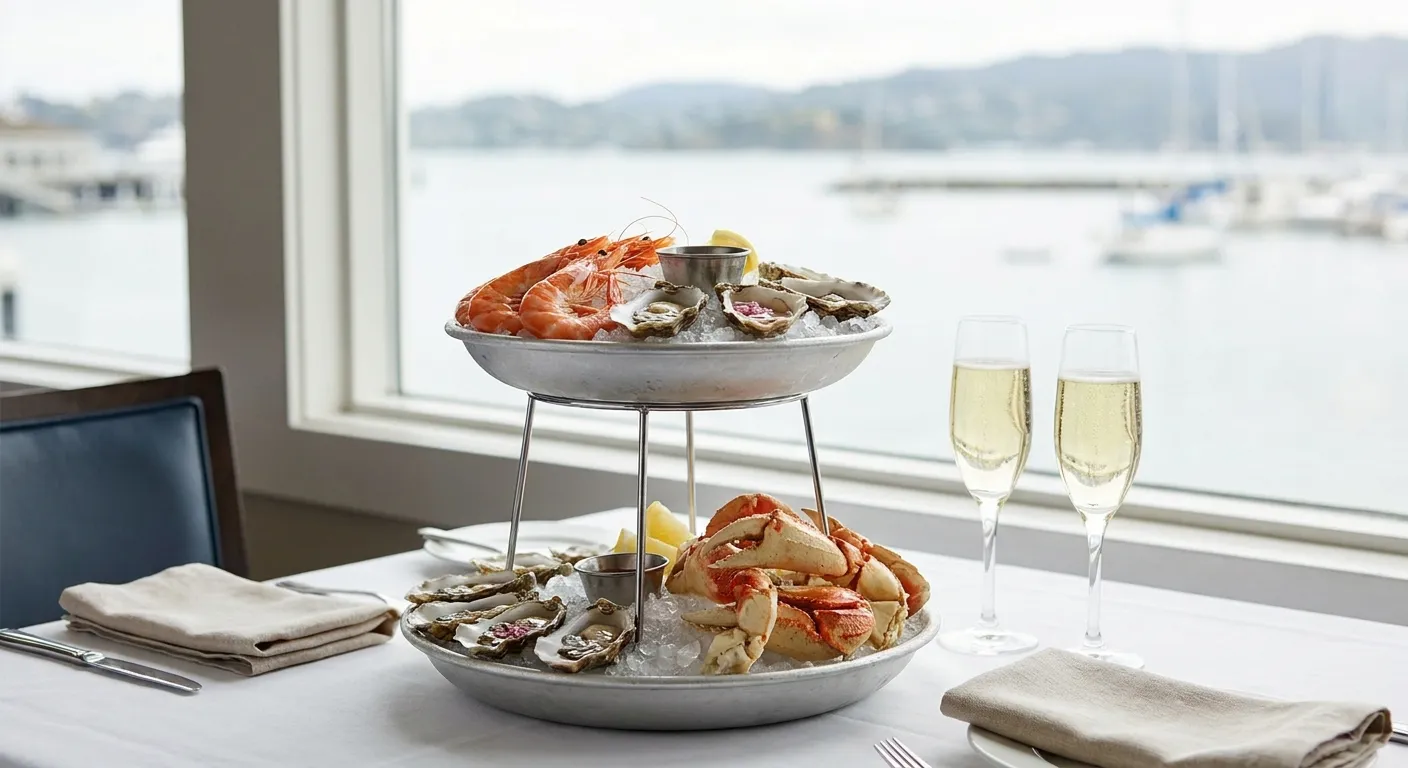
Everyone knows San Francisco can do oysters. But the city's raw bar scene runs a lot deeper than a dozen on the half shell at happy hour — there's silky crudo dressed in olive oil, ceviche bright with lime, aguachile that arrives still fighting, and the seafood tower, that gleaming two-story monument to deciding tonight is an occasion. Cold seafood is arguably what this city's kitchens do best: the fish is close, the fog keeps everything feeling appropriately chilled, and there's a bar for every mood and budget.
This guide covers the cold end of the menu — what the styles actually mean, where each one shines, and the honest math on when a tower is worth it. Oyster deals get their own article; this one is for everything else on the ice.
Crudo, Ceviche, Aguachile: A Two-Minute Decoder
The three headliners get confused constantly, and the difference matters when you're ordering. Crudo is the Italian-and-Japanese-inflected style: pristine slices of raw fish finished with olive oil, citrus, maybe chile — the fish is the whole show. Ceviche cures seafood in citrus until the flesh turns opaque and firm, and in the Peruvian tradition the leftover marinade, leche de tigre, is practically a course of its own. Aguachile is ceviche's Sinaloan cousin with the safety off: raw shrimp hit with lime and chile and served more or less immediately, so it lands sharper, hotter, and rawer.
- Order crudo when the fish list looks interesting — it's the style that hides nothing.
- Order ceviche when you want bright and refreshing; drink the leche de tigre, that's not optional.
- Order aguachile when you want heat and don't fear raw shrimp.
- Order the tower when you're four people, celebrating, and someone else is opening the wine.
NoPa: Bar Crudo Named Itself After the Assignment
Bar Crudo on Divisadero has been the city's reference point for raw fish that isn't sushi for years, and the name is a mission statement. The crudo sampler is the move — a lineup that runs through the day's fish, each slice dressed differently, so you get a full tour without committing to one direction. The menu goes deeper than raw, too, and their large seafood platter piles locally sourced oysters, mussels, and prawns alongside half a lobster and crab — a tower experience in a room where you can wear a hoodie.
The Embarcadero: Towers With a Bay View
If the tower is the point, go where the tower has a backdrop. Waterbar on the Embarcadero pairs one of the most expansive oyster selections on the West Coast with a shellfish spread and a floor-to-ceiling view of the Bay Bridge, and the whole room is built for the moment when the ice arrives on its stand. A short walk up the waterfront, Hog Island Oyster Co. in the Ferry Building is the more casual play — a marketplace institution where the shellfish comes from their own Tomales Bay farm and the line moves faster than you'd fear.
Between them sits the city's ceviche cathedral: La Mar Cocina Peruana at Pier 1½, chef Gastón Acurio's first U.S. outpost. Order from the cebiche bar and pay attention to the leche de tigre — this is the style done at full Peruvian fidelity, with local catch like halibut and Dungeness crab run through Lima technique. The room got a renovation and a modernized menu under executive chef Victoriano Lopez, so even if you went years ago, it's due a revisit.
Polk Street: Swan Oyster Depot, the Standing-Room Classic
No raw seafood guide gets out of San Francisco without Swan Oyster Depot, the century-old marble counter on Polk Street where the line forms before opening and nobody regrets joining it. There are no towers here, no crudo menu, no reservations — just impeccably fresh shellfish, old-school seafood cocktails, and counter guys who run the room like a family kitchen. It's cash-friendly chaos and one of the best arguments in the city that atmosphere is a seasoning. Go at an off hour if you can, and know the wait is part of the deal.
Fillmore and the Castro: Neighborhood Raw Bars
Little Shucker on Fillmore Street — from the team behind The Snug — is what happens when a raw bar commits to being a wine bar too: oysters, lobster rolls, and seasonal small plates alongside a curated list of old- and new-world bottles. It's the date-night pick on this list, polished without being precious. Over in the Castro, Anchor Oyster Bar has been the neighborhood's tiny seafood stalwart for decades; the raw selections are the warm-up and the cioppino is the famous closer, which makes it the rare raw bar where you should save room.
The Mission: Aguachile That Bites Back
For the spiciest corner of the cold seafood map, head to Chuy's Fiestas in the Mission, a family-run spot beloved for aguachile and ceviches served family-style. This is the version of raw shrimp that doesn't ask permission — lime-forward, chile-hot, and best attacked by a group with a stack of tostadas. If your raw bar experience has been all mignonette and champagne, this is the correction.
When Is a Seafood Tower Actually Worth It?
Honest answer: less often than the menu wants you to think, and more often than cynics claim. A tower is a poor value if you're two people who actually wanted crudo, because half the real estate goes to crackers, ice, and shrimp you could order à la carte. It earns its price when the table is four or more, when the spread includes the things that are annoying to order individually — crab, lobster, clams — and when the point of the night is the reveal as much as the food. Prices shift with the catch and the season, so check the current menu rather than budgeting off an old photo. And one practical rule: order the tower first, not last, so the kitchen isn't building it while you're already full.
Raw Bar FAQs
What's the difference between crudo and sashimi?
Both are raw sliced fish, but sashimi is served essentially unadorned, letting soy and wasabi happen at the table. Crudo comes dressed from the kitchen — olive oil, citrus, chile, flaky salt — so each bite is a finished dish. If you like the chef making decisions for you, order crudo.
Is ceviche safe to eat? The fish isn't cooked, right?
The citrus in ceviche denatures the proteins, which firms and turns the fish opaque, but it's not heat-cooked — reputable kitchens start with very fresh, properly handled seafood, which is exactly why you order it at established spots like the ones above rather than anywhere with a sad, long-sitting case. Aguachile is served even rawer, so the same logic applies double.
Do I need a reservation for these raw bars?
It splits down the middle. Waterbar, La Mar, and Little Shucker are book-ahead rooms, especially on weekends. Swan Oyster Depot famously takes no reservations at all — the line is the system — and the more casual counters run walk-in. If you're planning a tower for a group, call ahead regardless; ask Karpo to point you to whichever raw bar fits tonight's mood and party size.