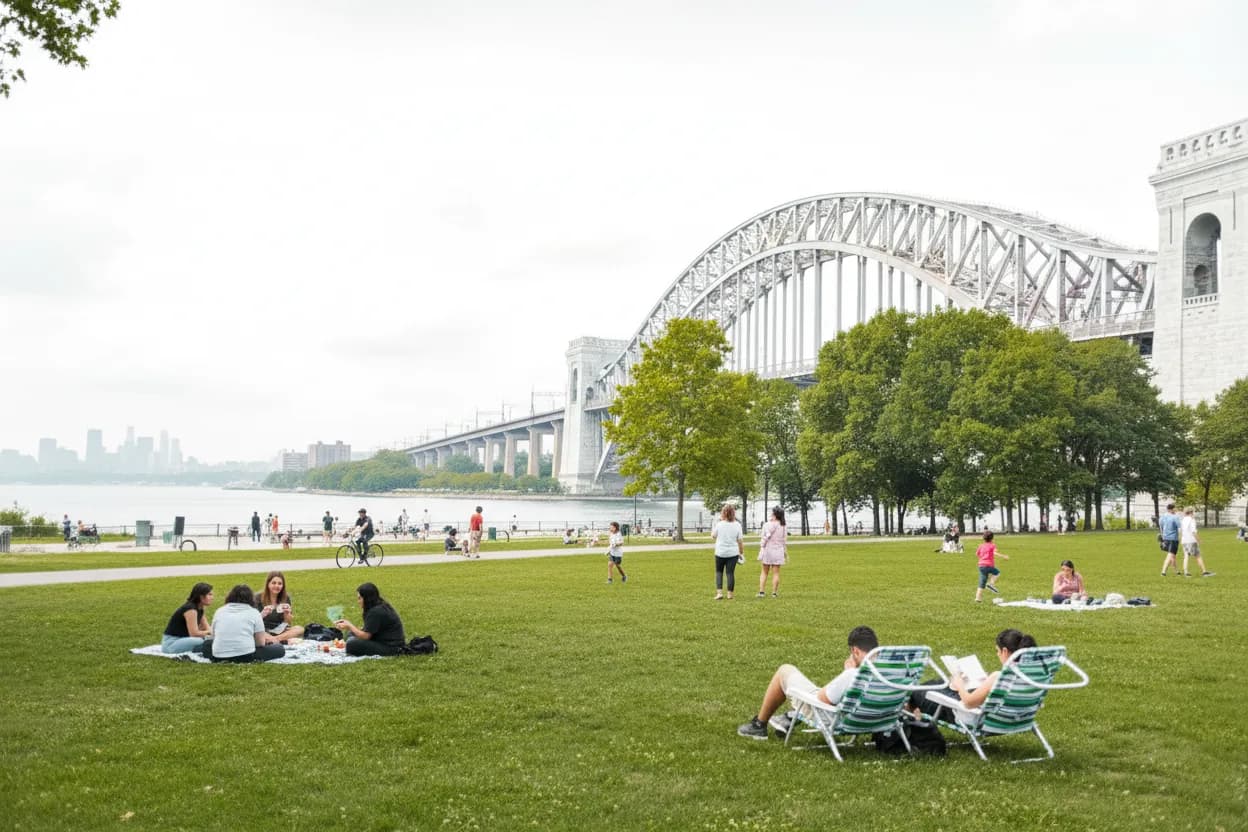
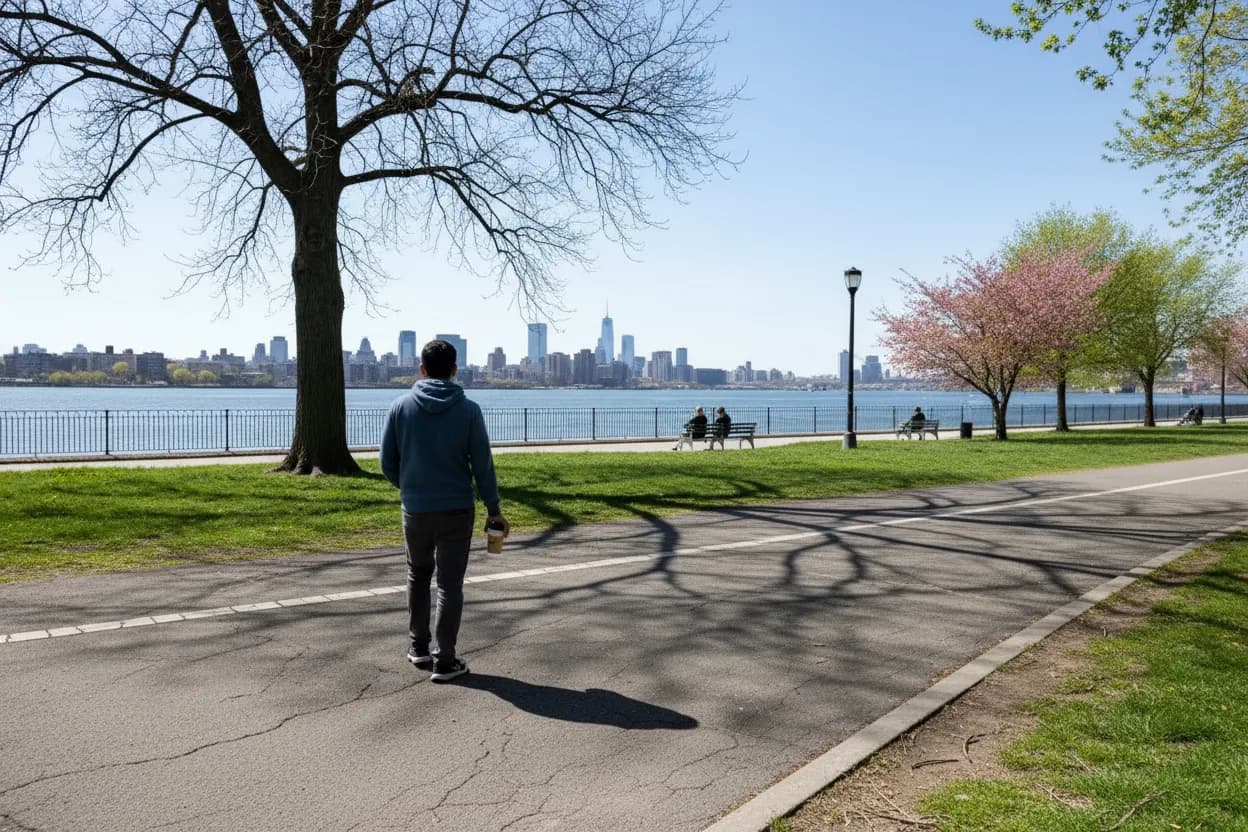
Ralph Demarco Park works best as a small, practical promise: a free waterfront place in Astoria where a tired Queens caregiver can sit, walk a little, and leave before the day gets louder. The park runs along Shore Boulevard by the East River, north of Astoria Park, with bridge and skyline views doing most of the emotional labor. This is not a destination that needs a long itinerary. It is a bench-first, low-demand route for a clear or breezy early morning, especially when you have one narrow window between responsibilities. The main risks are simple: wind, transit changes, open seating, and whether the path feels calm enough when you arrive.
Want a quieter Queens reset without overplanning your morning? Text Karpo with your nearest cross streets, mobility needs, and return deadline, and ask for a Ralph Demarco Park bench-walk check.
Start the Ralph Demarco Park Walk on Shore Boulevard
Treat Shore Boulevard as the anchor, not a place to wander indefinitely. The practical move is to arrive near the Ralph Demarco Park waterfront edge, take a slow look at the benches, and choose whether this is a sitting morning or a short out-and-back. Keep the first five minutes unambitious. If you are coming off a shift, a hospital visit, or a care handoff, the goal is nervous-system downshifting, not step-count completion.
NYC Parks source material confirms recent capital work in the area, including Ralph Demarco Park shoreline reconstruction listed as completed in September 2024. That matters because waterfront routes can change after resiliency and repair work, even when a park feels familiar. Before relying on a specific bench, railing, or path segment, check the current NYC Parks page or 311 for closures, maintenance notices, or storm-related restrictions that could affect the shoreline.
Use Sunrise Timing at Ralph Demarco Park Without Forcing It
Sunrise is the right idea here because the route depends on low social demand. Early morning usually gives caregivers more space to sit without negotiating crowds, music, games, or group hangouts. The view faces the East River and the Manhattan side, so the light may be indirect rather than cinematic. That is fine. The useful version is a clean horizon, moving water, bridge structure, and enough quiet to breathe before the next obligation.
Do not build the plan around a perfect sky. A clear or breezy morning can still feel harsh if wind comes off the river, and summer humidity can make even a short walk feel heavier than expected. Check the forecast, wind, and air quality before leaving. If the morning looks wet, smoky, unusually hot, or gusty, make this a transit-connected bench check rather than a full waterfront pause, then pivot quickly if the park does not settle.

Choose the Bench Before You Choose the Distance
For this article’s caregiver use case, the bench is the destination. Walk only after you know where you can stop. Ralph Demarco Park is narrow enough that pacing can stay flexible: sit first, walk a few minutes, turn back, and sit again if the space allows. That sequencing matters for anyone carrying fatigue, grief, sensory overload, or the mental residue of coordinating another person’s day before handling their own.
Bench availability is the main failure mode because it cannot be guaranteed by any official schedule. If every seat is taken, do not convert the visit into a forced standing waterfront moment. Keep moving slowly toward Astoria Park if you have enough energy, or make the reset shorter: one railing pause, one photo if it does not pull you into your phone, then leave. A low-energy plan fails when it starts demanding endurance.
Check N, W, and Q69 Options Before Leaving Home
Transit is useful but not frictionless. Third-party and MTA route pages identify Astoria-Ditmars Boulevard as the nearby N and W subway point, while MTA Bus Time lists the Q69 running via 21 Street and Ditmars Boulevard. For many Queens locals, that makes Ralph Demarco Park reachable without a car. Still, early morning service, weekend work, elevator status, and bus gaps can change the whole value of the outing.
The strongest move is to verify live service immediately before leaving, especially if you have a fixed return time for medication, school drop-off, an aide shift, or work. If the N or W is disrupted, look at the Q69 only if the bus stop timing is genuinely workable. If both look messy, skip the park and choose a closer free reset. The point is relief, not proving you can make Astoria work.
Read Ralph Demarco Park as a Quiet Utility, Not an Event
Ralph Demarco Park is most useful when you refuse to turn it into an outing. Bring water, a layer for wind, and only the bag you already need. Skip elaborate coffee detours unless you know they will not cost you the quiet window. A solo caregiver or one close friend is the best fit because the route rewards low conversation, easy silence, and the freedom to leave after twenty minutes.
The tradeoff is that there may be little programmed structure to hold your attention. That is a benefit if you are overstimulated, but it can feel flat if you need bathrooms, indoor seating, food, or a reliable protected place to wait. Do not sell it to yourself as a full morning plan. Use it as a small waterfront reset, then let nearby Astoria options become backups only if your energy improves.
Build an Accessibility Decision Around Surface, Wind, and Return Time
Accessibility here should be judged on the exact route you will take, not the park name alone. Waterfront paths can include uneven pavement, narrow pinch points, construction remnants, cyclists, dogs, and wind exposure. If you use a mobility aid, push a stroller, or recover from illness, check current NYC Parks information, recent map imagery, and the weather before committing. A bench route is only accessible if the getting there and getting back are manageable.
Set a return-time boundary before you arrive. Caregiving days often punish vague plans, and waterfront distance can expand without feeling like a decision. Pick the point where you will turn around, even if the view is good. If your body feels worse after the first bench stop, do not add Astoria Park or a longer shoreline loop. The win is leaving with enough capacity for the rest of the day.
Verify Ralph Demarco Park Conditions, Then Go or Skip
The final check should be boring and specific: park status, weather, transit, bathroom expectations, and whether you can leave quickly if the bench plan fails. NYC Parks pages are the right place to confirm official park information, while MTA pages or apps should handle service. Because exact hours, access rules, construction conditions, and service changes can move, do not rely on old screenshots, social posts, or memory from a previous season.
Go if the morning is clear enough, transit is stable, and you can accept a short visit even without your preferred bench. Skip if you need guaranteed seating, indoor shelter, restrooms, or a predictable accessible route that you have not personally checked. Ralph Demarco Park is a strong free Queens reset when expectations stay modest. Its value is not novelty; it is a quiet exit from demand, close enough to use and simple enough to repeat.
Tags: #RalphDemarcoPark #Astoria #QueensNYC #FreeThingsToDo #NYCParks #WaterfrontWalk #CaregiverReset #SunriseWalk #AstoriaQueens #LowEnergyNYC #QuietNYC #NYCTransit #AskKarpo #BeforeYouGo
Sources consulted: Source 1: php1-84.nycgovparks.org · Source 2: bt.mta.info · Source 3: bustime-classic.mta.info · Source 4: nycbirdalliance.org · Source 5: loc8nearme.com
All trademarks are the property of their respective owners.
Ask Karpo first
Tell Karpo your date, group size, budget, and starting neighborhood. We’ll check current access, timing, transit, and the cleanest plan for Ralph Demarco Park, Astoria, Queens before you head out.