
A raising kanan walk in Queens works best when you treat the borough as a lived-in place first and a screen cue second. The most useful version is not a spoiler chase or a fame hunt; it is a respectful neighborhood walk built around public streets, normal errands, and a few food stops that can stand on their own. That matters in NYC, where the fan impulse to look for a scene has to sit beside privacy, access, and whether a place is actually open. For fans, the goal is simple: stay on public ground, verify before you go, and let the street texture do the talking.
Share your Queens starting station, walking limit, food preference, and spoiler tolerance with Karpo for a respectful Raising Kanan public-street walk.

Why Queens Fits the Frame
Queens gives this kind of walk enough density to feel textured without forcing a single-story reading onto a neighborhood. That is the right tone for a show prompt like raising kanan, where the temptation is to turn every block into proof. Resist that. A better walk asks what a street would tell a visitor on an ordinary Saturday: who is moving through it, what kinds of storefronts face it, and how a corner changes after a few blocks. The payoff is not certainty about a scene location. It is a clearer eye for the borough as a real place with layered uses, visible routines, and a pace that changes block by block.
That framing also keeps the walk useful for the friend who is not chasing the show as intensely. If one person wants references and the other wants a good day outside, Queens can hold both without making either person feel trapped in trivia. Look for blocks where foot traffic, buses, and local businesses give you something to read even if you never identify a single production spot. The discipline is part of the pleasure: a neighborhood guide should help you notice scale, retail mix, and residential edges before you start assigning meaning to them. That's where the street-level fascination becomes sustainable.
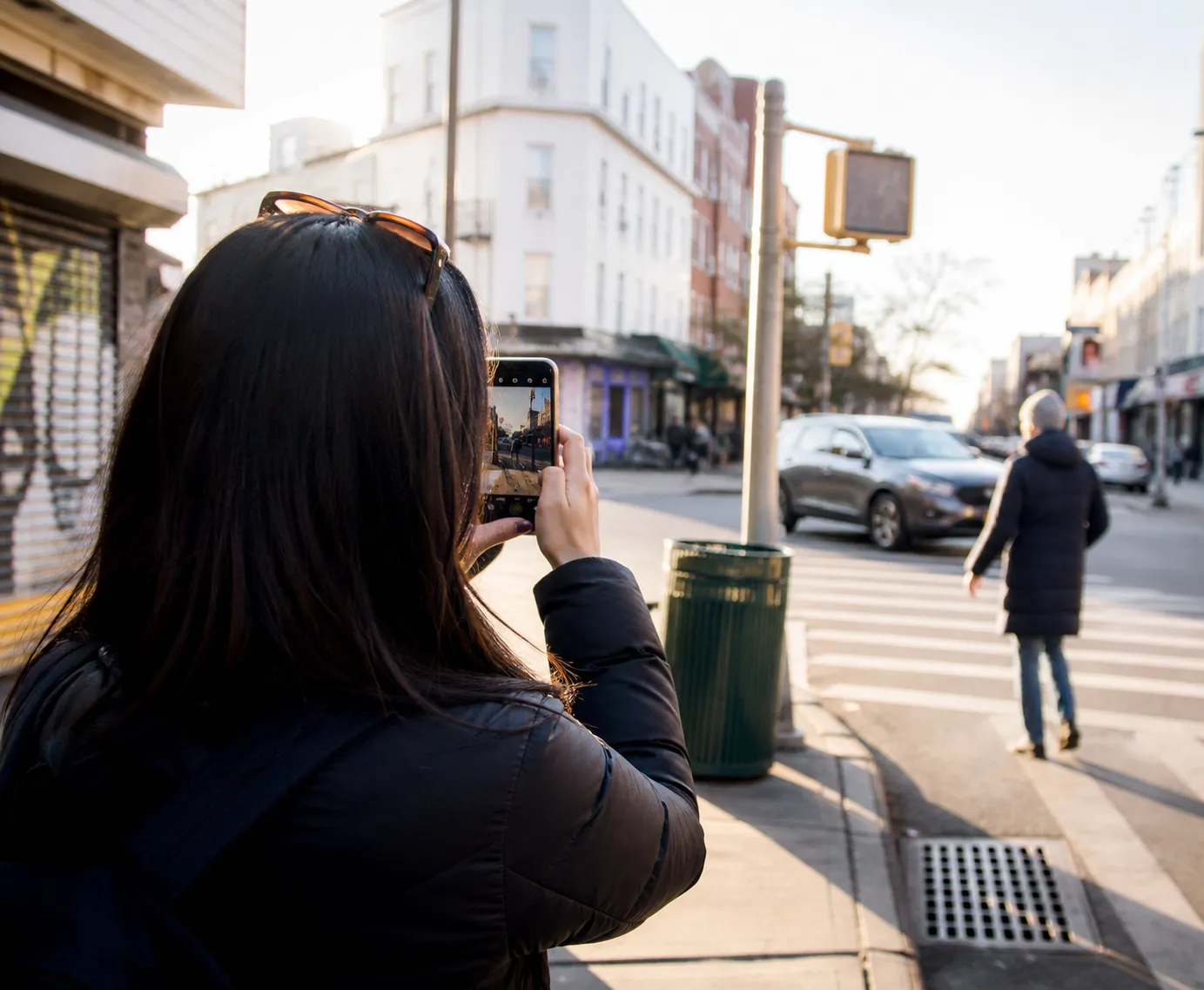
Let Transit Decide the Day
Start with the MTA, not with your memory of a clip. The official site points travelers to schedules, maps, fares and tolls, planned service changes, nearby stations and stops, real-time alerts, elevator and escalator status, accessibility, and trip resources. That is enough to shape the day without guessing. If the route depends on a specific line or a transfer that feels tight, check the current service page before you leave. The homepage also flags summer service changes on the 1, 2, and 3 lines and service changes on the G line in 2026, which is a reminder that a walk can break on transit, not distance.
For a Saturday daytime plan, build the route around the station you can reliably reach rather than the block you most want to photograph. That choice sounds less cinematic, but it makes the rest of the day calmer. Use the first stop to anchor the rest of the loop: if transit looks messy, shorten the walk and keep the food stops near the rail. If the line is running cleanly, give yourself room to linger. The right version of this outing is flexible. It should still work when you cut one stop, skip one detour, or decide the weather and service bulletin deserve more respect than the original idea.
Stay on Public Ground
The strongest version of a Queens film-location walk is also the least intrusive. Stick to sidewalks, public plazas, open storefronts, and whatever you can see without stepping into someone’s daily life. That matters because the fan fantasy of finding a hidden corner often ignores the fact that neighborhoods are not sets. A respectful route treats homes as homes and businesses as businesses, even when they look familiar from a screen. If a location is only interesting because it might have been used for filming, that is not enough reason to linger. Move through it like a guest, not a claimant.
Film-location literacy is mostly about observation, not confirmation. Notice whether a block reads as commercial, residential, or mixed; whether the street is built for pause or passage; and whether the place has room for a line, a crowd, or just a quick look from the curb. Those differences matter more than the fantasy of matching every shot. For a companion who is less invested in the show, this is still a strong way to spend an afternoon because the walk becomes a lesson in how NYC streets are organized. You are reading the neighborhood as it is, not as a rumor says it should be.

Make Food Stops Earn Their Place
Food stops should be checkpoints, not decorations. Use the city’s restaurant directory to confirm current business details before you fold a place into the route, and treat any listing as something to verify again on the day of the walk. That is the practical tradeoff in a fan-oriented outing: the more you want a specific vibe, the more you need to check whether the business still exists in the form you expected. A good stop should also give the walk a reset point. It lets the group sit, compare notes, and decide whether to continue or trim the loop without losing the day.
This is where the street-level fascination can become a better guide than a plot summary. A neighborhood snack break tells you more about local rhythm than another round of guessing. Watch how the room fills, what kind of pace the staff keeps, and whether the stop feels like a place people use on an ordinary weekday, not only when fans show up. Keep the standard simple: if you cannot verify the place, skip it and choose another public stop. That protects the neighborhood and keeps the outing from becoming dependent on one business behaving exactly like your memory wants it to, which is a poor way to spend a Saturday.
Who This Walk Works For
This kind of walk fits best for people who like a little media reference but do not need the day to prove a theory. A fan friend can enjoy the recognition game; a more casual companion can enjoy the city texture, transit decisions, and lunch stop without feeling dragged through a scavenger hunt. It also works for visitors who want a Queens neighborhood guide that does not pretend the borough is a backdrop instead of a place people live and work in. The route is strongest when curiosity stays curious and does not turn into entitlement. That balance is the whole point.
In practice, the day should feel light, public, and easy to revise. Check transit before leaving, keep the walk on visible streets, verify any business you plan to use, and leave room to change course if the block does not match the mood you wanted. That is the safest way to get value from a raising kanan search prompt without overreading the neighborhood. You end up with something better than a spoiler hunt: a Queens afternoon that teaches you how the city looks, moves, and feeds itself at street level, and one that can still work if your original plan needs a trim.
Tags: #NYC #Queens #NeighborhoodGuides #TVlocationwalk #foodstops #publicstreets #Saturdaydaytime #transitplanning
Sources consulted: Source 1: nycgovparks.org · Source 2: new.mta.info · Source 3: nypl.org · Source 4: a816-health.nyc.gov
All trademarks are the property of their respective owners.
Ask Karpo first
Ask Karpo to turn this NYC idea into a current plan for your date, budget, companion, transit preference, and energy level. Karpo can narrow the route and flag what to verify before you go.


