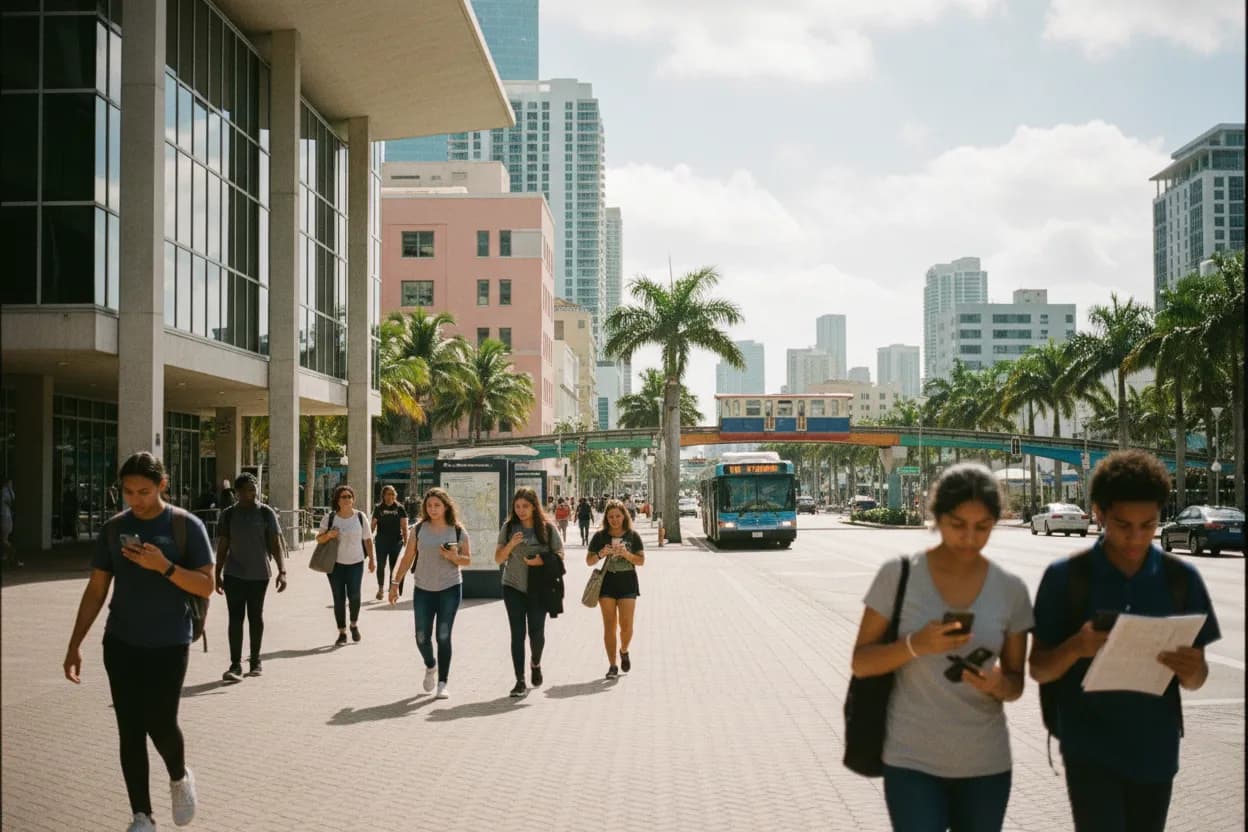
The phrase prince mongo can pull people into a fast search spiral, especially when students are already shifting from summer habits into back-to-school routines. In Miami, the useful move is not to chase a rumor, assume a sighting, or build a day around an unverified celebrity thread. Treat the phrase as a research prompt: What is being claimed, who is the source, and what public place can help you check it calmly? This route keeps the plan grounded in official Miami-Dade resources: the public library system for research access, county transportation pages for trip planning and alerts, and a backup mindset for closures, service changes, and crowd friction.
Want a faster pre-trip check before you leave home? Text Karpo with your Miami study stop, transit mode, and backup window, and ask for a source-first route.

Turn curiosity into a research question
Start by writing the claim in one sentence. If prince mongo is trending through your group chat, do not convert that curiosity into a destination, purchase, or schedule assumption. Ask what you actually need to know: Is this a historical reference, a social media claim, a local rumor, or just a search phrase moving through national attention? That distinction matters because Miami plans can become expensive in time, parking, and missed assignments when they are built on weak information.
For a back-to-school use case, make the research question practical. A student might ask, “What credible sources explain the term, and can I verify them before class?” A parent might ask, “Where can my student work quietly and check primary information?” A teacher might ask, “How can this become a media-literacy exercise instead of a rumor chain?” None of those questions requires a claimed Miami appearance, affiliation, private access, or guaranteed event.
Set a time box before you move. Give the first check 20 to 30 minutes at home, then decide whether a public study stop is worth the trip. That keeps the search from taking over the day and leaves room for transit delays, library access checks, and a backup choice if the first location is not workable.
Start with a reliable public resource
The Miami-Dade Public Library System is the cleanest starting point in the official materials provided here because it offers public-facing research tools rather than hype. Its site points users to a library card, branch locations, eContent, online newspapers and magazines, the catalog, learning and training, eBooks, audiobooks, and more. For a student trying to separate a real source from reposted noise, that is more useful than refreshing a social feed.
Before choosing a branch, check the library site directly. The official page includes an “Open Now” function and a “Find a Branch” link, both of which are the right places to confirm current access. It also carries a patron notice that the Miami Lakes Branch and South Dade Regional Libraries are closed for construction, renovations, and improvements. Do not make either one your default study stop without checking the current official notice first.
If you already have a library card, the digital route may be enough. The library site says users can download and stream digital books, audiobooks, movies, music, and more anytime, anywhere, free with a library card. It also highlights online newspapers and magazines. That means the first layer of verification can happen from a kitchen table, dorm room, or bus stop before anyone commits to a cross-county trip.
Compare primary reporting before opinions
Once you have a place to research, separate primary material from reaction. The official extracts do not provide facts about prince mongo itself, and that absence is important: this article should not pretend to verify a claim that the supplied public sources do not confirm. Use library databases, online newspapers, magazines, and catalog tools to look for original reporting, dated references, and named sources before reading commentary.
A useful Miami classroom method is the three-column check. In the first column, paste or write the claim. In the second, list the source type: official page, news report, archive, opinion, social post, or anonymous repost. In the third, mark what is still missing. If the missing piece is a date, location, organizer, transit update, or access rule, do not fill the gap with guesses.
This is where skepticism protects the day. A claim that sounds local is not the same as a public Miami event. A search phrase that is timely is not the same as an endorsement. A screenshot is not a schedule. Keep opinions for later, after you have compared sources that show where the information came from and whether it can be checked.
Choose a study stop that fits the task
For a focused back-to-school session, choose the stop by the task, not by the most dramatic route. If the student needs quiet reading, a branch with current open status matters. If the assignment requires digital articles, a library card and online access may matter more than a seat. If a group project is involved, confirm the branch page and any current library guidance before assuming space will be available.
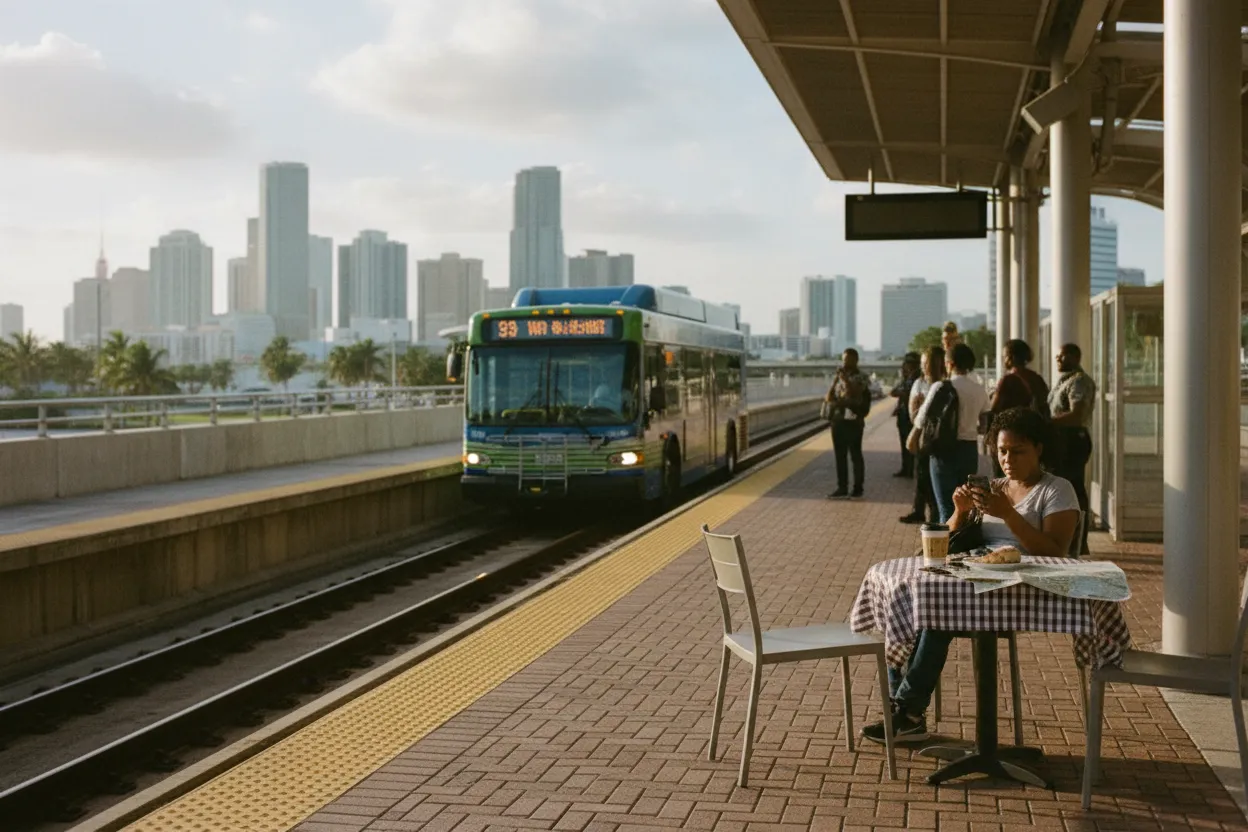
Use Miami-Dade Transit planning tools before leaving. The county transportation page points riders to service updates, rider alerts, a trip planner, transit tracker, and the GO Miami-Dade Transit mobile app, which can be used to plan a trip, track a ride, purchase a mobile pass, and more. Those are official checks to make before depending on a bus, train, or Metromover connection.
Students should also verify fare-related details on the official transit page before riding. The county page states that full-time students ride Metrobus and Metrorail for half the price, but the conditions and current process should be checked through Miami-Dade Transit. A back-to-school plan works best when the rider confirms eligibility, route, service status, and any alert before the first transfer.
Add one low-cost reset nearby
A verification route needs a reset because research fatigue is real. Keep it low-cost by choosing something that does not depend on a ticketed event or unverified appearance: a short walk near the study stop, a snack break you can afford, or a quiet pause before the ride home. The key is to avoid building the day around anything the official sources here do not confirm.
Crowd risk is not only about big events. In Miami, a normal school-week afternoon can feel crowded if a route is delayed, a station connection changes, or a library branch is busier than expected. Build a cushion between the research block and the next obligation. If the goal is a one-hour source check, do not schedule it so tightly that one missed bus turns the whole plan into stress.
The backup choice should be decided before departure. If the first branch is closed, crowded, or not suitable, switch to the library’s digital tools or another branch found through the official site. If the transit route becomes unreliable, use the county’s rider alerts, service updates, trip planner, or transit tracker to choose whether to wait, reroute, or go home and finish online.
Verify hours and access before leaving
Make the final check in this order: library access, transit service, route timing, and return plan. On the library side, use the official Miami-Dade Public Library System site for open status, branch information, card access, eContent, newspapers, magazines, and any patron notices. Remember that the official extract specifically flags the Miami Lakes Branch and South Dade Regional Libraries as closed for construction, renovations, and improvements.
On the transit side, check Miami-Dade Transportation and Public Works for alerts and service updates. One time-sensitive notice in the official extract says that on Saturday, Aug. 15, Metromover service will begin operating at 2 p.m. while upgrade work continues. Because today is Wednesday, Aug. 12, 2026, that notice matters for anyone considering a Saturday downtown connection and should be verified again before travel.
Do not rely on memory for accessibility or service conditions. The transportation page includes elevator and escalator status, accessible transit services, rider alerts, service complaints, safety concerns, lost items, and other service-request paths. If access affects your trip, check the official status before leaving. The best Miami source-checking route is the one that still works after the first plan changes.
Tags: #PrinceMongo #Miami #BackToSchool #MiamiDade #MiamiDadeLibrary #MiamiDadeTransit #StudentLife #SourceChecking #MediaLiteracy #TransitTips #LibraryCard #LocalLife #AskKarpo #BeforeYouGo
Sources consulted: mdpls.org · miamidade.gov · miamidade.gov
All trademarks are the property of their respective owners.
Ask Karpo first
Ask Karpo first when a viral phrase starts shaping your Miami day. Send the claim, your starting point, your study goal, and your transit preference. Karpo can help turn the noise into a checkable route, a realistic backup, and a before-you-go list.