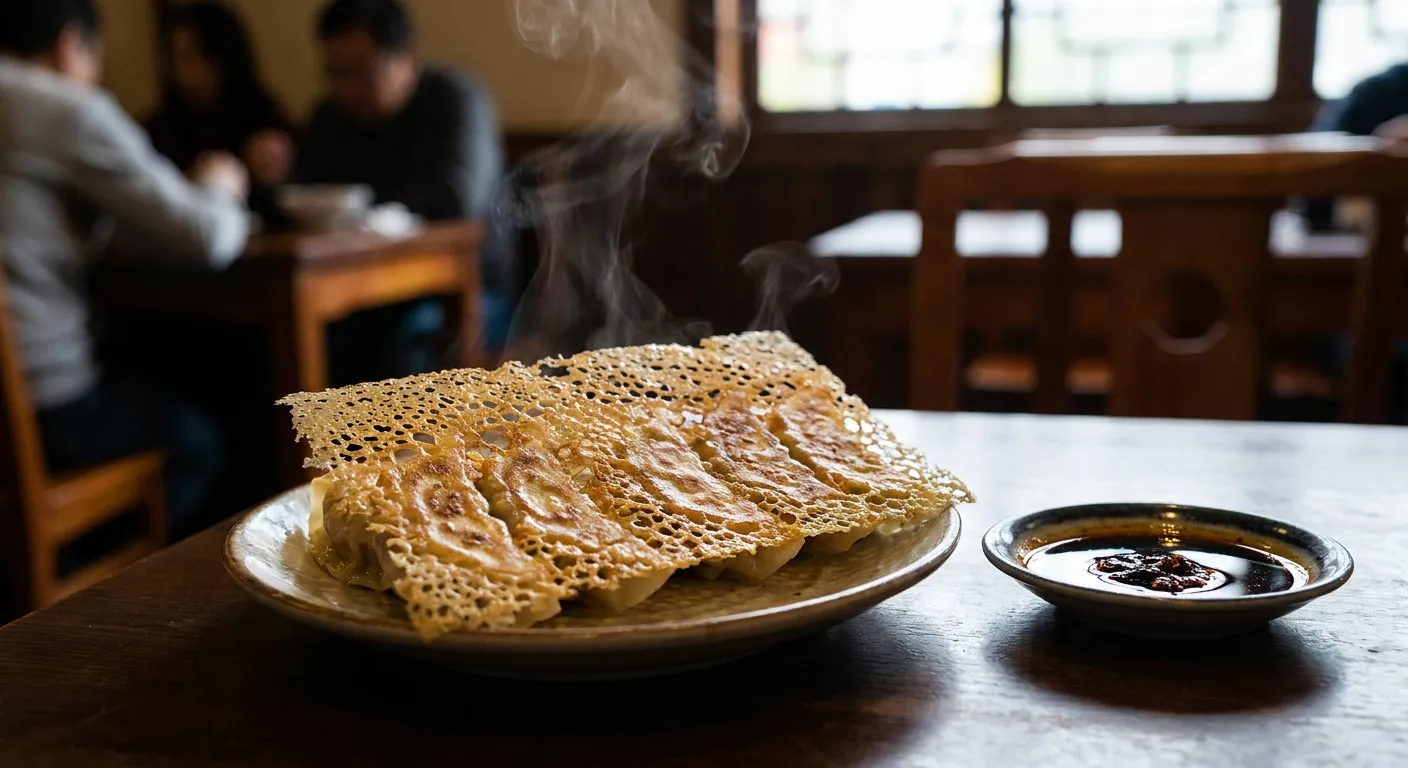
A potsticker lives or dies by its bottom. The dish is guotie — literally 'pot stick' — a northern Chinese dumpling that gets seared in a hot oiled pan, steamed under a lid until the filling cooks through, then uncovered so the base fries back to a deep golden crunch. Done right, you get three textures in one bite: crisp underside, tender pleated top, juicy filling. Done wrong, you get a greasy sole or a steamed dumpling with a tan. San Francisco, blessedly, has kitchens that take the bottom seriously.
This guide is potsticker-specific — no soup dumplings, no delicate steamed anything. These are the rooms and takeout windows where the steam-fry is treated as a craft, plus the dipping-sauce logic that makes a good guotie great.
What Separates a Real Guotie From a Sad Potsticker
The potsticker's defining move is the steam-fry: sear, steam, crisp, in that order. The wrapper is thicker than a soup dumpling's — it has to survive direct pan contact — and the filling is usually pork with cabbage or chives, seasoned hard enough to stand up to browning. The fancy flourish you'll see around town is the lattice skirt: a thin flour-and-water slurry poured into the pan that fries into a shattering golden web connecting the dumplings, so the whole batch flips out as one crackling sheet. It's the same 'wing' technique Japanese kitchens use for hanetsuki gyoza. A skirt isn't mandatory — plenty of great old-school guotie skip it — but wherever you order, the bottom should be audibly crisp and the dumpling should release from it cleanly, not soak in oil.
San Tung: The Shandong Standard on Irving
San Tung in the Inner Sunset is famous for its dry-fried chicken wings — the line out the door is for those — but the potstickers are the quiet reason regulars keep coming back. The kitchen's roots are in Shandong, potsticker heartland, and it shows: these are big, generously stuffed dumplings with thin, properly browned bottoms and a pork-and-napa-cabbage filling that tingles with fresh ginger. Order both the wings and the potstickers and you'll understand why this room has stayed packed for decades. Expect a wait at peak hours; the turnover is fast.
Dumpling Kitchen: Parkside's Crescent Specialists
Out on Taraval Street, Dumpling Kitchen runs a long Shanghainese menu, and its pork potstickers are textbook: crescent-shaped, pan-fried on one side only, so you get maximum contrast between the crisped base and the soft pleated top. It's a neighborhood workhorse — the kind of place where you order potstickers as the opener, a plate of greens, and whatever noodle dish the next table has, and everything arrives fast and hot. Note the midday break between lunch and dinner service on most weekdays.
Mini Potstickers: The Blurred Line on Irving
Mini Potstickers in the Outer Sunset put its thesis in its name. The specialty here, since it opened in 2023, is a thumb-sized dumpling sold by the dozen — juicy pork inside, slightly crispy bottoms, finished with sesame seeds and scallions. Purists will note these lean toward the pan-fried-bun family, blurring the line between potsticker and sheng jian bao, and purists are welcome to argue about it while everyone else eats. The spot went from neighborhood secret to citywide destination after a Top Chef alum's social media post sent the internet its way, so lines have gotten more real. Go at an off-hour.
United Dumplings: Bernal's Creative Streak
On Cortland Avenue in Bernal Heights, United Dumplings has been folding since late 2020, and it treats the potsticker as both a classic and a canvas. The traditional versions are executed cleanly, but the menu's personality shows in the creative fillings — including a potsticker packed with chicken, sweet corn, and mozzarella that sounds like a dare and eats like a hit. It's a warm, small-room operation that has earned the neighborhood-institution title fast, and it's the pick on this list for a table of people who don't all want the same thing.
Dumpling Time: The Gyoza Cousin in the Design District
Gyoza is the potsticker's Japanese cousin — thinner wrapper, finer filling, same steam-fry logic — and Dumpling Time on Division Street is where SF does the crossover with the most energy. The room channels an Asian night market, the kitchen is open so you can watch the folding, and the crispy gyoza come in pork, chicken, and seafood versions, with a wagyu option for when you're feeling flush. It's the loudest, most date-friendly stop on this list, and the one to pick when your group wants potstickers plus everything else in the dumpling universe.
Good Mong Kok: The Chinatown Takeout Window
Good Mong Kok Bakery on Stockton Street is takeout-only, cash-friendly, and mobbed for a reason: almost everything in the case costs pocket change, and the potstickers are one of the best cheap bites in Chinatown. There's no dining room and no ceremony — you point, you pay, you carry your box to Portsmouth Square like generations of smart people before you. It opens early morning and winds down by dinnertime, so this is a lunch move, not a dinner plan.
Dipping Sauce Logic
A potsticker's crust is a delivery system for sauce, and the sauce deserves more thought than a puddle of soy:
- Start with black vinegar as the base — its mellow tang cuts the fried richness without drowning the filling.
- Add soy sparingly. The filling is already seasoned; you're accenting, not salting.
- Chili oil or chili crisp goes on top of that base, not instead of it. A spoonful per saucer is plenty.
- Fresh ginger threads, if offered, belong in the vinegar. They do more work than any other add-in.
- Dip the crispy bottom, not the pleats — the crust carries sauce better and stays crunchy longer.
Potsticker FAQs
What's the difference between a potsticker, a dumpling, and gyoza?
All potstickers are dumplings; not all dumplings are potstickers. A potsticker (guotie) is specifically pan-fried using the steam-fry method, giving it a crispy bottom and tender top. Gyoza is the Japanese adaptation — typically a thinner wrapper and a finer-ground, garlic-forward filling — cooked the same way. Boiled and steamed dumplings are their own categories entirely.
Why are they called potstickers?
The name is a direct translation of guotie: 'pot' plus 'stick.' The dumpling sticks to the hot pan while it sears, and that controlled sticking is exactly what builds the browned, crispy base. It's the rare dish named after what looks like a cooking mistake.
How do I keep takeout potstickers crispy?
Ask for sauce on the side, keep the container cracked open so steam escapes on the ride home, and re-crisp them in a dry or lightly oiled pan over medium heat for a couple of minutes, bottoms down. A microwave will make them soft and sad. If you're not sure which spot is closest when the craving hits, ask Karpo and it'll route you to the nearest crispy bottom.