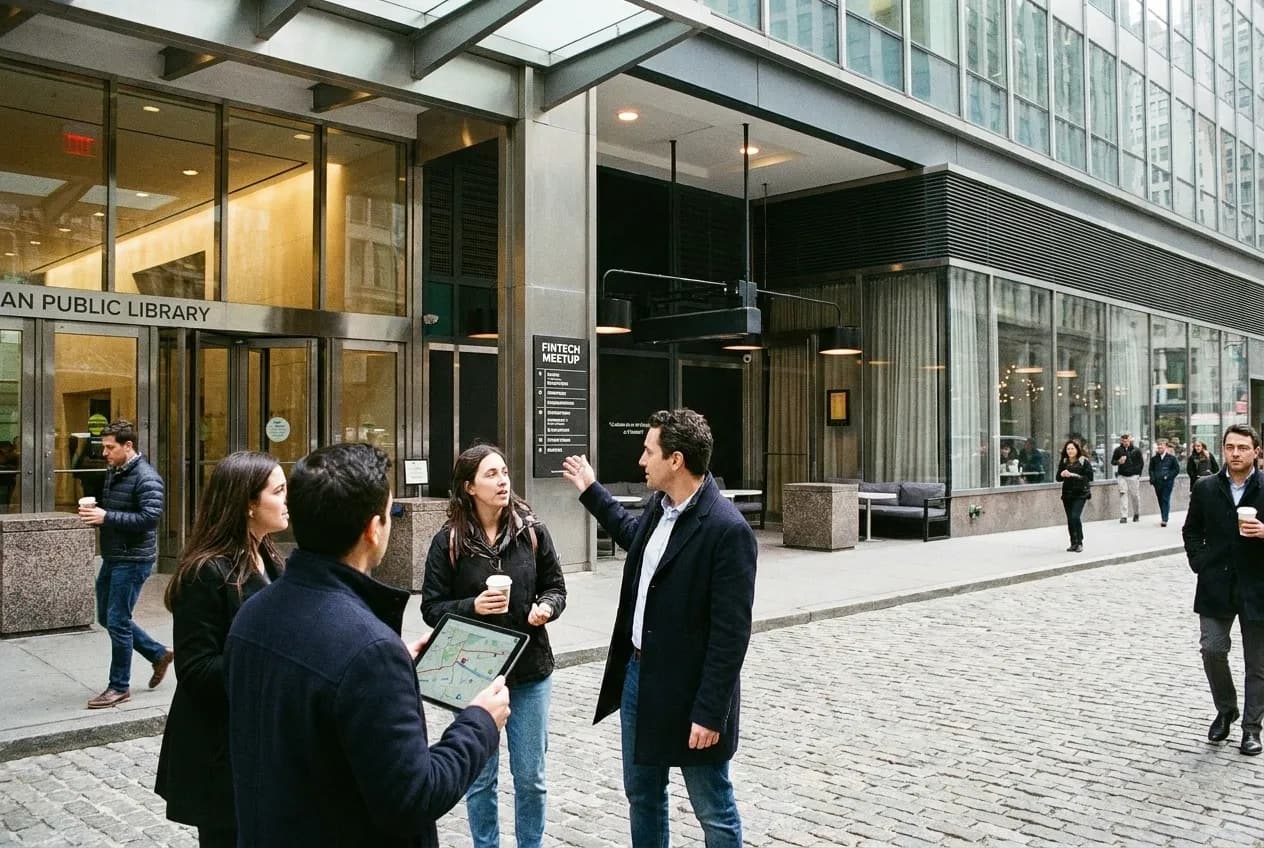
The rise of Polymarket and other decentralized prediction markets has sparked curiosity among fintech students and crypto-curious New Yorkers who want to understand how blockchain-based betting differs from traditional gambling—and whether it's legal to use in New York State. This self-guided Financial District walk maps a route connecting public libraries, coworking spaces known for crypto meetups, and cafés where fintech discussions unfold, designed for solo explorers or small groups willing to invest weekday lunch hours or weekend afternoons in legal and technical research. Unlike casual neighborhood strolls, this moderate-difficulty route requires stopping to read regulatory documents, compare platform whitepapers, and verify claims about decentralized finance, making it ideal for those intrigued but confused by the intersection of prediction markets, smart contracts, and U.S. securities law. You'll leave with a clearer framework for evaluating whether platforms like Polymarket operate in a legal gray zone or outright prohibition in New York, though no walk can substitute for professional legal advice.
Text Karpo your current understanding of prediction markets, whether you want legal clarity or technical how-tos, your available weekday hours, and your borough—we'll send a Financial District walk with library and meetup stops, explain Polymarket's legal status, and suggest one online SEC tutorial as a backup.

Mapping Your Research Route Through Lower Manhattan's Fintech Corridor
Start your walk near the Bowling Green or Wall Street subway stations—the MTA offers real-time service alerts and elevator status updates at mta.info, essential for planning accessible routes through the Financial District's older station infrastructure. From there, plot a loop that includes the New York Public Library's Science, Industry and Business Library branch if it maintains Financial District hours, any publicly accessible coworking lounges in fintech office buildings, and parks like Battery Park or Zuccotti Park where you can sit and read regulatory filings on your device. The goal is not to attend formal workshops—schedules and availability change constantly—but to create quiet research intervals between walking segments, allowing you to digest complex topics like the Commodity Futures Trading Commission's stance on event contracts versus the Securities and Exchange Commission's view of investment contracts.
Carry a charged device with offline access to key documents: the CFTC's orders regarding prediction market operators, New York State's definition of gambling under Penal Law Article 225, and Polymarket's own terms of service that specify geographic restrictions. This route works best on weekdays when libraries and coworking spaces maintain longer hours, though weekend walks offer quieter streets and less crowded café seating. Moderate difficulty stems not from physical exertion but from the cognitive load of parsing legal language while navigating; plan two to three hours if you intend to read thoroughly rather than skim.

Verifying Polymarket's Legal Status in New York State
The central question—whether New York residents can legally use Polymarket—requires examining multiple regulatory layers that shift as enforcement priorities and court rulings evolve. As of mid-2026, Polymarket has faced CFTC enforcement actions in prior years for offering event contracts to U.S. users without proper registration, leading the platform to implement geographic restrictions; your research task is to verify current terms of service and check whether the platform blocks New York IP addresses or relies on user attestations. New York's gambling statutes traditionally define illegal betting as wagering on contests of chance or future contingent events, yet prediction markets argue they aggregate information rather than create gambling opportunities—a distinction courts have not uniformly accepted. Sit in a Financial District park and compare how Polymarket's interface describes its markets versus how Kalshi, a CFTC-regulated competitor, frames similar event contracts; note whether one emphasizes forecasting accuracy and the other entertainment.
Understand that "legal in New York" exists on a spectrum: a platform might be federally compliant but still violate state gambling laws, or it might operate offshore and simply be inaccessible rather than explicitly illegal for users to attempt access via VPN. Your walk should include a stop to search New York State Attorney General press releases and CFTC enforcement databases on your device, checking for recent actions. The confusion you feel is justified—regulatory clarity remains elusive, and platforms often update geographic restrictions without public announcement. Document your findings with screenshots and timestamps, recognizing that any conclusion you draw today may be outdated by next quarter's enforcement sweep or legislative amendment.
Understanding Prediction Markets Versus Traditional Gambling Mechanics
Prediction markets like Polymarket allow users to buy and sell shares in outcomes—"Yes" or "No" tokens on whether an event will occur—with prices fluctuating based on collective belief and information flow, theoretically aggregating dispersed knowledge into a probabilistic forecast. Traditional sports betting or casino gambling, by contrast, pits the bettor against a house with fixed odds or mechanical randomness, designed to extract profit through house edge rather than to surface accurate predictions. The distinction matters legally because prediction markets claim social utility: they can reveal market sentiment about election outcomes, product launches, or policy decisions, serving as information tools rather than pure entertainment. Walk to a café near Wall Street and sketch out the difference: if you buy a "Yes" share at 60 cents that pays one dollar if the event occurs, you profit 40 cents if correct, but you also signal to the market that you believe the probability exceeds 60 percent—your trade adds information.
Critics counter that this distinction is cosmetic; both activities involve risking money on uncertain future events, and the "information aggregation" benefit does not exempt prediction markets from gambling statutes that protect consumers from financial harm and addiction. As you walk, consider who benefits from framing prediction markets as distinct: platform operators seeking lighter regulation, researchers wanting access to forecast data, or users who prefer the intellectual framing of "forecasting" over "betting." The legal confusion you're navigating reflects genuine philosophical disagreement about whether society should treat probabilistic forecasting as a regulated financial activity, a prohibited gambling product, or a protected form of speech and information exchange. No single walk will resolve this debate, but understanding the arguments equips you to evaluate new platforms critically.
Finding Educational Resources and Fintech Meetup Spaces Downtown
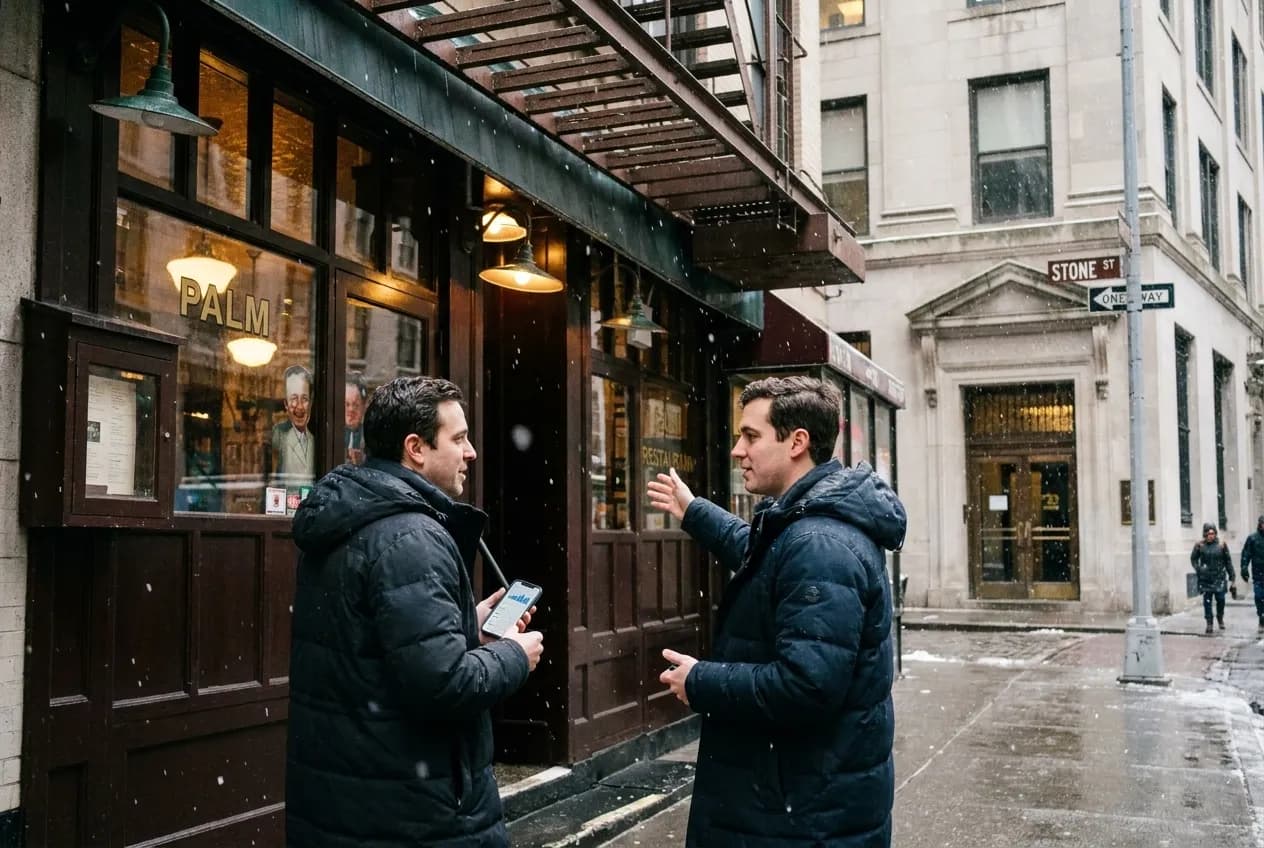
The Financial District hosts coworking spaces, accelerator offices, and occasional meetup groups focused on blockchain, decentralized finance, and prediction markets, though specific venues and schedules fluctuate as startups relocate and organizers change. Rather than relying on a fixed list of addresses, use your walk to identify spaces with public-facing event calendars: check building lobbies for fintech accelerator nameplates, search Meetup or Eventbrite for "crypto NYC" or "DeFi NYC" groups that list Financial District locations, and note cafés with whiteboards advertising tech talks. The New York Public Library system may offer digital literacy workshops that touch on blockchain basics, though you'll need to verify current programming at nypl.org rather than assume availability. Your goal is reconnaissance—mapping where educational conversations happen so you can return for specific events that match your learning needs.
Prepare for variability: a coworking space that hosted weekly crypto office hours in 2025 may have pivoted to AI topics by mid-2026, and free workshops often fill quickly or require advance registration. Bring business cards or a notebook to jot down contact information if you encounter knowledgeable individuals willing to explain prediction market mechanics or legal nuances. Solo walkers benefit from the flexibility to linger when they discover a relevant resource; those with tech-interested friends can divide research tasks, with one person focusing on legal documents and another on platform technical architecture. The moderate difficulty rating reflects this need for adaptive research—you're not following a guided tour but constructing your own educational experience from available public resources.
Evaluating Whether This Walk Matches Your Learning Style and Risk Tolerance
This route suits individuals who prefer self-directed research over structured classes, who feel comfortable reading legal and technical documents without expert interpretation, and who accept that their conclusions may be provisional given the unsettled regulatory environment. If you need definitive answers—"Can I legally use Polymarket in New York, yes or no?"—this walk will frustrate you, because the honest answer as of August 2026 involves tradeoffs: the platform may block New York users, enforcement may be rare even if terms are violated, and future court rulings could shift the landscape. The walk works best for those intrigued by the ambiguity itself, who want to understand why prediction markets occupy a legal gray zone and how different stakeholders argue their positions. Crypto-curious learners gain a framework for evaluating not just Polymarket but any emerging decentralized platform that claims to operate differently than traditional regulated services.
Consider your risk tolerance for legal uncertainty: researching prediction markets does not require using them, and this walk emphasizes understanding over participation. If your ultimate goal is to place bets on event outcomes, consult a lawyer familiar with New York gambling and securities law before funding any account. If your goal is to understand how blockchain technology enables new market structures and why regulators struggle to classify them, this Financial District route provides the physical and intellectual space to explore those questions. Pack water, a portable charger, and patience for dense reading; the reward is not a simple answer but a nuanced appreciation of how technology, law, and finance intersect in one of the world's most regulated cities.
Tags: #Polymarket #predictionmarkets #FinancialDistrictNYC #decentralizedfinance #blockchaineducation #cryptolegalresearch #fintechmeetups #NYCwalkingtours #DeFiplatforms #gamblinglawNewYork
Sources consulted: Source 1: nycgovparks.org · Source 2: new.mta.info · Source 3: nypl.org · Source 4: a816-health.nyc.gov
All trademarks are the property of their respective owners.
Ask Karpo first
Ask Karpo to turn this NYC idea into a current plan for your date, budget, companion, transit preference, and energy level. Karpo can narrow the route and flag what to verify before you go.


