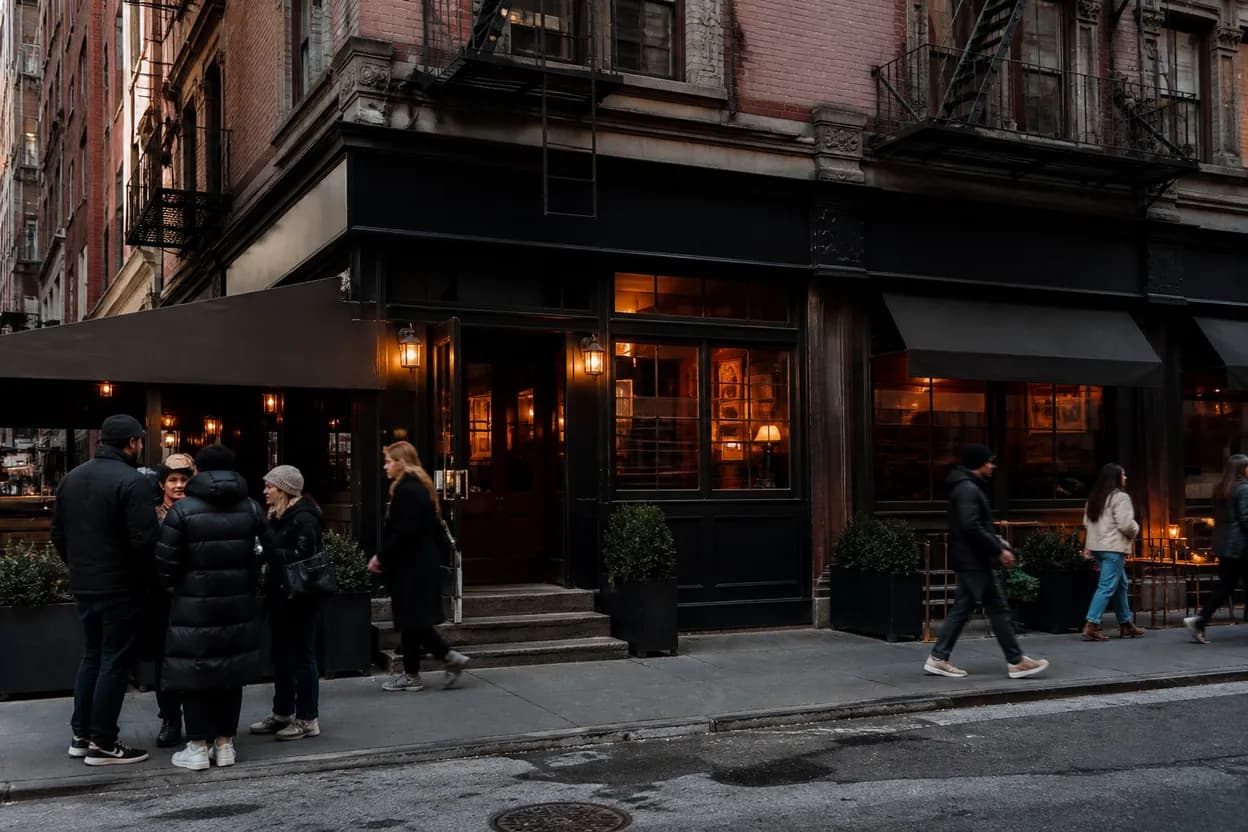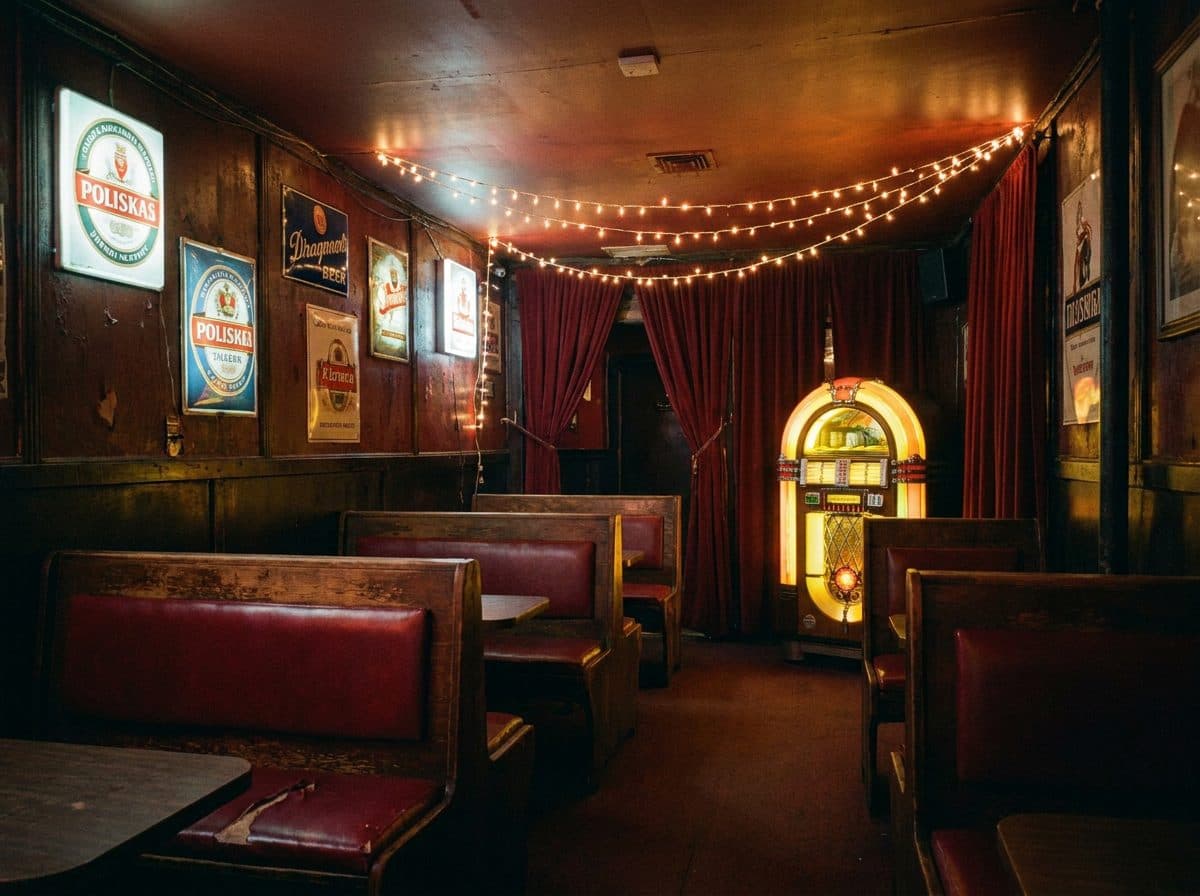
The door sits flush with the sidewalk on a residential stretch where Greenpoint's Polish heart still beats steady, no sign bigger than a hand, the kind of entrance that looks like it leads to someone's apartment until the bass line leaks through at dusk. Inside, the front room runs narrow and fluorescent-bright, a handful of stools facing shelves of vodka bottles with labels in two alphabets, but the real room waits past the archway in back—a low-ceilinged cavern where the jukebox glows amber and the crowd thickens after nine, voices layering in English and Polish until the language of the night becomes rhythm itself. Those who find it early claim the corner booths and stay through last call, and those who stumble in late learn quickly that this is not a bar designed for discovery but for return.
The Geography of a Holdout
Greenpoint's northern blocks hold the last concentrated stretch of Polish-speaking storefronts in a neighborhood that has spent two decades folding luxury towers into its skyline. This bar sits among them—a survivor not by reinvention but by refusal, the kind of place where the rent is old and the lease older. The surrounding blocks mix pre-war walkups with new glass-front cafés, but the regulars here have been coming since before the L train became a punchline, back when the entire avenue spoke their first language. The bar itself occupies a double storefront, the front half functioning as a package goods shop during daylight hours, the back room opening properly only after the dinner rush. First-timers often miss the transition, thinking they've walked into a cramped bodega until someone gestures toward the archway and the sound pulls them through.
Two Rooms, Two Speeds
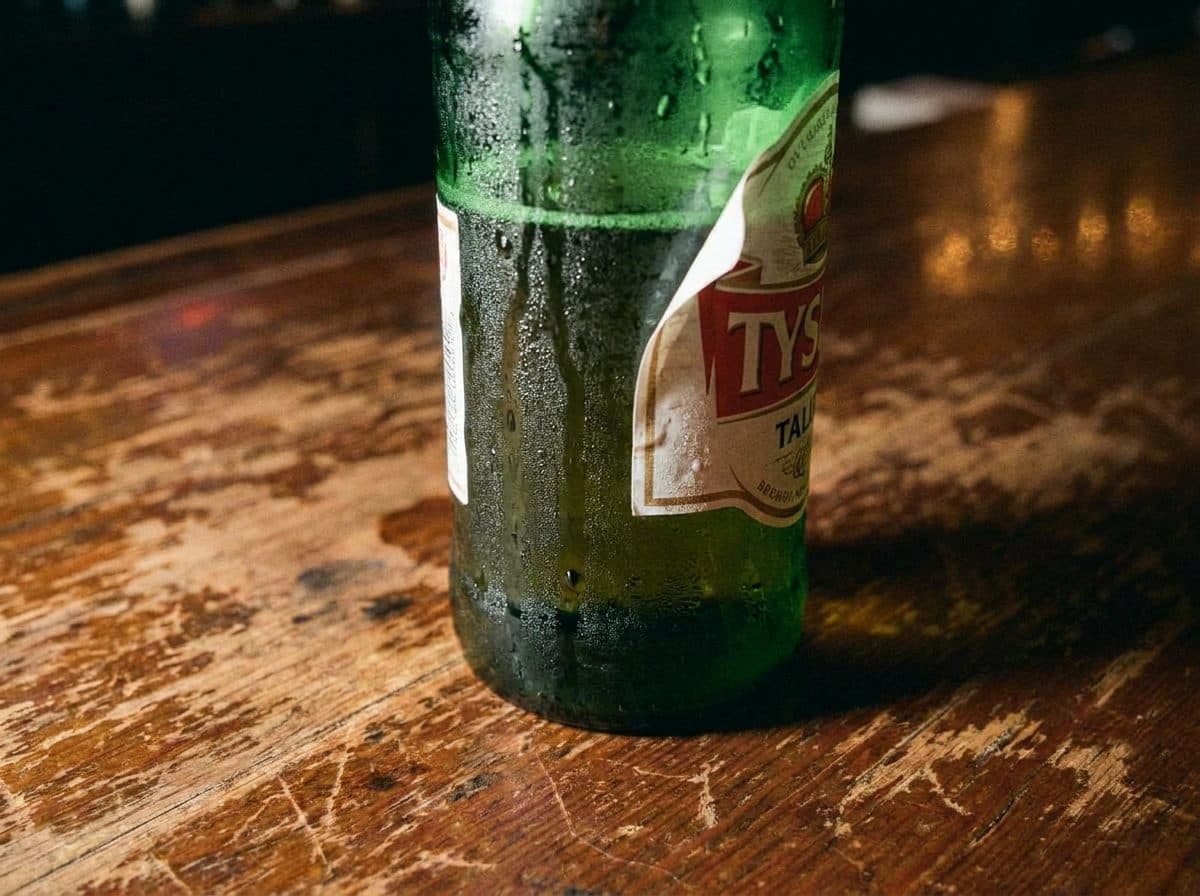
The front operates like a checkpoint—a narrow galley with a single bartender, a cash register that still dings, and a cooler stocked with Tyskie, Żywiec, and Okocim in squat green bottles. Regulars buy by the six-pack and carry them to the back. The rear room expands into something closer to a social club than a bar: mismatched tables, a corner stage that hosts live accordion on Saturdays, walls papered in fading posters for football matches and folk festivals that happened a decade ago. The jukebox stands against the far wall, a battered Wurlitzer loaded with a mix that spans polka standards, '80s rock, and inexplicably deep cuts of Italo disco. The lighting stays dim enough that faces blur at the far tables, but the music keeps everyone tethered to the same pulse. Those who arrive before eight find the back room nearly empty, the tables sticky with the afternoon's spills. Those who arrive after ten find it packed shoulder-to-shoulder, the air thick with cigarette smoke that technically isn't allowed but somehow persists in the corners.
The Tyskie Ritual and What It Signals
Cold bottles arrive without ceremony, no glassware offered unless requested. The Formica tables sweat rings within minutes, condensation pooling faster than anyone bothers to wipe. Regulars drink in rounds, but the rounds are informal—someone gets up, returns with four bottles, sets them down without asking who owes what. The beer itself is clean and light, the kind of lager built for volume rather than contemplation, and the pricing follows the old logic: a few dollars per bottle, cheaper by the bucket if the crowd is right. The bartender in back knows the regulars by sight and sometimes by family history, the kind of institutional memory that turns a transaction into a nod. First-timers who order anything more complicated than beer or vodka get a look that isn't rude but isn't encouraging either. The menu, such as it exists, lives in a laminated sheet behind the bar—pierogi, kielbasa, bigos if it's a weekend—but most people eat before they come or not at all.
The Jukebox Economy and Its Unwritten Rules
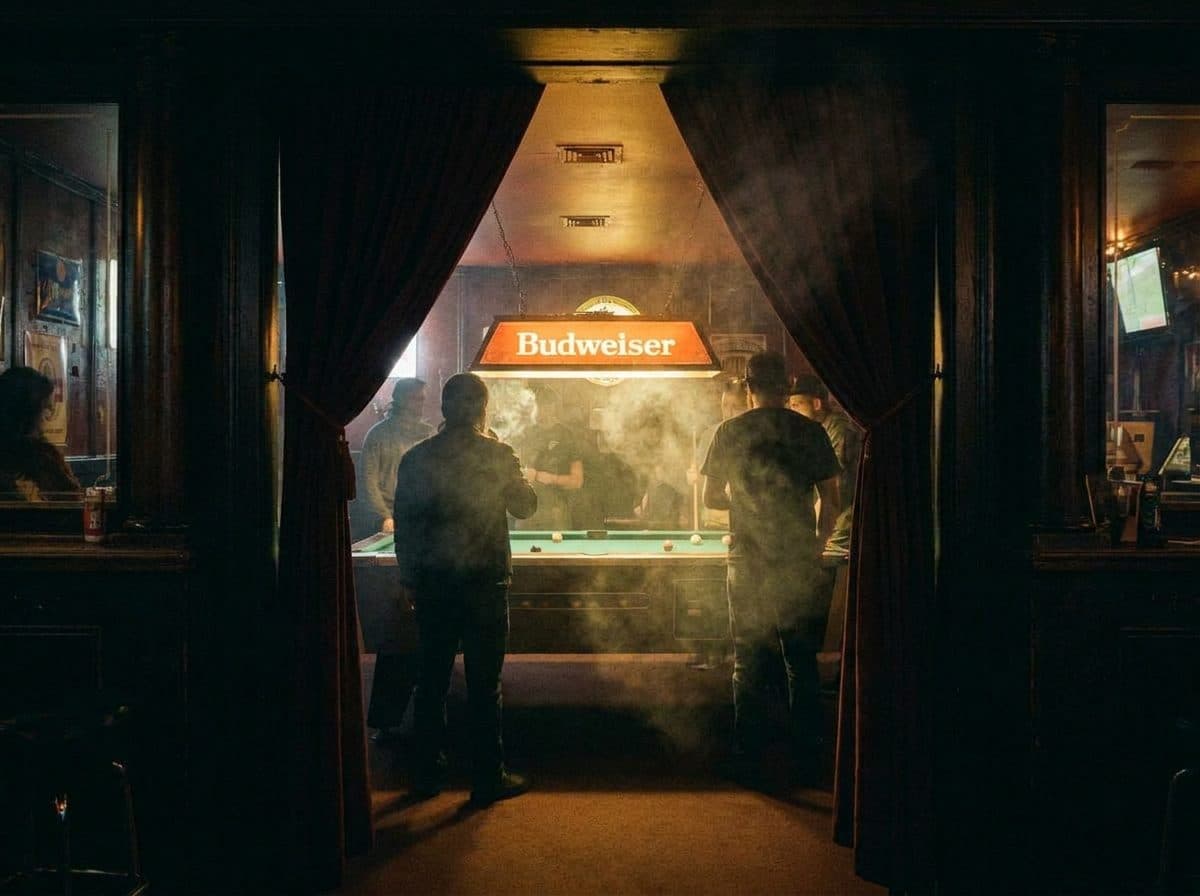
The Wurlitzer takes dollar bills, three songs per, and the selection reveals itself slowly: a deep bench of Polish folk and rock that the regulars queue up in clusters, punctuated by whoever got there first with a fistful of singles and a need to hear "Roxanne" at volumes that drown conversation. The machine's logic is egalitarian but the room's taste is not—certain songs get cheers, certain songs get groans, and certain songs clear the floor for dancing that looks less like choreography and more like controlled chaos. The regulars know which buttons to hit without looking, muscle memory from years of the same machine, the same songs, the same moment when the accordion solo kicks in and the back tables start singing. Newcomers who play the wrong track at the wrong time aren't shamed but they are noted, and the next song will correct the vibe without comment. The jukebox goes silent only during live music, and even then someone usually feeds it dollars between sets, keeping it warm.
The Crowd That Never Fully Left
The regulars skew older—men in their fifties and sixties who speak Polish at the bar and English to the younger crowd when necessary, women who arrive in pairs and command the corner booths, entire families who treat the back room like an extension of their living rooms. But the crowd is not monolithic: younger Poles who moved to the neighborhood in the past decade mix with the old guard, and a scattering of non-Polish locals who learned about the place through proximity or word-of-mouth claim their own tables near the stage. The common thread is not language but loyalty, the sense that this bar belongs to those who keep coming back rather than those who stumbled in once and posted about it. The atmosphere shifts with the calendar—weekends bring the accordion and the dancing, weeknights settle into quieter rhythms, and certain matches (football, always football) pack the room with a tension that turns every goal into a collective roar. The crowd does not perform its presence; it simply occupies the space with the ease of people who know the room will still be here next week.
Practical Notes
The bar sits on the northern stretch of Manhattan Avenue, a ten-minute walk from the Nassau Avenue G stop or a slightly longer trek from the Greenpoint Avenue stop on the same line. The front room opens mid-afternoon most days, but the back room doesn't truly come alive until evening, and the peak energy hits between ten and midnight on weekends. No reservations, no velvet rope, no host stand—walk in, find a spot, or wait until one opens. Cash is preferred and the ATM in the corner charges a fee that everyone complains about but pays anyway. The bar stays open late by neighborhood standards, last call drifting closer to three or four depending on the night and the crowd. Parking is residential and scarce, but the bus runs up Manhattan Avenue until late. Those planning to stay a while should arrive before the rush or resign themselves to standing room near the jukebox.
The Moment the Room Tips
There is a specific point each night when the back room crosses from bar to something closer to a living archive of a neighborhood that used to be. It happens without announcement—the jukebox hits a certain song, the tables fill past capacity, someone's uncle starts singing, and the room coheres into a single organism. The lighting does not change, the drinks do not get stronger, but the air thickens with a kind of collective memory that outsiders can feel but not fully access. This is not a bar that markets nostalgia; it simply houses it, in the peeling posters and the jukebox queue and the regulars who never really left the block. Those who come once might not understand. Those who come back do.
Tags: #ThePolishDiveBar #GreenpointNightlife #PolishBarsNYC #ManhattanAvenueFinds #TheLongWayHome #GreenpointBars #NYCDiveBars #PolskiBar #JukeboxNights #TyskieAndTales #OldGreenpoint #NeighborhoodBar #NYCNightlife #BrooklynBars #PolishGreenpoint
Sources consulted: timeout.com · atlasobscura.com · nycgo.com
Please drink responsibly. Must be of legal drinking age.
All trademarks are the property of their respective owners.
Ask Karpo first
Want to know what the regulars order and which nights the back room gets going?
Ask Karpo for the jukebox codes everyone plays and the unwritten rules of claiming a booth before you head out.