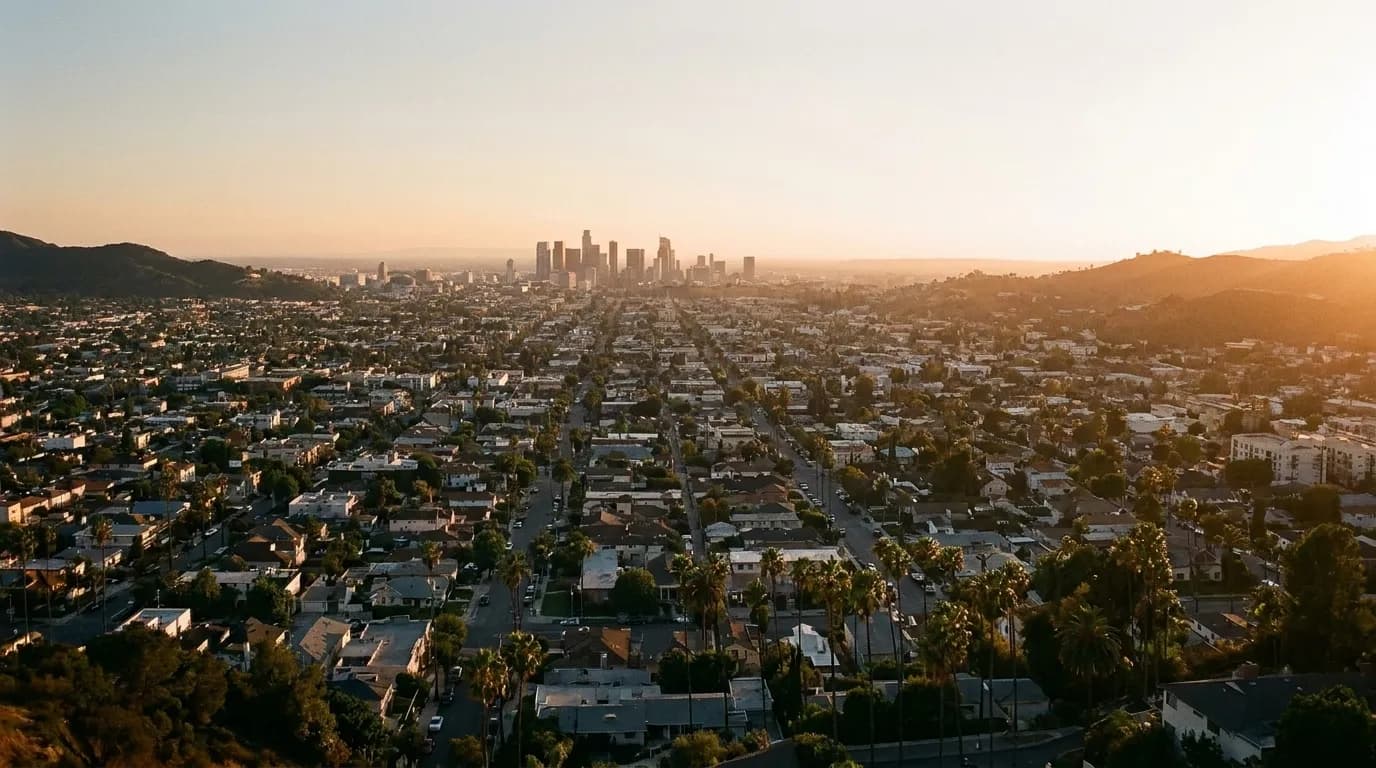
Los Angeles has no restaurant district and no centre, and the most useful mental model is a set of small food towns connected by freeways. Each has a cuisine it does better than anywhere else in the country, and the practical question is never what the best food in Los Angeles is. It is which of these towns you should be in tonight, and that has a clear answer for almost any craving.
The right area tonight depends on what you feel like and what the traffic is doing. Ask Karpo which is genuinely reachable.
The San Gabriel Valley
The corridor running east from Alhambra through Monterey Park, San Gabriel, Rosemead, Arcadia and out to Rowland Heights is the densest concentration of regional Chinese cooking outside China. Monterey Park became the first majority-Asian city in the continental United States in the 1990s, and four decades of food economy have grown around that.
What that means practically is that you choose a region rather than a restaurant: Shaanxi hand-pulled noodles, Hunan, Sichuan, Dongbei, Chaozhou seafood, Taiwanese breakfast, Cantonese banquet. Valley Boulevard and Garvey Avenue are the two spines and almost all of it is in strip malls that look like nothing. The area also has the best Vietnamese, Taiwanese bakeries and boba in the county.
Koreatown and the central corridor
Koreatown is the densest restaurant neighbourhood in Los Angeles and the most forgiving of a late arrival. Barbecue is the headline, but the stews, knife-cut noodle soups and ox-bone broths are at least as good. A large share of it is above or below street level in buildings with a lobby directory, so walking the pavement shows you a third of what is there.
Immediately around it: Thai Town along Hollywood Boulevard east of Normandie, the only officially designated Thai Town in the United States and the deepest Thai scene in the country. Little Ethiopia on Fairfax. Historic Filipinotown north of downtown. Little Armenia in East Hollywood, with Glendale a few miles north holding the largest Armenian population in the country.
The east side
Boyle Heights, East Los Angeles and the corridor along Whittier and Cesar Chavez have Mexican food with a century of continuous history behind it — birria, carnitas, moles, and a street-vendor economy that operates after dark and is where the best tacos in the county are. Highland Park, Eagle Rock and Glassell Park have the newer generation of small chef-owned restaurants alongside the older neighbourhood places.
Downtown sits at the hinge: the only genuinely walkable eating in the city, with Grand Central Market, the Arts District, Little Tokyo and the Fashion District's Mexican and Central American counters all within a reasonable distance of each other. For a visitor with one evening and no car, downtown is the answer.
The Westside and the coast
Sawtelle Japantown on the Westside is the densest Japanese concentration in the city — ramen, izakaya, bakeries and grocery — and it is walkable. Culver City has grown into a genuine restaurant neighbourhood with easy parking. Santa Monica and Venice have the highest concentration of expensive, produce-led California cooking and the highest prices in the county.
Further south, the South Bay has Japanese in Torrance at a depth that surprises people, Sinaloan seafood, and San Pedro's port-town fish markets and Croatian and Italian rooms. Long Beach adds Cambodian food — the largest Cambodian community outside Cambodia is here — which is one of the genuinely distinctive things about eating in Southern California.
The Valley
The San Fernando Valley is the most underrated eating in the county. Van Nuys and Sherman Way for Mexican and Central American, Reseda and Northridge for Middle Eastern and Persian, Glendale for Armenian, Studio City and Sherman Oaks for a good general restaurant scene with free parking. Encino and Tarzana have the Persian rooms; Woodland Hills has the sushi.
The Valley's advantage is practical rather than culinary: everything has a car park, the rooms are larger, prices are lower, and on a weekday evening the drive over the hill is fifteen minutes. It is where a great many people who eat well in Los Angeles actually eat.
The formats that cut across areas
Three things exist everywhere in the county and are worth knowing independently of geography. The strip mall, which is the default architecture of good food here and tells you nothing from the outside — read the pylon sign, not the building. The truck and street stand, which set up after dark along the boulevards and are where the best tacos are. And the Asian supermarket food court, attached to the large grocery chains, where a dozen independent counters share seating at very low prices. Any of the three is within a few minutes of almost anywhere in Los Angeles.
One last thing about the geography: the areas above are not equally covered by any search you will run. The Westside and the central corridor are heavily reviewed and the San Gabriel Valley, the South Bay, the east side and the Valley are systematically underweighted, because ratings measure who could get there as much as what they found. Adjusting for that — assuming the eastern and southern areas are better than the aggregate suggests — is a reliable correction in this city.
Practical notes
Choose a direction before you choose a restaurant; crosstown at the wrong hour is the most common planning error here. Traffic peaks roughly seven to ten and three to seven, and outside those windows the county is genuinely fast. Many San Gabriel Valley and Koreatown kitchens close between about three and five, and several of the best close one weekday. Strip-mall parking is free; Koreatown validates by building; the Westside is valet. And carry a little cash for trucks and stands.
Tags: #LosAngeles #LAFood #PlacesToEat #NeighborhoodGuide #SanGabrielValley #Koreatown #ThaiTown #BoyleHeights #Sawtelle #SouthBay #LongBeach #SanFernandoValley #FoodNearMe #LAEats
All trademarks are the property of their respective owners.
Ask Karpo first
Want to know which area is genuinely reachable from you tonight, what it does best, and which kitchens are open when you arrive? Ask Karpo before you set off.