At 1am the search for pizza near me in San Francisco returns a dozen results and about three of them are real. The rest are closed, closing, or a twenty-minute walk uphill in the wrong direction. Late pizza is not a taste problem in this city — the standard is decent almost everywhere — it is a logistics problem with four variables: slice or whole pie, the actual cut-off time, the payment situation, and the distance you are willing to walk on a cold night. Solve those before last call and you eat well.
The best late slice is nearly always the one inside a five-minute walk of where you already are, and the walk is the part people get wrong. Tell Karpo which bar you are leaving and it will work out what is still cutting within range.
Slice versus pie decides everything else
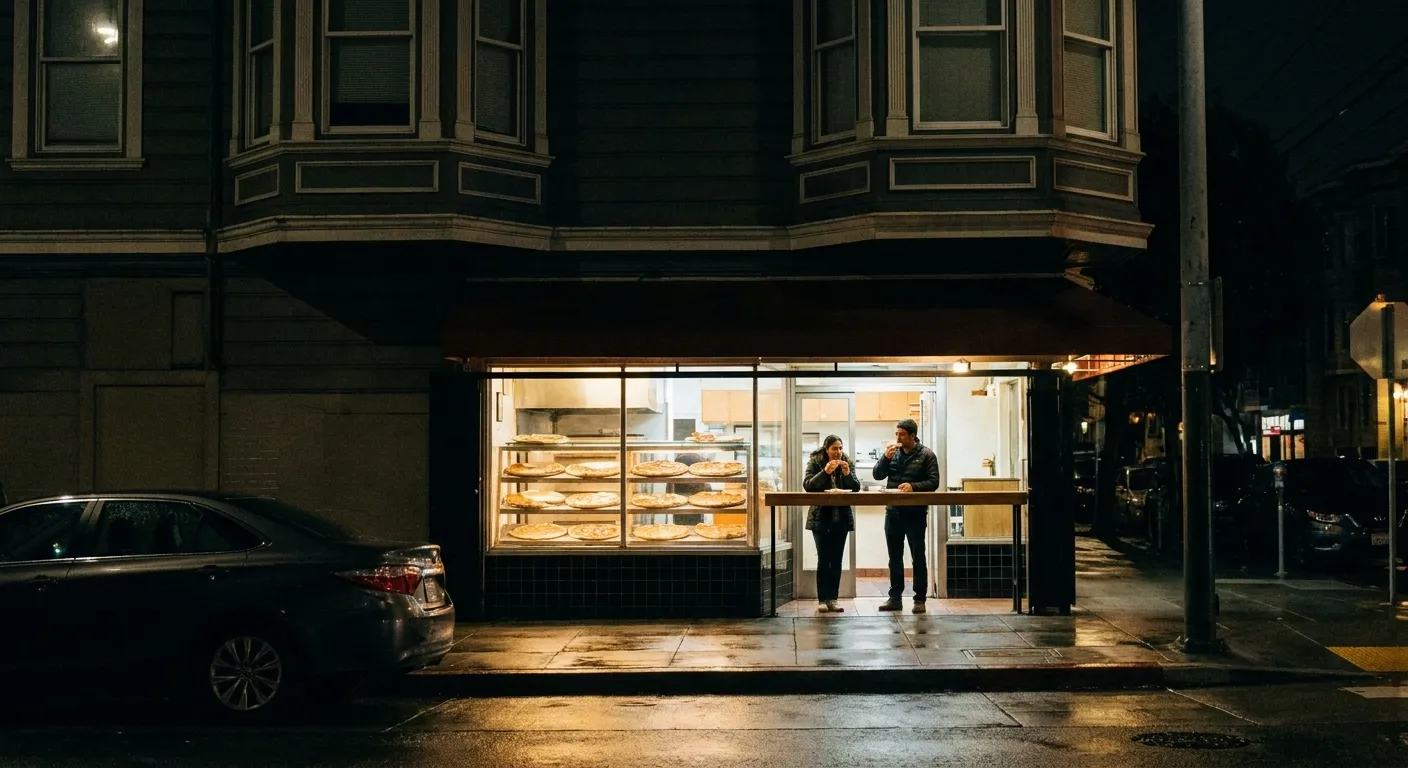
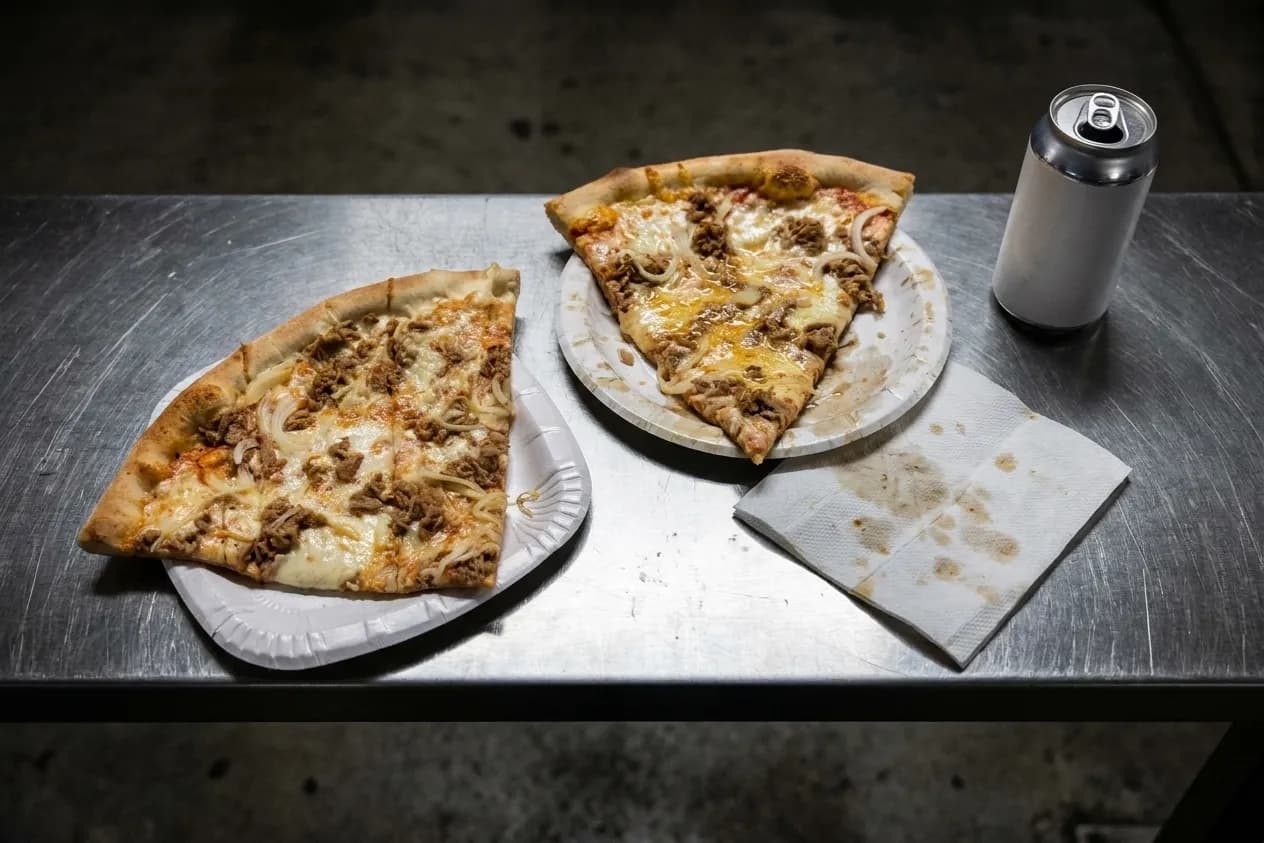
A slice counter and a pizzeria are different businesses that happen to sell the same food. A slice shop keeps whole pies in a warming case and reheats to order, so service takes two minutes and the operation can run with one person behind the counter. That is why slice shops are the ones still open late: their overnight cost is one wage and one oven, and they can stay open as long as there is a queue.
A full pizzeria making pies to order needs a fired oven, a prep station and enough staff to justify both. Even when the dining room is technically open past midnight, the kitchen often stops well before, because a single order does not pay for the oven. If you want a whole pie after midnight your realistic options collapse to a handful of places, and calling ahead stops being optional.
The cut-off is earlier than the closing time
Posted hours late at night are the least reliable numbers in food. A shop advertising 2am may stop cutting at 1:30 when the last pie in the case is gone, and a shop advertising midnight may keep going to 1 on a busy Saturday. The deciding factor is not the sign; it is whether there is still product in the case and people on the sidewalk.
Weeknights are the trap. The same counter that runs to 2am on Friday and Saturday often closes at 10 or 11 from Sunday through Wednesday, and search listings frequently show only the weekend hours. If it is Tuesday, assume everything closes an hour or two earlier than what you read and plan accordingly.
Walk radius is the variable people underestimate
San Francisco is small on a map and steep in reality. A ten-minute walk on flat ground in the Mission is a very different proposition from a ten-minute walk from a bar in North Beach up toward Russian Hill, and at 1am in the wind that difference decides whether the group stays together. Look at the contour before the distance.
The practical rule is to treat five walking minutes as the radius and to know your options inside it before you leave the bar. If nothing is open in that ring, the honest answer is usually a short rideshare to a denser late-night block rather than a long cold walk to a single shop that may have already sold out.
Payment, queues and the group problem
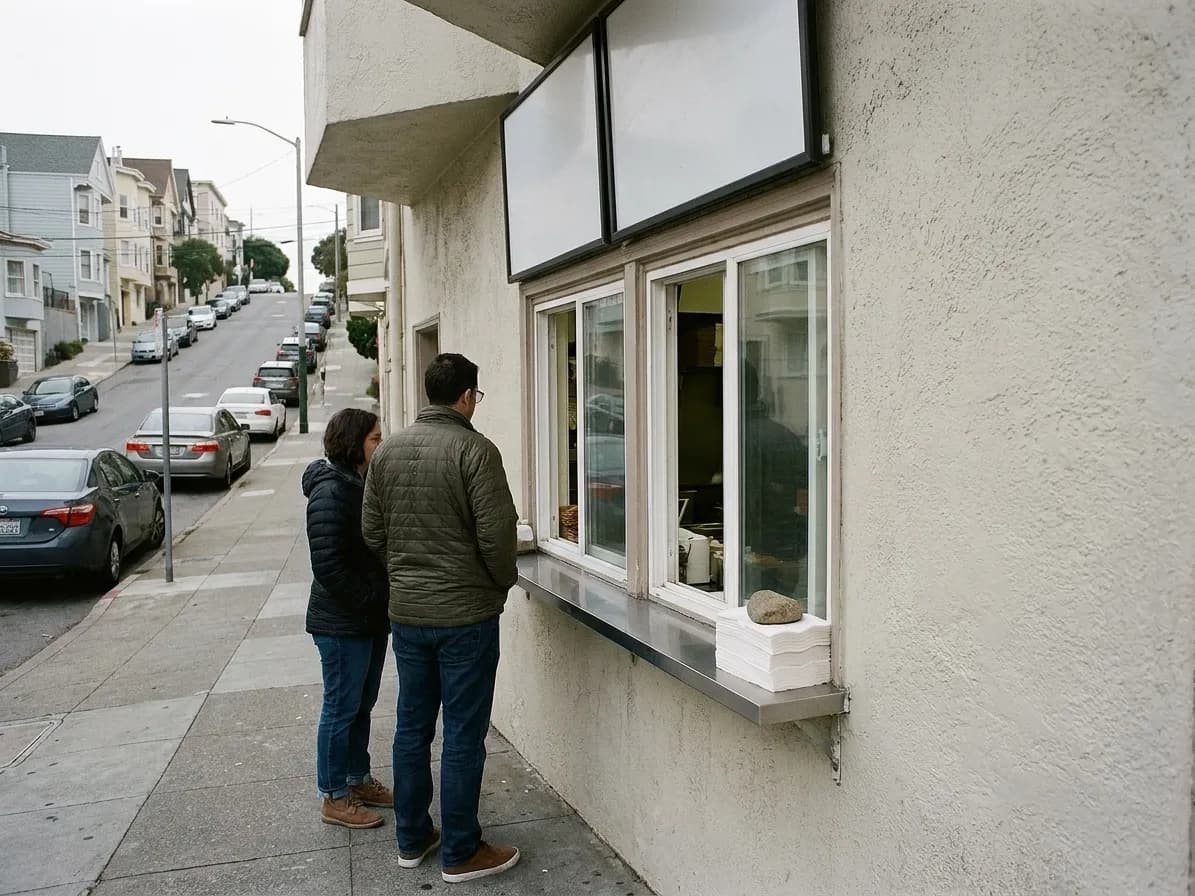
Late-night counters are the last redoubt of cash-only operations, and the queue is not the place to discover it. Assume you may need cash, and check for an ATM in the same block. Even card-taking shops sometimes drop to cash after midnight when the network connection or the staffing changes.
Groups are the other failure mode. Six people ordering six different slices at a one-person counter turns a two-minute transaction into a ten-minute one and makes everyone behind you unhappy. The efficient move with a group is to send one person in with a consolidated order while everyone else waits outside, which is faster for you and better for the shop.
The blocks that actually stay lit
Late food in San Francisco clusters rather than spreads. The reliable areas are the dense restaurant grids with a resident late population — around the Mission's main corridors, the blocks near Chinatown and North Beach, and the Tenderloin. Those areas work because there are several options within a block of each other, so one closed shutter does not end the search.
Hours in this category change week to week with staffing, and holidays scramble everything. Confirm before you walk, keep a second door in mind, and remember that the case being empty is a closing time too.
Reheat is a skill, and it is visible
The whole quality of a late slice comes down to how the shop reheats. A deck oven or a proper slice oven at high heat crisps the base again in a couple of minutes and the slice arrives structurally sound. A microwave, or a low oven used as a warming shelf, produces something that folds limply and tastes steamed. You can see which one you are getting from the queue, and it is worth crossing the street for.
The second variable is how long the pie has been in the case. A shop selling steadily cuts from pies that came out within the hour; a shop with no queue may be reheating something baked at nine. If the case is nearly full at 1am and nobody is inside, that is not luck, it is a warning.
Tags: #SanFrancisco #SF #BayArea #Restaurants #WhereToEat #Dining #Pizza #LateNight #SFEats #SFGuide #ExploreSF #SFLocal #SFWeekend #SFNights
Sources consulted: sfchronicle.com · eater.com · sfmta.com
Please drink responsibly. Must be of legal drinking age.
All trademarks are the property of their respective owners.
Ask Karpo first
Karpo is a proactive AI assistant that lives in iMessage. Tell it where you are at last call and it will find the slice within walking distance.