Los Angeles pizza splits cleanly by equipment, and the oven sits in plain view at almost every counter. A wood-fired dome, a steel deck oven and a conveyor belt produce three entirely different products with three entirely different correct orders. Ordering the wrong style for the oven in front of you is the single most common way to walk out disappointed, and the mismatch happens because people treat pizza as a single category when it is actually three separate formats that happen to share a name.
The Karpo APP reads the equipment at every pizza counter within walking distance right now, then routes you to the oven that matches what you actually want to eat tonight.
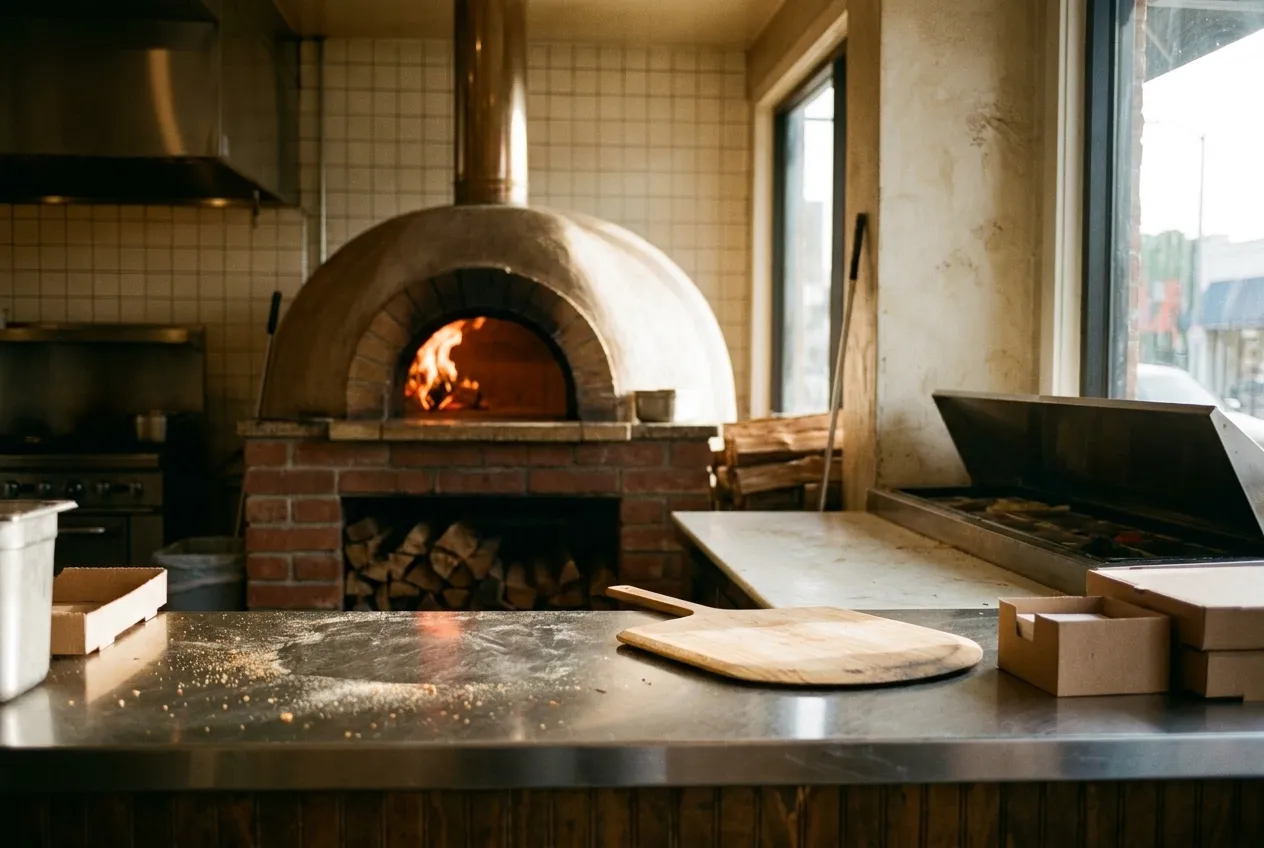
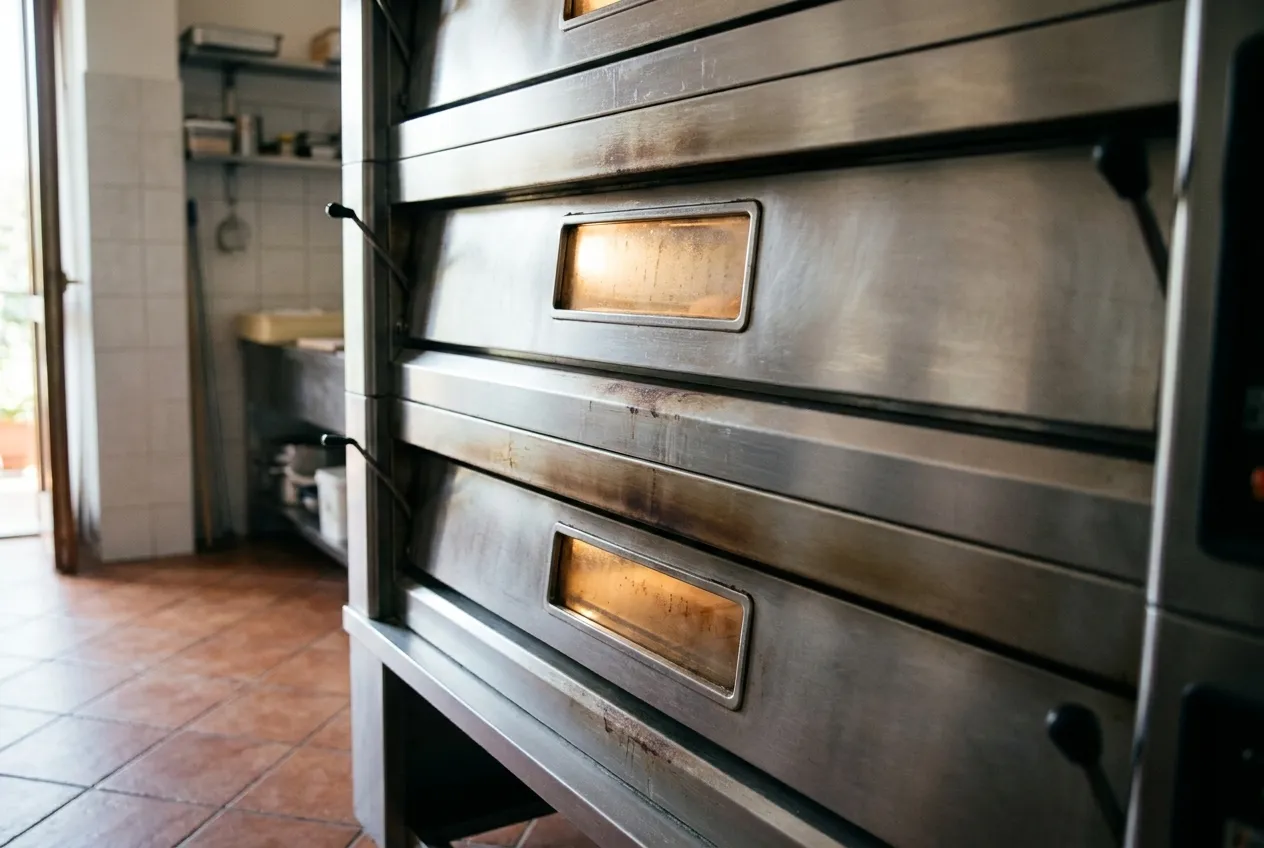
The wood dome is always visible—a rounded brick or clay structure with a fire burning inside, usually tiled or plastered white, sometimes black from years of smoke. The deck oven is a stack of steel doors with small windows, each door opening to a stone or steel shelf where pies bake in a closed chamber. The conveyor is a long metal tunnel with a moving belt, open at both ends, and you can watch pizzas ride through on a slow mechanical track. Each oven is legible from fifteen feet away, and each one telegraphs a different wait time, a different structural outcome, and a different set of menu items that will actually work.
Wood Dome: Order for Char and Eat Immediately
The wood-fired dome runs extremely hot—typically eight hundred degrees or higher—and finishes a pizza in ninety seconds to three minutes. The short bake produces a puffy, blistered rim with dark leopard spots, a soft interior crumb, and a base that ranges from tender to lightly charred depending on how aggressively the cook works the peel. The center is almost never crisp. This is structural, not a mistake. High heat and short time create steam inside the dough, and steam makes lift and chew, not crunch.
Wood ovens cluster in Silver Lake, Echo Park, Highland Park, Venice, and along the west side from Santa Monica through Culver City. They also appear in downtown Arts District addresses and scattered through the valley in Studio City and Sherman Oaks. The format arrived in Los Angeles in waves—first in the early two thousands with imported Neapolitan gear, then again in the twenty-tens when California-style wood-fired pizza became its own recognized lane. Both approaches use the same oven type, but Neapolitan versions stay closer to soft, wet dough with San Marzano tomatoes and fresh mozzarella, while California versions load on seasonal vegetables, house-cured meats, and drier aged cheeses that can handle the high heat without weeping.
Order a margherita or marinara from a wood oven if you want to taste the dough and the char. Order a white pie or a vegetable-heavy build if you want the oven to caramelize toppings without fighting tomato acidity. Do not order extra cheese—it will slide off in the heat. Do not order a thick-cut pepperoni unless you see other tables eating it successfully, because most American pepperoni releases too much fat at eight hundred degrees and turns the center into a grease pond. Eat wood-fired pizza within ten minutes. The rim deflates as it cools, the base softens further, and the structural integrity disappears entirely by the time you drive it across town. If you are ordering for a group at home, wood is the wrong oven.
Deck Oven: Order for Structure and the Drive Home
The deck oven bakes at five hundred to six hundred degrees in a closed chamber, and the pizza sits directly on a stone or steel surface for six to nine minutes. The longer bake dries the dough, crisps the bottom, and sets the structure so the slice holds its shape when you pick it up. The rim is lower and denser than a wood-fired rim, the base has an even tan without char, and the cheese melts into a unified layer rather than blistering into separated curds. This is the oven behind New York-style pizza, grandma pies, and most of the red-sauce Italian-American formats that dominated Los Angeles until wood ovens rewrote the script.
Deck ovens still run the San Fernando Valley, most of the South Bay, and long-established Italian neighborhoods in Glendale and Burbank. They also hold firm in mid-city pockets around Pico-Robertson and Fairfax, and along older commercial strips in East Hollywood and Los Feliz where red-checkered-tablecloth restaurants never left. The format works for takeout and delivery because the structure survives a twenty-minute drive. The pizza may lose heat, but it does not collapse, and you can reheat a deck-oven slice in a skillet or a home oven without turning it into a wet mess.
Order a pepperoni or sausage pie from a deck oven if you want the toppings to integrate with the cheese and the base to stay firm. Order a margherita only if you see the shop using low-moisture mozzarella—fresh mozzarella releases too much water during the longer bake and makes the center soggy. Order a grandma or Sicilian if the shop offers it, because those thick-dough formats are engineered for deck heat and the extended bake caramelizes the bottom into a deep golden crust. Do not expect char. Do not expect a soft, airy rim. The deck oven optimizes for a different outcome, and judging it against wood-fired standards misses the point entirely.
Conveyor: Order for Speed and Consistent Mediocrity
The conveyor oven moves pizza through a heated tunnel on a metal belt, and the bake is timed by belt speed rather than by a cook watching the pie. The format is visible in fast-casual chains, airport locations, and high-volume shops where labor cost and throughput matter more than craft. The pizza is never great. It is also never a disaster. The conveyor produces an even bake with no hot spots, no cold spots, and no variation from pie to pie. The bottom is dry, the cheese is fully melted, and the rim is uniform. This is industrialized pizza, and it serves a specific function: feeding a crowd quickly without requiring a skilled cook.
Conveyor ovens appear in downtown lunch zones, in LAX and Burbank terminals, in mall food courts, and in late-night clusters near USC, UCLA and the beach where the priority is speed and price. The format also shows up in some delivery-focused ghost kitchens that optimize for volume. The wait is short—usually under six minutes from order to box—and the product is predictable. If you are hungry, in a hurry, and working within a tight budget, the conveyor is the correct choice. If you are hoping for a memorable pizza, walk past it.
Order simple builds from a conveyor. Pepperoni, cheese, or a basic combination work because the format cannot handle complexity. Do not order anything with fresh vegetables, because the belt speed does not give them time to cook and they arrive raw or steamed. Do not order a white pie, because the lack of tomato sauce exposes how little flavor the dough carries. The conveyor optimizes for okay, and okay is useful when the alternative is skipping a meal or waiting thirty minutes you do not have.
How to Read the Street and Decide in Ten Seconds
Walk up to the counter and look past the register. If you see a rounded brick or clay structure with visible flame, you are looking at a wood oven. If you see a stack of steel doors with small windows, you are looking at a deck oven. If you see a long metal tunnel with a moving belt, you are looking at a conveyor. The oven type determines the correct order, the wait time, and whether the pizza will survive the trip home.
Ask one question if the oven type is unclear: How long is the wait? A wood oven answers in minutes—two to four if the oven is already hot and the line is short. A deck oven answers in a range—six to ten minutes depending on how many pies are already in the chamber. A conveyor answers with a number under six. The wait time is not just logistics. It is a structural signal. Fast bake means soft and immediate. Slow bake means firm and portable. The oven is the menu, and reading it correctly is the difference between a pizza that works and one that does not.
Tags: #PizzaNearMe #LosAngelesPizza #WoodFiredPizza #DeckOven #PizzaOvens #LAPizza #SilverLakePizza #VenicePizza #LAEats #HiddenGemsLA #PizzaTactics #LosAngelesFood #LAFoodie #PizzaGuide #CaliforniaPizza
All trademarks are the property of their respective owners.
Ask Karpo first
The Karpo APP identifies which oven is running at every pizza counter within a mile of where you are right now, tells you the current wait, and builds a route to the shop that matches what you actually want to eat. Ask Karpo first and walk in knowing exactly what to order.