For most of the last decade the argument about pizza in Los Angeles was about round pies - Neapolitan versus New York, wood versus deck, whose dough had been fermented longest. Somewhere in that period the more interesting development happened sideways: the city got extremely good at square pizza. Detroit-style in particular has gone from a curiosity to something a dozen kitchens do seriously, and alongside it sit Sicilian and grandma pies that are related but genuinely different products. The three get used interchangeably on menus and by customers, which is why people frequently order one and are surprised by what arrives.
Square pizza is often sold in limited daily batches rather than made to order, which means the good ones are gone by evening. Tell Karpo what you are after and when you are eating, and it will find somewhere that still has pans coming out rather than somewhere that sold out at two.
Detroit: the pan is the whole point
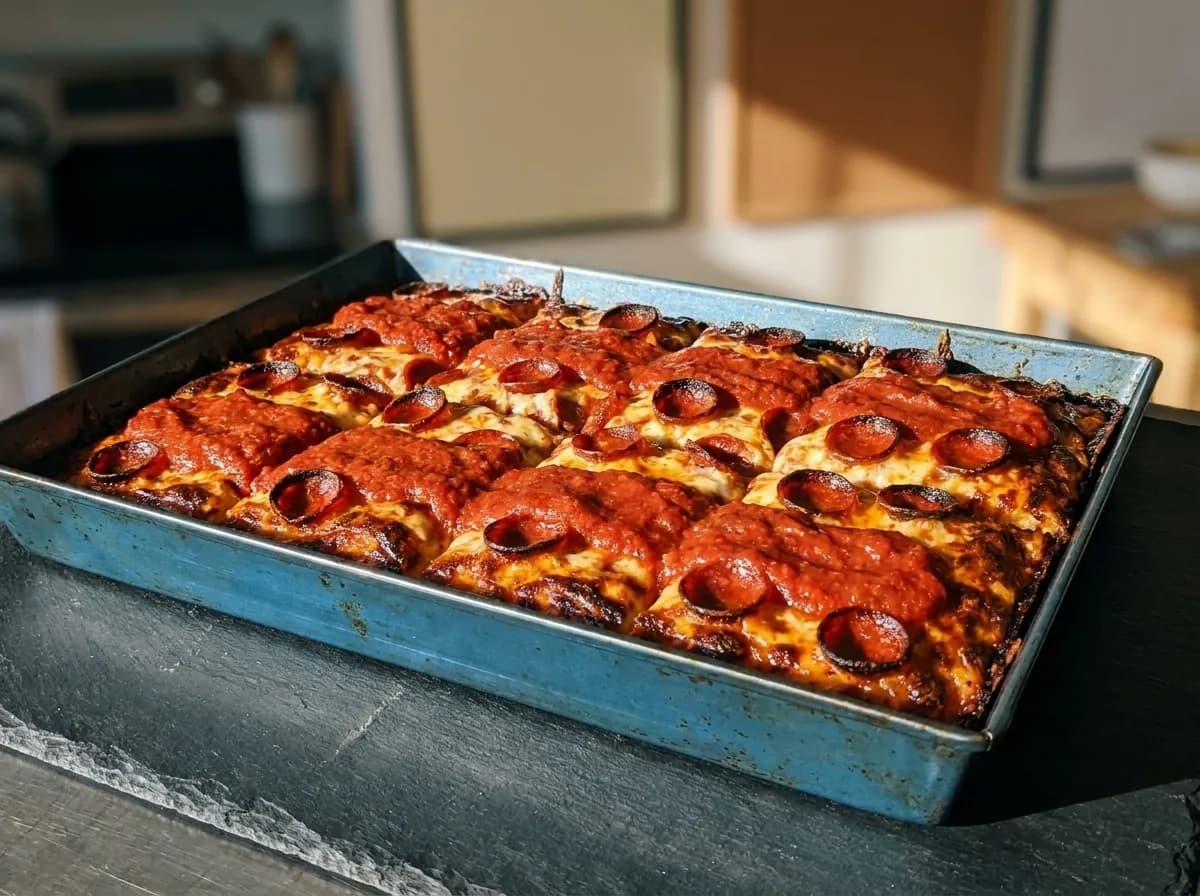
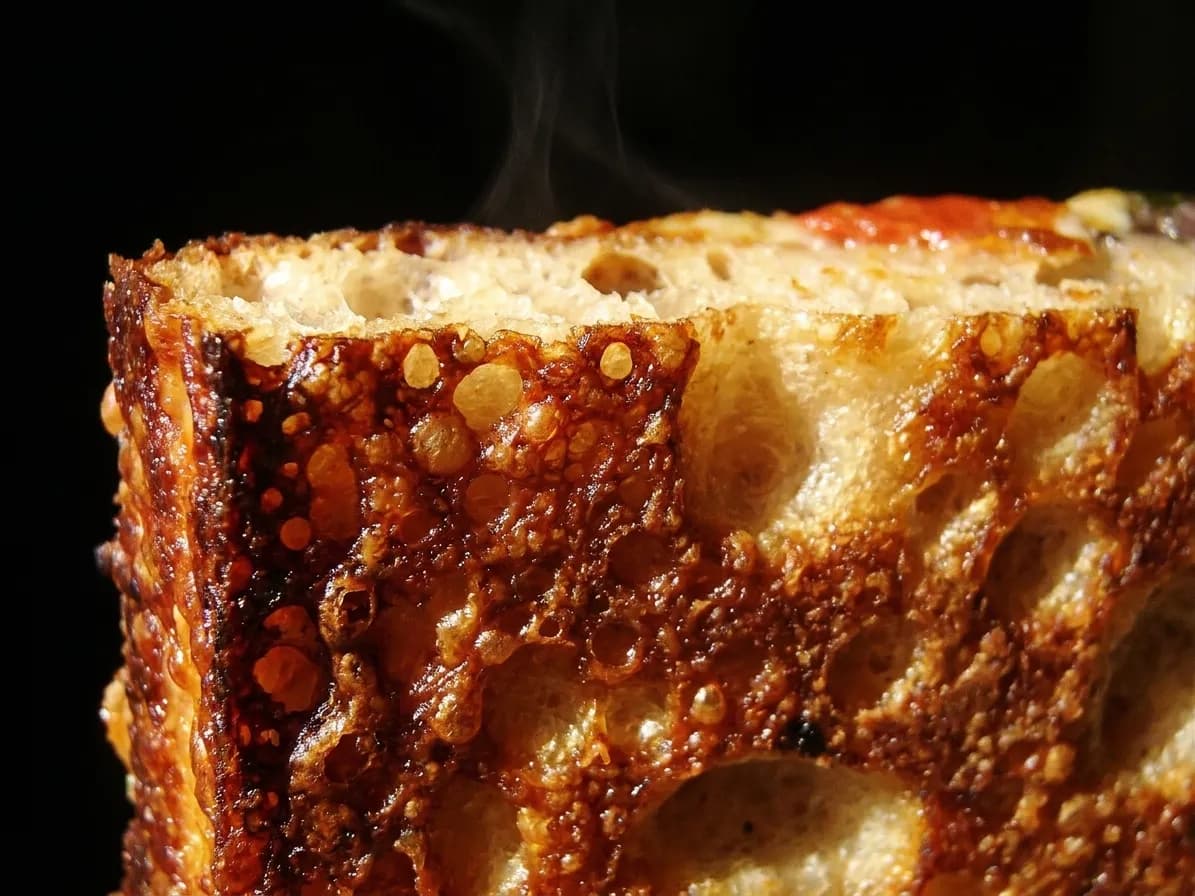
A Detroit pie is baked in a rectangular steel pan with high sides, originally an automotive parts tray. The dough is wet and proved in the pan; cheese - traditionally brick cheese - is pushed all the way to the edges so it melts against the hot metal and caramelises into a hard, lacy crust called the frico.
The sauce goes on top, in stripes, after baking or near the end of it. If your Detroit pizza arrives with the sauce under the cheese and a soft edge, it is a thick-crust pizza in a rectangle rather than the style.
Sicilian: older, breadier, differently seasoned
Sicilian pizza in the American sense - sfincione's descendant - is a thicker, softer, more bread-like base, generously oiled in the pan, with the sauce under the cheese and a crumb that is open and airy rather than crisp. The edge is soft, not caramelised.
It is the older tradition in the United States by decades and it is the one most likely to be found at a long-standing east coast-style shop rather than a new opening. The two styles are frequently sold from the same counter and confusing them changes what you get quite a lot.
Grandma: the thin square that people forget
The grandma pie is the third and the least understood: a thinner square baked in an oiled sheet pan, closer to a home-made Long Island pizza, usually with crushed tomato applied in patches and mozzarella beneath it, often with garlic and basil.
It bakes faster and eats lighter than either of the others. If you want a square pizza but do not want a heavy one, this is the one to ask for by name.
Why Los Angeles took to the format
Practical reasons, mostly. A pan pizza can be produced in batches ahead of service, which suits a pop-up, a bakery, or a small kitchen without a large oven. It also holds heat and structure far better than a thin round pie, which matters in a city where a meaningful share of pizza is eaten in a car twenty minutes after purchase.
The result is that square pizza arrived here through bakeries and pop-ups rather than through pizzerias, and it carries some of that bakery sensibility - long ferments, attention to crumb, sourdough bases in several cases.
Where to find each style
The Detroit examples cluster on the Eastside, with Quarter Sheets in Echo Park the best-known of them, and a scattering of bakeries and pop-ups doing versions across the county. Sicilian is more likely to be found at older New York-style shops, particularly in the Valley and the beach cities.
Grandma is the least evenly distributed and often appears as a single item on a menu otherwise devoted to round pies. It is worth asking whether a shop makes one even when it is not listed - a fair number do it for staff and regulars.
The toppings question is different on a square
A square pizza carries weight differently. The high sides and the thicker base mean wet toppings pool rather than drain, so anything with a lot of moisture - fresh tomato, ricotta added before baking, certain vegetables - does more damage here than on a thin round pie.
The toppings that work are the ones that render fat or crisp up: pepperoni that cups and chars, sausage in large pieces, hot honey applied after the bake. The classic Detroit order is pepperoni and nothing else, and the reason is structural rather than nostalgic.
Ordering, sharing and reheating
Square pizza is heavier per square inch than round, and the standard mistake is over-ordering. A Detroit pan of eight pieces feeds three people comfortably, not two, particularly if anything else has been ordered.
It also reheats better than any other style, which makes it the correct choice for taking home. A cold slice in a dry pan over medium heat for four minutes restores the frico almost completely, and does more for it than any oven.
How to judge one in a single bite
Take a corner piece. Everything the style is trying to do happens there: the caramelised cheese wall, the contrast between crisp exterior and open interior, the balance between the sweetness of the sauce and the salt of the cheese.
If the corner is the best piece by a wide margin, the pizza is working. If the corner and the centre taste identical, the pan is not hot enough or the cheese is not reaching the edge, and the kitchen is making a rectangle rather than a Detroit.
Tags: #PizzaNearMe #LosAngeles #DetroitStyle #SicilianPizza #GrandmaPie #EchoPark #LAFood #SquarePizza #Restaurants #PizzaLA
All trademarks are the property of their respective owners.
Ask Karpo first
Square pizza is quietly one of the best things Los Angeles makes right now. Ask Karpo who still has pans coming out near you tonight.