Pizza near me in San Francisco returns a list that treats five unrelated things as one category. A sourdough-crusted pie built on a three-day ferment, a folding New York slice, a thick Detroit-style square, a cracker-thin tavern pie and a Neapolitan pizza with a wet centre are different foods with different jobs, and half the disagreements about pizza in this city are just people ordering the wrong style for what they wanted. Sorting them out first makes the search work.
Pizza arguments in this city are almost always people comparing two different styles as if they were the same food. Tell Karpo what you actually want — a folding slice, a blistered sourdough pie, a square with crisp cheese edges — and it will point you at the ovens near you that do that one properly.
The San Francisco style: sourdough, and the reason it exists here
The local style is the one worth understanding, because it is genuinely regional. Bay Area pizzerias lean heavily on naturally leavened dough, long cold ferments and, in several cases, the same starter culture tradition that made the city's bread famous. The result is a crust with an open, irregular crumb, a pronounced tang, and a chew that stands up to being loaded with vegetables. It is closer to bread baking than to Naples.
Order this style with restraint on the toppings. A sourdough base with three components on it — a good tomato, one allium, one green thing — shows the crust off; the same base under six ingredients turns soggy in the centre and you have paid for the dough and then buried it. These pies also travel badly, so eat them in the room if you can.
The New York slice: a real category here, finally
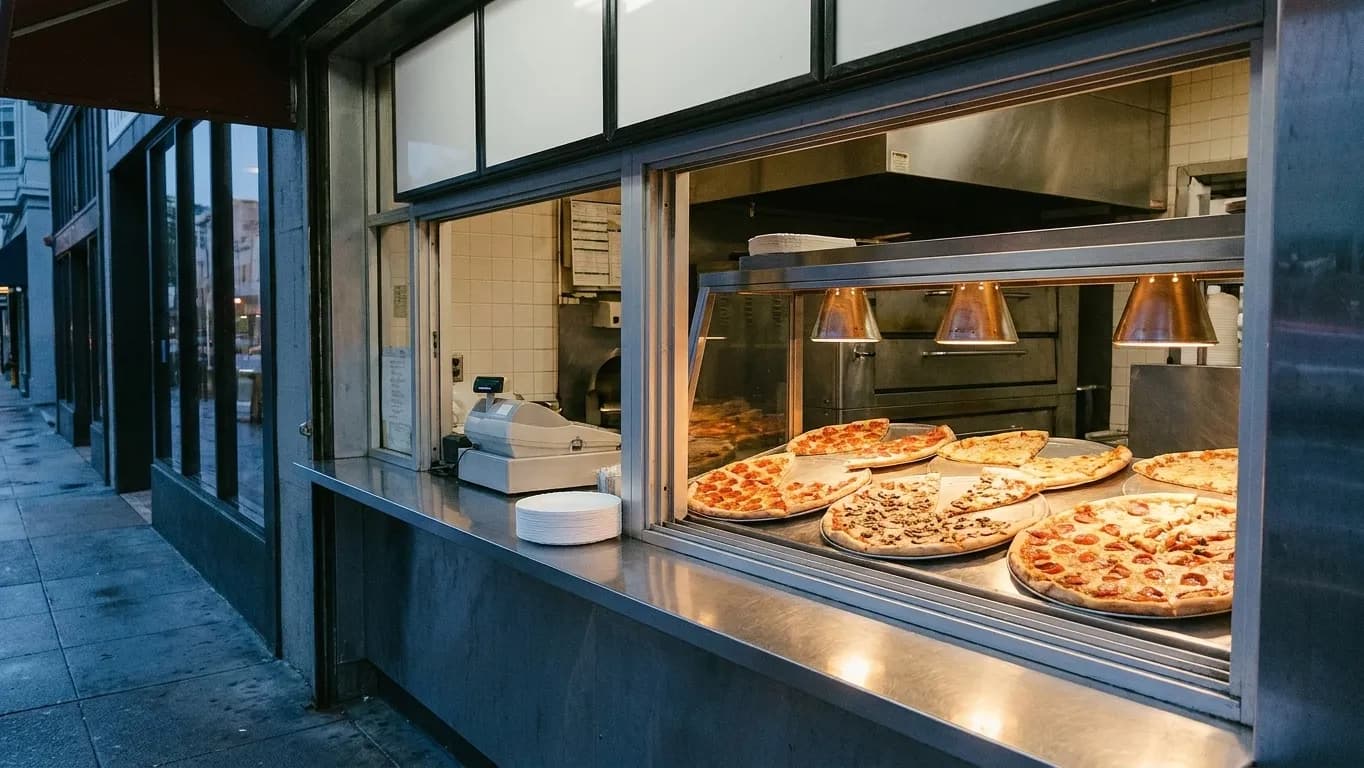
For a long time the standing complaint about San Francisco was that it had no proper slice. That has changed substantially in the last several years, with a run of dedicated slice shops using high-gluten flour, low-moisture mozzarella and deck ovens run hot. The test for this style is mechanical rather than culinary: the point is whether it folds and holds without the tip drooping, and whether the underside is dry and freckled rather than pale.
The correct order is a plain cheese slice first, always. Everything about the execution of a New York-style pie is visible in the plain version, and toppings mostly hide problems. If the cheese slice is good, come back for the pepperoni.
Detroit and tavern: the two squares
Both styles are cut into rectangles and that is where the similarity ends. The Detroit square is thick and airy, baked in a steel pan with cheese pushed to the walls so it caramelises into a crisp edge, with sauce ladled on after the bake. A tavern-cut pie is the opposite — cracker-thin, cooked flat, cut into small squares, designed to be eaten by the handful next to a beer.
Detroit-style is the better group order because it is filling and it holds heat; tavern style is the better bar order because it does not fill anyone up and can sit on a table for an hour. Ordering them the other way round is the most common mistake with both.
Neapolitan: the style most often ordered wrong
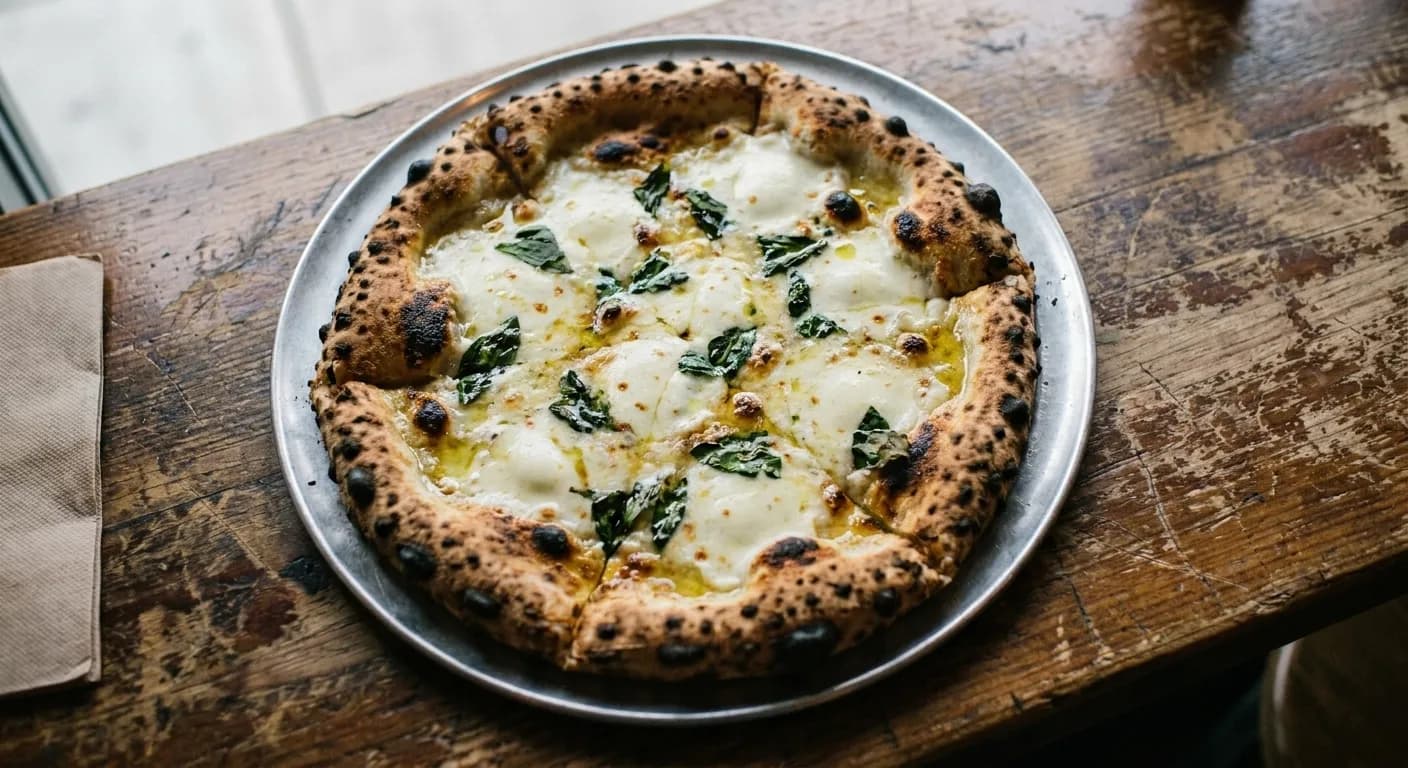
A true Neapolitan pie comes out of a very hot wood oven in about ninety seconds, which gives it a puffed, charred rim and a centre that is deliberately soft — soupy, even. That soft middle is correct and not a fault, and it is the reason this style is a knife-and-fork pizza rather than a folding one, and a bad choice for delivery.
Two rules make Neapolitan much better. Eat it immediately, standing up if necessary, because it has a five-minute window before the base goes limp. And do not order it for a group where everyone wants their own — the format is one pie per person, served the moment it leaves the oven, which is why the good rooms bring them out one at a time rather than together.
How to read a pizzeria before you order
A few signals tell you which style a San Francisco pizzeria is really doing. An oven with a visible fire and a dome means Neapolitan or close to it. Stacked deck ovens and a warming counter mean slices. Steel pans on a rack behind the counter mean Detroit. A refrigerated proofing cabinet full of dough balls with visible bubbles means a long ferment, which is the sourdough end of the spectrum.
The other signal is the menu length. A shop doing one style well runs six to ten pies. A menu offering Neapolitan, Detroit, New York and a gluten-free base is running compromise dough through one oven at one temperature, and every style will be the second-best version of itself.
Tags: #SanFrancisco #Pizza #SFPizza #SFEats #WhereToEatSF #SourdoughPizza #NewYorkSlice #DetroitStyle #Neapolitan #SFRestaurants #SFFoodie #BayArea #SliceShop #PizzaNight
Sources consulted: sf.eater.com · sfstandard.com · sfchronicle.com
All trademarks are the property of their respective owners.
Ask Karpo first
Ovens change hands, slice shops keep short and shifting hours, and the style a place actually cooks is rarely what the listing says. Ask Karpo which pizzerias near you are doing the style you want tonight, and whether they are still open by the time you get there.