Three pizzas can arrive at three tables in the same block of Miami and be, in a real technical sense, three unrelated foods. They use different flour, different hydration, different fermentation times, different ovens and different bake temperatures, and they are built to be eaten in different ways. Once you can tell them apart from the plate - which takes about five minutes of instruction and one comparison meal - ordering pizza in this city stops being a gamble. This is that instruction, followed by where to run the comparison.
Tasting three styles properly means three rooms with three different sets of hours, and the wood ovens close hours before the slice counters do. Tell Karpo which nights you have free this week and let it sequence the comparison for you.
Neapolitan: ninety seconds and a wet middle
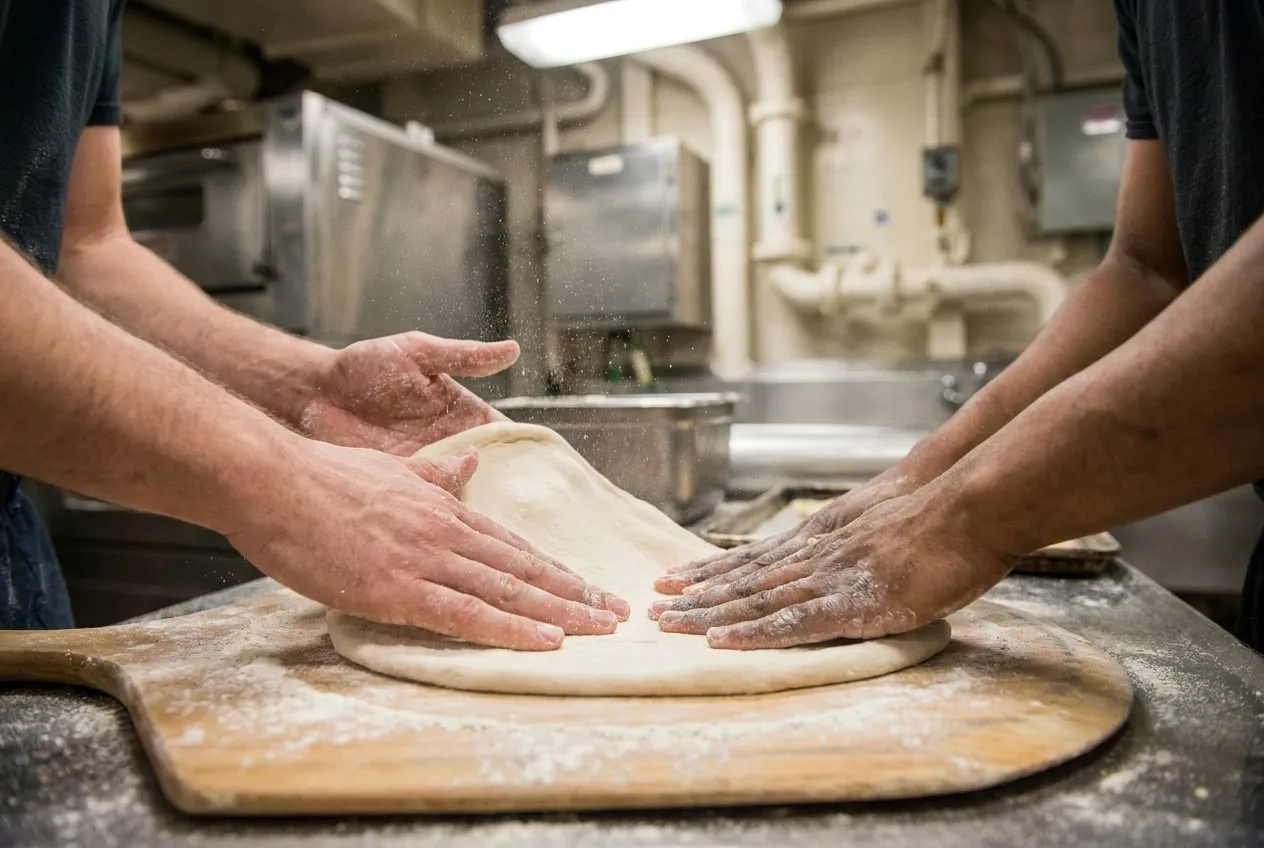
Neapolitan is the oldest and the most tightly specified. The dough is soft wheat flour, water, salt and a very small amount of yeast, fermented slowly, at a hydration around sixty percent. It is shaped by hand - never rolled, because rolling crushes the gas out of the rim - and baked in a wood-fired dome at somewhere near four hundred and thirty degrees Celsius for sixty to ninety seconds. That bake is the whole thing. It is too fast to dry the base out, which is why the centre stays soft and slightly wet.
How to read it on the plate: a puffed, blistered rim with irregular dark spots called leoparding; a centre so soft that a slice will not hold itself horizontal; toppings applied sparingly, often just tomato, mozzarella, basil and oil. If it arrives crisp all the way through, it is not a bad pizza but it is not this style. Eat it immediately and in the room - it degrades faster than any other pizza on earth. Miami has a genuine cluster of these, concentrated in Wynwood, Edgewater and the Design District edge, several run by people who trained in Naples.
New York: the engineered slice
New York style is a nineteenth-century adaptation of Neapolitan to a different oven and a different economy. The flour is high-protein bread flour, often with a little oil and sugar in the dough, hydration lower at around sixty percent but the gluten far stronger. It bakes in a gas or coal deck oven at roughly two hundred and sixty to three hundred degrees for ten to fifteen minutes. Longer bake, drier base, much stronger structure - which is the point, because it has to survive being cut into wedges, held in a warming case, reheated, and then folded in one hand.
How to read it: wide thin slice, cheese browned rather than milky, visible oil, a rim that is chewy rather than pillowy, and a tip that droops but does not break when you fold it lengthways. The fold is not a mannerism, it is a structural test the style is designed to pass. Miami's version of this arrived with the New York diaspora and is best represented by long-running counters like Steve's, and by the coal-fired thin-crust end of the spectrum on the Upper East Side.
Sicilian: the one people mislabel
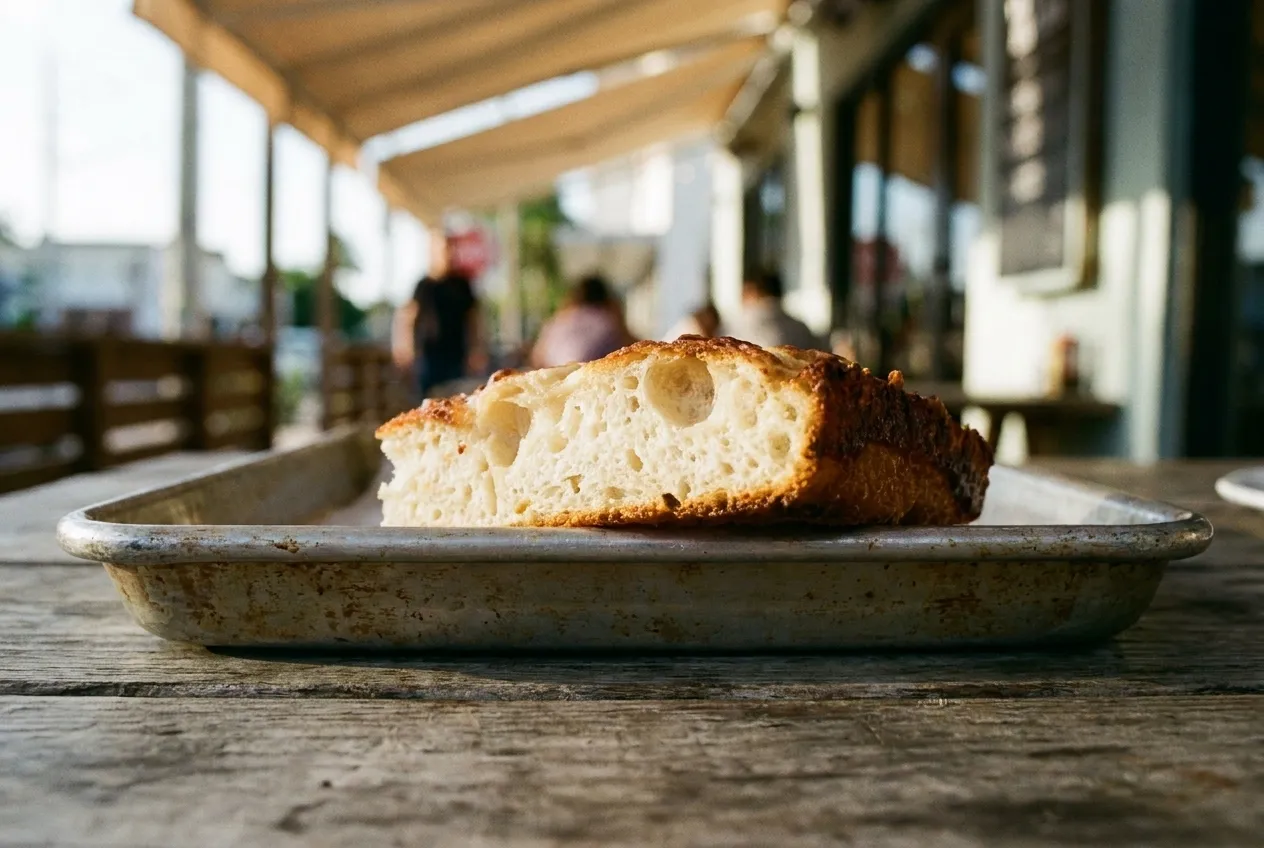
Sicilian is the outlier because it is not a round pizza at all. The dough is much wetter - hydration up towards seventy or seventy-five percent - and it proves in an oiled rectangular pan, so it rises tall and open like focaccia. The pan bake, usually twenty to thirty minutes at a moderate temperature, fries the underside in the oil while the crumb steams, producing a base that is simultaneously crisp and airy. In its American form, sfincione descendants often put the cheese under the sauce so the cheese does not burn during the long bake.
How to read it: square or rectangular, an inch or more tall, a pale open crumb like bread, a bottom that is golden and slightly fried, and often sauce sitting on top of the cheese. The related grandma slice is a thinner, faster pan pizza and is not the same thing. In Miami, Sicilian and pan slices tend to appear as a sideline at the slice counters rather than as a speciality, so you find them in the case next to the round pies rather than in dedicated rooms.
Running the comparison properly
Do it across a week rather than a night, and always order the plainest version on each menu. A margherita at the Neapolitan room, a plain cheese slice at the counter, a plain square at the pan place. Toppings are noise when you are trying to taste dough. Eat each one in the room it was made in, within about three minutes of it hitting the plate, and pay attention to three things in order: the smell of the crust, the resistance when you bite the rim, and whether the base holds itself up.
Order matters too. Taste Neapolitan first, while your palate is unbiased, because it is the most delicate and the most easily overwhelmed. Sicilian second. New York last, because its salt and oil levels will flatten anything you eat after it. If you can only do one comparison in one night, do Neapolitan and New York, because they are the two that people most often expect from the wrong room.
Making one yourself
The natural end of this is making dough, and it is far more achievable than the equipment lists suggest. A home oven maxes out at about two hundred and fifty degrees, which is fine for New York and ideal for Sicilian - the pan style is genuinely the easiest good pizza to make at home, because the oiled tray does the work a stone would otherwise do. Neapolitan in a domestic oven is the one that will disappoint you; it needs heat a home appliance cannot reach, which is why the small outdoor pizza ovens exist.
Miami has a steady supply of hands-on pizza and dough classes, mostly attached to restaurants and cooking studios and mostly running as evening sessions of two to three hours. They are a good format for a group because everyone leaves with something they made. Look for classes that cover fermentation rather than just assembly - the difference between a decent home pizza and a bad one is almost entirely what happened to the dough in the eighteen hours before it met the oven.
Practical notes
Quick reference: Neapolitan is sixty to ninety seconds at about four hundred and thirty degrees, soft centre, eat in the room. New York is ten to fifteen minutes at about two hundred and seventy, foldable, survives travel and reheating. Sicilian is twenty to thirty minutes in an oiled pan, tall and open, best at room temperature a couple of hours later - the only one of the three that is arguably better cold. Delivery: New York and Sicilian travel, Neapolitan does not. Prices in Miami run roughly four to seven dollars a slice and eighteen to twenty-eight for a whole Neapolitan pie. And a note on ovens - a visible burning fire means wood; a glowing element behind the dome usually means gas, which is not disqualifying but does change the bake.
Tags: #PizzaNearMe #Miami #NeapolitanPizza #NewYorkPizza #SicilianPizza #PizzaDough #WoodFired #Wynwood #UpperEastSide #PizzaClass #Fermentation #MiamiEats #CreativeWorkshops #FoodNerd
All trademarks are the property of their respective owners.
Ask Karpo first
Once you know what you are tasting, the only remaining problem is scheduling three very different kinds of room in one week. Ask Karpo which Miami pizzerias are actually working a wood fire tonight, where the nearest proper slice counter is, and whether there is a dough class running that you could put a group into.