Miami is a better pizza city than it gets credit for, and the reason people argue about it is that they are comparing two things that are not the same product. There is the slice - New York-descended, wide, foldable, sold by the wedge from a counter with a warming case, priced to be lunch or a two-in-the-morning decision. And there is the pie - Neapolitan or something adjacent to it, cooked in ninety seconds in a wood oven, served whole to one person, priced as dinner. Both are done well here. Almost every disappointing pizza experience in this city comes from walking into one expecting the other.
Slice counters and wood ovens keep opposite hours - one peaks at midnight, the other stops taking tables at ten. Tell Karpo when you want to eat and which you are in the mood for, and skip the version that is already closed.
The slice tradition, and why it exists here
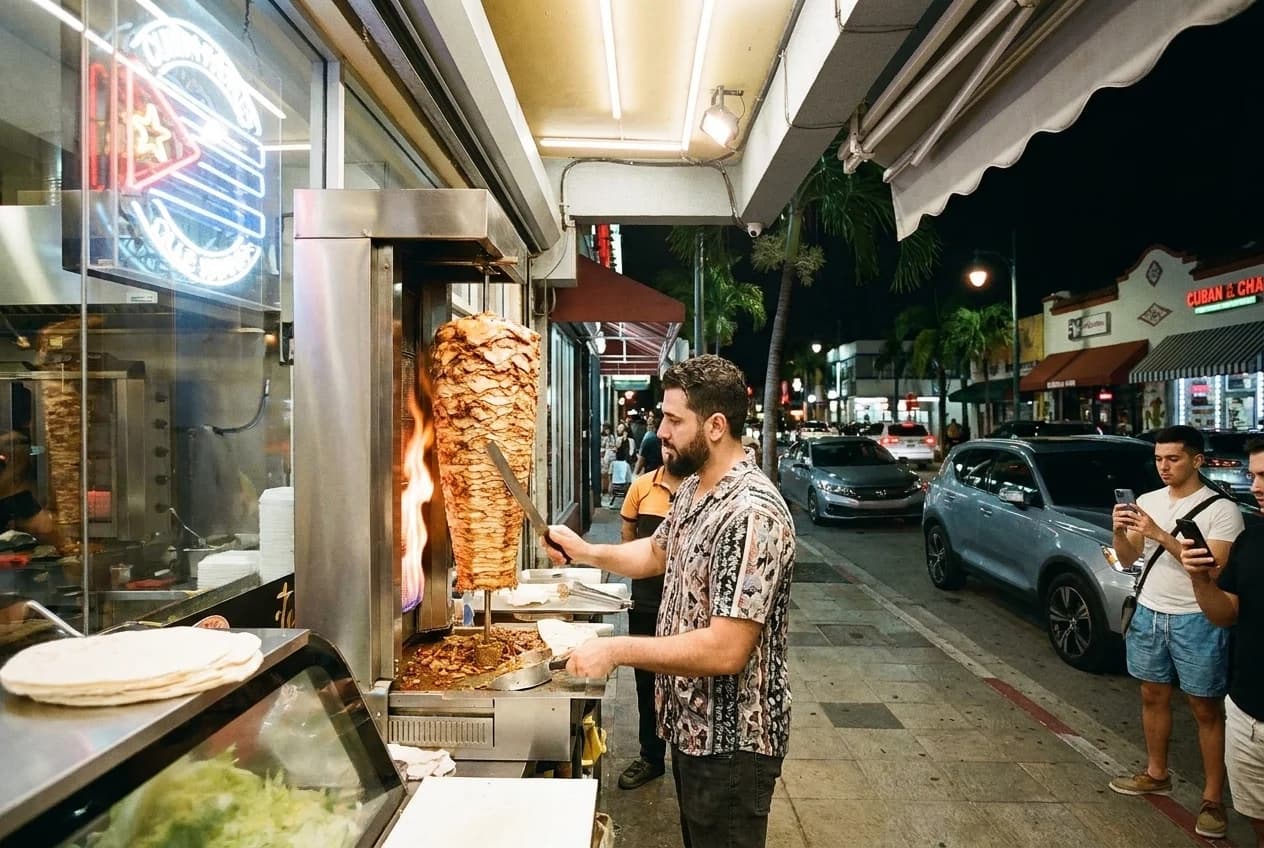
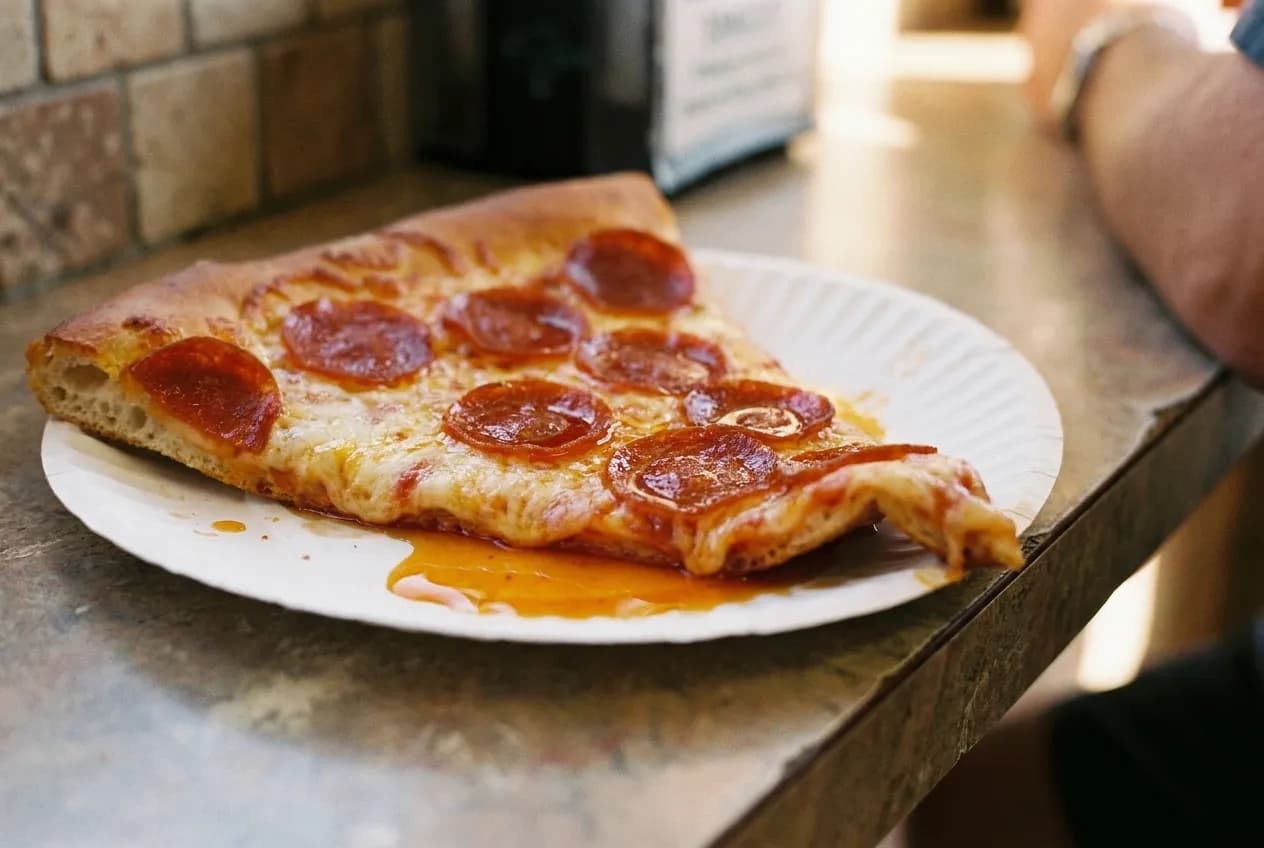
South Florida has absorbed a very large number of people from the New York metropolitan area over several decades, and they brought a specific and non-negotiable idea of what pizza is: a thin, wide, structurally floppy slice with enough oil to leave a mark on the paper plate, reheated to order in a deck oven, eaten standing or folded. Miami has plenty of counters doing this properly, and the good ones are recognisable from the street - a warming case with whole pies in it, a counter you order at rather than a host stand, and paper plates.
Steve's Pizza is the reference point for this style in Miami and has been for decades, with locations including North Miami and a South Miami branch, and a reputation built almost entirely on being open extremely late and being consistent. Andiamo, in the Upper East Side on Biscayne, is the other end of the slice-shop spectrum - a converted drive-through with a coal-fired oven, thin and blistered, and outdoor seating that makes it a destination rather than a stop.
The wood-oven wave
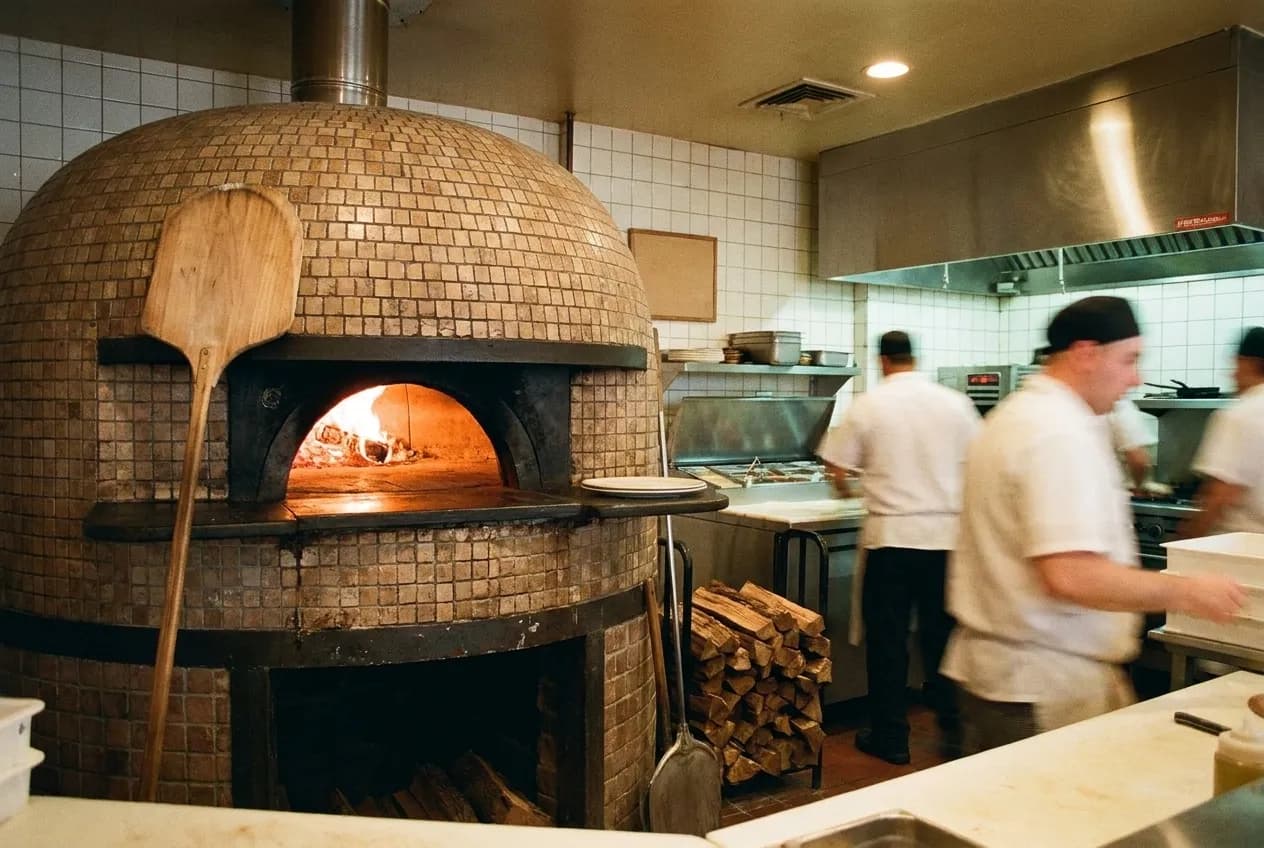
The other tradition arrived much more recently and much more deliberately. Over the past decade Miami has accumulated a serious cluster of Neapolitan and Neapolitan-adjacent pizzerias, several of them run by people who trained in Naples, most of them working with imported flour, a proper dome oven and a ninety-second bake. The result is a soft, wet-centred, leopard-spotted pie that you eat with a knife and fork for the first two bites and your hands after that.
Mister 01 grew out of exactly this movement and has spread across the city; its star-shaped pie with ricotta-stuffed points is the signature and is more fun than it sounds. Lucali, the Brooklyn transplant, sits on Miami Beach and runs a no-reservations queue system that generates the longest sincere pizza wait in the county. Del Popolo-style thin-crust rooms and the newer wave in Edgewater and the Design District fill out the category. These are dinner restaurants: they take bookings, they have wine lists, and their kitchens stop at a normal hour.
Neighbourhood by neighbourhood
Wynwood is the densest pizza neighbourhood in Miami and skews toward the pie end, with several wood ovens within a few blocks and a couple of slice windows that exist to catch the bar crowd on the way home. It is also the neighbourhood where pizza is most likely to be a late decision rather than a plan, so both categories are represented and the slice option is the one still running at one in the morning.
Brickell is pie territory: sit-down rooms serving people from the towers, decent quality, weekday-heavy, quiet on Sundays. The Upper East Side along Biscayne is the most interesting stretch for anyone who cares about the difference between the styles, because Andiamo's coal-fired thin crust and the Neapolitan rooms nearby sit within a mile of each other. South Beach has both but is priced as South Beach, and the honest advice is that the slice counters west of Washington are better value than anything on Ocean Drive. Coral Gables has good pies and closes early.
The late-night question
Pizza is Miami's most reliable late food after the taqueria, and the reason is structural: a slice counter can keep whole pies in a case and reheat wedges to order, so it can serve one person at half past one without firing a full kitchen. That is why the late options are almost exclusively slice shops. A wood oven at that hour would need a fire that has been burning for hours to serve two customers, which nobody does.
The practical consequence is that if you want pizza after midnight, do not search for the highest-rated pizzeria - search for a counter. And check what is actually open rather than trusting a listed closing time, because in nightlife neighbourhoods the posted hour is frequently the bar's. Steve's has built its whole identity on being genuinely open when it says it is, which is why people drive to it.
How to tell a good version of each from the doorway
For a slice shop: whole pies visible in a warming case rather than pre-cut wedges sitting dry; a deck oven for reheating rather than a microwave or a salamander; a slice that holds a fold without the tip snapping off; and oil, visibly. If the cheese has gone matte and orange under the lamp, walk on. Price should be a few dollars a slice - a slice priced like a small plate is a warning sign, not a quality signal.
For a wood oven: a dome you can see, a fire that is actually burning rather than a gas element, a bake so fast that you notice the pizzaiolo turning the pie, and a base that is soft and slightly wet in the centre with charred bubbles round the rim. Neapolitan pizza is meant to be floppy in the middle - that is not undercooking. If it arrives crisp all the way through, it is a good pizza but it is a different pizza.
Practical notes
Prices: slices generally four to seven dollars, a whole Neapolitan pie usually eighteen to twenty-eight, and the transplant destination rooms higher. Queues: Lucali on the beach is the long one and does not take reservations - go early or accept the wait. Hours: slice counters run latest, several past midnight and a few until two or three; wood ovens mostly stop between ten and eleven. Delivery: Neapolitan pizza does not travel - the base steams in the box and goes soft within ten minutes - so eat it in the room or order the slice-shop style instead. And a Miami-specific note: several of the best pizzerias here are in strip malls rather than on pretty streets, which says nothing about the pizza.
Tags: #PizzaNearMe #Miami #MiamiPizza #NeapolitanPizza #PizzaSlice #Wynwood #Brickell #UpperEastSide #LateNightPizza #WoodFired #MiamiEats #SouthBeach #CoralGables #SliceShop
All trademarks are the property of their respective owners.
Ask Karpo first
Pizza is the food people are least willing to plan and most annoyed to get wrong. Ask Karpo which of the two traditions is still serving at the hour you are asking, which nearby counter is genuinely open rather than nominally open, and whether the queue at the famous one is worth joining tonight.