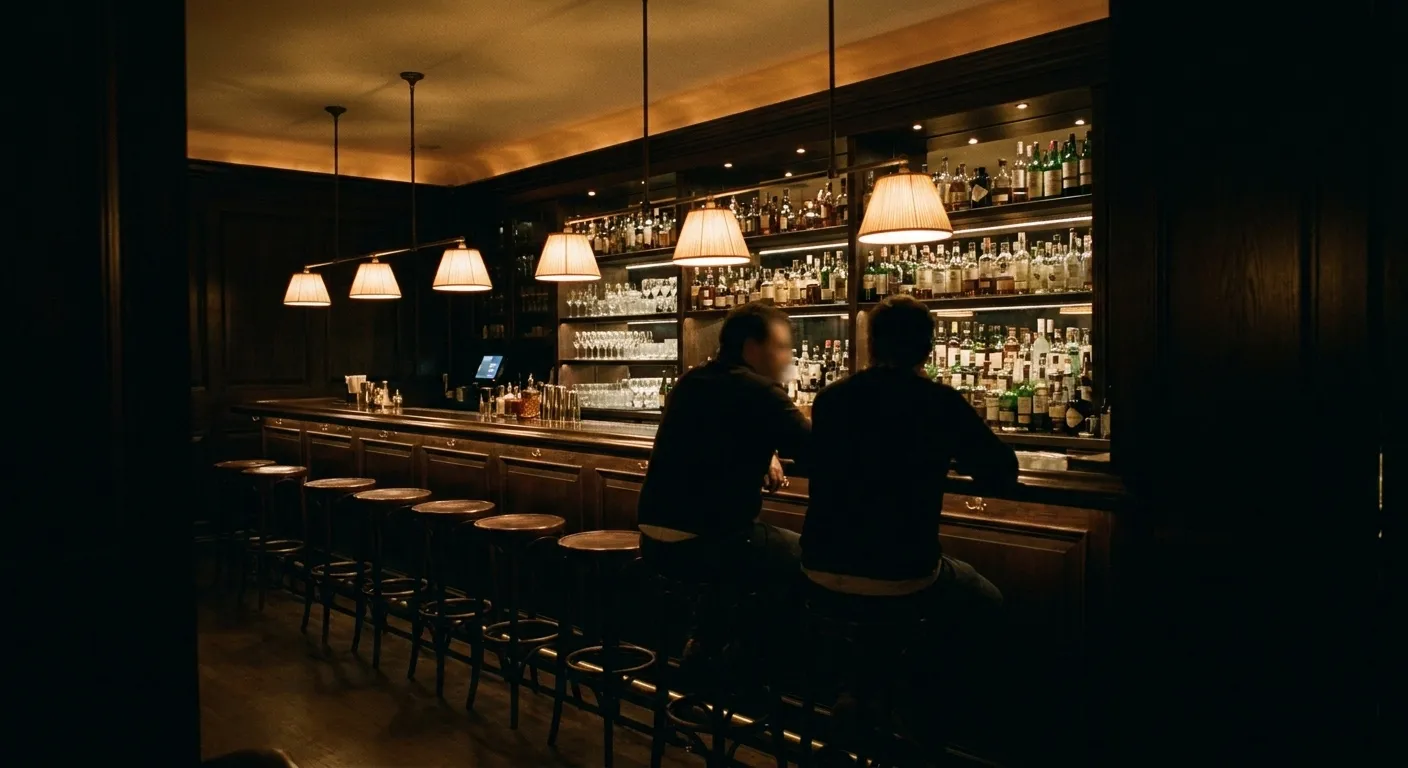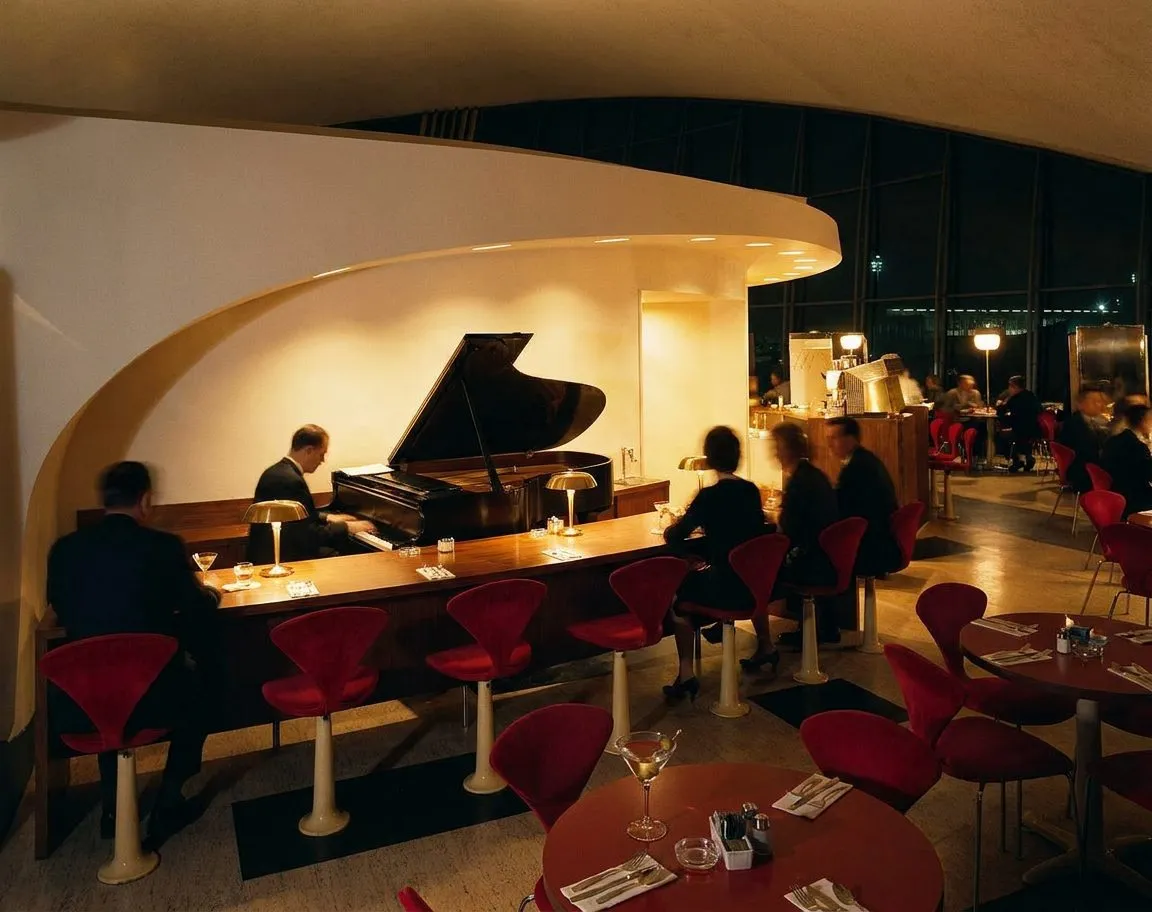
There's a particular breed of New York evening that begins with a dirty martini and ends with fifty strangers belting 'One Day More' in imperfect unison. Midtown West's piano bar circuit delivers exactly that—a stretch of dimly lit lounges where show tunes are currency, where tourists and Broadway regulars occupy the same velvet banquettes, and where the pianist's tip jar is a referendum on your request. These aren't polite listening rooms. They're participatory theaters, spaces where you're expected to know the bridge to 'Defying Gravity' and to harmonize accordingly. Spring 2026 finds the scene as unapologetically theatrical as ever, a pocket of the city where irony checked its coat at the door sometime in 1987 and never picked it up.
The Broadway Hour
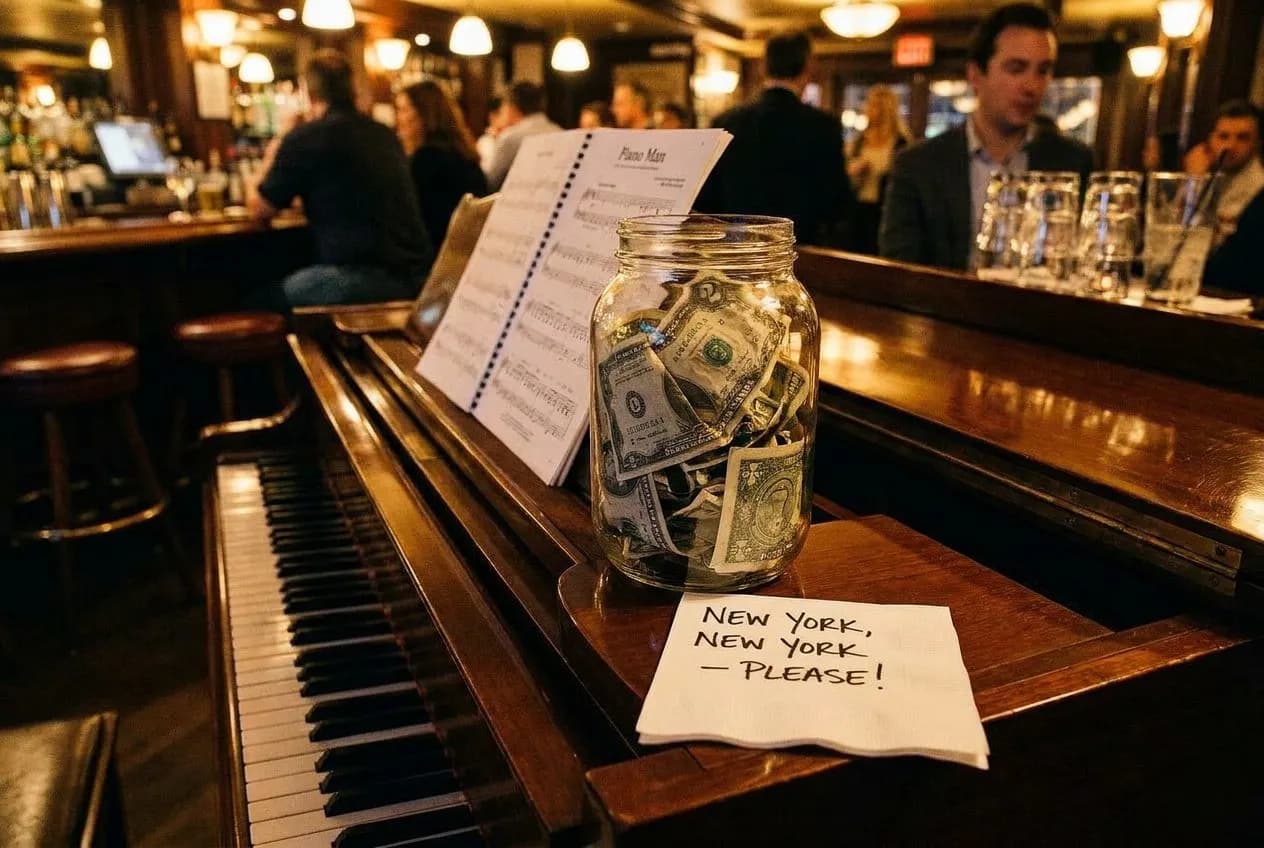
Timing is everything in this particular corner of the night. Most Midtown piano bars observe an unwritten Broadway hour between seven and eight p.m., when pianists field only musical theater requests—no standards, no pop covers, just Rodgers and Hammerstein through Pasek and Paul. If you harbor ambitions of hearing 'New York, New York' or anything resembling a jazz standard, arrive before seven or resign yourself to waiting until the clock strikes nine. The policy isn't posted anywhere; you learn it the way you learn all the best New York customs, by watching a well-meaning tourist's Sinatra request get gently deferred to 'after the theater block.'
The crowd during this window skews heavily toward pre-show warm-ups and post-matinee debriefs. Actors in street clothes nurse Manhattans and debate tempos. The energy is reverent but not stiff—think of it as a collective vocal warmup that happens to serve alcohol. By eight-fifteen the vibe loosens, the set lists diversify, and the piano bench becomes more democratic. But if your heart belongs to musical theater, that golden hour is worth building your evening around.
The Geography of Belonging
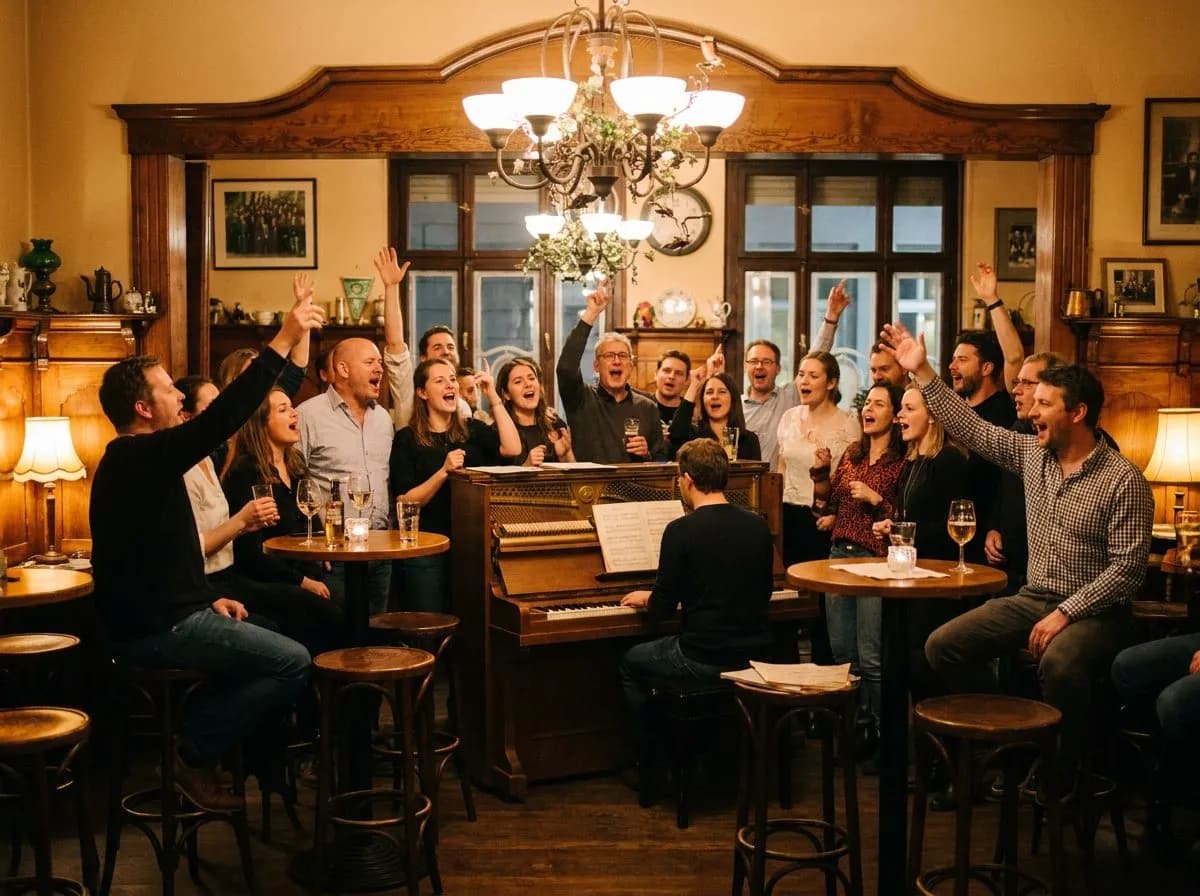
Every piano bar has its invisible seating chart, but few enforce it with the quiet vigilance you'll find at certain West Village institutions that draw the Midtown theater crowd. Take the phenomenon of the regular's corner—the cluster of stools or banquette ends nearest the piano where longtime patrons congregate like a standing committee. At venues like Marie's Crisis, this corner operates on unspoken rules older than most of the Broadway revivals downtown. Sit there as a newcomer and someone will politely, almost apologetically, ask you to move. But if you're invited to join that circle, the invitation is for life. It's a peculiar kind of New York intimacy, earned not through money or charm but through sustained attendance and a demonstrated ability to nail the alto line in 'Sunday.'
The rest of the room arranges itself in concentric rings of commitment. Closest to the piano: the singers, the harmonizers, the people who came with sheet music folded in their coat pockets. Mid-room: enthusiastic amateurs who know the chorus and fake the verses. Back wall and bar: observers, first-timers, and anyone nursing a complicated relationship with public performance. You can migrate between zones as the night progresses and the drinks accumulate. No one judges.
When the Bartender Knows Your Harmony
At Don't Tell Mama—a Theater District fixture that's hosted more cabaret dreams and post-audition debriefs than any single venue should—the bartenders are as much part of the performance as the pianist. They know the lyrics to most of what's being played, and on crowded nights when the singalong swells into something communal and slightly chaotic, they'll add harmony while measuring out gin or pulling a draft. It's multitasking elevated to art form, and if you're lucky enough to catch it during a full-room rendition of 'Being Alive,' you'll witness something that splits the difference between service industry competence and pure theatrical joy.
Tip accordingly. The jar on the piano gets most of the attention—singles, fives, the occasional twenty when someone's request finally gets called—but the bar itself deserves equal consideration. These are professionals managing a room that operates somewhere between a nightclub and a Broadway pit orchestra, and they do it with the kind of grace that makes the whole chaotic enterprise feel effortless.
The Tourist-Regular Compact
What makes Midtown West's piano bar scene work—what keeps it from tipping into pure theme-park pastiche—is the delicate equilibrium between tourists and regulars. The former bring enthusiasm, fresh energy, and a willingness to request 'Memory' for the eight hundredth time. The latter bring vocal chops, harmony knowledge, and the institutional memory that turns a night from pleasant to transcendent. They need each other. The regulars need new audiences to perform for; the tourists need guides to show them when to come in on the chorus.
By late 2026, this ecosystem has only deepened. The post-pandemic hunger for communal experience hasn't faded—if anything, it's intensified. Piano bars offer something increasingly rare: shared cultural literacy, a roomful of people who know the same songs, who can land on the same downbeat without rehearsal. It's the opposite of algorithmically personalized entertainment. It's analog, messy, and requires you to sit next to strangers. Which is precisely the point.
What to Know Before You Go
Come ready to participate—or at least ready to tolerate participation happening inches from your face. Bring cash for tips; the piano jar expects it, and your requests will get called faster with a visible contribution. If you don't know the words, fake it or hum; sitting in silent observation is technically allowed but spiritually discouraged. The dress code is nonexistent beyond 'wore clothes.' Martinis will be cold, strong, and expensive in that specifically Midtown way. And if someone asks you to move from a particular seat, don't take it personally. You've just encountered one of the city's stranger rituals of belonging.
Practical notes
Midtown West has several piano bars in the Theater District and Hell's Kitchen area; nearby subways include the A/C/E, N/R/W, and other Midtown lines depending on the venue. Most venues open around 5 p.m. and run until 2 or 4 a.m.; verify hours directly as schedules shift seasonally. Street parking is functionally nonexistent; public garages abound but expect Manhattan rates. Accessibility varies—many occupy basement spaces with narrow stairs and no elevator. Bring cash for tips and cover charges where applicable. Reservations are rarely accepted; arrival by 6:30 p.m. ensures seating during peak evening hours.
Tags: #PianoBarsNYC #MidtownWest #SingalongNights #PullUpAChair #BroadwayBars #ShowtunesAndSpirits #NYCNightlife #TheaterDistrictDrinks #Spring2026NYC #MartiniCulture #CabaretNights #NYCPianoBar #MidtownManhattan #SondheimSingalong #ClassicNYCBars
Please drink responsibly. Must be of legal drinking age.
Sources consulted: Piano bar · Midtown Manhattan · Time Out New York Bars · NYC Official Guide · MTA Transit Info
All trademarks are the property of their respective owners.