 Events Near Me in Little Havana: Calle Ocho Closes the Street for Miles
Free Things to Do
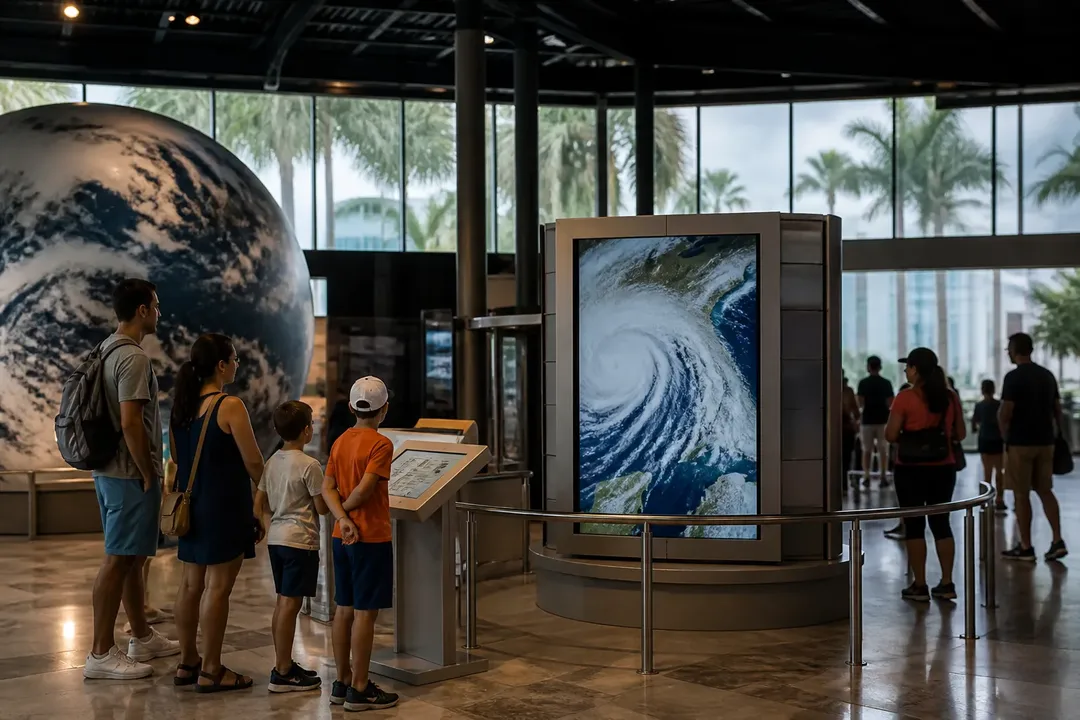
Phoenix Arizona Dust Storm Lessons: Free Miami Hurricane Preparedness Education Walking Route
Use Phoenix dust storm curiosity as a practical doorway into Miami hurricane readiness. This free weekend route turns public transit, libraries, parks, and civic event calendars into a low-pressure preparedness lesson for families or solo residents.
Footage tied to the exact keyword phoenix arizona dust storm can make extreme weather feel distant and dramatic, but it also creates a useful prompt for Miami residents: what would your family do when the local hazard is wind, rain, flooding, power loss, and fast-changing official guidance? This weekend-afternoon route is designed for weather-curious residents who want a free, easy way to learn without turning preparedness into a full-day errand. It uses public-facing Miami-Dade resources as anchors: free Downtown Miami Metromover service, library event and collection discovery, County parks and public open spaces, transit alerts, and official civic event calendars. Treat it as an educational walking route, not a promise that a specific exhibit, simulation, talk, or handout will be available on the day you go.
Text Karpo whether you want a family-friendly route or adult-focused exhibits, your preferred weekend day, how much walking time you have, and if you need parking info—we'll send a walking route with three free weather education stops and one backup library exhibit if the museum's closed.
Start With The Free Metromover Mindset
Begin downtown because the Metromover gives this route its simplest structure. Miami-Dade describes Metromover as a free elevated people mover operating in the downtown Miami, Omni, and Brickell areas, with 21 stations and three loops: Omni, Inner, and Brickell. For a preparedness-themed afternoon, that matters because you can practice moving between civic, library, waterfront, and transit spaces without making parking the main event. Before leaving, check current service messages, loop information, elevator or escalator status, and transit alerts instead of assuming every connection will be frictionless.
The lesson here is not only transportation; it is verification behavior. A person who watched phoenix arizona dust storm clips may focus on the spectacle, while Miami preparedness depends on checking official conditions before acting. Use the platform display, train destination, announcements, and posted alerts as a small rehearsal for emergency information habits. Families can assign one person to navigate, one to read notices, and one to choose the next stop. Solo visitors can do the same as a quiet checklist: current status, route option, accessibility backup, and fallback plan.
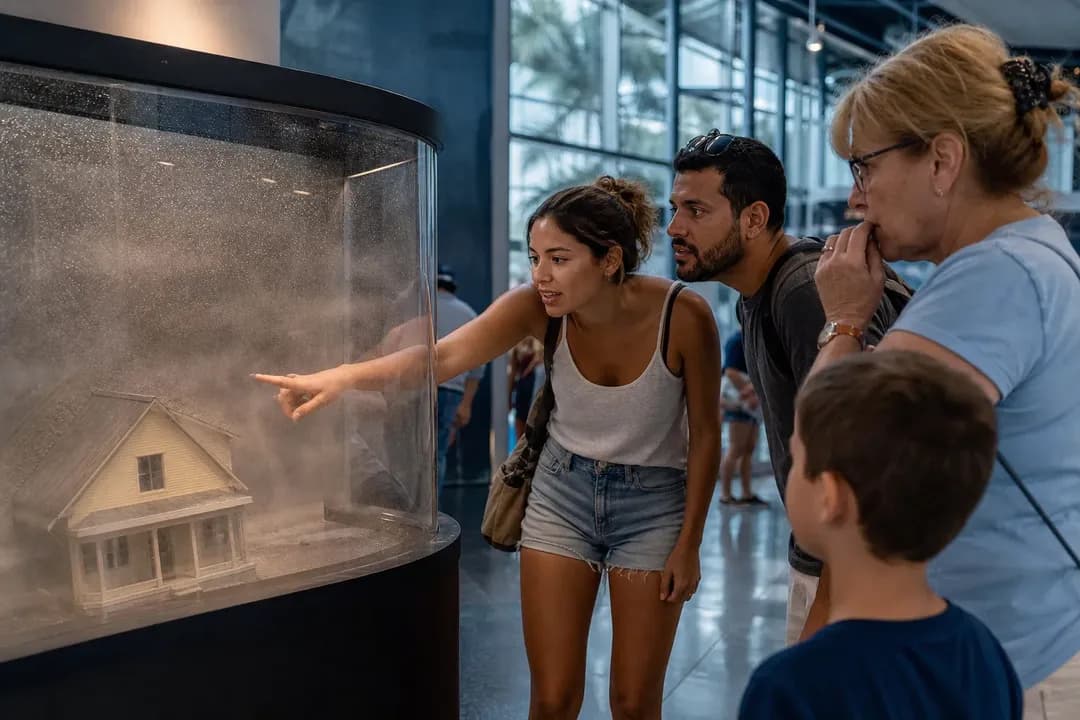
Make The Library Your Weather Desk
Use the Miami-Dade Public Library System events page as the planning step before the walk, then choose a branch or library stop that fits your afternoon. The supplied official information confirms that the system has an events page, account login, library card access, and an “open now” discovery path. That is enough to make the library a practical preparedness hub without inventing a specific workshop. Search for terms such as hurricane, emergency preparedness, weather, flooding, insurance, home safety, kids science, or climate resilience, then verify the date, branch, attendance rules, and whether registration is required.
Inside the library, make the goal concrete: build a family question list rather than passively browsing. Ask what you still need to understand after seeing extreme-weather stories from Arizona: warning language, evacuation decision points, battery and document storage, pet planning, older adult support, and how to explain storm risk to children without scaring them. If the library has a relevant collection, display, librarian recommendation, or public program that day, use it. If not, the stop still works because the habit is the value: finding official information before the forecast turns urgent.
Use Parks As A Risk Map
Miami-Dade Parks, Recreation and Open Spaces is useful here because preparedness is easier when people can connect weather to the places they actually use. The County highlights more than 200 public parks through its Park Finder tool, along with beaches, marinas, fitness zones, dog parks, family activities, UF/IFAS Extension educational outreach, natural areas, conservation topics, and accessible recreation. For this route, choose a nearby park or waterfront public space as an observation stop, not as a weather-risk demonstration. Do not go during hazardous conditions; visit on a normal day and think through what changes when warnings are active.
At the park, turn the walk into a practical scan. Where would water collect? Which paths feel exposed to wind? Where are restrooms, shade, transit access, and exits? If you are with children, ask them to point out sturdy buildings, open areas, signs, and places they would avoid in a storm. If you are alone, compare comfort, visibility, and exit options. The point is not to rank parks or create a safety guarantee. It is to make weather planning less abstract by connecting preparedness language to familiar public spaces.
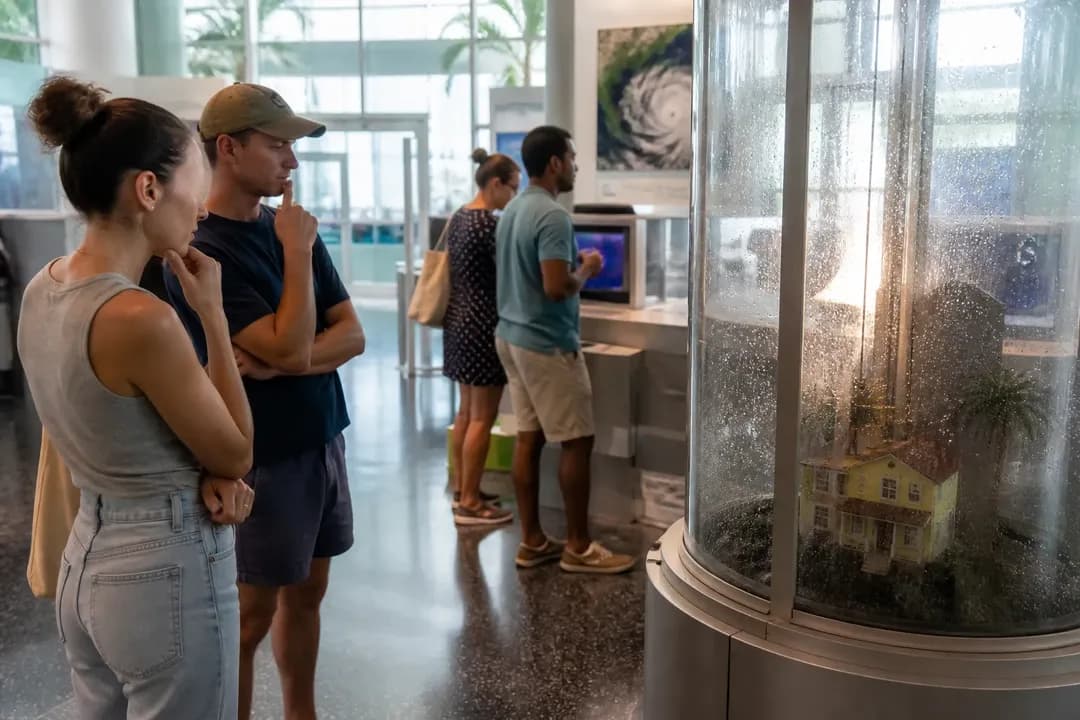
Add Civic Calendars Without Overpromising
Miami Beach and Miami-Dade public event calendars can widen the route, but they need careful use. The City of Miami Beach has an events page, and Miami-Dade Parks lists events and activities across parks. Those calendars may surface resilience, public safety, cleanup, environmental, family, or seasonal programs, but availability changes. For a grounded plan, check the official calendar on the same day or the day before, then decide whether an event belongs in the walking route. If nothing relevant appears, skip the event layer and keep the route centered on transit, library research, and public-space observation.
This is also where the brief’s museum or weather-education idea should be handled with discipline. A Miami science museum free-admission day, a NOAA-linked public education stop, or a hands-on storm display would be a strong addition only after you confirm it from the venue or agency directly. Do not build the afternoon around a rumored free day or an assumed exhibit. Instead, keep those as optional upgrades: if an official page confirms free access, timing, location, and topic fit, add it; if not, the no-cost route still works.
Turn The Walk Into A Family Plan
End the afternoon by converting observations into a simple household plan while the details are fresh. Use a bench, library table, transit station pause, or cafe-adjacent public space if it is convenient, but keep the task short. Write down three things: how your household will receive alerts, where you will look for official updates, and what you will check before deciding to travel. Miami-Dade’s public pages emphasize alert services, transit alerts, park resources, events, and public information access, which makes the exercise feel connected to real civic systems rather than generic storm advice.
The route fits residents who want free things to do in Miami with a preparedness payoff: parents turning weather curiosity into a teachable outing, solo adults pressure-testing their information habits, newcomers learning public systems, and longtime locals refreshing routines before peak storm anxiety. It is less suited to anyone seeking a guaranteed exhibit schedule or a formal emergency course unless they verify one first. The better expectation is modest and useful: one weekend afternoon, a few free public resources, and a clearer sense of how Miami’s everyday spaces become part of hurricane planning.
Tags: #Miami #FreeThingstoDo #HurricanePreparedness #WeatherEducation #FamilyActivities #PublicTransit #Libraries #Parks
Sources consulted: Source 1: miamidade.gov · Source 2: miamidade.gov · Source 3: mdpls.org · Source 4: miamibeachfl.gov
All trademarks are the property of their respective owners.
Ask Karpo first
Ask Karpo to turn this Miami idea into a current plan for your date, budget, companion, transit preference, and energy level. Karpo can narrow the route and flag what to verify before you go.
Ask Karpo for more information.
Keep reading
- Events Near Me in Little Havana: Calle Ocho Closes the Street for Miles
 Fast Food Near Me in Miami: Sergio's Runs a Cuban Drive-Thru Ventanita
 Things To Do Near Me: Máximo Gómez Park Open Games, Little Havana