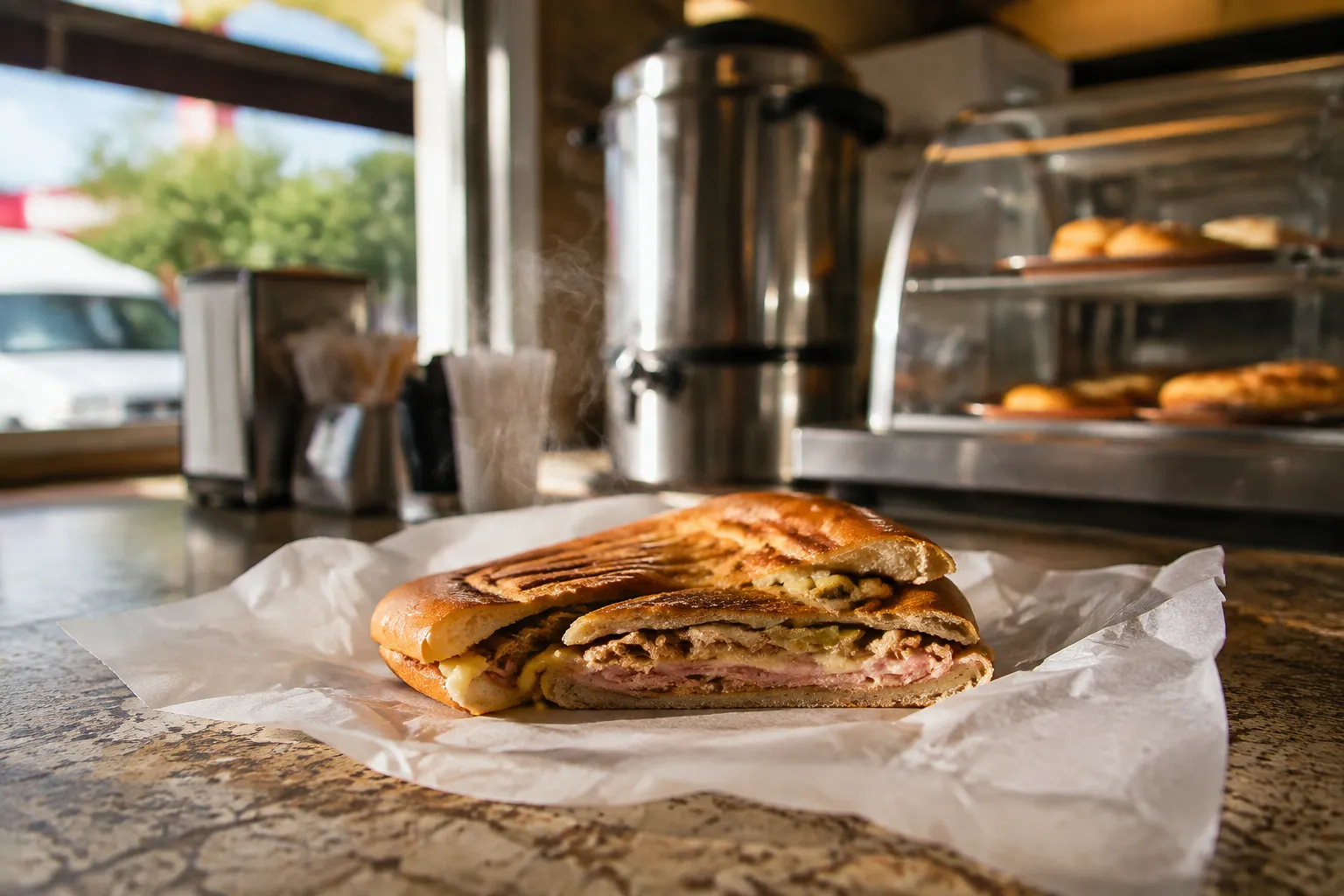
When the phillies trade deadline approaches and business lunches coincide with breaking roster moves, Miami restaurant selection becomes a strategic decision that balances screen access, channel control, and professional atmosphere. Executives monitoring trade coverage during weekday lunch face a venue comparison challenge: Brickell sports grills near Metromover stations, Coral Gables upscale sports bars requiring deliberate transit planning, and Doral casual chains along major corridors each offer different tradeoffs for solo diners or colleague groups tracking MLB Network versus ESPN-only programming. The intensity of following live trade updates while maintaining a business-appropriate setting requires advance verification of each restaurant's willingness to change channels, their default network lineup, and whether their lunch crowd tolerates extended screen monitoring without ordering multiple courses.
Text Karpo your starting point, timing, group size, and priorities for a Miami plan tailored to this exact situation, with one realistic backup before you leave.

Brickell Sports Grills and Metromover Accessibility for Rapid Venue Switching
Brickell's concentration of sports-oriented restaurants near Financial District Station and Tenth Street Station creates a walkable circuit for diners who discover their first-choice venue refuses channel changes or lacks MLB Network in their cable package. The Metromover operates every 90 seconds during weekday rush periods and every three minutes off-peak according to Miami-Dade transit schedules, allowing a frustrated diner to exit one restaurant, ride two stops, and test another venue within fifteen minutes. This mobility matters when a colleague insists on watching a specific analyst's trade breakdown and the current restaurant's manager cites corporate policy against changing from ESPN's default programming.
The tradeoff emerges between Brickell establishments with guaranteed MLB Network access versus those offering better lunch menus but uncertain channel flexibility. A solo diner can call ahead to confirm network availability, but group lunches complicate verification when one person scouts the location while others remain at the office. Restaurants near Metromover stations also face higher lunch traffic, meaning window seats with optimal screen sightlines fill quickly, and a party arriving at 12:30 p.m. may find themselves seated with obstructed views of the trade ticker. The intermediate difficulty lies in balancing transit convenience against the risk of musical-chairs venue hopping when breaking phillies trade news demands immediate screen access.
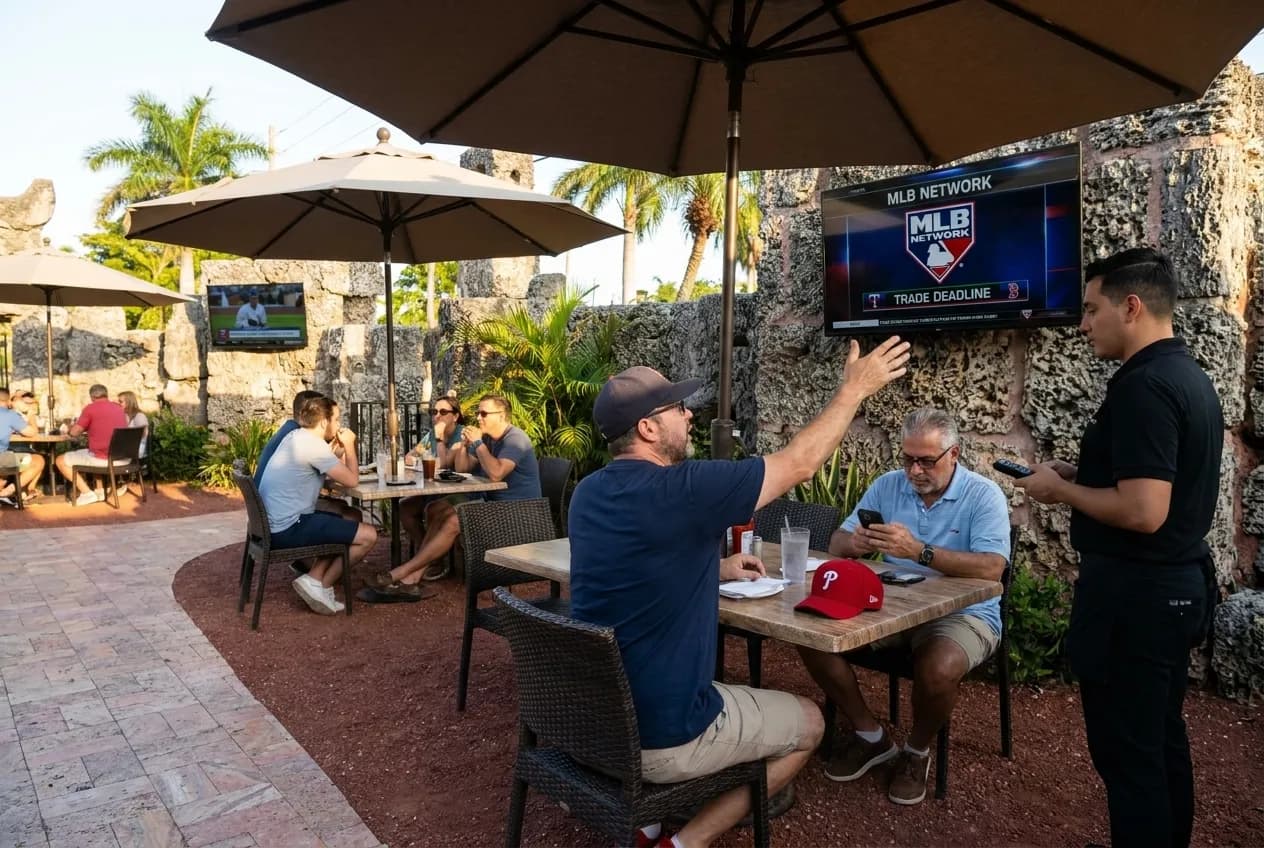
Coral Gables Upscale Sports Bars and the Channel-Change Negotiation
Coral Gables sports bars targeting business clientele typically install more screens and employ managers empowered to accommodate channel requests, but reaching these venues from downtown Miami offices requires deliberate planning rather than spontaneous Metromover hops. A weekday lunch party must coordinate departure times, accept the 25-minute drive variability depending on US-1 traffic, and commit to a longer meal duration since the return trip discourages quick check-ins. The upside includes establishments where the general manager recognizes repeat corporate groups and proactively tunes one section's screens to MLB Network during late-July and early-August trade periods without requiring individual requests.
The venue comparison calculus shifts when weighing Coral Gables atmosphere against Brickell's transit flexibility. Upscale sports bars often enforce subtler volume levels and discourage the standing-around-screens behavior common in casual chains, making them suitable for business lunches where trade monitoring remains secondary to client conversations. However, a solo executive intensely tracking trade rumors may feel conspicuous requesting channel changes in a quieter dining room, whereas Brickell grills expect and accommodate such requests as standard practice. The decision hinges on whether the lunch serves primarily as a work meeting with incidental trade watching or as dedicated monitoring time that happens to include a meal.
Doral Casual Chains and the ESPN-Default Dilemma
Doral's casual dining chains along NW 36th Street and near Miami International Mall offer predictable menus and ample parking but frequently operate under corporate policies that default all screens to ESPN and restrict individual location managers from overriding network selection. A business lunch group drawn to these venues by convenient midpoint geography between Brickell offices and western suburbs must verify each specific franchise's autonomy before assuming MLB Network availability. Some locations allow channel changes during non-marquee hours, while others cite their national sports bar franchise agreement requiring ESPN exclusivity except during locally broadcast games.
The intermediate challenge involves distinguishing between chain locations with local ownership discretion and those bound by corporate programming mandates. A phone call to the restaurant rarely reaches a decision-maker; front-desk staff typically defer to shift managers who won't arrive until 11 a.m., creating a verification gap for groups planning early lunch departures. The workaround requires scouting visits on prior weekdays to observe which screens show MLB Network during lunch hours and whether staff accommodate requests without management approval. Doral's advantage lies in larger dining rooms where multiple screen zones allow different groups to watch separate channels simultaneously, but this benefit evaporates if the venue's cable package excludes MLB Network entirely.
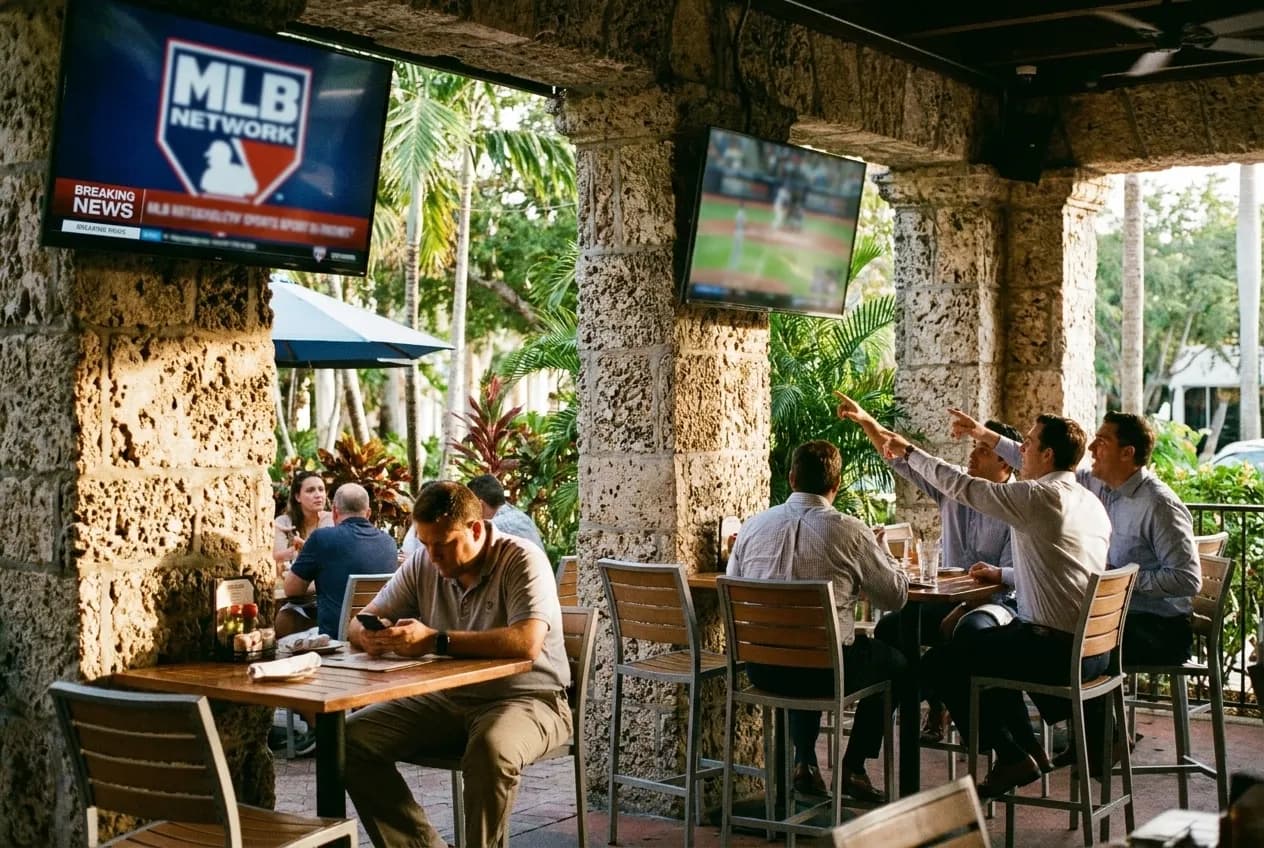
Solo Versus Colleague Dynamics in Screen-Monitoring Etiquette
A solo diner monitoring trade deadline coverage exercises complete control over seat selection, screen focus intensity, and departure timing when breaking news demands immediate reaction or follow-up calls. Restaurants tolerate extended single-seat occupancy during off-peak lunch hours, and a regular who tips appropriately can negotiate semi-permanent MLB Network assignment on a preferred screen. The solo approach works best in Brickell sports grills where bar seating provides direct screen access and the transient Metromover crowd creates constant turnover that makes extended stays less conspicuous.
Business lunch groups introduce competing priorities when one colleague prioritizes trade coverage while others focus on work discussion or prefer different sports entirely. The venue comparison must account for establishments offering separated screen zones where subgroups can split attention without disrupting the primary conversation. Coral Gables upscale sports bars typically configure seating to prevent screens from dominating every table, forcing explicit choices about whether the group sits in the bar area for maximum screen access or the dining room for better conversation acoustics. Doral chains often provide the best compromise with large booths positioned between multiple screen zones, though this advantage disappears if the restaurant refuses MLB Network requests.
Verification Steps Before Committing to Multi-Hour Trade Monitoring Sessions
Confirming a restaurant's MLB Network availability and channel-change willingness requires more than website menu browsing; the verification process should include calling during the previous week's lunch hours to speak with the actual floor manager who will be working during your planned visit. Ask specifically whether MLB Network appears in their cable lineup, whether they can dedicate one screen to that channel for a two-hour lunch window, and whether any corporate policies restrict manager discretion on channel selection. Document the manager's name and shift schedule, since evening managers often make promises that day-shift staff won't honor.
The secondary verification involves a brief reconnaissance visit to observe the restaurant's screen layout, identify which tables offer optimal sightlines to which screens, and note whether lunch crowds include other groups monitoring sports coverage or primarily focus on dining. This advance scouting reveals whether the venue's culture accommodates extended screen watching or whether staff pressure lingering diners to vacate tables during peak hours. For business lunches where trade deadline monitoring justifies the meal expense, these verification steps prevent the scenario where a group settles in only to discover the restaurant can't or won't provide the requested coverage, forcing an awkward mid-meal venue change or resigned acceptance of ESPN's programming choices.
Tags: #Miamirestaurants #sportsbarsMiami #MLBtradedeadline #Brickelldining #CoralGablesrestaurants #Doralrestaurants #businesslunchMiami #MLBNetwork #Metromoveraccess #weekdaylunchspots
Sources consulted: Source 1: miamidade.gov · Source 2: miamidade.gov · Source 3: mdpls.org · Source 4: miamibeachfl.gov
All trademarks are the property of their respective owners.
Ask Karpo first
Ask Karpo to turn this Miami idea into a current plan for your date, budget, companion, transit preference, and energy level. Karpo can narrow the route and flag what to verify before you go.