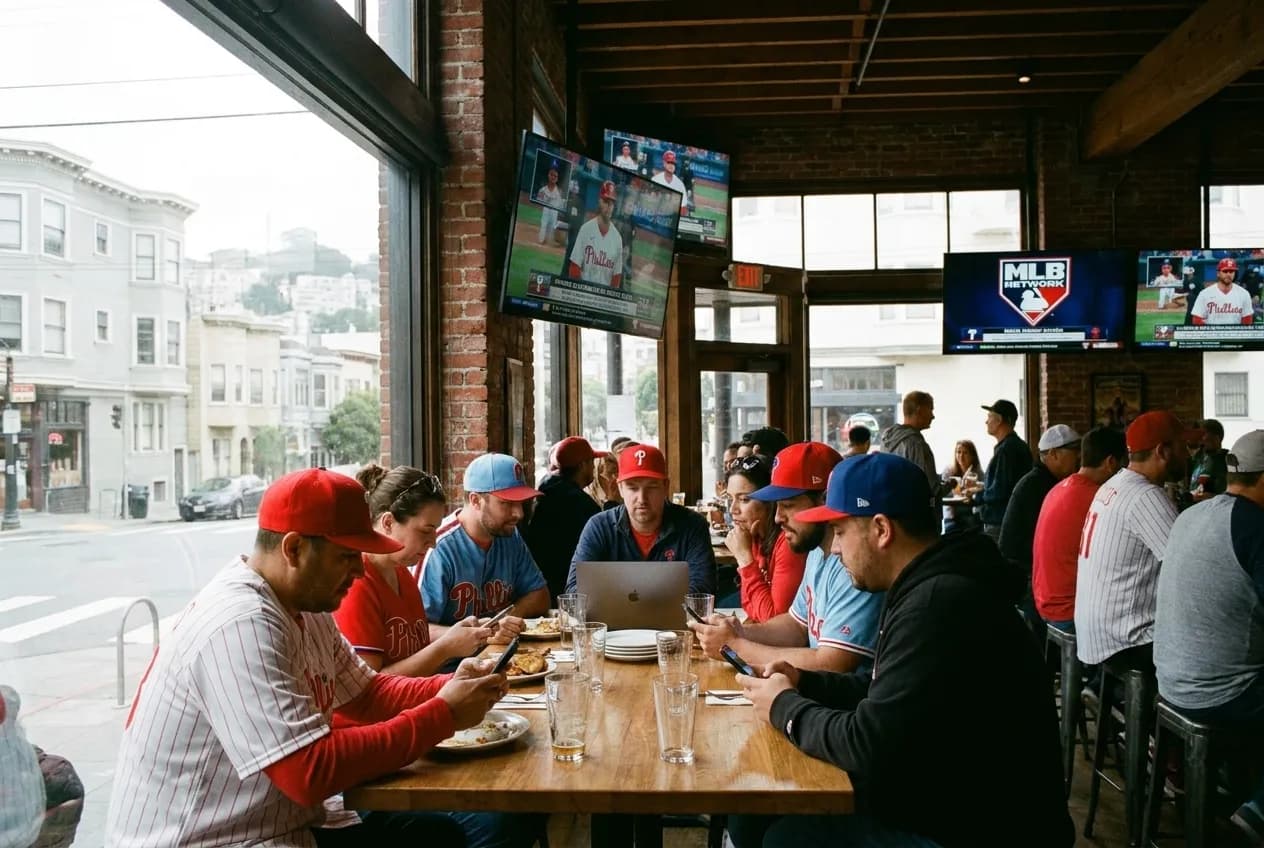
When the Major League Baseball trade deadline arrives and you're a Phillies fan living in San Francisco, following phillies news becomes a logistical puzzle that blends time zone math, broadcast verification, and the hunt for venues that understand East Coast baseball urgency. Transplants from Philadelphia face the challenge of finding sports bars that not only carry MLB Network—the primary source for live trade deadline coverage—but also open early enough to accommodate afternoon Eastern Time broadcasts, offer group seating without mandatory spending thresholds, and provide audio for the specific channel rather than defaulting to West Coast games. This guide addresses the practical steps required to confirm venue suitability, the tradeoffs between neighborhood accessibility and guaranteed MLB Network access, and the verification process that separates promising leads from wasted trips across the city.
Text Karpo your starting point, timing, group size, and priorities for a San Francisco plan tailored to this exact situation, with one realistic backup before you leave.

Why MLB Network Access Requires Direct Confirmation
Not all San Francisco sports bars carry MLB Network in their cable or streaming packages, and even fewer guarantee audio priority for a channel focused on league-wide coverage rather than local Giants broadcasts. The distinction matters during trade deadline hours when multiple screens display different content—a venue might technically have the channel but relegate it to a corner monitor without sound, rendering the experience useless for fans trying to catch breaking news about roster moves. Calling ahead to speak with a manager rather than relying on online channel listings provides the clearest answer, though responses vary depending on whether you reach daytime staff unfamiliar with evening sports programming or bartenders who know the actual remote control hierarchy.
The verification conversation should specify the exact date and time window—weekday trade deadline coverage typically runs from late morning through mid-afternoon Pacific Time—and ask whether the venue can dedicate a screen with audio to MLB Network during that period. Some establishments accommodate requests for regular customers or groups reserving tables, while others operate on a first-come, first-served basis that favors whatever game draws the largest crowd. Understanding this distinction helps transplants decide whether to commit to a venue or continue searching, particularly when coordinating with fellow Philly expats who need assurance before arranging time off work.
Time Zone Logistics and Early Opening Tradeoffs
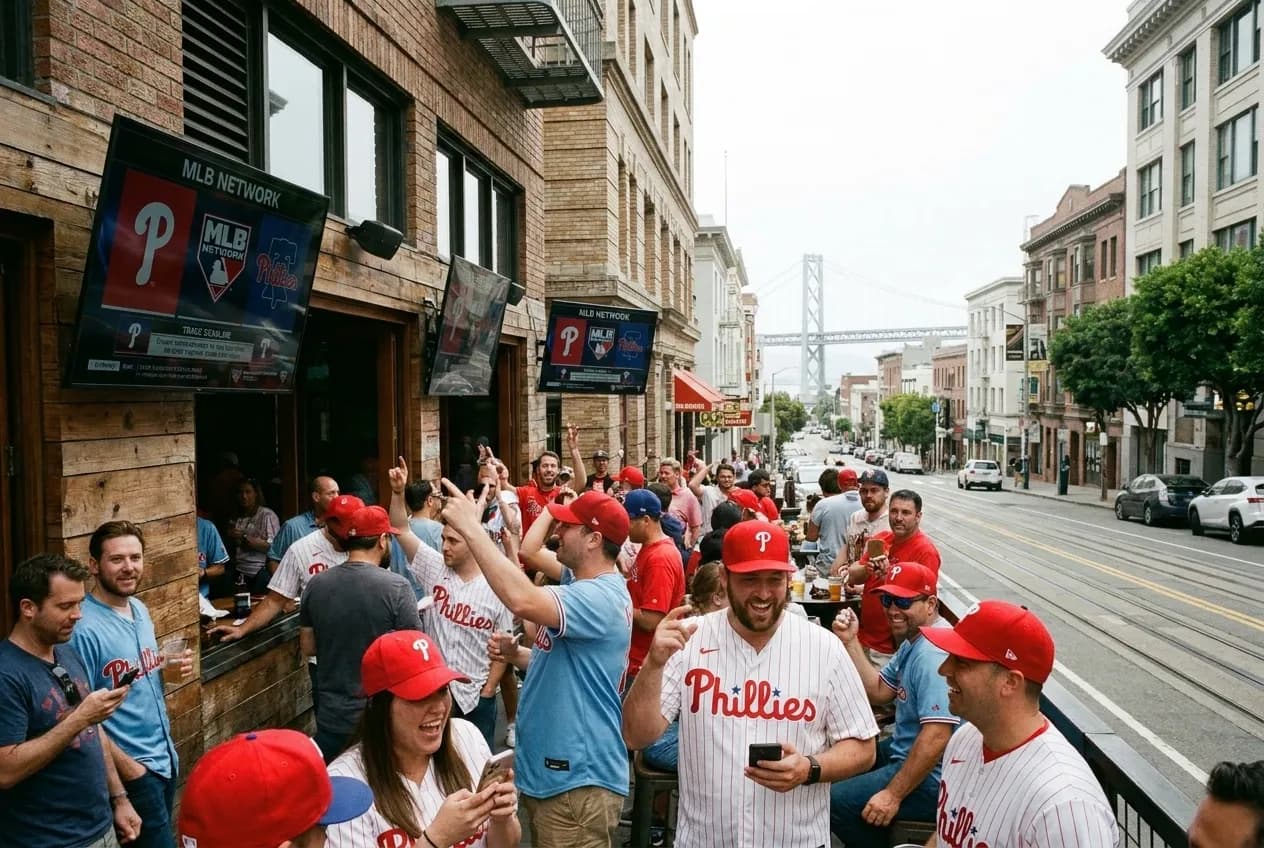
The three-hour time difference between Philadelphia and San Francisco means a 4 p.m. Eastern trade deadline translates to 1 p.m. Pacific—a window when many sports bars are either just opening or operating with limited lunch menus and skeleton staff. Venues that cater primarily to evening crowds may not have full audio-visual control available during early afternoon hours, and managers might be less willing to adjust programming for a small group when the dinner rush is hours away. This creates a tradeoff: neighborhood bars with flexible daytime operations versus downtown sports bars with comprehensive channel packages but rigid programming schedules designed around peak traffic.
Transit planning through SFMTA options—Muni buses, light rail, or walking routes—becomes relevant when weighing venues across different neighborhoods, since a bar willing to accommodate your request in the Sunset or Richmond districts might require a longer commute than a less flexible option downtown. The decision depends on whether your priority is guaranteed access with a longer travel time or proximity with uncertainty, and whether your group can arrive early enough to claim space before lunch crowds fill available seating. Weekday afternoon availability often differs significantly from weekend patterns, making advance reconnaissance valuable.
Group Seating Without Minimum Spend Requirements
Many San Francisco sports bars implement minimum spending requirements for groups reserving tables, particularly during high-traffic periods or when dedicating screens to specific programming. For Phillies fans gathering to watch trade deadline coverage—an event that might last two hours with unpredictable intensity—these minimums can feel punitive, especially when the primary goal is following news rather than extended dining. Smaller neighborhood establishments sometimes waive such requirements for weekday afternoon gatherings that don't displace dinner reservations, but policies vary widely and often aren't published online, requiring direct negotiation.
The alternative is claiming communal bar seating or high-top tables on a walk-in basis, which offers flexibility but no guarantee of staying together as a group or maintaining proximity to the desired screen. This approach works better for pairs or trios than for larger expat gatherings, and it assumes the venue's afternoon crowd will tolerate your audio preferences. Asking about group accommodation during the confirmation call—framing it as a weekday afternoon request rather than a weekend game—sometimes yields informal arrangements where staff will hold a section if you arrive by a certain time, though nothing is guaranteed without a formal reservation system.
Neighborhood Accessibility and Fallback Options
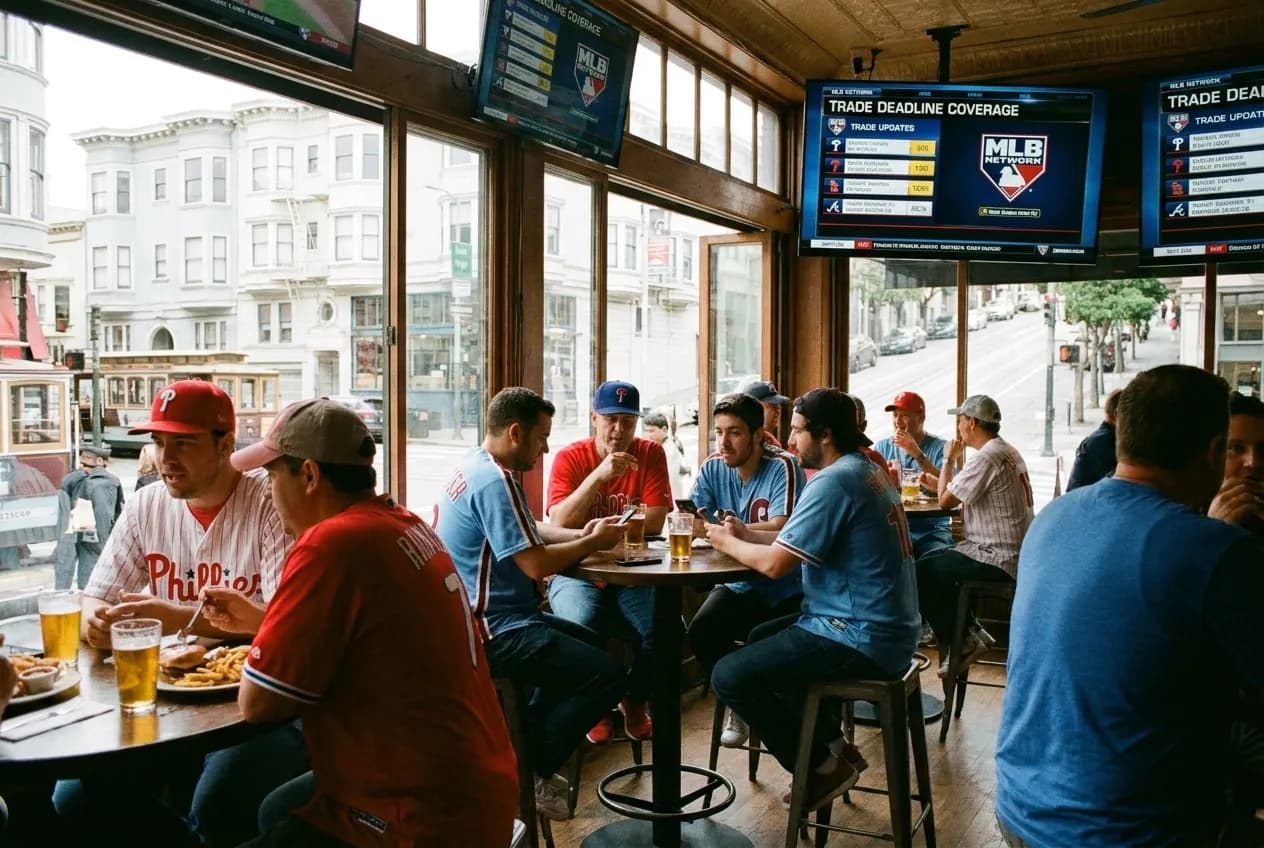
Concentrating your search in neighborhoods with multiple sports bars—such as the Marina, Mission, or areas near AT&T Park—provides fallback options if your first choice can't accommodate MLB Network requests or fills to capacity. Walking between venues becomes feasible when they're clustered within a few blocks, allowing your group to pivot quickly rather than committing to a long cross-city trip based on incomplete information. The SFMTA network supports this strategy, with Muni lines connecting sports bar concentrations and allowing you to shift neighborhoods if initial calls reveal limited availability.
However, neighborhood density cuts both ways: popular areas attract crowds that make spontaneous seating harder to secure, while quieter districts might offer more space but fewer alternatives if your chosen venue doesn't work out. Transplants familiar with San Francisco's geography can map a route that includes a primary target and one or two backups reachable within a fifteen-minute walk or single transit connection, reducing the risk of spending trade deadline afternoon searching rather than watching. This planning matters more for weekday events when you're coordinating around work schedules and can't afford extended venue-hopping.
Who This Approach Fits and Who Should Look Elsewhere
This verification-heavy strategy suits Phillies transplants who prioritize reliable MLB Network access and group cohesion over spontaneity, and who have the flexibility to make advance phone calls and potentially travel across neighborhoods. It works best for fans with at least one other committed attendee—coordinating solo watch parties for niche programming is significantly harder—and for those comfortable with the uncertainty that even confirmed plans can unravel if a venue's staffing or crowd dynamics change. The approach assumes you're willing to invest time in logistics for a better viewing experience rather than settling for whatever's convenient.
Conversely, fans who prefer minimal planning, can't easily take weekday afternoon breaks, or prioritize proximity over programming guarantees might find this process frustrating. Watching trade deadline coverage at home via personal MLB Network subscriptions eliminates venue uncertainty entirely, though it sacrifices the communal energy of following roster news with fellow expats. The decision hinges on whether the social dimension and dedicated screen space justify the coordination effort, and whether your schedule allows the flexibility to arrive early and potentially stay longer if breaking news extends beyond the formal deadline window.
Tags: #Phillieswatchparties #SanFranciscosportsbars #MLBNetworkvenues #tradedeadlineviewing #EastCoasttransplants #groupseating #weekdayafternoonsports #PhillyexpatsSF #baseballwatchparties #venueverification
Sources consulted: Source 1: sf.gov · Source 3: sfmta.com · Source 4: sfpl.org
All trademarks are the property of their respective owners.
Ask Karpo first
Ask Karpo to turn this San Francisco idea into a current plan for your date, budget, companion, transit preference, and energy level. Karpo can narrow the route and flag what to verify before you go.