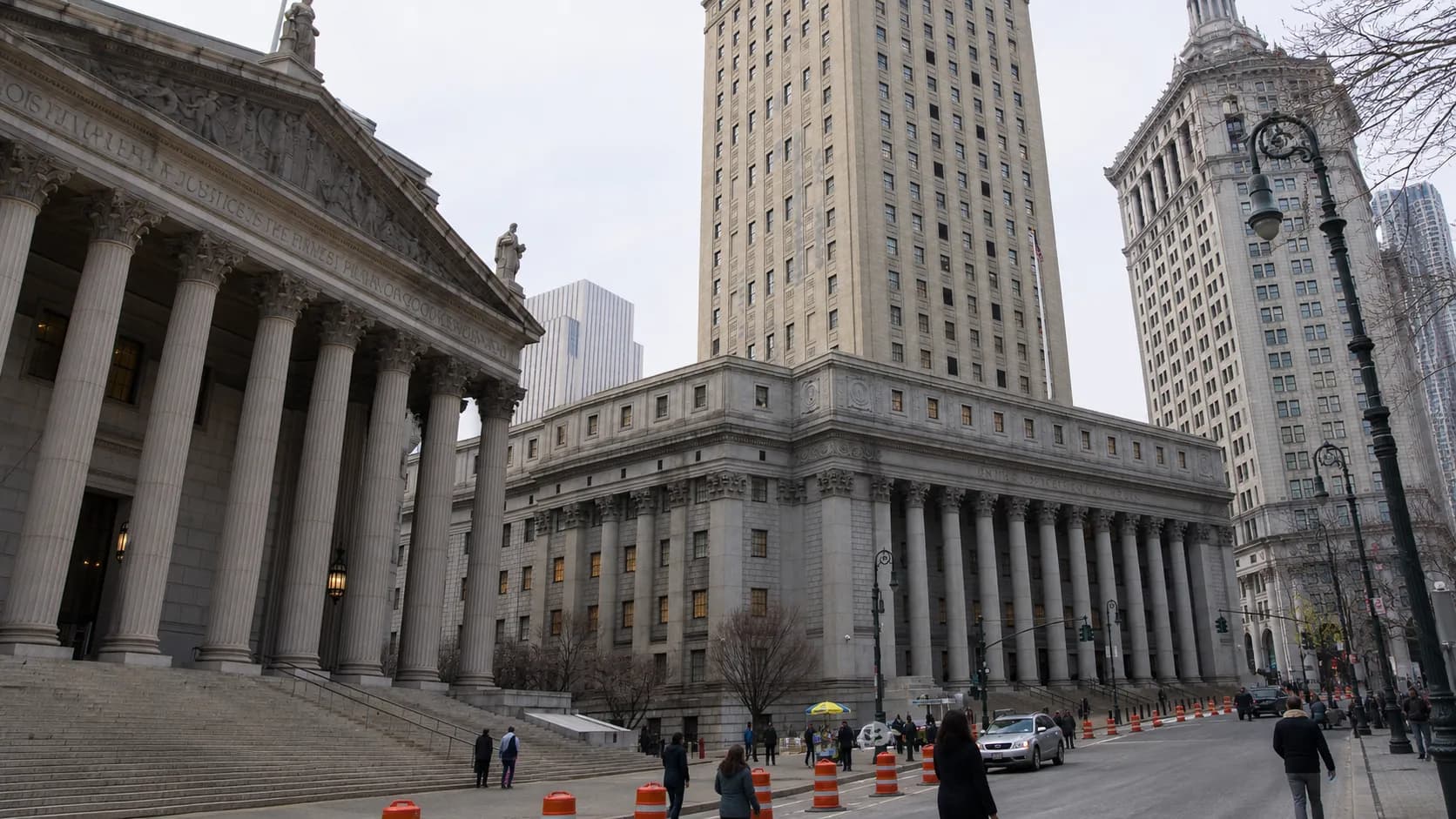
The search phrase peter navarro contempt of congress is trending again after the U.S. Court of Appeals for the D.C. Circuit affirmed Peter Navarro’s convictions on July 21, 2026. For NYC readers, the case is not local in venue: the subpoena came from the House January 6 select committee, the criminal trial was in Washington, D.C., and the appeal was heard by the D.C. Circuit. But the issues are civic basics that matter in every borough: what Congress can demand, what a witness must do, what executive privilege can and cannot settle, and how a federal appeal differs from a political argument.
Text Karpo if you want a borough-friendly civics breakdown of a federal court story without the partisan spin. Ask Karpo to turn this timeline into a classroom-ready checklist for back-to-school discussions.
What changed on July 21, 2026
On Tuesday, July 21, 2026, a three-judge D.C. Circuit panel affirmed Peter K. Navarro’s two contempt of Congress convictions in United States v. Navarro, No. 24-3006. The opinion, written by Judge Patricia Millett and joined by Judges Cornelia Pillard and J. Michelle Childs, left intact the judgment entered after Navarro’s 2023 jury trial and 2024 sentence. The court’s bottom line was straightforward: the panel affirmed the district court’s rulings and the jury’s verdict.
That does not mean every possible filing is over. A losing appellant can seek rehearing or ask the Supreme Court to review a case, subject to strict rules and deadlines. But as of July 22, 2026, the operative appellate decision is that the convictions stand. Navarro had already served a four-month prison sentence before this merits appeal was decided, so the ruling is about the continuing validity of the convictions rather than a new reporting date.
The congressional subpoena timeline in plain English
The House Select Committee to Investigate the January 6th Attack on the United States Capitol issued a subpoena to Navarro on February 9, 2022. According to the Justice Department and the D.C. Circuit opinion, the subpoena required document production by February 23, 2022, and a deposition appearance on March 2, 2022. Navarro did not produce documents, did not provide a privilege log, and did not appear for the deposition.
The select committee then moved through Congress’s contempt process. Its March 2022 report recommended that the House find Navarro and Daniel Scavino Jr. in contempt for refusing to comply with subpoenas. The House contempt referral led to a federal grand jury indictment of Navarro on June 2, 2022. In September 2023, a jury found him guilty on two misdemeanor counts: one tied to documents and one tied to deposition testimony.
What “contempt of Congress” means here
In this case, contempt of Congress refers to a federal statute, 2 U.S.C. § 192, that covers a person summoned by either chamber of Congress who willfully defaults or refuses to answer pertinent questions. It is not the same thing as being criticized by lawmakers or held in low regard by the public. It is a criminal charge that can be referred after a congressional process and then prosecuted in federal court.
The D.C. Circuit described Congress’s subpoena power as tied to its legislative function: lawmakers often need information before they can write, amend, or oversee laws. The court also emphasized that subpoena recipients may have valid privileges. The legal dispute was not whether privileges exist in the abstract. It was whether Navarro could refuse across the board without appearing, producing a log, or engaging question by question with the committee’s requests.

Executive privilege was the central defense issue
Navarro argued that former President Donald Trump had invoked executive privilege and that this should have prevented the prosecution or allowed a defense at trial. The district court held an evidentiary hearing and concluded that Navarro had not shown a formal invocation of executive privilege. The D.C. Circuit agreed that the record did not establish the invocation Navarro needed for the defense he sought.
The appeals court also treated executive privilege as a qualified doctrine, not a blanket permission slip to ignore an entire subpoena. The opinion explained that even when privileged communications may be protected, a witness can still be required to appear and respond to questions outside the privilege or assert privilege in a targeted way. For NYC civics teachers, that distinction is the core lesson: privilege may limit disclosure; it does not automatically erase the subpoena process.
How the trial and sentence fit into the record
Navarro’s trial took place in the U.S. District Court for the District of Columbia before Judge Amit P. Mehta. The jury convicted him on September 7, 2023. On January 25, 2024, the court sentenced him to four months in prison and imposed a $9,500 fine, according to the U.S. Attorney’s Office for the District of Columbia. The Justice Department said the case involved refusal to appear for testimony and refusal to produce documents.
Before beginning the sentence, Navarro sought release pending appeal. On March 18, 2024, Chief Justice John Roberts, acting on an emergency application, denied that request. That Supreme Court order was narrow: it addressed whether Navarro had met the Bail Reform Act standard for release while the appeal continued. It did not decide the full merits appeal that the D.C. Circuit resolved on July 21, 2026.
Why New Yorkers should read this as a civic process story
Nothing in the case required a New York courtroom, but New Yorkers interact with the same federal system every day through jury service, federal taxes, immigration filings, federal benefits, and congressional representation. The case shows how a dispute can move from a House committee to a House vote, then to the U.S. Attorney’s Office, a federal district court, an appeals court, and potentially the Supreme Court.
For students heading back to school, the case is also a useful map of separated powers. Congress investigates and issues subpoenas; the executive branch, through prosecutors, may bring a criminal case after a referral; courts decide legal motions, conduct trials, and review appeals. Those roles can overlap politically in public debate, but they are procedurally distinct. Keeping the roles separate helps readers follow the case without turning the explainer into persuasion.
Terms to know before sharing the story
A subpoena is a legal command to produce documents, appear for testimony, or both. A deposition is sworn testimony taken outside a courtroom, often with lawyers present and a transcript made. A privilege log is a document that identifies withheld materials and the claimed basis for withholding them, without necessarily revealing the protected content itself. An indictment is a formal criminal charge, not a conviction.
An appeal is not a second trial. Appellate judges usually review the legal rulings and record created below, not new factual claims made in the press. To affirm means the appeals court leaves the lower court’s judgment in place. To reverse would mean the appeals court found an error requiring a different result. Here, the D.C. Circuit affirmed, so the district court judgment remains in effect unless later changed by further review.
Practical notes
Practical notes for NYC readers: if you are discussing this case in a classroom, workplace, or community forum, keep the dates straight. The subpoena was issued February 9, 2022; the document deadline was February 23, 2022; the deposition date was March 2, 2022; the jury verdict came September 7, 2023; sentencing was January 25, 2024; the Supreme Court release-pending-appeal order was March 18, 2024; and the D.C. Circuit merits decision was July 21, 2026. This article is a civic explainer, not legal advice for subpoena recipients. Anyone who receives a subpoena should consult qualified counsel promptly, because deadlines, privileges, and response procedures are fact-specific.
Tags: #PeterNavarro #ContemptOfCongress #NYCCivics #FederalCourts #CongressionalOversight #ExecutivePrivilege #DCCircuit #SupremeCourt #CivicEducation #BackToSchool #NYCNews #LegalExplainer #GovernmentProcess #KarpoNYC
Sources consulted: D.C. Circuit opinion in United States v. Peter K. Navarro, No. 24-3006 · U.S. Attorney’s Office for D.C. sentencing release, January 25, 2024 · Congress.gov House Report 117-284 on Navarro and Scavino contempt recommendation · Supreme Court order in Navarro v. United States, No. 23A843 · GovInfo collection for the January 6th Committee final report and supporting materials · U.S. Court of Appeals for the D.C. Circuit public website
All trademarks are the property of their respective owners.
Ask Karpo first
Ask Karpo can help NYC readers compare official court documents, congressional reports, and agency releases so you can see which facts are final, which are allegations, and which are still subject to appeal or later review.