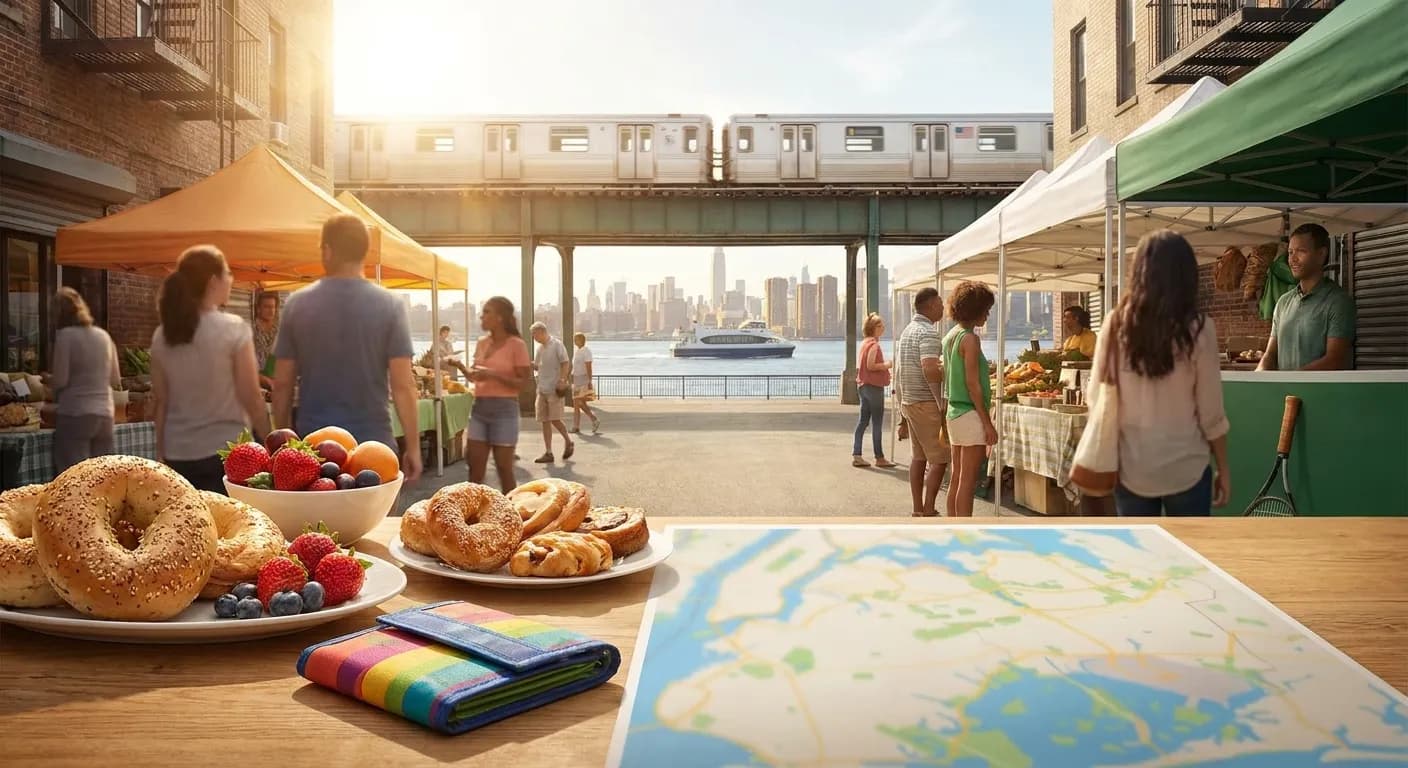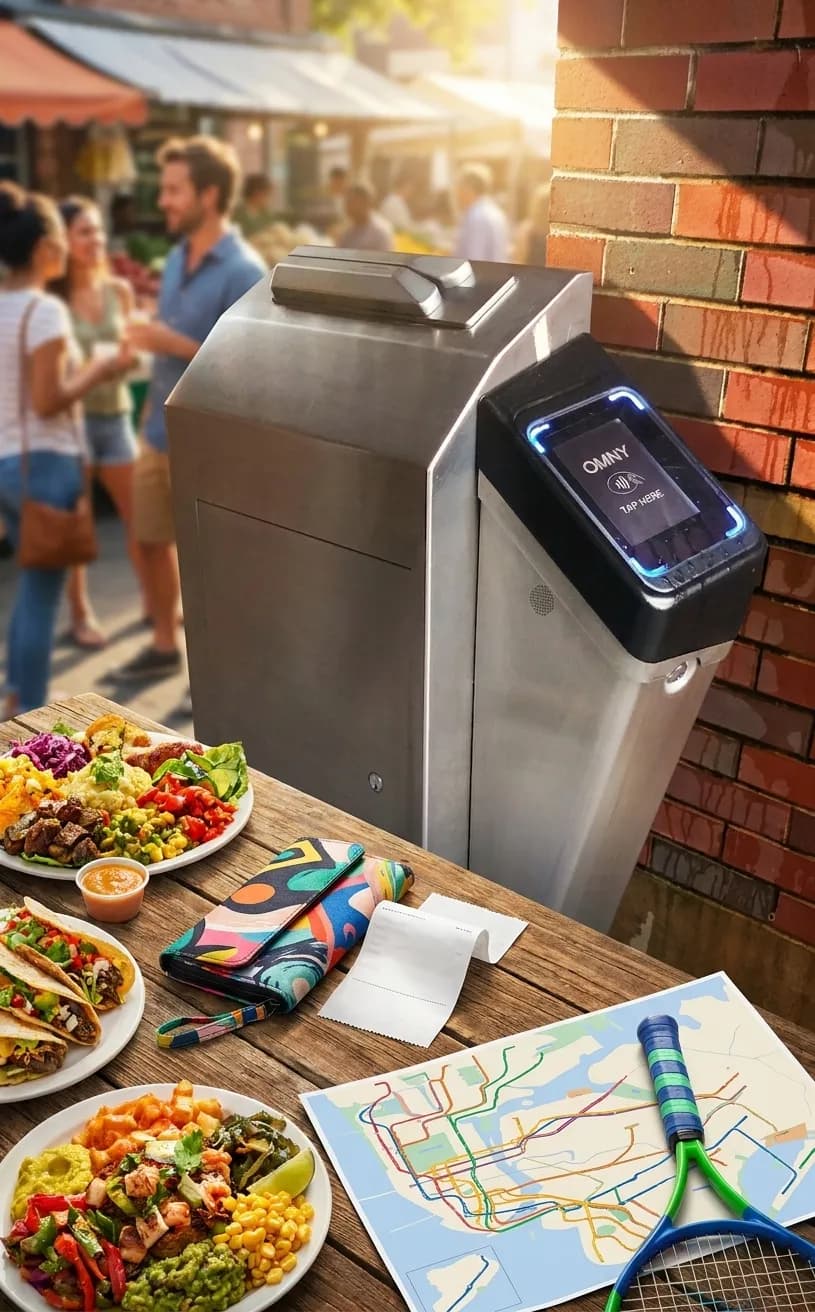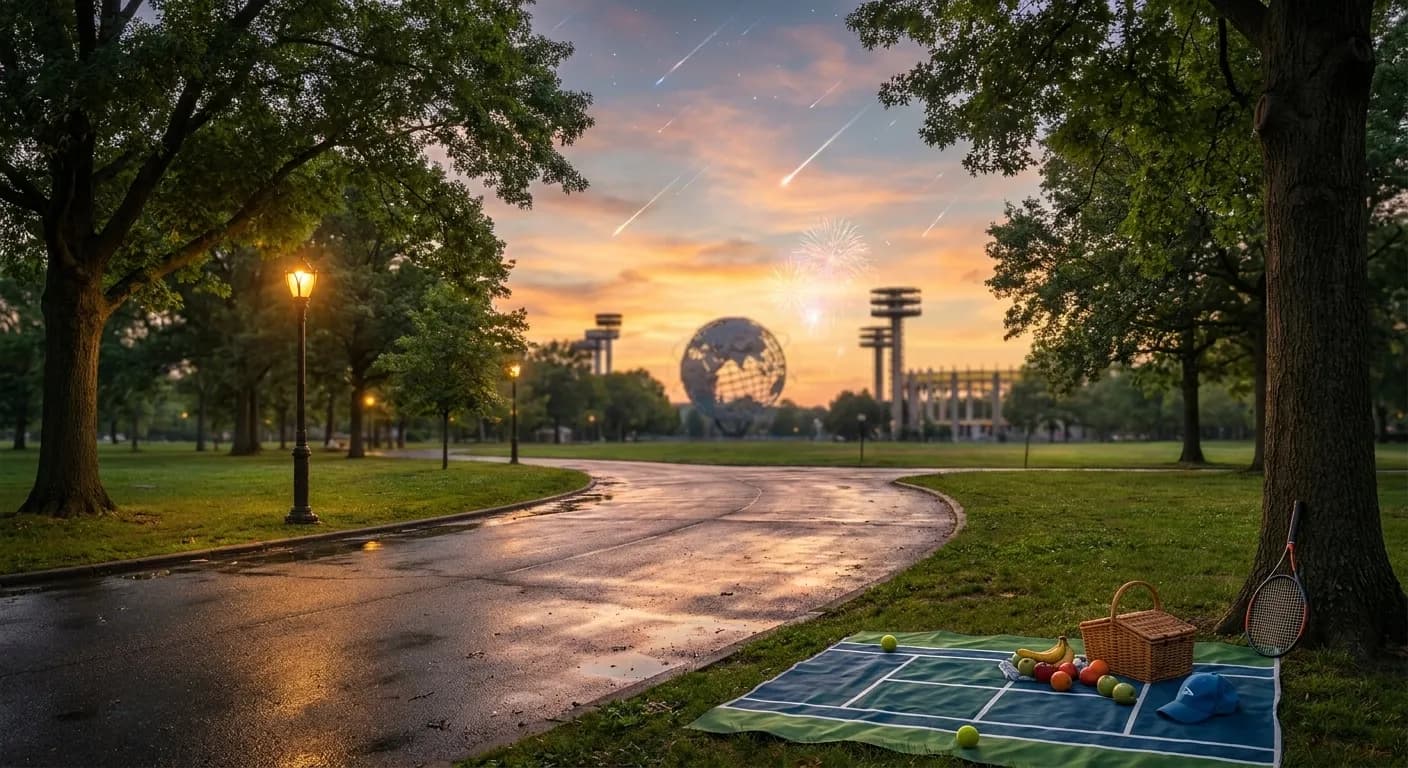
The Perseid meteor shower peaks each August, right when the US Open brings thousands of tennis fans to Flushing Meadows Corona Park. If you're planning evening sessions at the 2026 tournament, you're already halfway to a memorable night-sky experience—Queens offers several parks with open sightlines, and the logistics of combining a match with stargazing are simpler than you might expect. This guide walks through timing, transit, and practical choices for turning a tennis evening into a double feature that celebrates both world-class sport and the annual celestial show that lights up late summer.
Text Karpo with your US Open session time and Queens starting point, and we’ll turn this night parks idea into a practical local plan.

Why Queens Parks Work for Meteor Watching
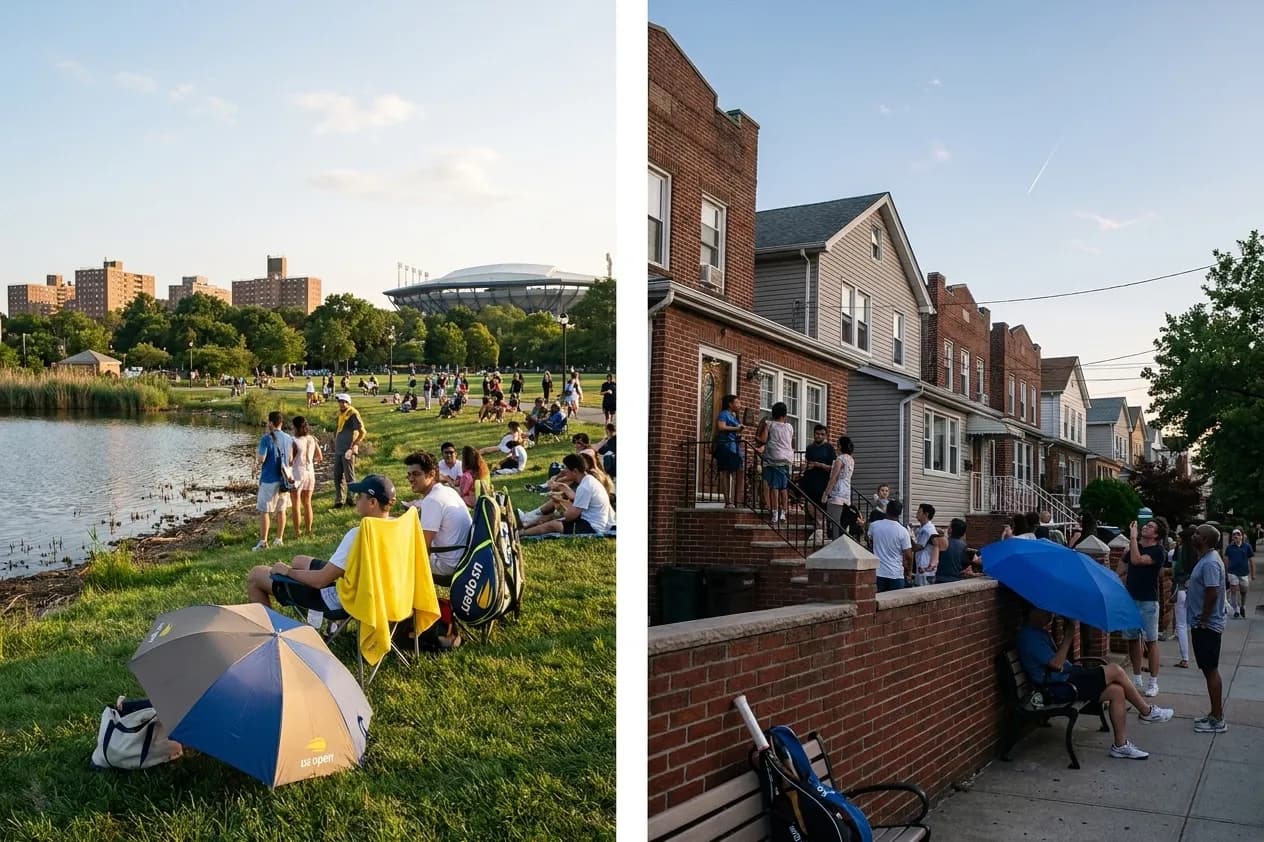
Meteor showers reward patience and dark skies, but you don't need to leave the city to see streaks during a strong Perseid peak. Queens parks—especially those with athletic fields, waterfront promenades, or hilltop overlooks—offer enough open sky to catch bright meteors even under urban light pollution. Flushing Meadows itself is enormous, with meadows and the Unisphere plaza providing unobstructed views. Astoria Park's running track and waterfront, Kissena Park's open fields, and the grassy stretches near Citi Field all give you room to tilt your head back without buildings blocking the northeastern sky, where Perseids appear to radiate from the constellation Perseus.
The key is managing expectations: you'll see the brightest meteors, not the faint ones visible from rural darkness. Urban stargazing is a trade-off, but Perseids are among the brightest meteor showers, with many fireballs—exceptionally bright meteors that leave persistent trails—so even under Queens' light pollution, you'll see memorable streaks if you're patient. That's still enough to make the detour worthwhile, especially when you're already dressed for an evening out and the park is a short subway or walk from the tennis center.
Timing Your US Open Session and Stargazing Window
Evening sessions at the US Open typically begin in early evening and can run late, depending on match length. The Perseid meteor shower is active from mid-July through late August, with the peak usually falling in the second week of August—check the American Meteor Society or NASA's annual forecasts for the exact dates closest to the 2026 tournament. Meteors are most visible after midnight, when the radiant point climbs higher and the sky darkens further, but you'll still catch bright Perseids late in the evening if you're willing to linger in a park after your match.
Plan for at least thirty minutes of sky-watching to let your eyes adjust and give yourself a fair chance at spotting streaks. If your session ends late evening, a quick subway ride or walk to a nearby park puts you in position to watch, leaving time before the trains thin out. The 7 train runs frequently late into the night, and the Long Island Rail Road offers post-match service from Mets–Willets Point, so you have flexibility to stay out a bit longer without worrying about getting stranded. Check official MTA schedules for current service patterns.
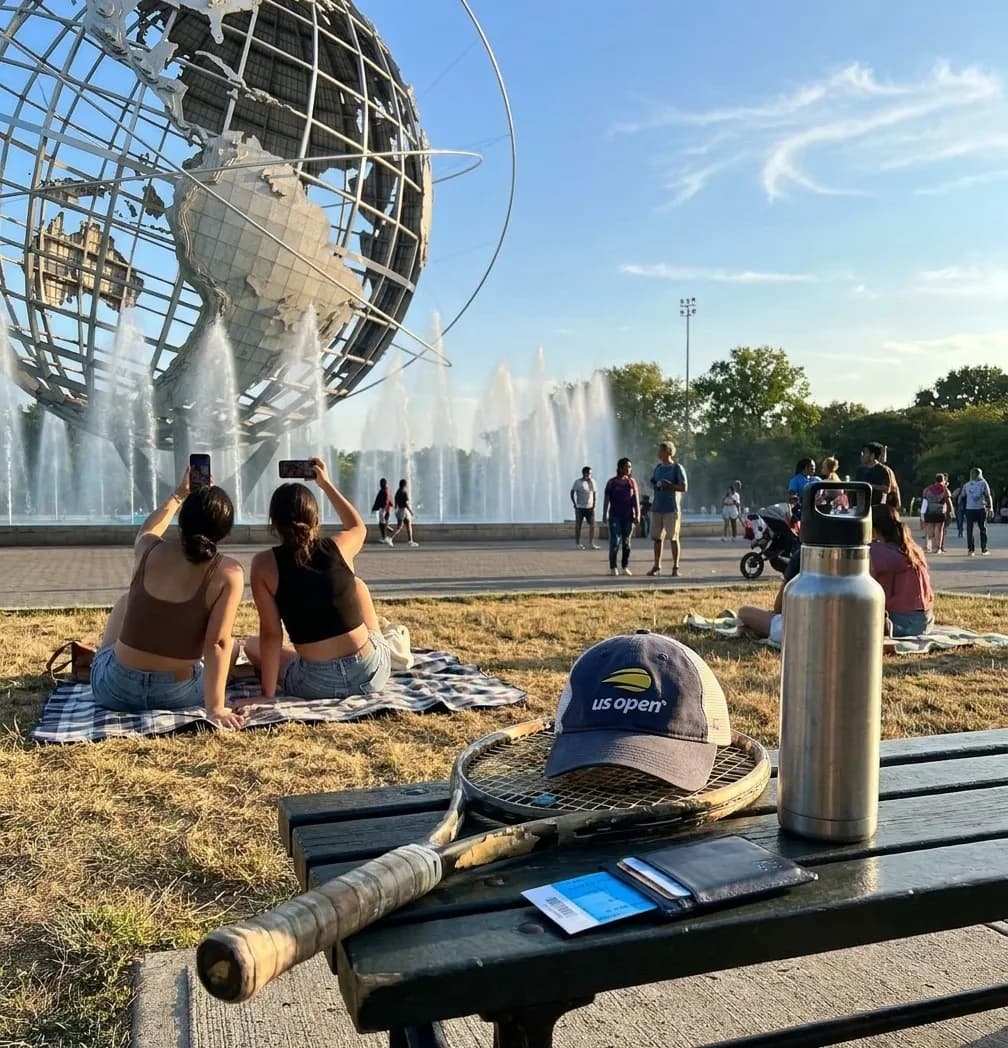
Flushing Meadows Corona Park After Dark
Flushing Meadows Corona Park is the obvious starting point—you're already there for the tennis, and the park's scale means you can walk from the Billie Jean King National Tennis Center to find a quiet meadow or the Unisphere plaza. The Unisphere itself is lit at night, which adds foreground interest but also light pollution; if you want darker skies, head toward the park's southern meadows or the fields near the New York Hall of Science. These areas are less trafficked after events and offer flatter horizons.
Check the NYC Parks website for any scheduled closures or maintenance, and be mindful that park lighting varies by section. Bring a blanket or folding chair if you want to lie back comfortably, and consider a small red-light flashlight to preserve your night vision while navigating paths. The park is generally active during and immediately after major events, but stay aware of your surroundings and keep valuables secure.
Astoria Park and the Waterfront Option
Astoria Park sits along the East River and offers a different atmosphere—waterfront breezes, the Triborough Bridge as a backdrop, and a running track that circles open fields. It's accessible from Flushing Meadows via the 7 train and the N or W, making it a reasonable post-match detour if you're staying in western Queens or heading back to Manhattan. The park's elevation and river views mean fewer obstructions to the north and east, which is ideal for Perseid watching.
The park's track and pool area are popular with evening joggers and families, so you won't feel isolated, but the grassy slopes near the bridge offer quieter spots. Arrive with enough time to claim a comfortable patch of grass, and double-check the National Weather Service forecast for cloud cover—clear skies are essential, and the waterfront can be breezy, so bring a light jacket even in August.
Practical Notes for Night Parks and Meteor Watching
- Recheck the Perseid peak dates each year—the shower's maximum activity shifts slightly, and moon phase matters; a bright moon washes out faint meteors.
- Dress in layers: August nights in Queens can be warm and humid, but waterfront parks cool down after sunset.
- Bring a blanket, reclining chair, or yoga mat—lying flat gives you the widest field of view and reduces neck strain.
- Download a stargazing app like SkySafari or Stellarium to identify constellations and locate Perseus, the radiant point for the shower.
- Avoid using your phone's white flashlight; red-light modes or red cellophane over a flashlight preserve night vision.
- Pack snacks and water—plan ahead for refreshments during a late-night outing.
- Check the US Open's prohibited-items list before your match; if you're carrying stargazing gear, plan storage accordingly.
- Confirm transit schedules for your return trip—check MTA real-time updates for current service patterns.
Transit and Logistics from the Tennis Center
The Mets–Willets Point station on the 7 train is steps from the US Open entrance, and the line runs frequently late into the evening. If you're heading to Astoria Park, take the 7 toward Manhattan and transfer to the N or W at Queensboro Plaza. For Kissena Park or other eastern Queens destinations, the 7 connects to local buses, though service thins out late—check the MTA's real-time updates before you commit to a longer journey.
The Long Island Rail Road's Port Washington Branch also stops at Mets–Willets Point and offers service to points east, though train frequency varies by time of day. If you're driving, the US Open's parking areas are convenient, but verify current policies regarding overnight parking and lot access. The official US Open transportation page provides detailed directions and real-time updates during the tournament.
What to Expect from Urban Meteor Watching
Urban stargazing is a trade-off: you sacrifice the faint meteors and Milky Way detail visible from dark-sky sites, but you gain convenience and the novelty of catching celestial fireworks without leaving the city. Perseids produce many bright fireballs that remain visible even under city lights. The shower's peak night offers the best odds, but Perseids remain active for weeks, so you can try again if clouds or scheduling interfere.
Bring a friend or two to share the experience; meteor watching is social and works well with conversation, since you're scanning the entire sky rather than focusing on one spot. If you're new to stargazing, use the wait time between meteors to learn a few constellations—Perseus, Cassiopeia, and the Summer Triangle are all visible from Queens in August and provide context for the shower's radiant point.
Making It a Full Queens Evening
Pairing a US Open match with meteor watching turns a single event into a full Queens evening that showcases the borough's range. Start with dinner in Flushing or Corona—hand-pulled noodles, Colombian arepas, or Tibetan momos—then catch your tennis session, and finish with time under the stars. The combination feels distinctly Queens: international, unpretentious, and full of unexpected juxtapositions.
If you're visiting from outside the city, this itinerary offers a richer sense of place than a stadium visit alone. If you're a local, it's a reminder that Queens parks hold more after-dark potential than most residents realize. Either way, the logistics are straightforward enough that the evening feels spontaneous rather than over-planned, which is exactly the right tone for a meteor shower—a natural event that rewards showing up and looking up.
Planning Your Night Parks Visit
Before heading out, verify current park hours and access policies through NYC Parks, confirm your transit route with live MTA updates, and check the National Weather Service forecast for cloud cover and conditions. The US Open's official visitor guide and transportation page provide essential details for match-day logistics. Meteor shower peak dates and viewing conditions are published annually by the American Meteor Society and NASA—consult these sources as your tournament dates approach to align your stargazing window with optimal celestial activity.
Tags: #USOpen2026 #Queens #FlushingMeadows #KarpoFinds #Karpo #perseidmeteorshowers #NewYorkLocal #TennisTravel
Sources consulted: usopen.org — Official event schedule · usopen.org — Official visitor A-Z guide · usopen.org — Official transportation directions · usopen.org — Official prohibited-items guide · National Weather Service New York · NYC Parks — Flushing Meadows Corona Park
All trademarks are the property of their respective owners.