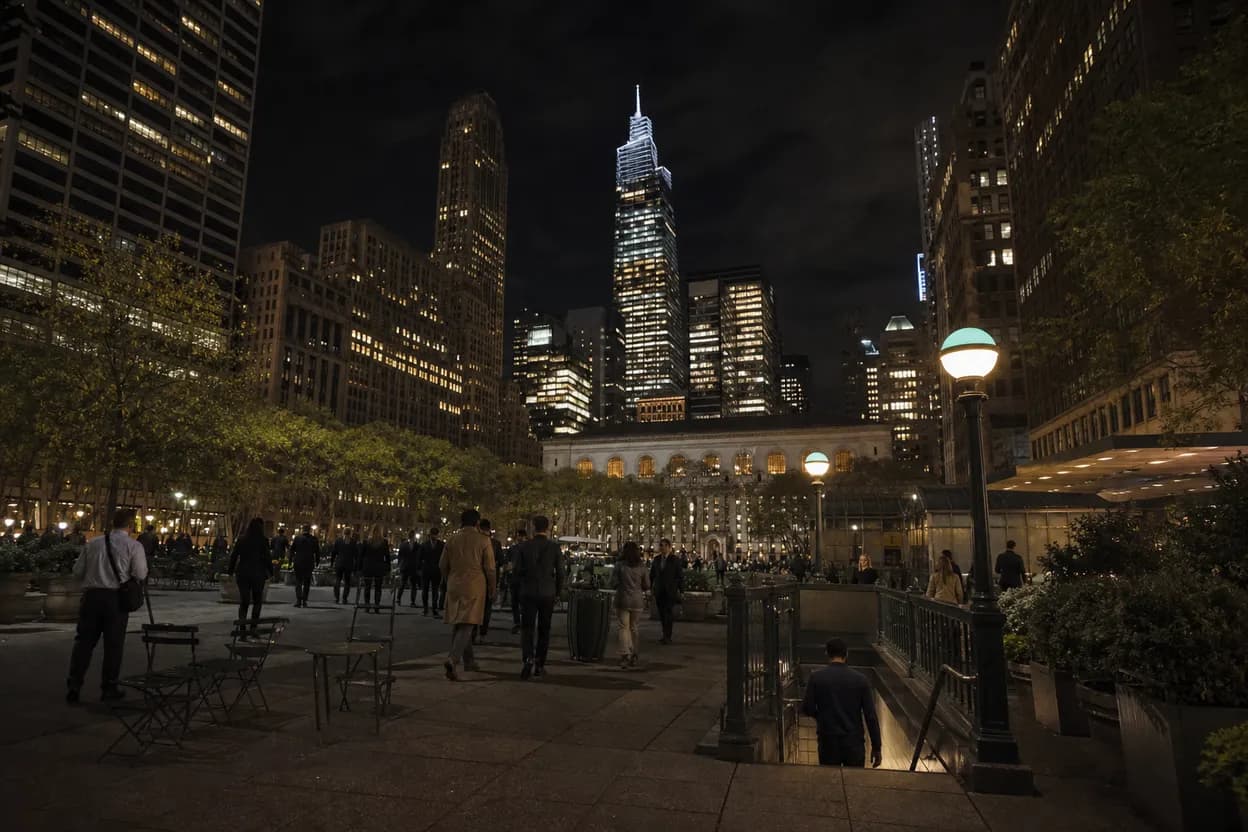
The argument over permanent daylight savings time keeps coming back because it touches something New Yorkers feel every August evening: the small window between logging off and losing the best outdoor light. On Monday, August 10, 2026, New York sunset is listed around 8:00 pm, with civil twilight extending later, so the useful after-work slot is real but not endless. This guide turns the debate into a Midtown-to-west-side plan: start where transit is dense, choose parks with posted hours, keep rain and closures in the decision, and avoid building the night around a single perfect sunset photo.
Want a tighter version for your exact office exit, subway line, and weather window? Text Karpo for a NYC after-work light route that checks parks, trains, and backups before you tap out.

Bryant Park Lawn and 42nd Street/Bryant Park Station
Bryant Park is the easiest first move when you want daylight without committing to a long cross-town plan. The official hours page lists May through September hours as 7:00 am to 11:00 pm, while also warning that weather or maintenance can close the park. That makes it useful after work, but not guaranteed. If the lawn is posted closed, shift to the gravel paths, chairs, Reading Room area, or a nearby errand instead of waiting around.
Transit is the reason Bryant Park works for solo plans, coworker decompression, and low-pressure dates. The park’s own directions point riders to B, D, F, or M service at 42nd Street/Bryant Park and the 7 at Fifth Avenue. Use it as a 25-to-40-minute reset: sit, check the sky, decide whether the west side still makes sense, then leave before the evening becomes a station-to-station scramble.
Fifth Avenue to Sixth Avenue Errands Before Sunset
The practical trick is to do the boring errand before the scenic one. Bryant Park sits between Fifth and Sixth Avenues, behind the Stephen A. Schwarzman Building, so you can fold in pharmacy, pickup, snack, or library-adjacent plans without leaving Midtown’s transit grid. This is where the permanent daylight savings time conversation becomes useful: treat later light as a planning buffer, not permission to stack too much into one evening.
A good pace is one errand, one park stop, one optional west-side extension. Anyone using mobility aids, carrying a work bag, or trying to keep the night low-effort should keep Bryant Park as the main destination rather than the warm-up. If rain starts, the failure mode is simple: stay near the subway, skip the river, and use the Bryant Park restroom only after checking posted hours, because the park notes those can change.
MTA Status Tab Before Leaving Midtown
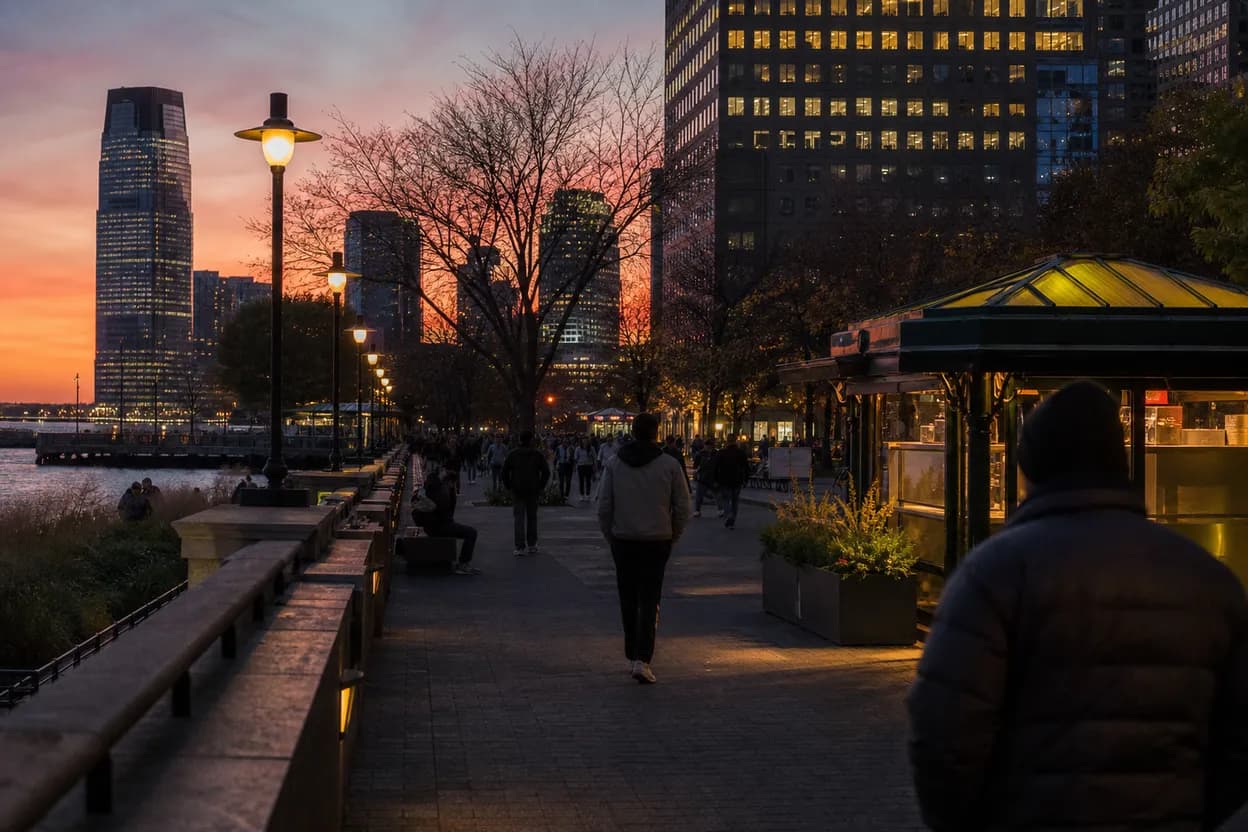
Before you walk west, open the official MTA app or MTA web tools and check service status, planned work, and elevator or escalator outages for the lines you actually need. MTA’s help center says planned changes can be found from the Status tab and through favorite services. That matters more than a generic transit map, because a pleasant sunset route can turn annoying if your return station has a disruption you could have seen.
For this route, check the B, D, F, M, 7, A, C, E, and 1 depending on where you plan to exit the evening. If you are meeting someone, send the chosen return station before you start walking, not after the sun is gone. The best version of this plan is flexible: subway first, walking second, rideshare only as a weather or accessibility backup, not the default.
Hudson River Park Piers for the West-Side Light
Hudson River Park is the payoff if the weather holds and your energy is still good. The park’s official visit page describes a four-mile west-side waterfront from Tribeca to Hell’s Kitchen, and lists general public access from 6:00 am until 1:00 am unless otherwise posted. That long access window does not mean every pier, lawn, restroom, court, or program is available, so choose the riverwalk itself as the dependable core.
From Bryant Park, the westward walk is more about pacing than distance bragging. Aim for a river access point that matches your return train, then stop when the light is good instead of pushing to a specific pier. The tradeoff is exposure: the waterfront is beautiful, but wind, sudden rain, and crowded bike-adjacent crossings can make it less forgiving than Midtown. If skies look unstable, choose a shorter Ninth or Tenth Avenue version.
Pier 40, West Street, and Posted-Area Checks
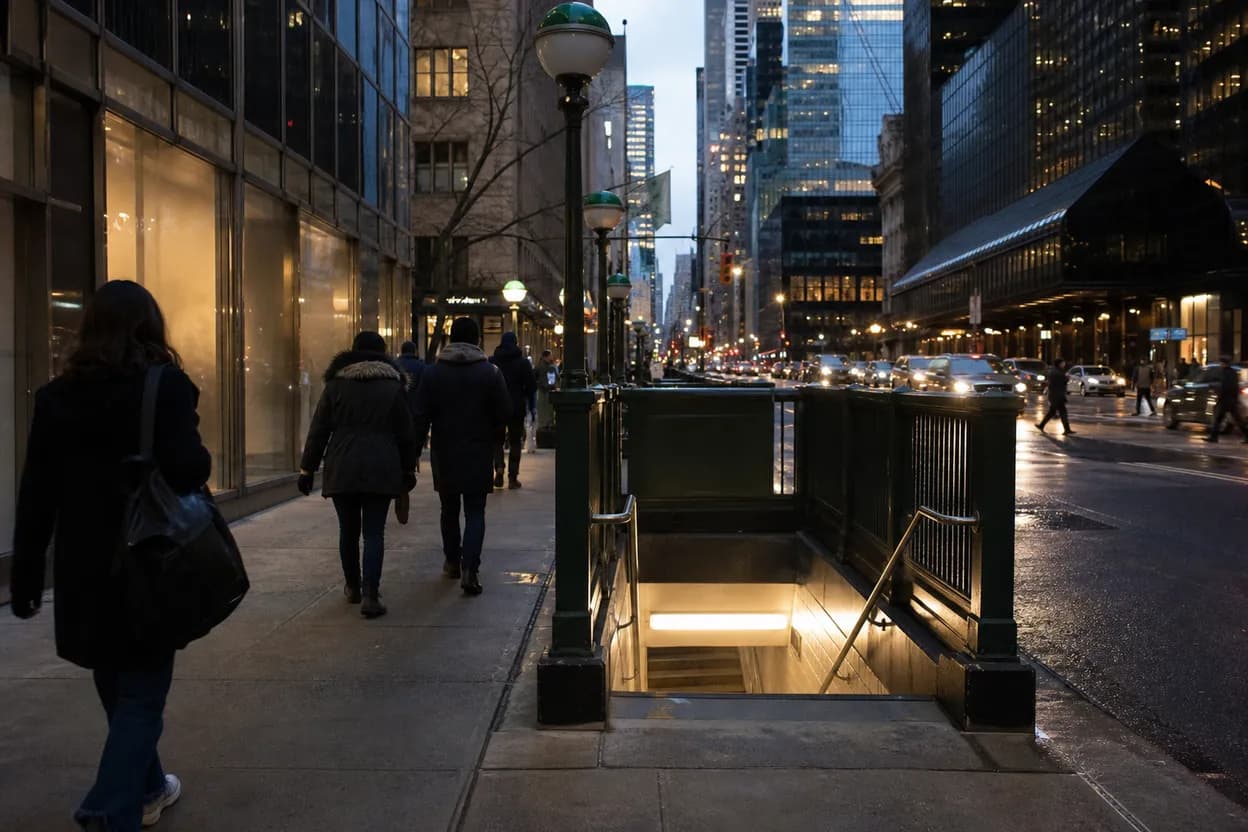
Pier 40 is a useful reference point because Hudson River Park’s contact information and operations presence are tied to it, and the park page tells visitors to call the Operations Desk for specific-area questions. That does not make it a universal evening destination, but it is a good reminder that posted conditions matter. Construction, events, wet surfaces, or area-specific signs can change the plan faster than any broad hours listing.
Accessibility planning should happen before the river segment. Look for curb cuts, elevator status on your return subway, and whether your chosen path requires crossing wide west-side traffic approaches. If you are with coworkers or a date, agree on a turnaround point rather than drifting south or north indefinitely. The best river plan is reversible: one scenic stop, one clear exit, and no reliance on an unverified restroom or pier feature.
Rain Backup Around Times Square and 40th Street
Late-summer NYC rain can turn a clean light plan into a damp logistics problem. The Bryant Park page explicitly allows management closures for unsafe weather or maintenance, and Hudson River Park points visitors to alerts and advisories for changing park conditions. Treat those warnings as normal operating logic, not as fine print. If the radar looks messy, choose a covered subway transfer, indoor errand, or quick food stop around 40th to 42nd Streets.
The backup should still feel like an evening, not a failed park visit. Keep the route small: Grand Central-adjacent errands if you need the 7, Sixth Avenue if you need B/D/F/M service, or Eighth Avenue if the A/C/E is your better exit. For solo users, that means fewer empty stretches after dark. For groups, it means the plan can end cleanly before dinner without anyone having to renegotiate the whole night in the rain.
Final Check at 5:30 PM From Your Office Door
At 5:30 pm, make the decision from the actual door you are leaving, not from the version of NYC you imagined at lunch. Check sunset timing, the park page or posted signs, Hudson River Park alerts if you are going west, and MTA service for the return. If anything is uncertain, shorten the route rather than adding a second destination. The light is the reason to go, but the exit is what makes it easy.
Use this final verification action: open Bryant Park hours, Hudson River Park alerts or map, and the MTA Status tab before you commit to the westward walk. If all three look normal, start with Bryant Park and continue only while the weather and return trip still work. If one fails, keep the evening subway-friendly and save the river for another clear weekday. That is the whole point: better daylight use, fewer avoidable headaches.
Tags: #NYC #NewYorkCity #BryantPark #HudsonRiverPark #MidtownManhattan #AfterWorkNYC #EveningWalk #SubwayTips #MTA #DaylightSavingTime #SoloNYC #NeighborhoodGuide #AskKarpo #BeforeYouGo
Sources consulted: Source 1: bryantpark.org · Source 2: hudsonriverpark.org · Source 3: intercom.help · Source 4: portal.311.nyc.gov · Source 5: timeanddate.com
All trademarks are the property of their respective owners.
Ask Karpo first
Tell Karpo your date, group size, budget, and starting point. We’ll check current access, timing, transit, and the cleanest New York City plan for NYC after-work park and transit-light route around Bryant Park, Hudson River Park, and subway-friendly evening errands before you head out.


