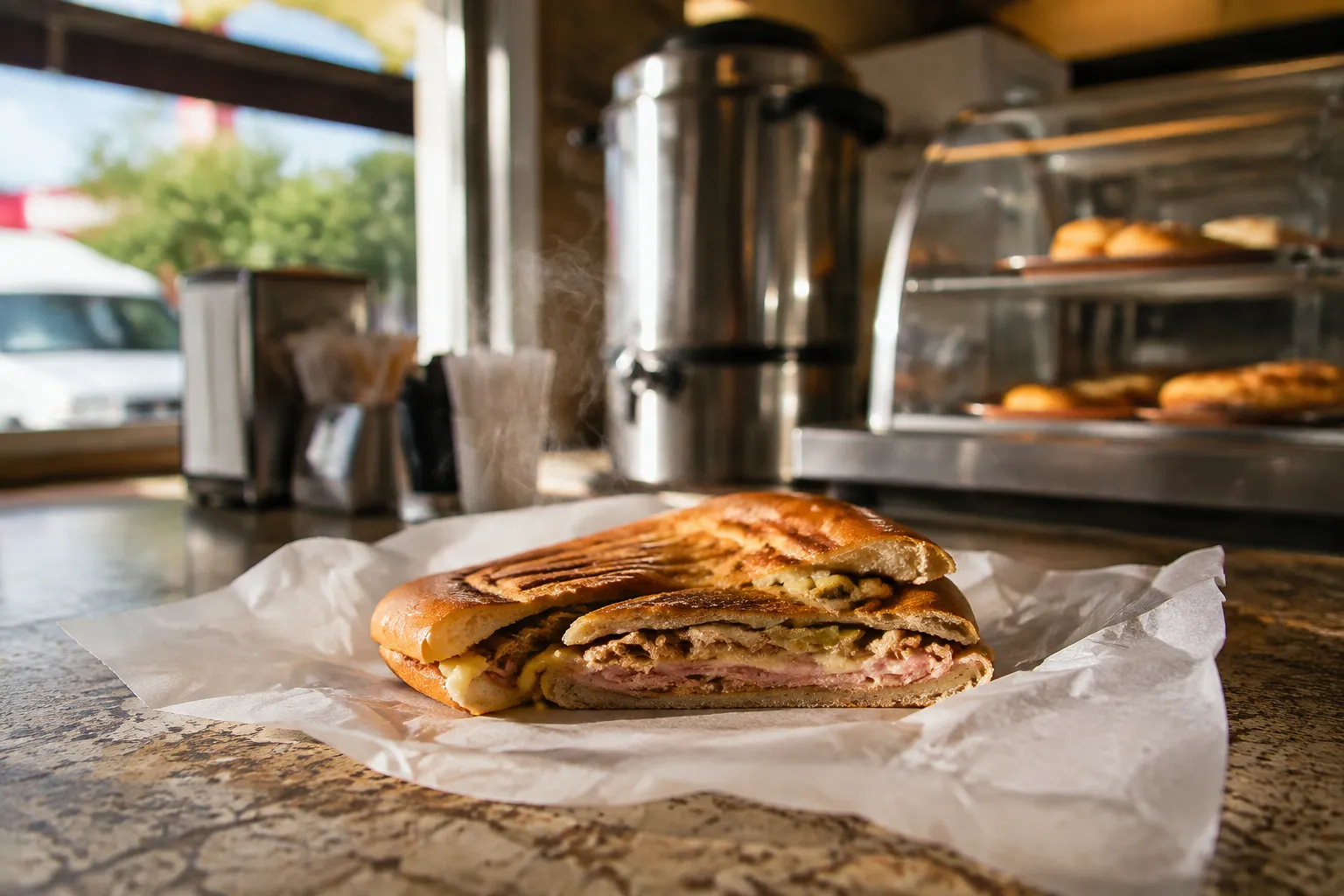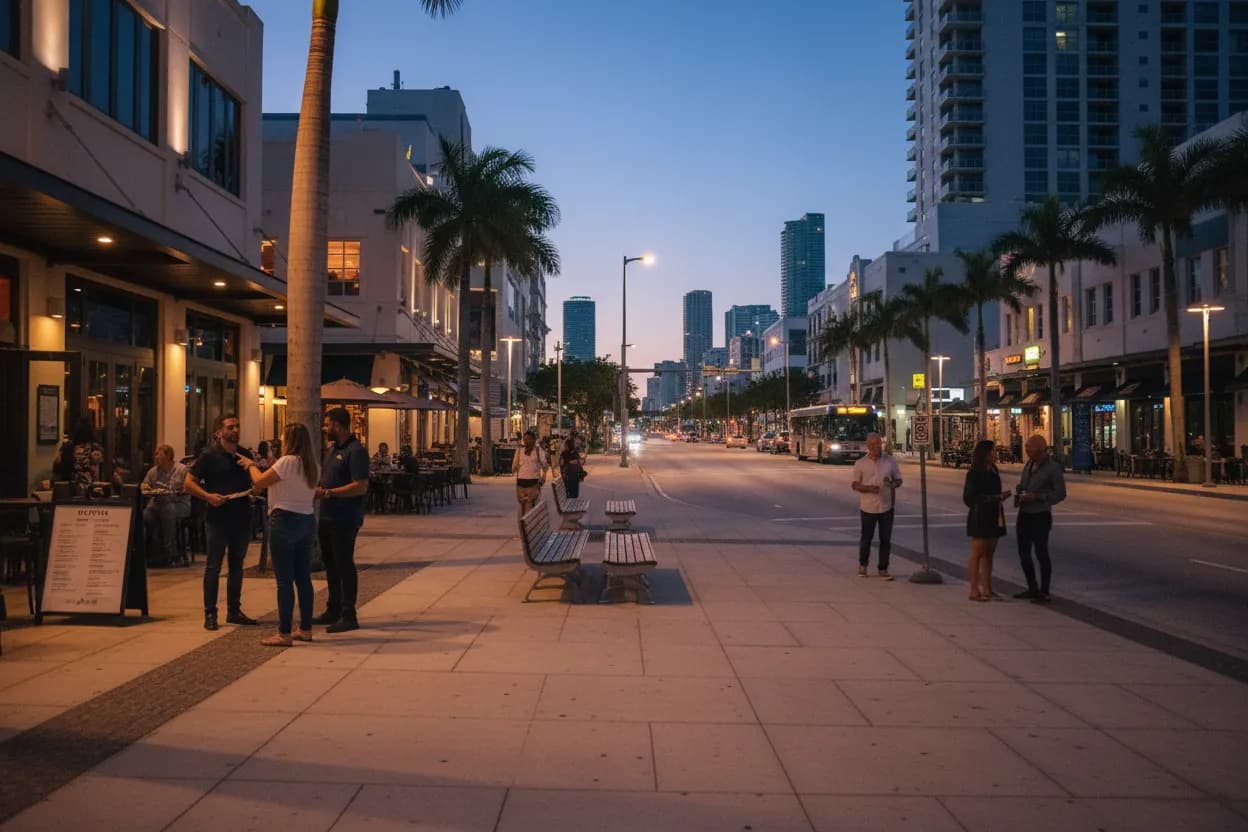
Miami restaurant planning gets messy when a group chat starts with a trending name, a half-remembered post, and ten people asking where to eat. Treat perez hilton as a conversation hook, not evidence that anyone famous is appearing, endorsing a restaurant, or unlocking a private table. Greater Miami & Miami Beach’s official visitor site frames the city’s dining scene around bold Latin and Caribbean flavors, celebrity-chef restaurants, food festivals, and distinct neighborhoods, which is enough to build a smart public plan without chasing rumors. As of Monday, August 10, 2026, the safest move is simple: pick the kind of room your group can handle, verify current details on official pages, check transit alerts, and name a backup before the first person orders a rideshare.
Want a Miami dinner plan that survives late arrivals, transit changes, and overhyped chatter? Text Karpo with your group size, neighborhood target, access needs, and backup tolerance before you commit.

Use the trend as a dinner conversation hook
A search spike can be useful without being treated as proof. If someone drops perez hilton into the chat, use it to start the question that actually matters: what kind of Miami night are you planning? A loud, see-and-be-seen dinner requires different logistics than a family meal, a quick pre-event bite, or a low-pressure catch-up where half the table wants to linger.
Do not build the plan around a claimed sighting, private invitation, celebrity endorsement, or guaranteed event unless it is posted by an official source you can verify. The official Greater Miami & Miami Beach visitor site describes a broad culinary landscape, not a single magic reservation. That distinction matters: the city has plenty to eat, but your group still needs a practical route, a time window, and a fallback.
Choose the room before choosing the menu
For groups, the room often matters more than the dish that photographs best. Decide first whether your people need seated service, counter ordering, outdoor flexibility, quick turnover, or a place where different diets can split up and reconvene. Miami’s official visitor framing points to bold Latin and Caribbean flavors and restaurants led by celebrity chefs, but those labels alone do not tell you whether a party of eight can sit together tonight.
Before leaving, verify the restaurant’s current official page or direct channel for hours, reservation rules, accessibility notes, and any group requirements. If the listing is vague, treat that as a planning risk, not a reason to improvise at the door. A smooth Miami dinner usually starts with one person making the boring checks: date, time, headcount, mobility needs, payment expectations, and whether the first choice can actually receive the group.
Match the market or hall to the group
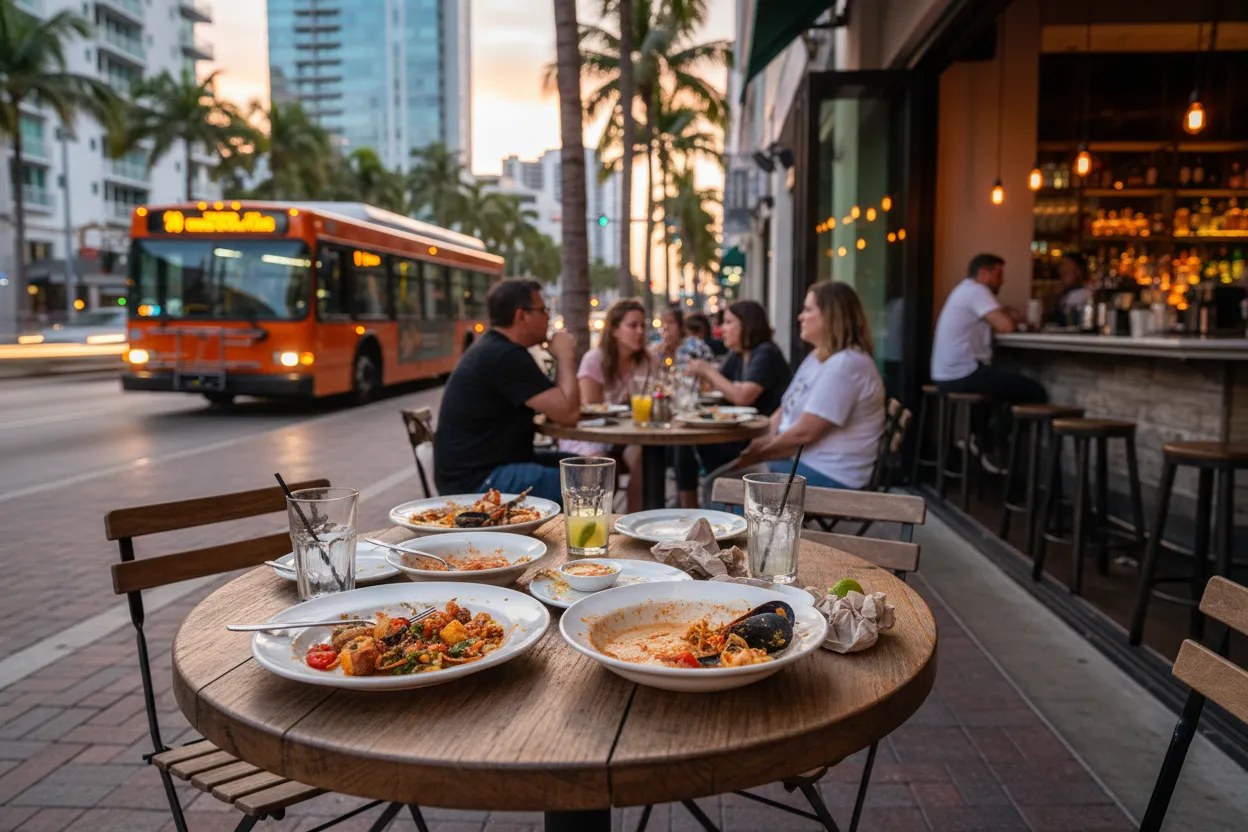
A market or food hall can be a strong group solution because people can choose different vendors while staying in one public destination. It can also fail fast if the seating is tight, a favorite vendor is closed, or the group arrives during a crowd surge. Use this format when your group values choice over a single coordinated table, and only after checking the venue’s official vendor and hours information.
Assign roles before arrival. One person checks seating and access, one confirms open vendors, and one keeps the backup option ready. This prevents the classic Miami stall-out: ten people standing in a walkway while everyone debates whether to wait. If your group includes children, older adults, or anyone using mobility equipment, confirm elevators, ramps, and restroom access on official venue information where available instead of relying on old social posts.
Keep the first stop easy to reach
Miami-Dade County’s Department of Transportation and Public Works says its mass transit system includes Metrobus, BRT Metro Express, Metrorail, Metromover, MetroConnect microtransit service, and Special Transportation Service. That gives groups several public ways to plan, but the right choice depends on the exact address and the day’s service conditions. Use the county’s trip planner, service updates, and transit tracker before the group leaves.
Accessibility checks should happen before the restaurant decision feels final. The county transportation page directs riders to elevator and escalator status information, transit alerts, and rider tools. If someone in the group depends on an elevator, escalator, or predictable transfer, verify those conditions the same day. For Saturday, August 15, the county notice says Metromover service will begin operating at 2 p.m. while upgrade work continues, so anyone planning that date should recheck official service updates.
Do not assume driving is simpler just because dinner is in Miami. The county’s transit department promotes planning routes and tracking buses and trains in real time, which is exactly the habit groups need when one delay can split the party. Pick a first stop near a workable transit path, then share the route and meeting point in the chat.
Save a nearby option for long waits
A backup is not pessimism; it is crowd control. Miami has a year-round event culture, according to the official visitor site, and events can reshape dinner demand even when your group is not attending one. If a neighborhood is busy, a no-reservation plan can turn into a sidewalk meeting with no food and rising tempers.
Choose the backup by distance and format, not by ego. The best second choice is close enough that the group can move together, public enough that no one needs special access, and flexible enough to absorb a different arrival time. If your first choice is a seated restaurant, make the backup a verified market, hall, café-style stop, or another restaurant whose current hours are confirmed. If your first choice depends on transit, make sure the backup does not require a complicated transfer.
Set the trigger in advance: for example, if the wait is longer than the group can tolerate, or if seating cannot work for the headcount, you switch. You do not need to publish that rule to the world; you just need the group to agree before hunger turns every decision into a referendum.
Verify vendor hours before leaving
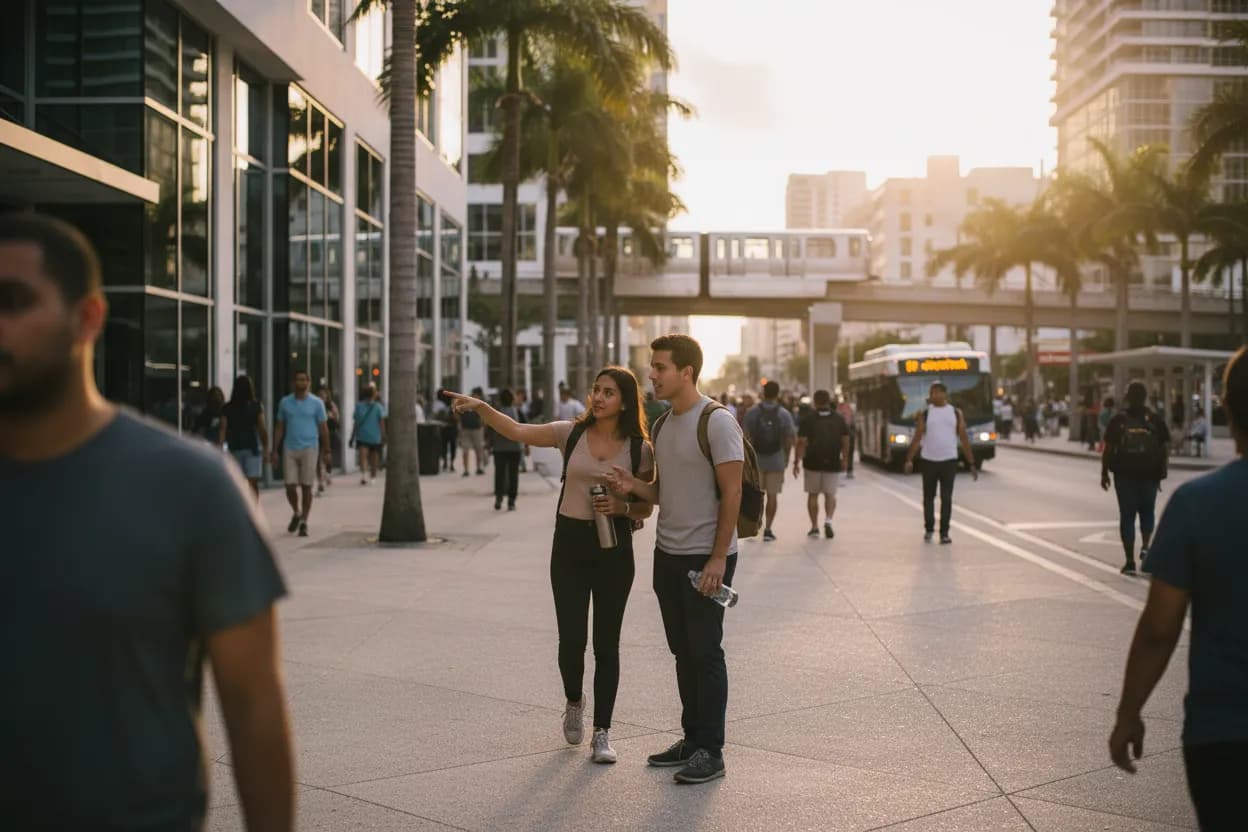
The final check should be boring and official. Confirm restaurant or vendor hours, current location details, access notes, and whether any public event or service update changes your route. The official Greater Miami & Miami Beach site emphasizes that each neighborhood is a distinct destination, which is a reminder not to treat Miami as one interchangeable dining zone. A plan that works in one area may not work across town at the same hour.
Use Miami-Dade Transit’s service updates, trip planner, and transit tracker if the group is riding. If a member uses accessible transit services or needs elevator information, consult the county’s posted resources before departure. If the official page is unavailable, outdated, or unclear, downgrade confidence and keep the backup active.
The practical sequence is: verify the room, verify the route, verify access, verify the backup, then leave. That order keeps a search trend in its proper place. It can make the dinner timely, but it should never outrank public information, current transportation alerts, or the needs of the people actually eating together.
Tags: #MiamiRestaurants #MiamiDining #GroupDining #FoodHall #MiamiTransit #MiamiDadeTransit #GreaterMiami #MiamiBeach #RestaurantPlanning #DinnerPlans #AccessChecks #CrowdRisk #AskKarpo #BeforeYouGo
Sources consulted: miamiandbeaches.com · miamidade.gov · miamidade.gov
All trademarks are the property of their respective owners.
Ask Karpo first
Ask Karpo first when the group chat is moving faster than the facts. Send the target neighborhood, headcount, timing, mobility needs, and how far everyone is willing to walk or ride. Karpo can help turn the hype into a verified Miami restaurant plan with a real backup.