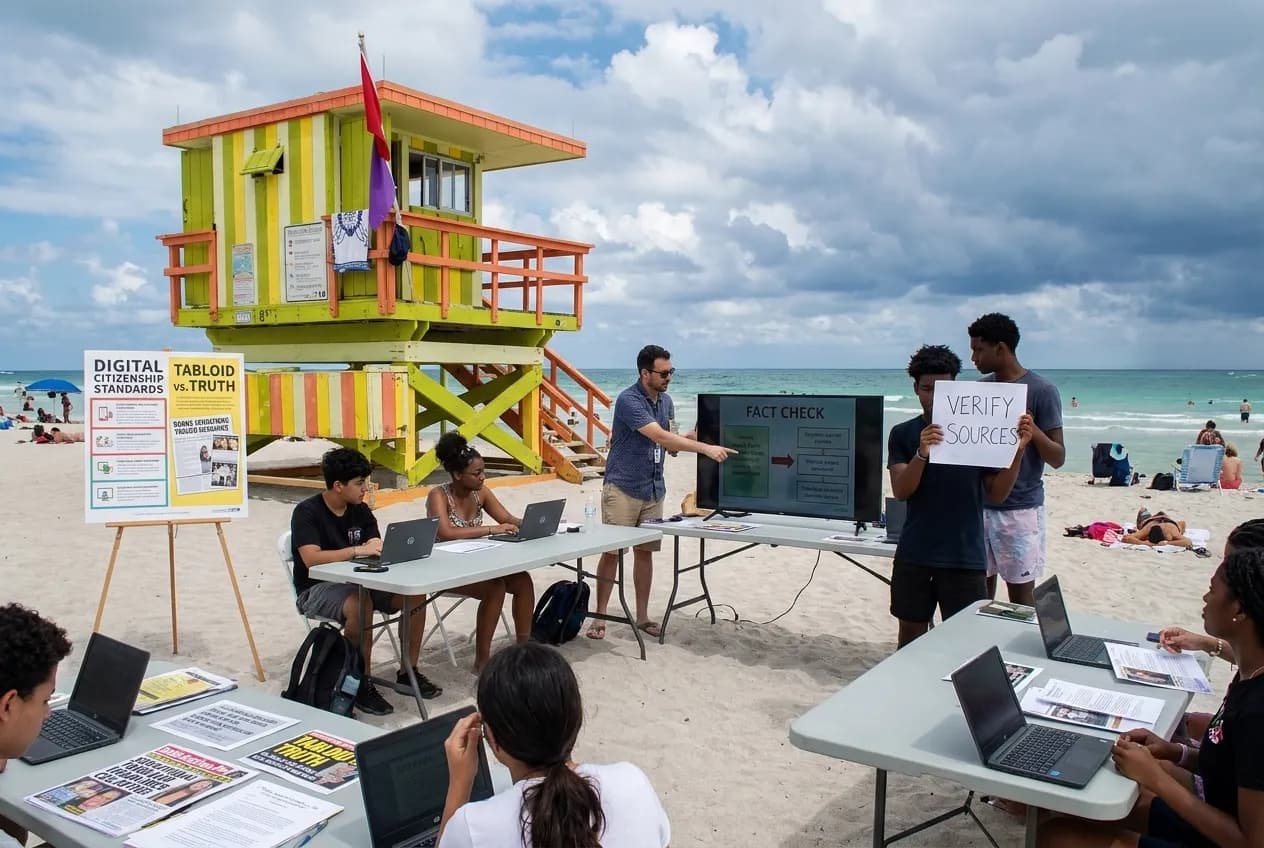
As August afternoons fill Miami school libraries with back-to-school energy, a new wave of workshops addresses a skill many teens haven't formally practiced: verifying what they read before they share it. Miami-Dade public and school libraries are hosting media-literacy sessions this month that teach students to fact-check celebrity gossip sources—including headlines that reference perez hilton and similar tabloid-style outlets—before forwarding stories to classmates or posting on social platforms. The workshops compare sensational headlines with primary-source reporting, walking participants through digital-citizenship standards that distinguish rumor from verified news. For skeptical students curious about how misinformation spreads, and parents wondering whether their teens can spot unreliable sources, these beginner-friendly skill workshops offer hands-on practice in an environment designed for learning, not lecturing.
Text Karpo your teen's grade level, preferred library branch, and whether you want a parent co-session or drop-off format. We'll send a ranked list of August media-literacy workshops with registration links and a backup list of free online fact-checking tutorials from university journalism schools if in-person slots fill.

Why Celebrity Gossip Became the Teaching Hook
Librarians chose celebrity gossip as the entry point because teens already engage with it daily—scrolling through feeds, sharing screenshots, debating rumors between classes. By starting with content students recognize, workshops avoid the abstract tone of traditional media-literacy lectures. Facilitators display actual tabloid headlines alongside primary-source articles from entertainment-news desks, asking participants to identify which claims include named sources, timestamps, or corroborating evidence. The perez hilton brand often appears in these comparisons because its mix of commentary and aggregated reporting illustrates how secondary sources repackage information, sometimes amplifying unverified details that originated elsewhere.
This approach meets teens where their skepticism already lives. Many students arrive curious but doubtful that they've been fooled by fake stories, yet within minutes of comparing two articles side by side, they notice missing bylines, vague attribution, or sensational language that primary outlets avoid. The workshops don't shame participants for past shares; instead, they frame verification as a skill anyone can learn, much like solving a math problem or editing an essay. Parents attending alongside their teens often discover they've made similar mistakes, which shifts the session from a lecture into a shared learning experience that respects everyone's starting point.

What the Fact-Checking Process Actually Looks Like
Workshops dedicate most of their time to step-by-step verification exercises. Facilitators distribute printed or projected headlines, then guide students through a checklist: identify the original source, search for the story on established news sites, check publication dates, look for named sources or official statements, and examine whether images match the claims. Participants practice reverse-image searches on their phones, learning that a photo accompanying a celebrity rumor might be years old or digitally altered. The goal is muscle memory—making verification feel as automatic as hitting the share button once did.
Each exercise includes a decision tradeoff. Students discuss whether a story is worth sharing if it's entertaining but unverified, whether speed matters more than accuracy when everyone else is already posting, and how to respond when a friend insists a rumor is true because 'everyone's talking about it.' These conversations reveal the social pressures that drive misinformation spread, especially in group chats where classmates expect instant reactions. Facilitators emphasize that pausing to verify doesn't make someone slow or boring; it builds credibility, so that when a participant does share something, peers trust it. The workshops treat fact-checking as a form of digital self-defense, protecting both the sharer and the audience from embarrassment or worse.
Who Benefits Most and Who Might Feel Overwhelmed
These sessions work best for students who already spend time on social media or news apps and feel curious—even skeptical—about what they see. Beginners with little prior exposure to digital news may need extra context about how online publishing works, but the hands-on format helps them catch up quickly. Teens attending with a parent or classmate often engage more freely, since they can compare observations and debate tricky examples together. The workshops also suit students preparing for research projects or debate teams, where source credibility directly affects grades and outcomes.
On the other hand, students who rarely engage with news or celebrity content might find the examples less relevant, and those accustomed to accepting information at face value may feel uncomfortable confronting how often they've been misled. Facilitators try to balance challenge with encouragement, but the session's pace—typically ninety minutes covering multiple exercises—can feel rushed for participants who need time to process each concept. Parents hoping for a comprehensive course in all forms of misinformation should understand that these workshops focus narrowly on entertainment and celebrity gossip as a gateway skill, not on political deepfakes or financial scams. The tradeoff is accessibility: by keeping the scope manageable, libraries make the session approachable for teens who might tune out a broader, more intimidating curriculum.

Navigating Miami Libraries and Scheduling Around August Constraints
Miami-Dade public libraries and school libraries host these workshops, though specific branch schedules vary and are not centrally published with guaranteed dates or times. Families interested in attending should contact their nearest branch directly or monitor the Miami-Dade Public Library System events page for updates, keeping in mind that August availability depends on staff capacity and back-to-school demand. School libraries may offer sessions during orientation weeks or after-school hours, but access often requires current student enrollment. Public library sessions welcome any resident, making them the more flexible option for families whose school doesn't participate.
Reaching a library in Miami typically involves personal vehicle, bus, or—if near downtown—the free Metromover, which operates from 5:30 a.m. to 10 p.m. daily and connects to Metrorail and Metrobus routes. Stations like Government Center or Brickell serve areas with nearby library branches, though families should confirm the closest stop and walking distance before committing to transit. Parking at library branches varies; some offer dedicated lots, while others rely on street parking that fills quickly on weekday afternoons. Arriving fifteen minutes early helps secure a spot and allows time to locate the meeting room, especially in larger branches where signage may be unclear. Parents should also confirm whether the workshop requires advance registration or accepts walk-ins, since capacity limits can turn away latecomers during peak back-to-school weeks.
Extending the Skills Beyond the Workshop Room
The real test of these workshops happens days later, when a student encounters a viral headline in a group chat and pauses to verify it before sharing. Facilitators encourage participants to bookmark fact-checking tools—reverse-image search engines, news-verification sites, primary-source databases—and to practice the checklist on at least three stories per week until it becomes habit. Some workshops provide printed handouts summarizing the steps, which students can tape inside a locker or notebook as a quick reference. The goal is to make verification feel less like homework and more like a reflex, similar to double-checking an address before leaving the house.
Parents can reinforce the skills by modeling verification at home: pausing before sharing a news story at dinner, discussing why one source seems more credible than another, or asking their teen to fact-check a claim the parent found online. This approach avoids the dynamic where adults lecture and teens tune out; instead, it frames media literacy as a shared responsibility that everyone practices. For students planning to take the skills further, some Miami-Dade schools offer journalism or debate clubs where fact-checking becomes a regular activity, and local organizations occasionally host follow-up workshops on related topics like identifying AI-generated images or understanding algorithmic bias. The August library sessions serve as an entry point, but the real work—building a habit of skepticism balanced with curiosity—unfolds over months, one verified story at a time.
Tags: #medialiteracy #Miamilibraries #factcheckingworkshops #teeneducation #backtoschoolMiami #digitalcitizenship #celebritygossipverification #Augustworkshops #MiamiDadeschools #sourcecredibility
Sources consulted: Source 1: miamidade.gov · Source 2: miamidade.gov · Source 3: mdpls.org · Source 4: miamibeachfl.gov
All trademarks are the property of their respective owners.
Ask Karpo first
Ask Karpo to turn this Miami idea into a current plan for your date, budget, companion, transit preference, and energy level. Karpo can narrow the route and flag what to verify before you go.