 Ghost Walk Near Me in Greenwich Village: Edgar Allan Poe's Haunts
Weekend Plans
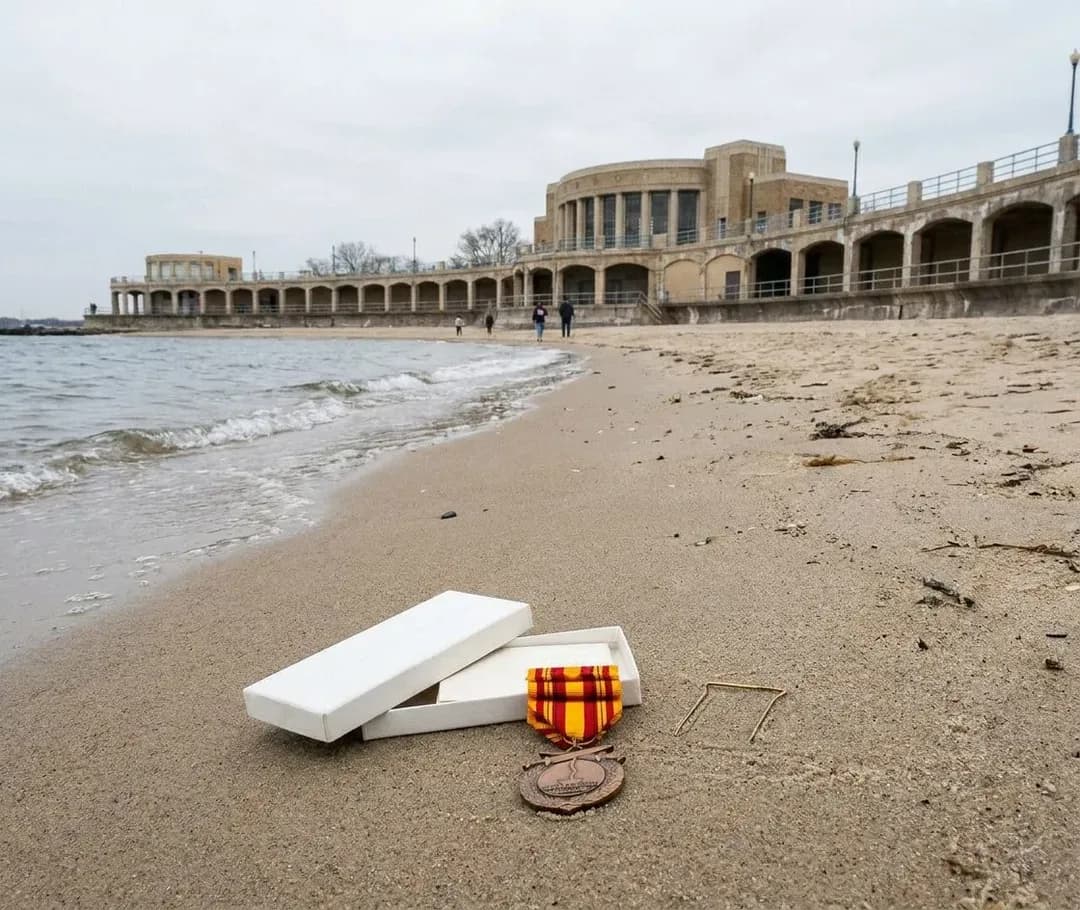
Orchard Beach's Art Deco Promenade When the Bronx Arrives Before the Season Starts
The Bronx's 1930s WPA beach pavilion stands empty but open in late spring, when the bathhouses are shuttered, the crowds haven't arrived, and the 6 train plus bus becomes a Sunday ritual for those who know.
There's a particular species of New Yorker who knows that the best time to visit a beach is when you can't swim at it. Late spring in the Bronx—those quiet weeks after the dogwoods finish and before Memorial Day flips the switch—Orchard Beach belongs to the infrastructure pilgrims. The grand WPA promenade stretches out in all its Moses-era concrete glory, the twin-towered pavilion presiding over empty sand, and the only sounds are gulls and the distant hum of the Hutchinson River Parkway. No radios. No umbrellas. No line for the bathroom. Just the scaled ambition of a beach built to accommodate thousands, standing at attention with no one to serve.
The Pilgrimage Itself
Getting to Orchard Beach is a commitment, which is precisely why it filters for a certain Sunday-morning constitution. You take the 6 train to Pelham Bay Park, then the Bx12 bus; verify current bus frequency before publishing. and covering the last ten-minute stretch through Pelham Bay Park's woodland margins. It's a transit journey that forces a gear-shift, a deceleration. You cannot impulse-visit this beach.
By the time you step off the bus into the vast parking lot—empty save for a few cars with fishing rods and folding chairs—you've earned the view. The pilgrimage has become the point. This is not Rockaway with its easy A-train accessibility and year-round surfer traffic. This is a beach that asks whether you mean it.

Robert Moses's Concrete Riviera
The promenade is the thing. Thirteen arched bays stretch nearly a mile, built in 1936 with WPA labor and designed with the kind of civic optimism that assumed the masses deserved grandeur. The pavilion's central section, anchored by its twin hexagonal towers, reads more Miami Beach than borough outpost. There's ornamental metalwork, terrazzo accents, and a colonnade of columns that frame Long Island Sound like a municipal proscenium. It's architecture that takes the idea of a public beach seriously—not as a leftover strip of shoreline but as a destination worthy of ceremony.
In late spring, the scale of it becomes clear. Without the summer press of bodies, you can see the pavilion's bones, the way the sight lines work, the considered rhythm of arcade and open terrace. The bathhouses are shuttered, the concession stands papered over, but the promenade and parking lot remain open for anyone who wants to walk. And walk they do: Bronx families speaking Tagalog and Spanish, birders with serious binoculars, couples pushing strollers, solo walkers with headphones and private agendas. This is the window when Orchard Beach belongs to locals, before the seasonal machinery kicks in.
A Beach With No Swimming
There's something clarifying about a beach when the water is off-limits. The usual hierarchy—prime umbrella real estate, proximity to the lifeguard stand—dissolves. You're left with the promenade, the sand, the architecture, and the sound. The absence of swimmers, of that high-summer human density, foregrounds everything else. The way the light hits the pavilion's cream-colored stucco. The texture of the hexagonal pavers underfoot. The line where the crescent beach curves into the haze of City Island and the Throgs Neck Bridge.
You realize this is a beach built for promenading, in the European sense—a place to see and be seen, to take the air, to perform the ritual of leisure. The sand is almost beside the point. The real theater is the walkway, the benches, the pavilion's covered arcades where people gather even when the weather turns. It's one of those free things to do that costs nothing but transit fare and delivers a kind of urban satisfaction that's hard to quantify: you went somewhere, you saw a thing built with intention, you came home.
Rain-Day Walkers and the Covered Pavilion
The promenade's central pavilion section, with its twin towers, offers covered seating even in light rain, which is why it attracts walkers in iffy weather. On a drizzly May Sunday, the arcade becomes a kind of public living room. Parents corral toddlers under the vaulted ceilings, older couples sit on benches watching the gray Sound, runners loop through on training circuits. The covered section gives the whole complex a flexibility that pure beachfront lacks—you can still get your weekend plans in even when the sky won't cooperate.
There's a particular quality to the light under those arches, filtered and soft, that makes even a non-beach day feel like an occasion. The rain taps on the concrete, the gulls ride the wind, and you're dry. It's a small civic gift, this weather-proof promenade, and it changes the calculus of when to visit. The beach becomes all-season, or at least three-season, as long as you're willing to redefine what a beach is for.
Who Knows the Window
The late-spring crowd skews local and skews knowing. These are Bronxites who've been coming here since childhood, who remember when the beach was the borough's summer living room, and who've learned that the shoulder season offers a different, quieter version of the same amenity. There are also the urban hikers—the subset of city explorers who treat the five boroughs as a series of long-form walks, collecting neighborhoods and endpoints. Orchard Beach in May is a known route for this cohort, a reward at the end of a Pelham Bay Park traverse.
You see them consulting maps, taking photos of the pavilion's ironwork, sitting on the promenade wall with thermoses of coffee. They're the ones who understand that New York's best moments are often offseason and off-center, that the city's infrastructure—its parks, its bridges, its beaches—can be appreciated as architecture when they're freed from their peak-demand function. The pre-season beach is a genre, and if you know, you know.
The Return Trip
The Bx12 bus back to Pelham Bay Park feels different after two hours on the promenade. You've put time on the pavement, breathed salt air, reset something. The 6 train rumbles south, and Manhattan reasserts itself, but the afternoon has done its work. You've been to the edge of the city and back, visited a monument to mid-century optimism, joined the Sunday procession of people who know that sometimes the best outing is the one that requires three modes of transit and delivers nothing but a long walk and good bones.
By late May 2026, when the bathhouses start prepping for the season and the parking lot begins to fill on weekends, the window will close. But for now, in these liminal weeks, Orchard Beach is a secret hiding in plain sight—grand, empty, and entirely yours.
Practical Notes
Orchard Beach & Promenade, Pelham Bay Park, Bronx. Subway: 6 train to Pelham Bay Park (last stop), then Bx12 bus to Orchard Beach (approximately 10 minutes). Parking available. The promenade and beach grounds are open year-round; bathhouses and concessions operate seasonally, but verify exact opening dates before publishing. The site is largely accessible, with paved promenade and ramps. Bring: comfortable walking shoes, layers for wind off the Sound, water, and a camera for the pavilion architecture. No food vendors in the off-season. Verify seasonal schedule and bus service before traveling.
Tags: #OrchardBeach #TheLongWayHome #PelhamBayPark #TheBronx #NYC #ArtDeco #WPA #RobertMoses #WeekendPlans #FreeThingsToDo #UrbanExploration #NYCBeaches #OffSeason #PublicSpaces #CityWalks
Sources consulted: Orchard Beach (Wikipedia) · Orchard Beach – NYC Parks · Works Progress Administration · NYC Subway & Bus – MTA · NYC Parks History
All trademarks are the property of their respective owners.
Ask Karpo for more information.
Keep reading
- Ghost Walk Near Me in Greenwich Village: Edgar Allan Poe's Haunts
 Ghost Walk Near Me in Lower Manhattan: Phantoms of City Hall Park
 Ghost Walk Near Me in the West Village: Phantoms by Commerce Street