Most commuters treat Journal Square as waypoint, a transfer hub to scatter toward Grove Street or Newark. But the PATH terminus itself—the mechanical ballet of trains switching tracks, the liminal hum of the underground platform, the return descent through the Hudson River tunnel—rewards the visitor who arrives with no agenda beyond observation. Late 2026 finds this Jersey City station unchanged in its essential function, a pocket of transit ritual that unfolds with the same precision whether the platform holds three passengers or thirty. The station exists in a state of perpetual transition, yet maintains a consistency that borders on meditative.
The Terminus Turnaround
When the train pulls into Journal Square on the westbound track, it does not simply reverse direction. Trains dwell here for two to four minutes while the operator walks the length of the cars to the opposite end, a slow procession through empty or near-empty carriages that transforms the front into the back. The mechanical logic is clear, but the human choreography—the operator's deliberate pace, the pneumatic sigh of doors closing behind them—lends the process a ceremonial weight. Watch carefully and you'll notice the operator often pauses briefly at each junction between cars, checking sight lines, ensuring the train is properly secured before continuing their measured walk.
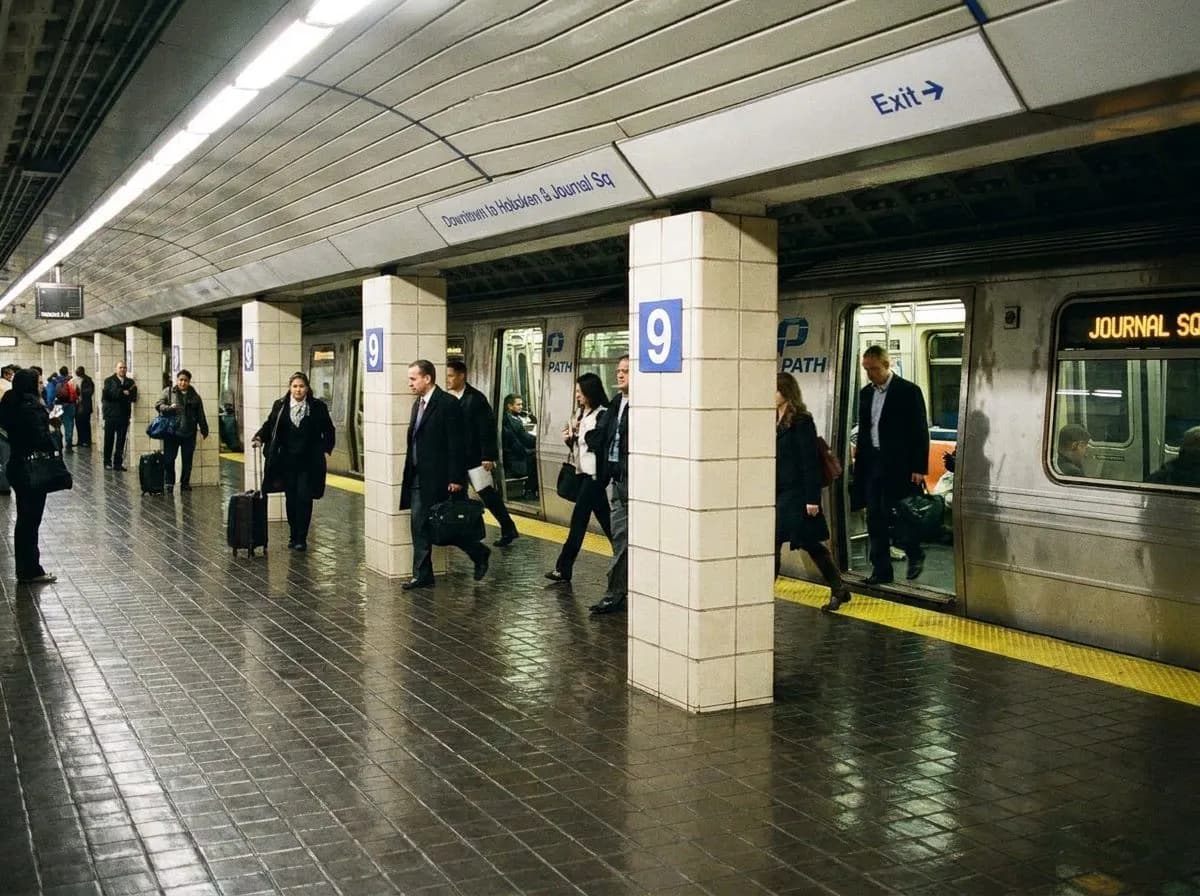
Passengers cannot simply remain aboard. You must exit, cross the platform, and re-board on the opposite side for the Manhattan-bound return. It is a small enforced intermission, a moment when the journey pauses and the station itself becomes the experience. The platform smells faintly of brake dust and damp concrete. Fluorescent light pools unevenly across the tile. In winter months, passengers carry cold air down from street level, a temporary chill that mingles with the station's steady underground temperature before dissipating.
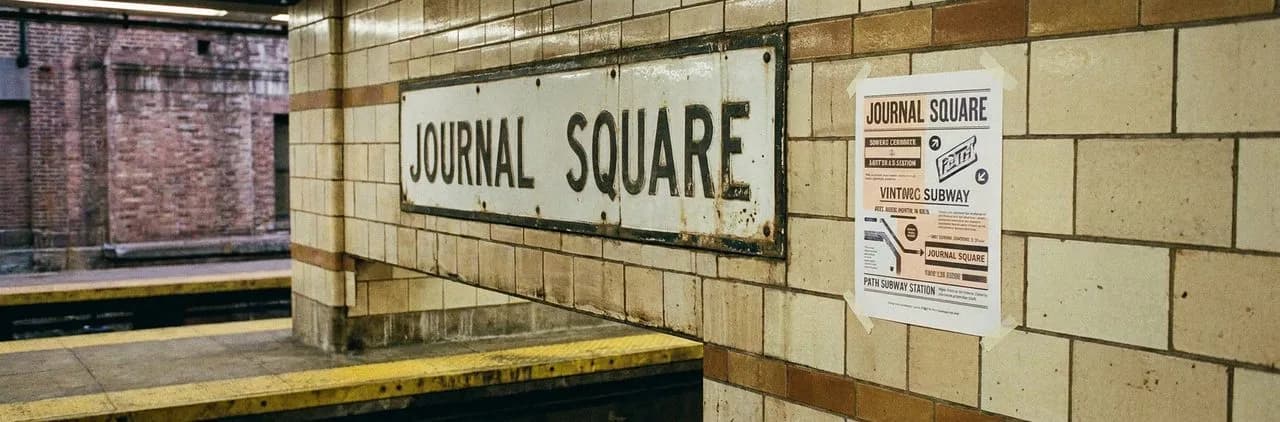
The Observation Bench
At the southern end of the westbound platform sits a bench with sight lines to both tracks. It is not marked, not highlighted in any wayfinding material, but it occupies the single vantage point from which the entire terminus choreography becomes legible. From here you watch the arriving train settle, the operator emerge and walk, the passengers scatter and regroup. A few minutes later the eastbound train may arrive on the neighboring track, its own operator beginning the same ritual in reverse. The two movements sometimes overlap, creating a symmetry that feels choreographed despite its purely functional origins.
The bench itself is standard-issue transit furniture—metal slats, bolted to the floor—but its placement turns it into a theater seat. On a weekday evening or a quiet Saturday afternoon, when weekend plans have scattered most travelers toward livelier destinations, the platform belongs to a handful of passengers and the occasional urban wanderer content to let the transit system dictate the rhythm. You could sketch the turnaround sequence in a notebook, time the dwell with a stopwatch, or simply sit and let the predictability wash over you. The bench has accommodated shift workers between jobs, students avoiding crowded apartments, and solitary travelers who discovered this vantage point by accident and return deliberately.
The Subterranean Atmosphere
Journal Square station lacks the grandeur of the older subway terminals. There are no vaulted ceilings, no decorative tile work spelling out neighborhood names in serif fonts. The aesthetic is late-century functional: dropped ceilings, signage in Helvetica, commercial-grade flooring that echoes footsteps. Yet the space holds its own atmosphere—part transit node, part underground waiting room, part threshold between states. The lack of ornamentation actually clarifies the space's purpose, stripping away distraction to reveal the essential function of movement and pause.
The acoustics flatten conversation into murmur. Announcement chimes carry longer than they should. During off-peak hours, when PATH service frequency varies by time of day; verify against current PATH schedules, the intervals between arrivals stretch into a kind of suspended time. You become aware of the air circulation, the faint vibration that precedes an approaching train, the way a dozen strangers arrange themselves along the platform edge without acknowledging one another. There's a particular quality to the silence between trains—not quite empty, filled instead with the ambient hum of ventilation systems, distant station announcements, and the barely perceptible settling of the infrastructure around you.
Journal Square Above Ground
The surface-level Journal Square Transportation Center presents a stark contrast to the measured quiet below. The plaza bustles with bus terminals, taxi stands, and commuters cutting through on foot toward surrounding streets. Journal Square is an important commercial center, anchored by the Loew's Jersey Theatre, a 1929 movie palace that hosts performances. The neighborhood radiates outward in a grid of residential blocks, corner bodegas, and longtime businesses that predate the waterfront development boom further east.
Emerging from the PATH station into this environment completes a sensory transition. The underground's controlled climate gives way to weather. The muted color palette of platform tile yields to storefronts, street vendors, and the varied architecture of a working neighborhood. If the terminus platform is about observing transit in isolation, the street level reconnects that transit to its purpose—the daily movement of a community. A brief walk in any direction from the station entrance reveals the texture of Jersey City beyond the commuter corridor: lunch counters with Formica tables, hair salons with hand-painted signage, residential streets where the city's layered immigration history is written in the languages overheard on sidewalks.
The Return Through the Hudson Tubes
The eastbound departure from Journal Square begins unremarkably—industrial Jersey City flashing past at track level, then the descent into the tunnel. But the Hudson River crossing has carried commuters since 1908. The deepest point occurs mid-river, beneath the shipping channel, where the weight of water and silt and a century of maritime traffic presses down on the tunnel bore.
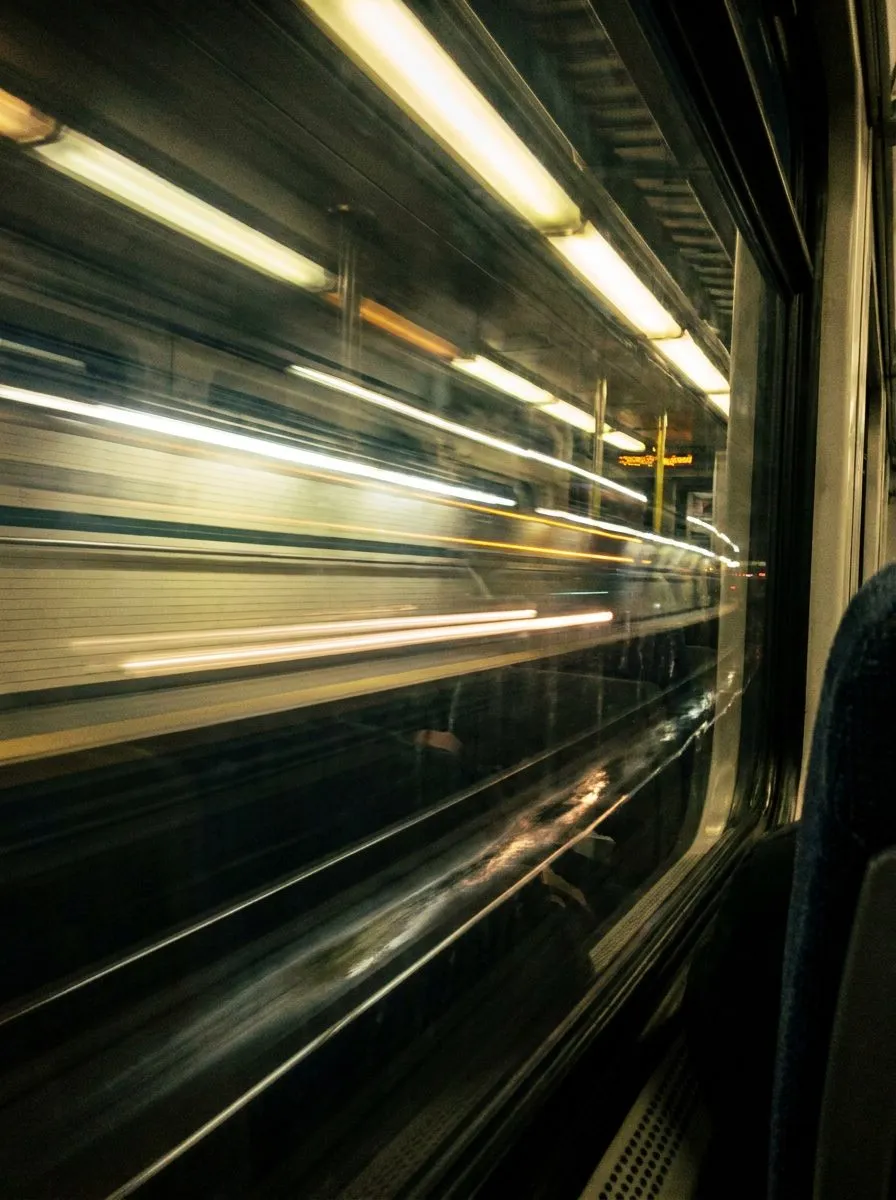
There is no window view, of course, only the strobing reflection of tunnel lights on glass and the occasional worker's alcove cut into the tube wall. Yet the awareness of crossing under the river lends the journey a particular texture. You are suspended between states—not in New Jersey, not yet in Manhattan, moving through a space most New Yorkers never consider except when service disruptions make headlines. The train's motion smooths into a steady hum. Some passengers doze. Others scroll. A few simply stare at the darkened window, watching their own reflection travel.
Why Make the Trip
The Journal Square terminus offers no destination in the conventional sense. There is no vista, no landmark, no restaurant that justifies the detour on its own terms. What it offers instead is a deliberate slowness, a built-in pause that refuses to be optimized away. The platform crossover, the observation bench, the return through the tubes—these are not experiences that reward multitasking or efficiency. They ask for attention, or at least presence.
In a transportation network designed to move bodies as quickly as possible between points of economic activity, the terminus becomes a small act of resistance. You are traveling in order to travel, riding the train to watch the train, descending under the river because the river is there. It is not quite tourism, not quite commute, but something in between—a field note in motion, a minor key variation on the daily theme of urban transit.
Practical Notes
Journal Square PATH station is located at Journal Square, Jersey City, NJ 07306, accessible via the Journal Square Transportation Center. PATH service runs 24 hours; off-peak intervals extend to 15-20 minutes. The station is ADA accessible via elevators. Bring a MetroCard or use contactless payment; a notebook or sketchbook suits the observational nature of the visit. The platform benches are open seating; no reservations, no fees beyond the standard PATH fare. Verify current service schedules and any weekend maintenance directly with PATH before planning your trip.
Tags: #TheLongWayHome #PATHTrain #JournalSquare #JerseyCity #NYC #TransitRitual #UrbanExploration #HudsonRiver #SlowCommute #Winter2026 #PlatformLife #SubterraneanSpaces #FieldNotes #WeekendPlans #TransitDesign
Sources consulted: Journal Square Station (Wikipedia) · PATH Rail System · Official PATH Website · Hudson County News (NJ.com) · NY/Region (New York Times)
All trademarks are the property of their respective owners.