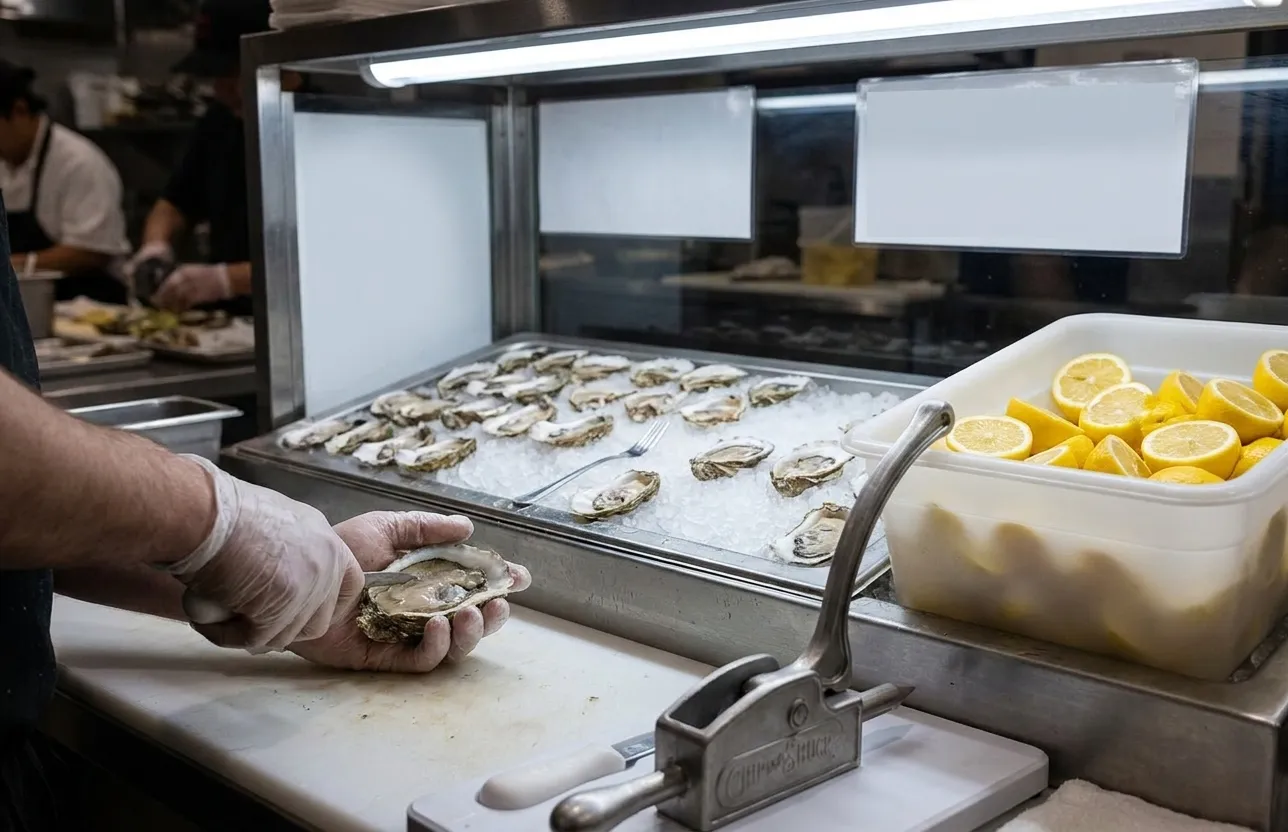
San Francisco is one of the few American cities where a cheap oyster is not a compromise. The Bay Area sits beside genuinely productive growing waters, the supply chain from Tomales Bay and further north is short, and an oyster that costs a dollar at four in the afternoon here is a different animal from a dollar oyster two thousand miles inland. What is worth understanding before you go looking is that buck-a-shuck is a marketing frame rather than a fixed offer, and the actual terms — which oyster, how many, where you may sit, and when the price stops — vary enough that two bars advertising the same thing are selling quite different deals.
Karpo can find which San Francisco raw bars are pouring a dollar oyster right now, what variety is in the deal today, and whether there is a limit per person.
What is actually in the deal
A discounted oyster is essentially always the house selection — a single variety the kitchen has bought in volume that day, usually a small, mild Pacific oyster grown nearby. It is not your choice from the board, and the board's more interesting oysters remain at full price. This is entirely reasonable and it is the reason the offer can exist.
The useful move is to ask what the house oyster is on the day. Any decent raw bar will name the farm and the water it came from without hesitating, and that single answer tells you whether the bar is buying carefully or buying cheaply. A shucker who says Tomales Bay or names a specific grower is a shucker worth ordering from.
Limits, bar-only rules and the drink you have to buy
Three conditions attach to almost every oyster deal in this city and none of them is usually printed. There is often a per-person limit, commonly six or a dozen. The offer is frequently valid at the bar and the raw bar counter only, not at dining tables. And it is generally understood, and sometimes stated, that the offer comes with a drink order.
Ask all three at once when you sit down — it takes ten seconds and it prevents the awkward moment where a second dozen arrives at full price. The drink condition is where the economics live: the bar is making nothing on the oysters and everything on the glass of Muscadet, and that glass is very rarely discounted.
Where the offers are, and when
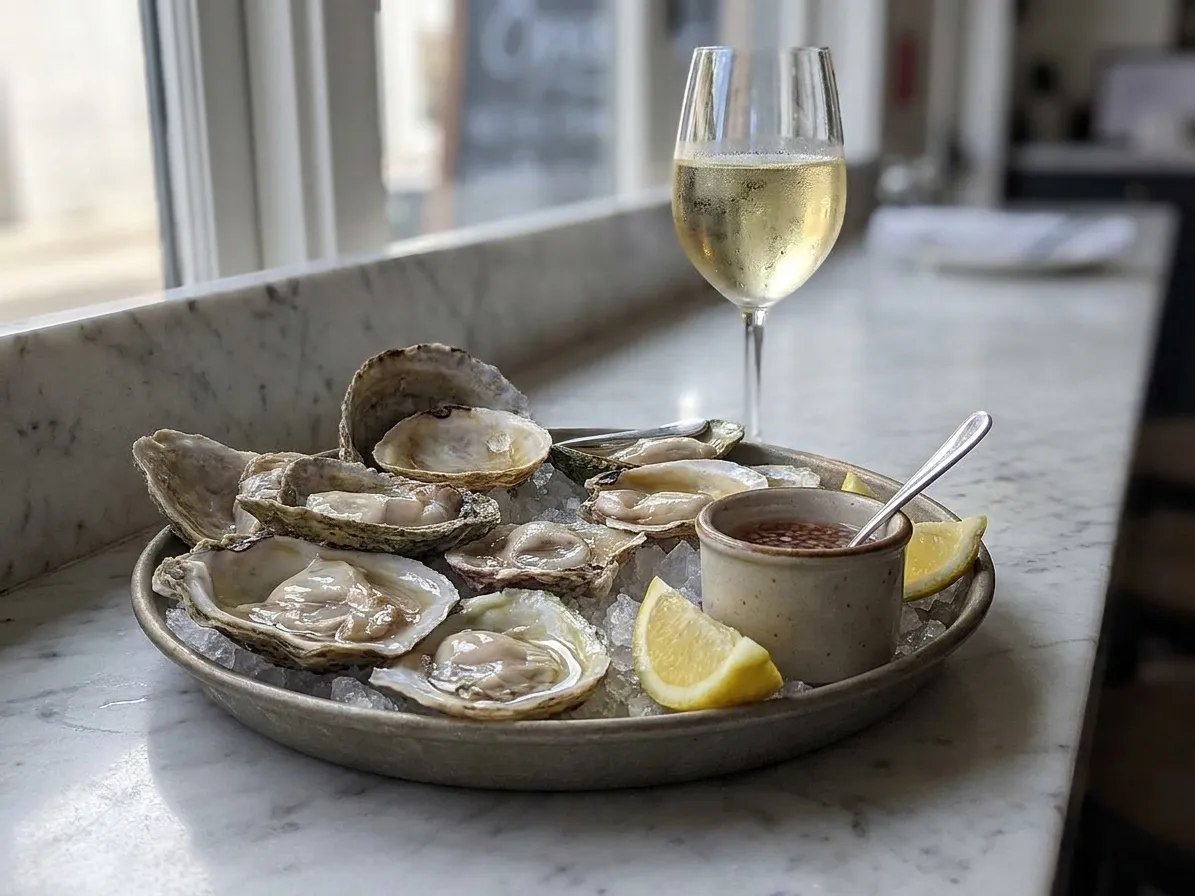
Hog Island Oyster Co. in the Ferry Building is the reference point for oysters in San Francisco, open 11:30am to 8pm Monday through Thursday and 11am to 8pm Friday through Sunday, and it runs a happy hour. It is also, being in the Ferry Building, extremely busy at predictable times — the counter is a queue at lunch and again at six, and it is walk-in rather than reservation-driven.
Anchor Oyster Bar at 579 Castro Street is the neighbourhood counterpoint: trading since 1977, open 2pm to 8pm Monday and Thursday through Sunday, and closed Tuesdays and Wednesdays. Note those closed days carefully — it is a small, old room with a short week, and it is one of the most commonly wasted journeys in the city for people who did not check.
Reading an oyster list without pretending
West Coast oysters are broadly smaller, sweeter and more melon-like than the brinier East Coast varieties, and within that the variation comes mostly from where they were grown rather than from the species. You do not need vocabulary to order well. You need one question: which of these came out of the water most recently.
Two practical habits. Eat them in the order the kitchen laid them out, which is usually mildest to strongest, so you are not wiping out a delicate one with a mineral one. And use the mignonette sparingly or not at all on the first one — you cannot taste the water through a spoonful of shallot vinegar, which is occasionally the point but should be your decision rather than a default.
Seasonality, and the rule that no longer applies
The old advice about only eating oysters in months containing an R is largely obsolete for farmed Pacific oysters, which are available year-round and are managed for it. What does change through the year is condition: oysters spawn in warmer water and can be softer and less sweet around that period, and growers and bars both know it.
The more relevant seasonal factor in the Bay Area is closures. Growing areas can be closed temporarily after heavy rainfall or for biotoxin monitoring, and when that happens the local supply shifts north and the house oyster changes. If your usual bar's dollar oyster is suddenly from somewhere unfamiliar, that is usually why, and it is a sign the system is working rather than failing.
Making an oyster hour into an actual meal
The dollar oyster is the beginning of a meal rather than the whole of it, and every good raw bar in this city knows it. The correct sequence is a dozen at the counter, then the chowder, the crab, or the fish and chips that the same kitchen makes properly. That turns a fifteen-dollar snack into a genuinely good dinner for well under what a comparable sit-down meal would cost.
Go early. Oyster happy hours in San Francisco start in the afternoon and the counters fill from about five, and the shucking is noticeably better at four when one person is working steadily than at six-thirty when three people are working flat out. The oysters are the same. The care is not.
One practical caution for anyone new to raw shellfish: oysters are a live product and a small number of people react badly to them regardless of quality or handling. Eat them somewhere with high turnover, stop if one tastes wrong rather than finishing it out of politeness, and be aware that anyone with a compromised immune system or liver condition is generally advised against raw shellfish altogether. Good bars will answer questions about handling without defensiveness.
Tags: #SFOysters #OysterHappyHour #RawBar #HappyHourNearMe #FerryBuilding #TomalesBay #SanFranciscoFood #Castro #BuckAShuck #SFEats #Seafood #HogIsland #BayArea #Shucking
Please drink responsibly. Must be of legal drinking age.
All trademarks are the property of their respective owners.
Ask Karpo first
Want to know which San Francisco raw bars have a dollar oyster running right now, what farm today's house oyster came from, and whether there is a limit? Ask Karpo before you sit down.