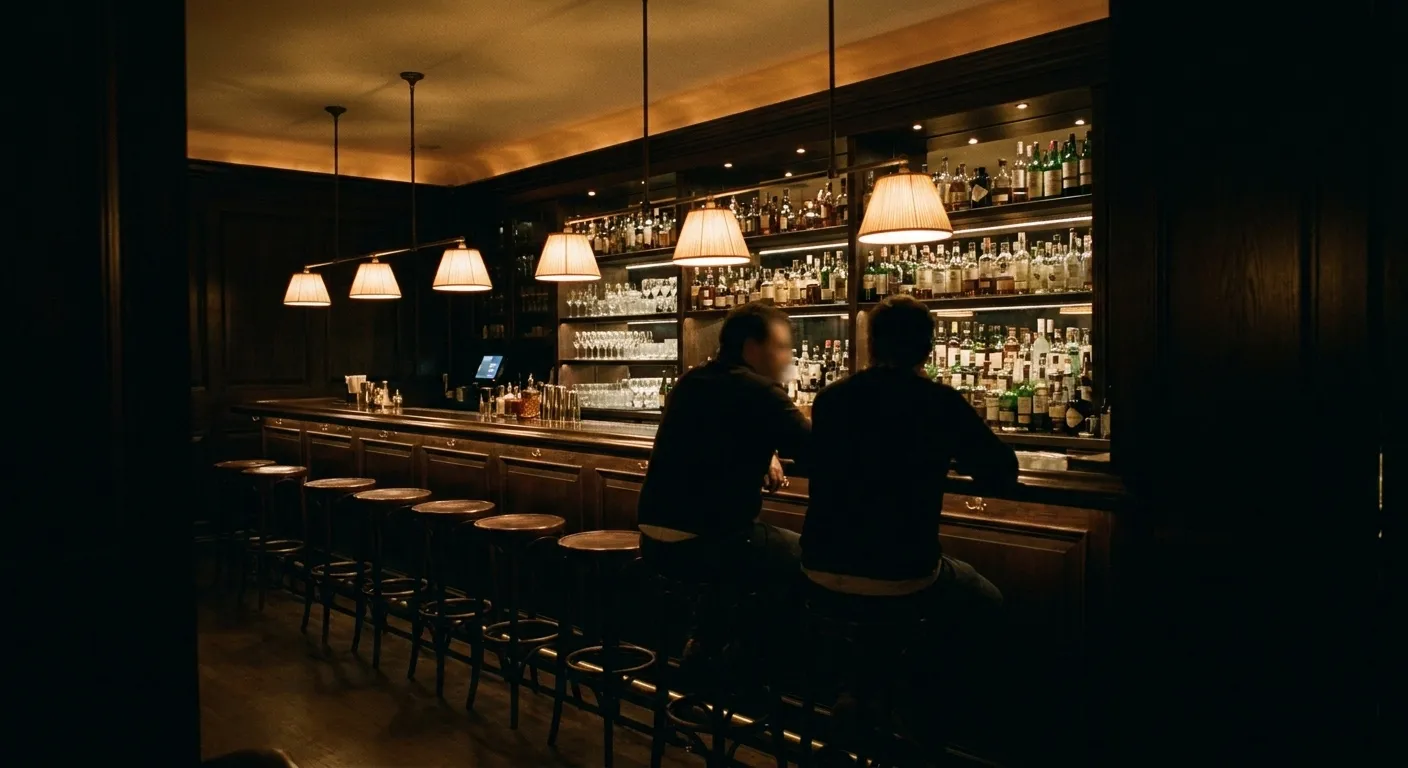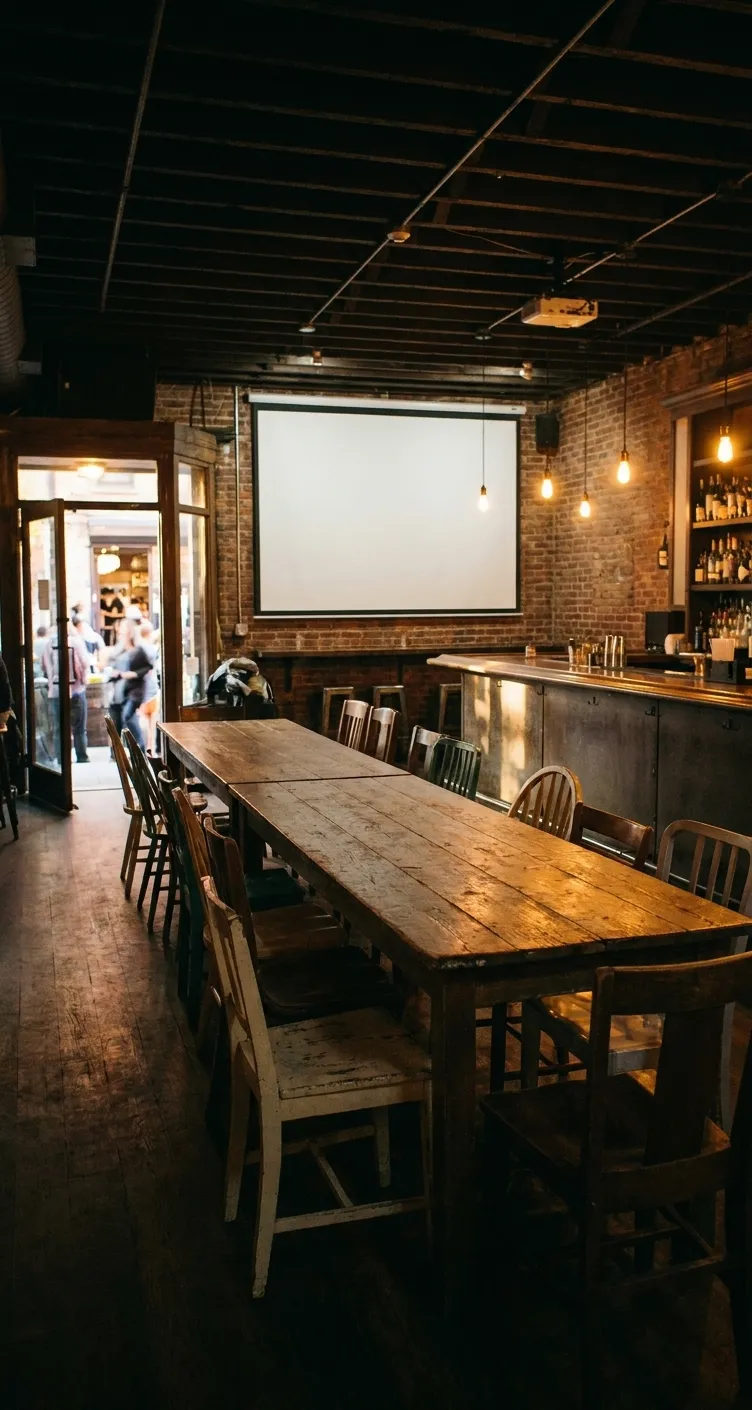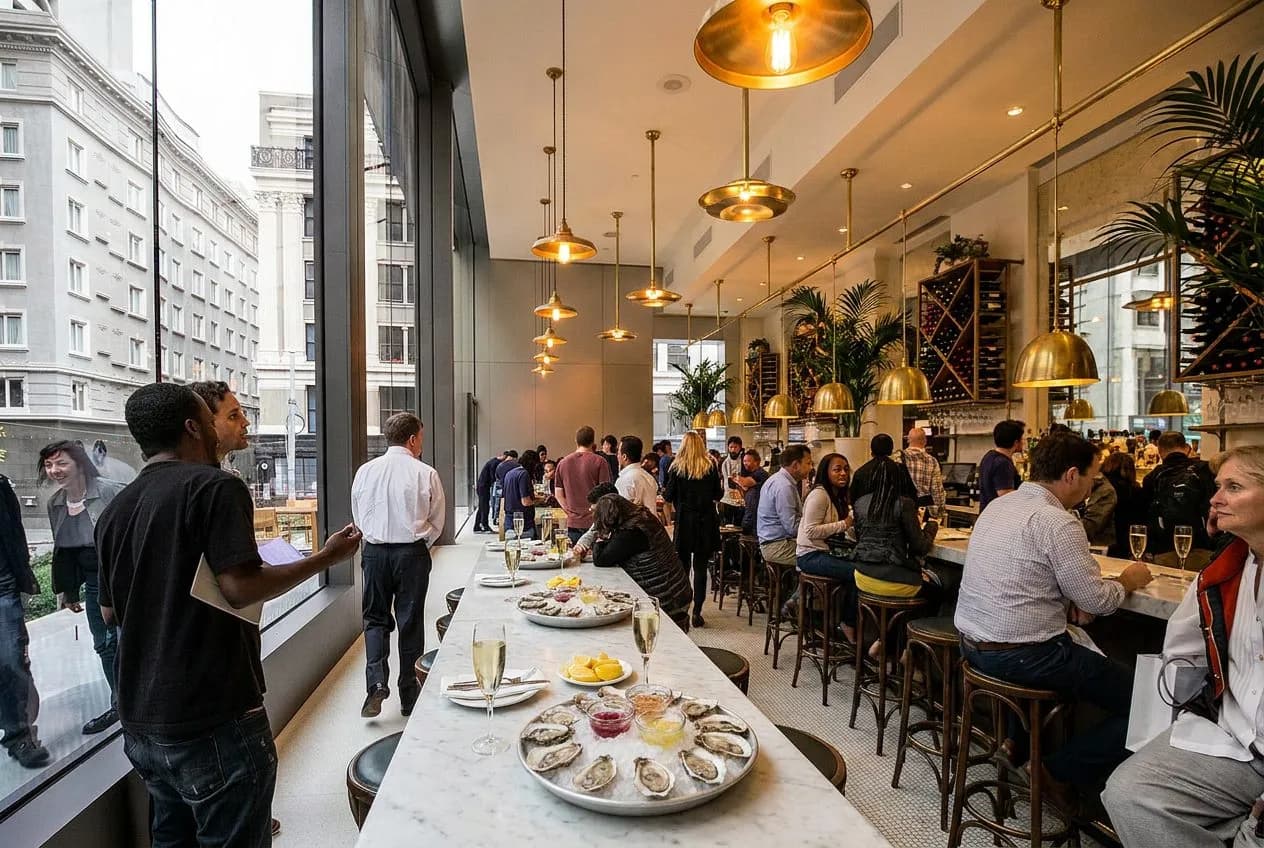
The ritual is simple and surprisingly Parisian: slide onto a stool at a marble counter, order a half-dozen oysters and a glass of something cold and sparkling, and let the city recalibrate around you. In the Flatiron District, this kind of efficiency has become an art form. White tile gleams under Edison bulbs, brass fixtures catch the late-afternoon light, and shuckers work with the kind of speed that suggests they've opened ten thousand oysters this month alone. You can be in and out in forty-five minutes or settle in for three rounds. Either way, the vibe skews more brasserie than beer garden, more Crémant than craft IPA.
The Architecture of the Counter
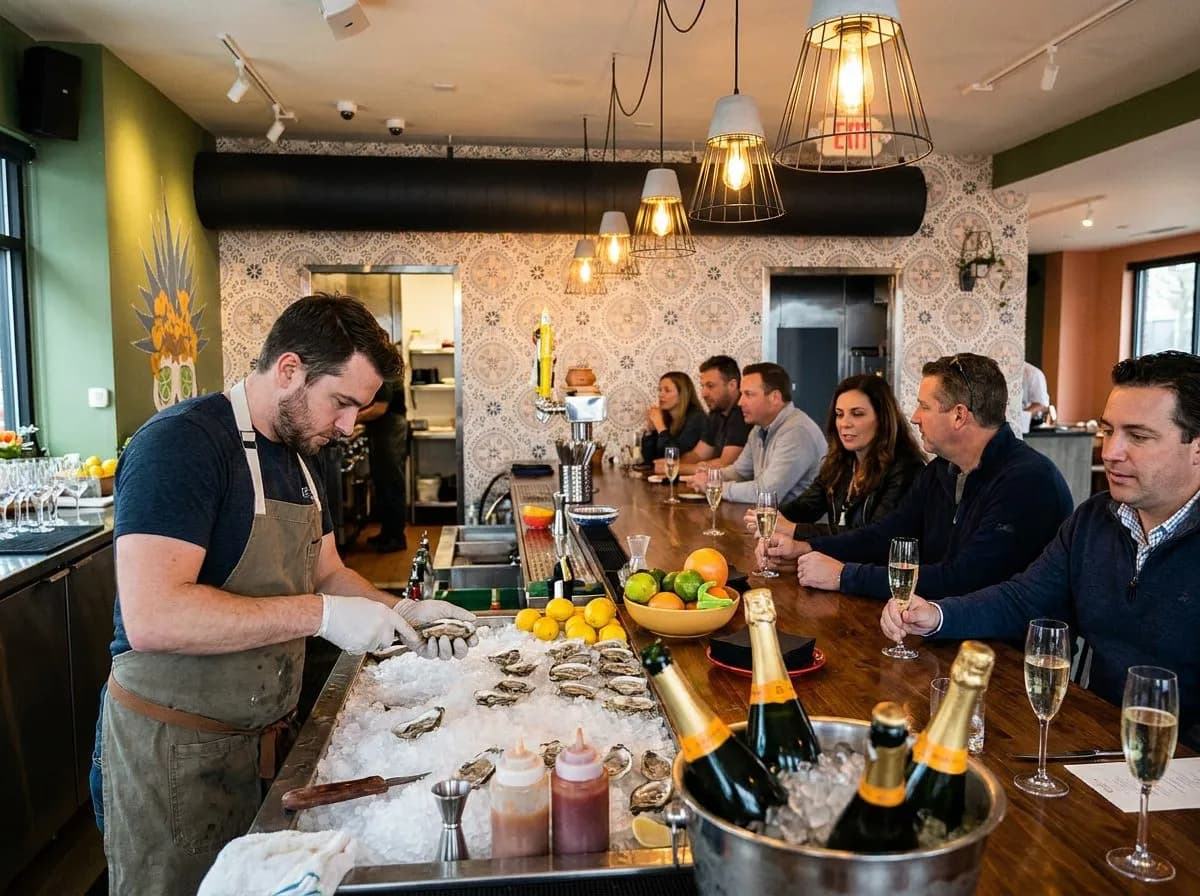
These are not sprawling dining rooms. The appeal is the counter itself—cool marble or polished zinc, always within arm's reach of the shucker. You watch the knife work, the quick twist, the presentation of each shell on a bed of crushed ice. There's a particular satisfaction in sitting close enough to hear the pop of the hinge, to see the liquor pool, to catch the briny scent before the oyster even reaches you. It's theater, but low-key, the kind where the performers don't make eye contact unless you ask a question.
The design language is consistent across the neighborhood: white subway tile, marble surfaces that stay cold, wooden stools with brass footrests. Lighting tends toward warm and dim, flattering enough for a first date but bright enough to read the chalkboard menu. The acoustics are lively without being punishing. Conversations blur into a pleasant hum, punctuated by the clink of glasses and the scrape of shells being cleared.
The Commuter Special
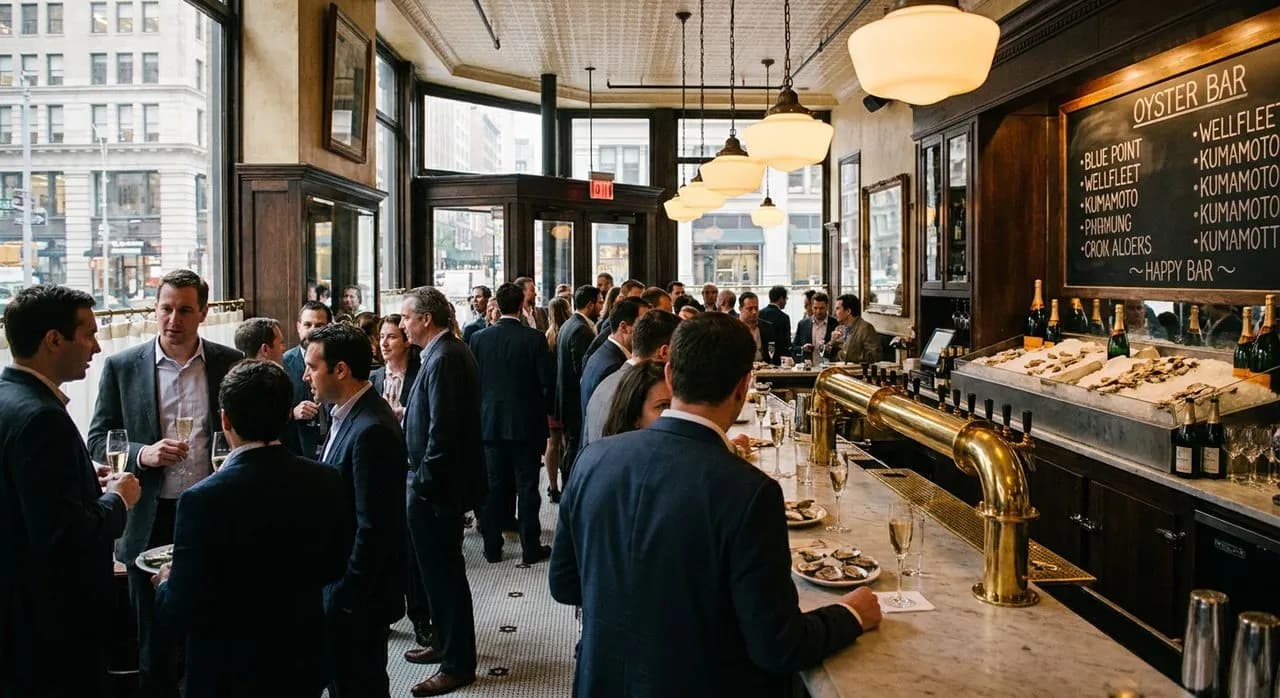
Flatiron sits at the crossroads of several transit lines, and the neighborhood's oyster bars have adapted accordingly. Most offer a commuter special between five and six-thirty p.m.—six oysters and a glass of Prosecco for under twenty dollars, designed explicitly for the post-work crowd catching Metro-North or the LIRR. It's a brilliant piece of hospitality math: quick enough not to derail your evening plans, indulgent enough to feel like a real break, and priced to encourage regularity.
The timing matters. Arrive at five-fifteen and you'll find the counters filling fast with people still in work clothes, ties loosened, blazers draped over neighboring stools. By six-thirty the energy shifts; the commuter wave has crested and the crowd skews toward those settling in for the evening. The special is a gateway, and the bars know it. Once you've tried the basic six, you start noticing the Kumamotos, the Malpeques, the hand-written chalkboard listing something just flown in from Prince Edward Island.
Sight Lines and Strategy
Seating strategy is real. At Maison Premiere in Williamsburg, the corner stool gives you a direct view of the shucking station and first access to any oysters that come out of rotation mid-service. It's the kind of insider knowledge that separates tourists from regulars: positioning matters when inventory turns over quickly and certain varieties sell out before they make it to the chalkboard. That corner perch also means you're close enough to ask questions—where the Kumamotos are from this week, whether the Wellfleets are extra briny, what just arrived.
The shuckers themselves are worth watching. There's a rhythm to the work, a practiced efficiency that borders on hypnotic. The best ones can open a dozen in under two minutes without sacrificing presentation. They know which oysters need a delicate touch and which shells are stubborn. And if you're lucky, they'll steer you toward something unexpected, a variety you've never tried, something they're personally excited about that day.
Off-Menu Allocations
Not everything makes it to the printed menu. The bar, for instance, holds back a small allocation of Gillardeau oysters for regulars who ask by name; they're not listed on the standard happy hour menu. It's the kind of quiet privilege that comes with showing up consistently, learning the staff's names, tipping well. Gillardeaus are a step up—fleshier, more complex, with a finish that lingers. They're also more expensive, which is precisely why they're reserved for people who know what they're ordering.
This isn't snobbery, exactly. It's curation. High-end oysters are a limited resource, and bars that specialize in them know their audience. The regulars who ask for Gillardeaus aren't just dropping names—they're demonstrating fluency. They've done the work of learning what they like, and the bar rewards that loyalty with access to inventory that never sees the chalkboard. It's a reminder that the best experiences in any food city, including among the countless nyc restaurants competing for attention, often happen just beyond the printed page.
Champagne and Its Cousins
The wine list at these counters skews heavily toward sparkling. Champagne, yes, but also Prosecco, Cava, Crémant, and the occasional pét-nat. The logic is sound: bubbles and bivalves are a pairing as reliable as salt and butter. The acidity cuts through the brine, the effervescence resets your palate between shells, and the ritual of a chilled coupe simply feels right when you're perched at a marble bar in the early evening.
Most bars offer Champagne by the glass, often from smaller producers whose names you won't recognize but whose quality is evident in the first sip. Staff tend to be knowledgeable without being pedantic. If you say you want something dry and minerally, they'll pour you something appropriate. If you ask what pairs well with a fatty West Coast oyster, they'll steer you toward something with more heft. The mark of a good oyster bar is that the wine program matches the shellfish in both quality and curation.
Late Spring 2026 and Beyond
By late spring of 2026, Flatiron's oyster bar culture has solidified into something approaching permanence. What started as a trend—imported from Paris, maybe, or from Brooklyn's earlier experiments—has become infrastructure. These counters are woven into the rhythms of the neighborhood. People have their preferred stools, their go-to orders, their weekday rituals. The seasonal shift toward warmer weather only reinforces the appeal: oysters and Champagne feel like the right response to longer days and loosened collars.
The staying power suggests that this model works. It's fast enough for commuters, elegant enough for dates, casual enough for solo diners who just want to stand at a counter and eat something excellent without making a production of it. And as the neighborhood continues to evolve, these oyster bars offer a kind of anchor—a place where the transaction is straightforward, the quality is consistent, and the pleasure is immediate.
Practical notes
Most oyster bars in lower Manhattan cluster within a few blocks of Madison Square Park, accessible via the N, R, W, 6, or F trains. Street parking is scarce; public garages are plentiful but pricey. Hours vary but most open by five p.m. on weekdays to catch the commuter wave; verify directly before heading over. Counters are first-come, first-served, and waits can stretch to twenty minutes during peak evening hours. Accessibility varies by venue—many counters are standing-room or high-stool only. Bring cash for tips even if cards are accepted at the bar. Dress is business-casual to smart-casual; you'll fit in whether you're coming from the office or a gallery opening.
Tags: #OysterBars #FlatironDistrict #ChampagneCounters #PullUpAChair #NYCDining #BivalvesAndBubbles #MarbleCounters #HappyHourDoneRight #SFCityGuide #EastCoastOysters #PostWorkRituals #Spring2026 #ShellfishtowerSeason #BrasserieVibes #KarposFinds
Please drink responsibly. Must be of legal drinking age.
Sources consulted: Oyster bar · Flatiron District · Champagne · Time Out New York Restaurants · NY Times Food
All trademarks are the property of their respective owners.