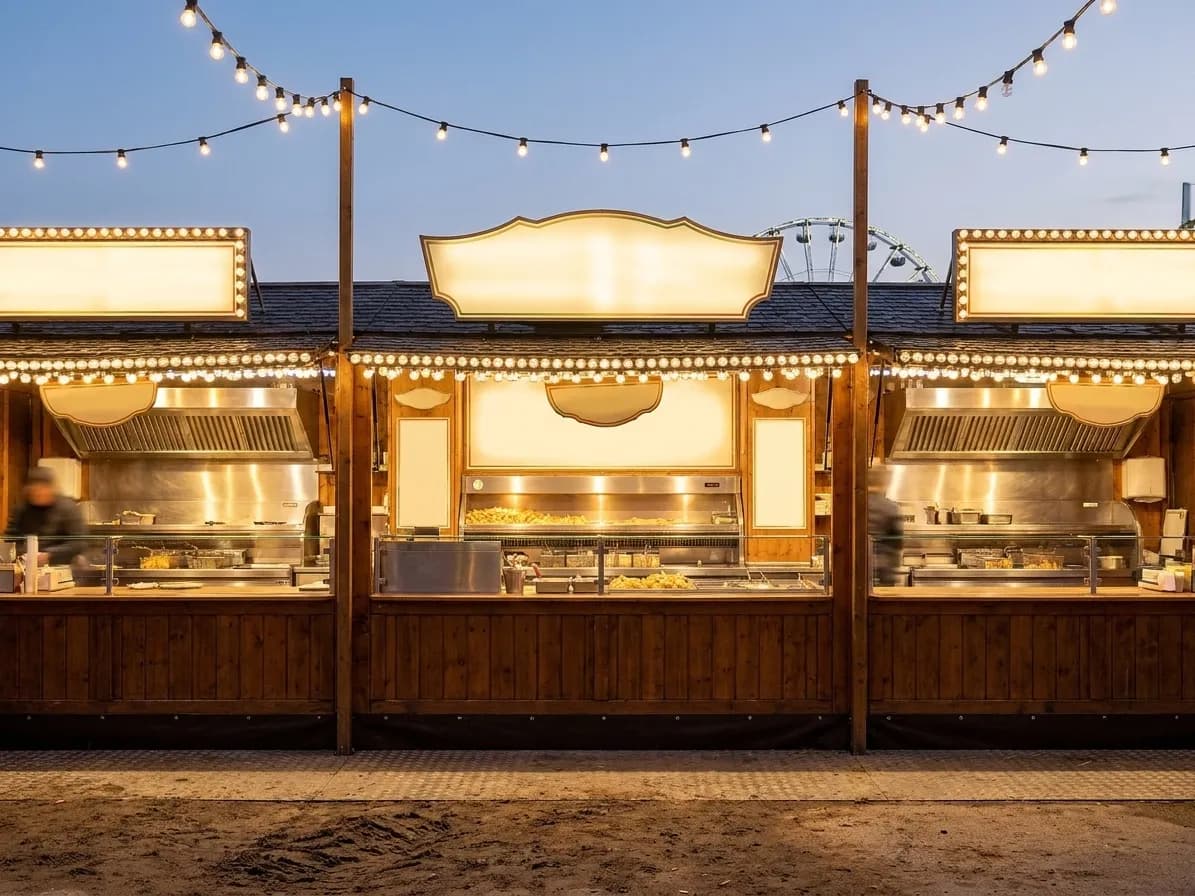
Ask a New Yorker in October how many outdoor meals they have left and they can give you a number. Ask the same question in Los Angeles and the question does not parse. There is no last weekend. Restaurants here do not put the furniture away, because there is no month in which an outdoor table becomes impossible.
The thing that ruins an LA patio is the temperature drop at sunset, not the season. Ask Karpo which outdoor tables near you have heat and which will be cold by nine.
The variable that actually matters
What Los Angeles has instead of a season is a daily temperature swing, and it is severe. A day that reaches the low eighties in the afternoon can be in the mid-fifties by ten at night, and inland — the Valley, the eastern edges, anywhere away from the marine influence — the spread is wider still. That thirty-degree drop happens over about four hours, most of it in the hour after sunset.
Which means the correct question about an LA patio is never what month it is. It is what time your reservation is, and whether the place has heat. A seven o'clock table in October is warm and you will be comfortable in a shirt. The same table at nine, without a heater, is genuinely cold, and the people who insist that Los Angeles is not cold have mostly not sat outside at ten at night in January.
The three kinds of outdoor room
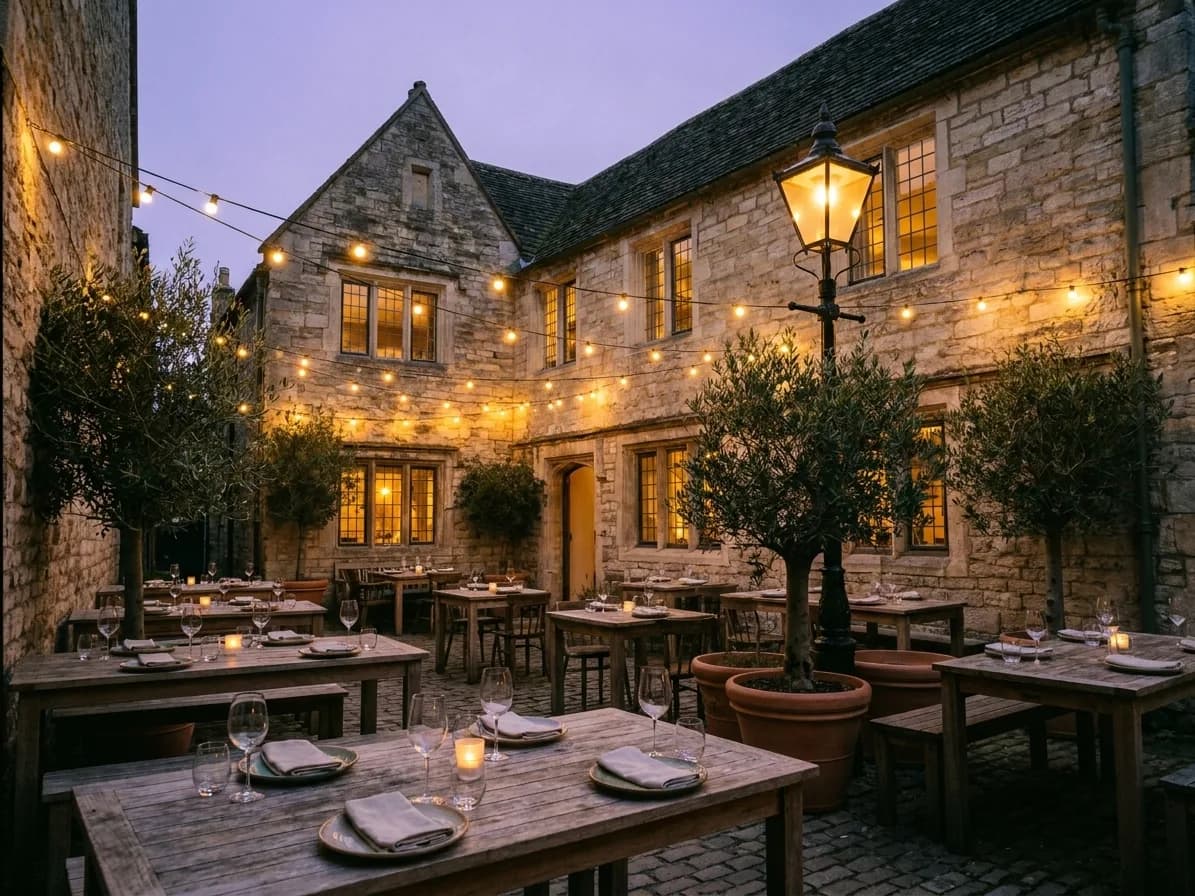
There is the courtyard, which is the best of them — enclosed by walls that hold the day's heat, sheltered from wind, usually with mature planting and string lights. A good courtyard is comfortable later into the night than any other configuration and stays usable through the winter with minimal help.
There is the rooftop, which is the opposite. Rooftops are wonderful at six, exposed at nine, and windier than the street below at every hour. They live or die entirely on their heating, and the ones that work in December have serious equipment. And there is the sidewalk or parking-lot patio, the most common by a distance, which is entirely dependent on what the restaurant has installed — some are as good as a courtyard, some are four tables and an umbrella.
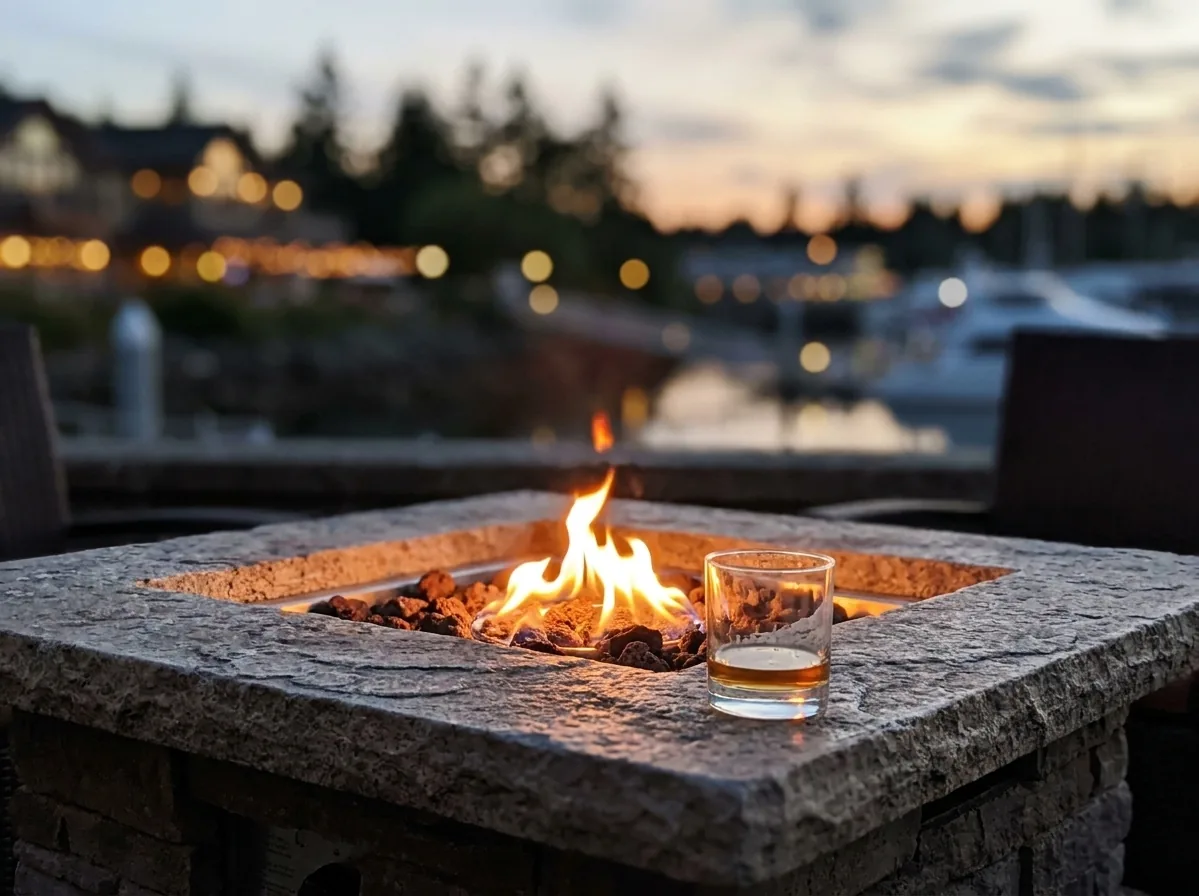
The fire pit deserves its own mention, because it has become close to standard in the city and it is doing real work. A gas fire feature surrounded by low seating is a fundamentally different proposition from a dining table with an overhead heater — it is where a group ends up after eating, and it extends an evening by an hour or two in a way that overhead heat does not.
The two things that genuinely close a patio
Rain is the first, and Los Angeles rain is concentrated — the wet season runs roughly from December to March and delivers most of the year's total in a handful of storms. On those days outdoor seating simply does not happen, and because it is infrequent, restaurants are often not well set up for it. Booking outdoors in February without a fallback is optimistic.
The second is wind, particularly the offshore events in autumn, which arrive with very low humidity and make an exposed patio unpleasant and sometimes unusable. Those are also the days when the air quality is worst if there is fire activity, which is the one genuine seasonal constraint on outdoor dining in this city and the one worth actually checking.
Neither of these is really seasonal in the way a New York winter is. They are episodes — a few days at a time, several times a year — and the correct response is to move a booking rather than to give up on outdoor dining for a quarter. That is the fundamental difference between here and almost anywhere else: the obstacle is always a specific day, never a period of months.
How to book, year-round
Because outdoor seating is the default here rather than the exception, it is usually not a separate booking category, and a request for a patio table is treated as a preference rather than a reservation type. Say it when you book and confirm when you arrive. Ask specifically about heat rather than about the patio, because every restaurant will say it has a patio and only some will say it has heaters at every table.
And book earlier than you would elsewhere. The best two hours on a Los Angeles patio are the two either side of sunset, which is the one thing about the city's outdoor dining that is genuinely seasonal — in September that means seven o'clock, and by December it means five.
Practical notes
Los Angeles outdoor dining runs year-round; the constraint is the drop after sunset, which can be 25-30F over about four hours and wider inland. Courtyards hold heat best, rooftops lose it fastest. The wet season runs roughly December to March and arrives in a small number of concentrated storms. Ask about heaters at the table rather than about the patio itself, and check air quality during autumn offshore wind events.
Tags: #LosAngeles #OutdoorDining #PatioDining #Restaurants #LAEats #FirePit #Rooftops #AlFresco #SoCal #WhereToEat #LADining #Courtyard #YearRound
All trademarks are the property of their respective owners.
Ask Karpo first
Every restaurant here claims a patio; far fewer have heat at every table. Ask Karpo which outdoor rooms near you are actually comfortable at the hour you want to eat.