There is a specific New York memory attached to Wo Hop: the basement at 17 Mott Street, the steep stairs, the fluorescent light, and a plate of noodles at three in the morning after everything else had closed. That version of the restaurant no longer exists. Wo Hop cut its hours permanently in 2020 and never restored them, and a large share of the guides describing it as an all-night institution have not been updated since.
Half the internet still describes this as an all-night restaurant and it has not been one for years, which makes a wasted walk to Chinatown very easy at midnight. Ask Karpo what is genuinely still serving downtown right now.
What the hours actually are now
The basement runs 10:30am to 10pm Monday through Saturday and 10:30am to 9pm on Sunday. That is a normal restaurant schedule. It is still late by the standards of most of Manhattan, but it is not a 2am kitchen and arriving at midnight will get you a locked door.
This matters more than it sounds because the entire reason people trek to Mott Street at that hour is the promise of an all-night kitchen. If you are planning a late meal after a show or a shift, this is the single most likely plan to fail, and it fails at the door rather than somewhere you can recover from.
In June 2025 the restaurant expanded upstairs onto street level with a second dining room. That is worth knowing because the two rooms are not the same experience — the basement is the one with the history and the fluorescent-lit character, and if that is what you came for, ask for downstairs.
Why it is still worth the trip
Wo Hop opened in 1938 and in 2022 the James Beard Foundation named it an America's Classic, which is the award reserved for restaurants that have defined a place over decades rather than for kitchens doing anything new. That is an accurate description of what this is.
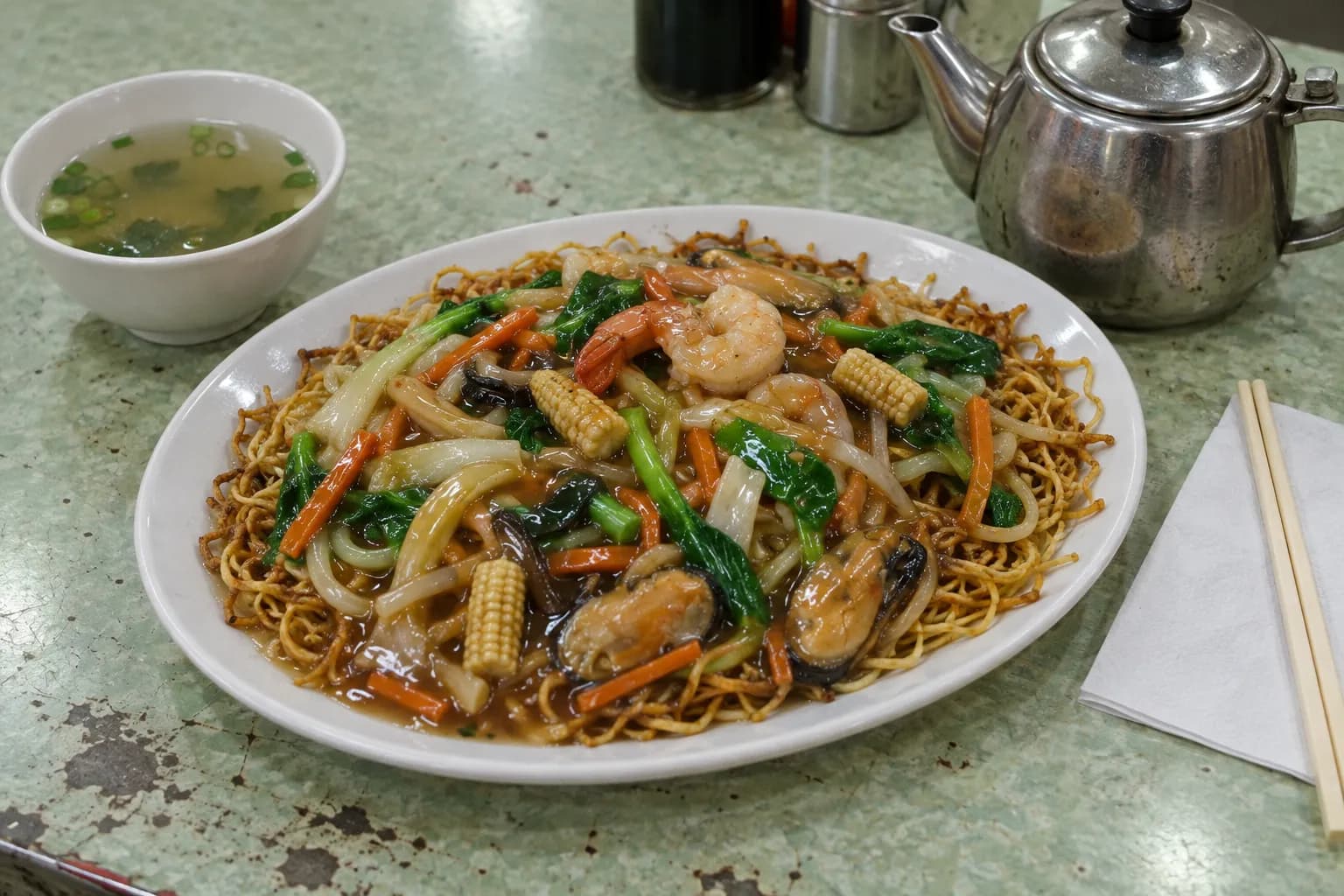
The cooking is Cantonese-American in the old sense — chow mein and lo mein, wonton soup, roast pork, dishes that predate the current wave of regional Chinese restaurants in this city by half a century. It is not a place to look for Sichuan or Northern cooking, and judging it on those terms misses what it is.
It is cash only. There is an ATM inside, which softens the problem, but the fee is real and pulling cash out beforehand is the better move. This catches out more people than the hours do.
Prices are low, portions are large, and the tea keeps coming. A table of three can eat properly here for less than one main course costs in most of downtown Manhattan, which is the other half of why it has survived.
What to order
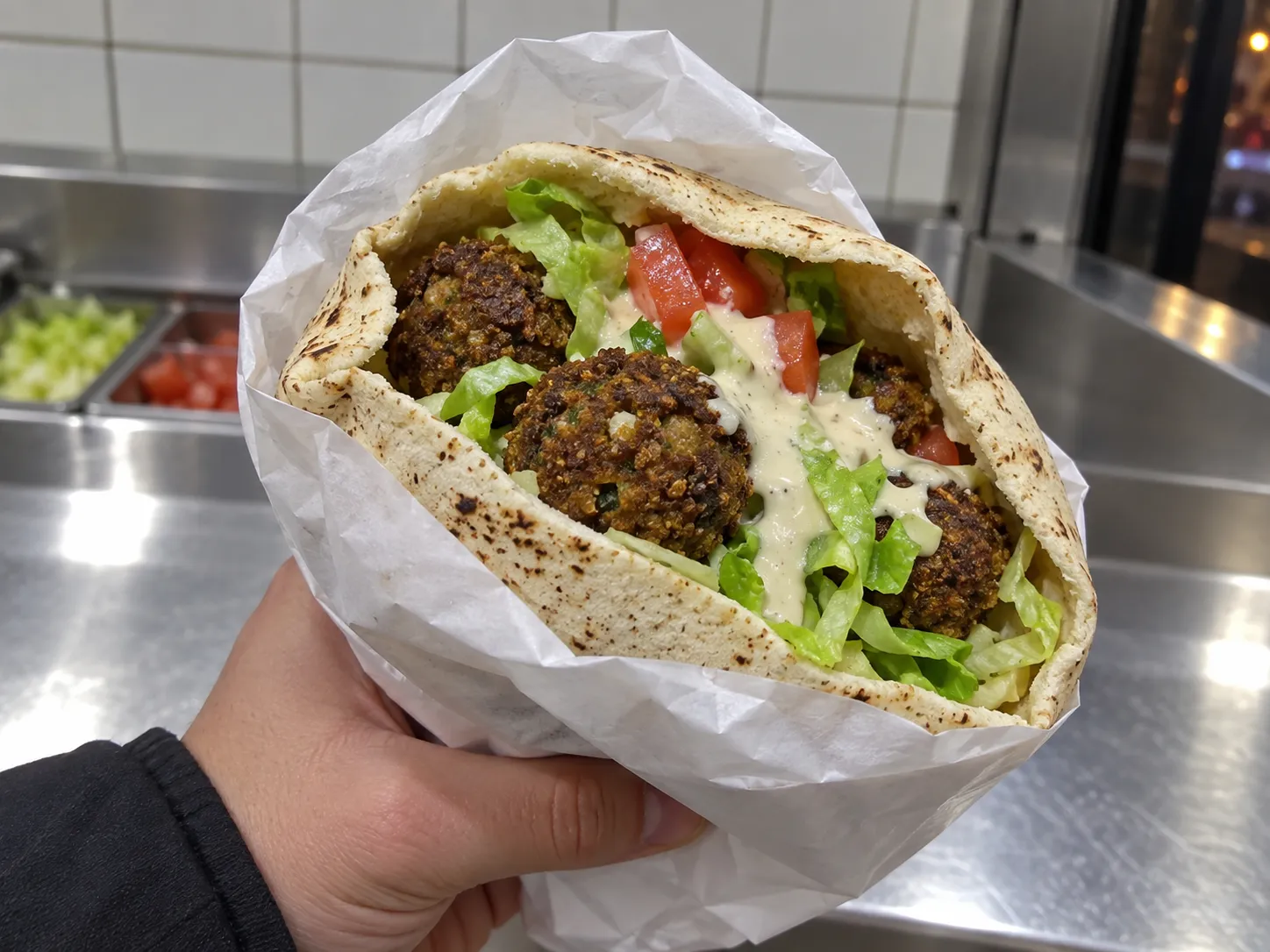
The pan-fried noodles are the dish people mean when they talk about this place — crisped underneath, softened under the gravy, with whatever protein you choose stirred through. Order that and a soup and you have the experience.
Roast pork appears across the menu in several forms and is the reliable protein. The wonton soup is honest and enormous. The house specials board is where the older regulars order from and is worth reading rather than defaulting to the main menu.
Do not over-order. The portions are calibrated for sharing and the most common mistake at this table is three dishes for two people and half of it going home in a container.
The room itself is part of the reason people are sentimental about it. It is a low-ceilinged basement with hard light, laminate tables and no attempt at atmosphere, and that lack of design is exactly what has kept it feeling like the same restaurant across three generations of customers.
Service is fast and unsentimental. Nobody is going to talk you through the menu, the food arrives quickly, and the table turns. That is not rudeness; it is a restaurant that has been feeding a lot of people cheaply for close to ninety years and has worked out how.
It is also worth saying that Chinatown around Mott and Pell is worth twenty minutes on foot before or after. The stretch is dense with bakeries, tea shops and older storefronts, most of which close earlier than the restaurant does, so daylight is the better time to look around.
Where to actually go at three in the morning
Chinatown and the Lower East Side still have genuinely late kitchens; they are just not this one. The category to look for is the late-night noodle and rice shops along and around East Broadway and the streets north of Canal, several of which run considerably past midnight, and the 24-hour delis that are always the fallback.
The other reliable late option downtown is pizza by the slice, which runs later than almost any sit-down kitchen and requires no plan at all. It is not the meal you wanted but it is the meal that exists at 3am.
The general rule since 2020 is that New York's all-night dining has thinned out considerably and that a specific address you remember from before then needs checking rather than assuming. That is annoying and it is the current reality.
Practical notes
17 Mott Street in Chinatown. Open 10:30am to 10pm Monday to Saturday and 10:30am to 9pm on Sunday — the pre-2020 all-night service has not returned. Cash only, with an ATM inside. Opened 1938 and named a James Beard America's Classic in 2022. A street-level dining room opened in June 2025; the basement is the original room and the one to ask for. Order the pan-fried noodles and a soup, and order less than you think. For an actual 3am meal, look to the late shops around East Broadway or a slice.
Tags: #wohop #chinatownnyc #mottstreet #openlatenyc #cantonesefood #jamesbeard #nycrestaurants #cashonly #latenightnyc #lowermanhattan #nycfoodguide #chowmein #classicnyc #hiddengemsnyc
All trademarks are the property of their respective owners.
Ask Karpo first
The all-night version of this restaurant ended in 2020 and most listings still say otherwise, which makes a late walk to Mott Street a coin flip. Ask Karpo whether Wo Hop is still serving at this hour, whether the basement or the new upstairs room is open, and what downtown kitchen is genuinely running if it is already shut.