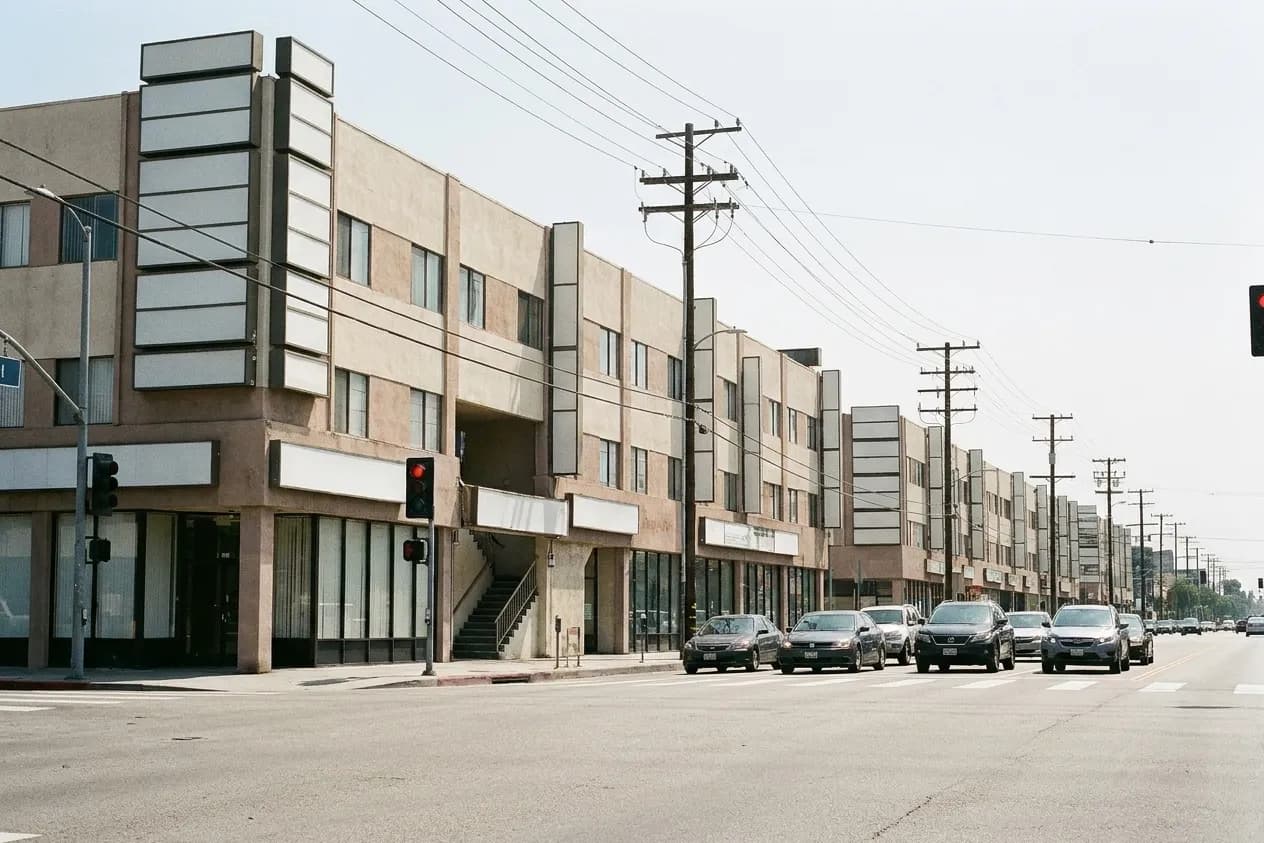
Koreatown looks unremarkable from the driver's seat: wide boulevards, mid-rise commercial blocks, parking lots. Almost none of what makes it one of the most interesting neighbourhoods in Los Angeles is visible at street level. The unusual things to do here are stacked vertically — in basements, on second and third floors, and on roofs — and once you start reading buildings as stacks rather than frontages, the whole district changes.
The unusual things to do here are almost never at street level, which is why the neighbourhood reads as ordinary from a car. Tell Karpo what kind of night you want and it will send you up or down.
Below street level
Basements in this neighbourhood hold the things that need soundproofing and do not need daylight: private singing rooms, arcades and game rooms, billiards halls, and bars that want to be dark at nine in the evening. They are usually reached through a plain door and a flight of stairs beside a shopfront, with a directory panel that lists what is down there in a form you have to stop and read.
This is the level to aim at for a group that wants an activity rather than a meal. Private rooms are booked by the hour, priced per room rather than per person, and are the reason a lot of Los Angeles ends up in this neighbourhood at midnight. Go with four or more people; the format does not work for two.
The second and third floors
Upper floors hold the specialists — cafes that only make one thing, small bars with twelve seats, spas, study rooms, a shop selling something extremely specific. Rent is lower away from the street, so these businesses can be narrow in a way a ground-floor operation cannot afford to be. It is the most rewarding level to explore and the one almost nobody does.

The method is simple and mildly uncomfortable at first: read the directory panels at building entrances, and go up. Nothing about a lit stairwell here is unusual or unwelcoming — it is how the neighbourhood is organised. Half an hour of doing this will turn up more than any amount of searching.
The roofs
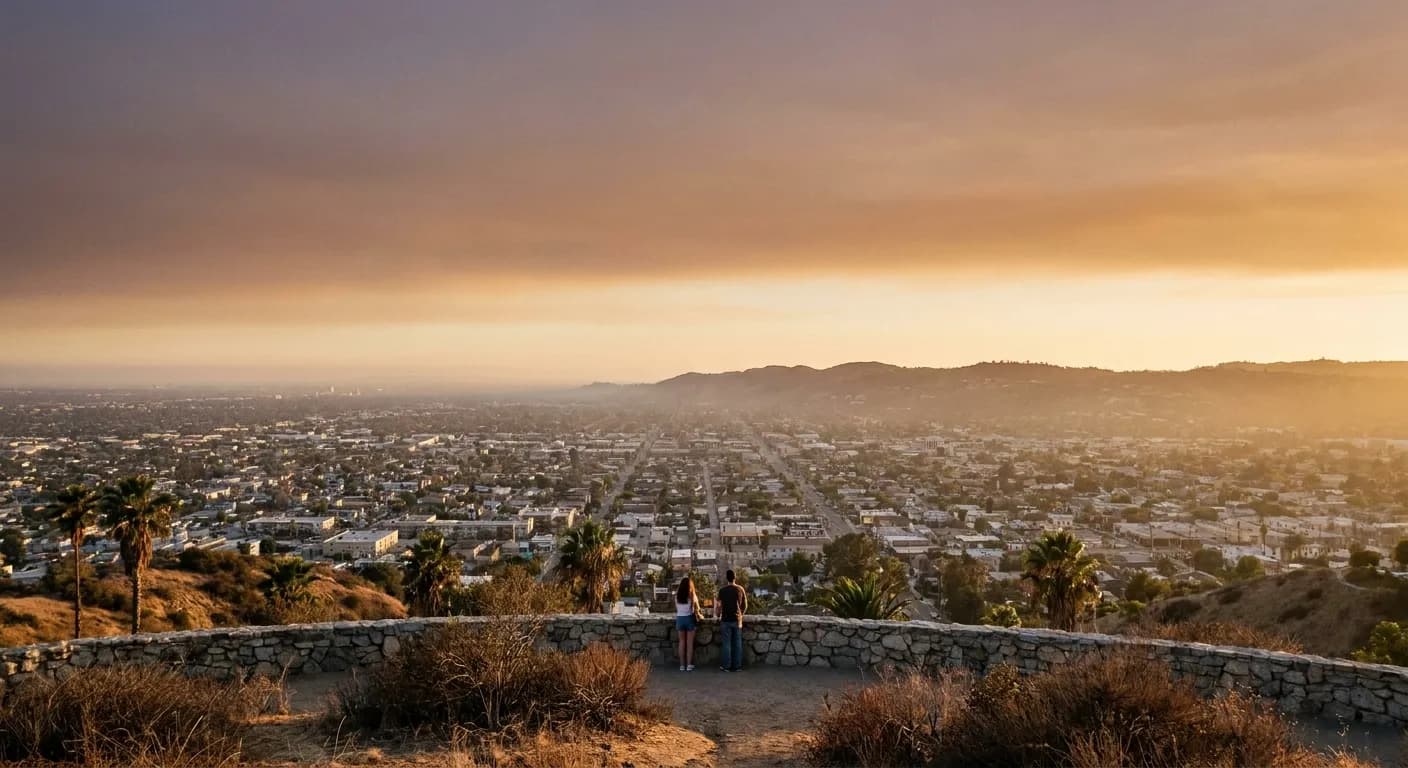
Rooftop bars and terraces in this neighbourhood are lower and less expensive than the downtown ones, and the view is arguably better — you are looking at the city rather than down at it, with the hills on one side and the towers on the other. They also tend to be attached to hotels or restaurants rather than being destinations in themselves, which keeps them calmer.
Go at dusk. The temperature drops fast after sunset at this height and the light on the buildings in the half hour before dark is the best thing about the neighbourhood visually. Bring a layer, because a terrace that is warm at seven is cold at nine.
The 24-hour rhythm
The genuinely offbeat thing about Koreatown is not any single venue — it is that the whole district operates on a clock that does not exist elsewhere in Los Angeles. Spas open through the night, restaurants serving full meals at two in the morning, cafes busy at midnight, karaoke rooms booked at three. Being somewhere that is fully awake at an hour when the rest of the county is closed is itself the experience.
The best version of a night here uses that. Eat late rather than early, do the activity after the meal rather than before, and let the evening run past the point where you would normally have gone home. The neighbourhood is designed for exactly that shape.
Practical notes
Park once in a lot and walk — street parking on the boulevards is scarce and heavily enforced, and the neighbourhood is dense enough that walking is faster than moving the car. Many upper-floor and basement businesses take bookings by phone rather than online, and some are cash-preferred.
Turnover in this neighbourhood is high and upper-floor businesses in particular come and go with little online trace. Confirm before travelling for a specific place, and treat the building rather than the business as the destination — if one room is gone, there are others in the same stack.
Going as two people rather than a group
Most of the basement formats here are priced and sized for four or more, which leaves couples and pairs looking at the wrong level. The answer is to skip the basement entirely and work the upper floors, where the twelve-seat bars, single-item cafes and specialist shops are built for exactly two people and are the most interesting thing in the neighbourhood anyway.
Spas are the other format that works well for two and is frequently overlooked. They run long hours, are priced per person rather than per room, and are one of the few things in Los Angeles that is genuinely better at one in the morning than at one in the afternoon.
What the vertical stacking means for finding things
Search tools are built around addresses, and an address in this neighbourhood may contain a dozen businesses across four floors. That mismatch is why so much here is effectively unsearchable, and it is why walking and reading directory panels outperforms searching by a wide margin.
It also means reviews are unreliable in a specific way: a review attached to a building may be describing a business that closed two years ago, or a different business entirely on another floor. Trust what you can see through the door more than what you read before you arrived.
Tags: #LosAngeles #LA #SoCal #LiveMusic #ThingsToDoTonight #GoingOut #Koreatown #Offbeat #LAEats #LAGuide #ExploreLA #LALocal #LAWeekend #LANights
Sources consulted: laist.com · discoverlosangeles.com · latimes.com
All trademarks are the property of their respective owners.
Ask Karpo first
Karpo is a proactive AI assistant that lives in iMessage. Ask what is on the second floor, not just what is on the corner.