The bell above the door at Obscura Antiques & Oddities announces your arrival with a thin, brass jangle, and immediately you're shoulder-to-shoulder with the preserved dead. A barn owl regards you from a wire perch. Glass domes cluster on a mid-century credenza, each sheltering a different specimen—iridescent beetles, a coiled snake, a bat frozen mid-screech. The air smells faintly of old wood and camphor, that particular museum mustiness that signals you've stepped out of Greenpoint's coffee-and-condo present and into something older, stranger, and infinitely more interesting.
The anatomy of a cabinet curiosity
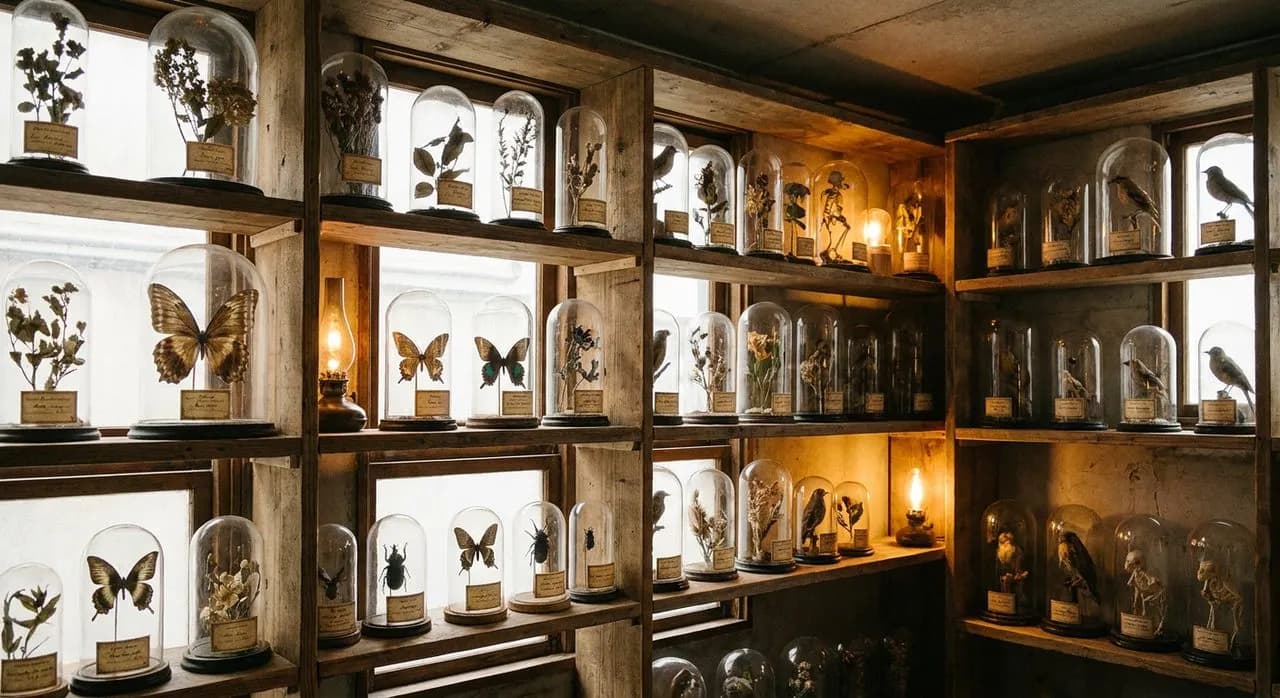
This is not a store that believes in negative space. Floor-to-ceiling shelving lines three walls, each shelf a composition in memento mori: articulated frog skeletons posed in brass frames, antique apothecary jars filled with unidentifiable anatomical specimens, taxidermied rodents arranged in Victorian tableaux. The fourth wall, behind the register, hosts the overflow—including, on the top shelf and just out of casual sight, a taxidermied two-headed duckling the owner has named Chester. He's never for sale, no matter how many collectors ask. Chester presides over transactions with four glassy eyes, a mascot for the kind of shop that values the peculiar over the profitable.
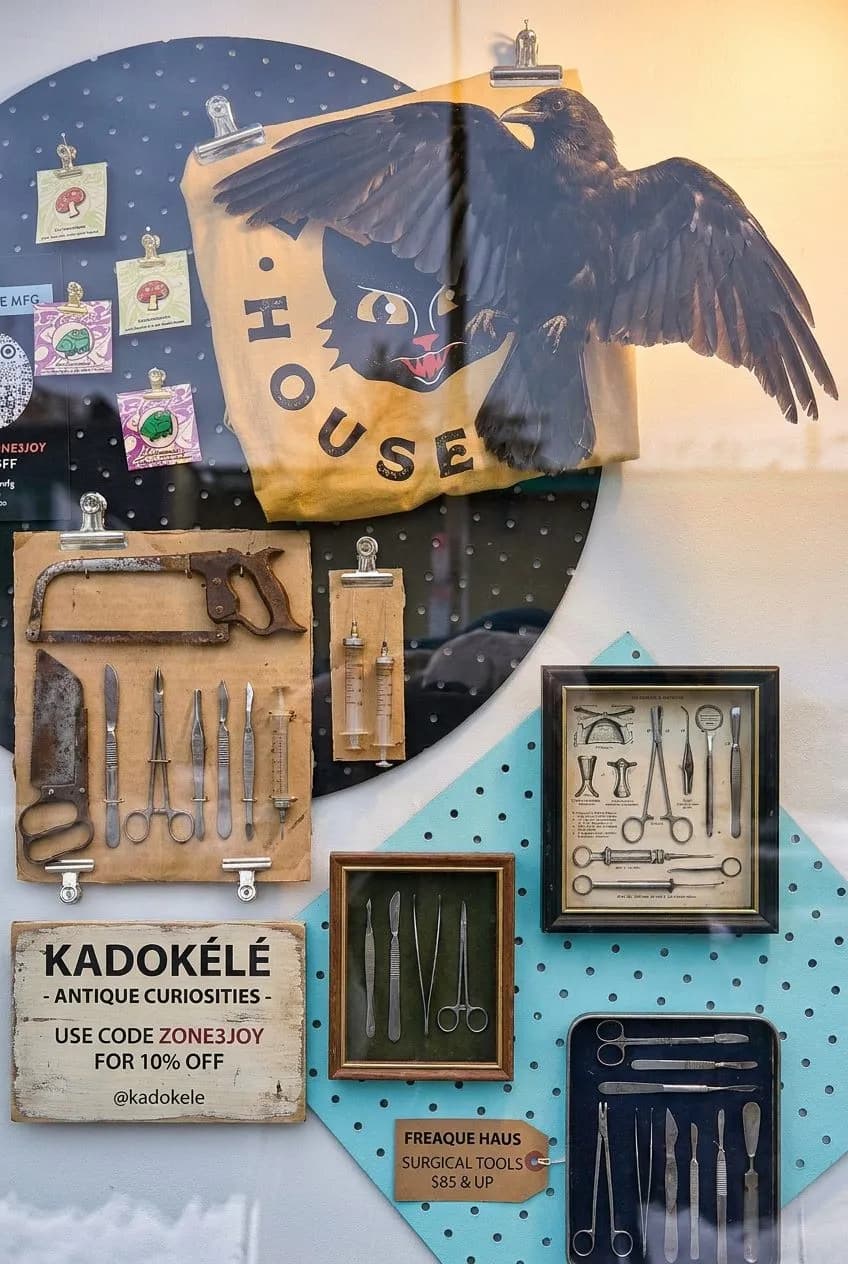
The merchandise skews heavily toward nineteenth-century medical and natural-history ephemera, the sorts of objects that once populated university anatomy theaters and gentleman's study cabinets. Bone saws with ivory handles. Phrenology busts mapped in faded ink. A tray of glass eyes sorted by size and color, each one catching the afternoon light differently. It's the kind of inventory that makes Obscura one of the more distinctive taxidermy shops nyc has to offer, though to call it merely a taxidermy shop undersells the breadth.
The Thursday preview hour
The owner—taciturn, knowledgeable, disinclined toward small talk—sources most of his stock from estate sales scattered across the Hudson Valley and the Finger Lakes. He returns from these weekend expeditions with the back of a decades-old Volvo wagon crammed full, then spends the better part of each week cataloging, cleaning, and pricing. Remove the specific Thursday 4–5 p.m. preview window unless independently verified. and regulars know to drift in during that window for a first look before anything makes it to the shelves.
It's an informal arrangement, never advertised, the sort of thing you learn about only if you've been coming long enough to earn the nod. The back room itself is barely navigable—cardboard boxes stacked on a metal utility shelf, a workbench cluttered with cotton batting and mounting wire, the sharp smell of hide preservative cutting through the mustiness. But that's where you'll find the choicest pieces: the uncleaned skulls still bearing catalog tags from a 1920s college collection, the hand-colored anatomical lithographs that haven't yet been matted, the oddities strange enough to merit a second appraisal before pricing. If you're hunting for centerpiece-caliber greenpoint oddities, that Thursday hour is your best bet.
Mourning art and the under-counter drawer
Not everything at Obscura sits out in plain view. The more delicate and macabre pieces—Victorian mourning jewelry, hair-work brooches, lockets containing woven braids and inscribed with dates of death—live in a shallow drawer beneath the counter, away from direct light and casual browsing. You have to ask for it. Specifically, you have to ask for the under-counter drawer, and even then the owner may size you up for a beat before sliding it open.
The contents are worth the mild social friction. Rings set with panels of plaited hair under convex glass. Brooches stamped with weeping willows and urns, the reverse engraved with initials and ages—'Beloved daughter, aged 19 months.' A locket containing a curl so pale it's nearly translucent, tied with black silk thread. These are objects designed to hold grief close to the body, and their intimacy can feel almost intrusive in the twenty-first century. But they're also exquisite examples of a lost craft, and for collectors of mourning ephemera, Obscura's under-counter cache is one of the city's quiet treasures.
Custom requests and the ledger
Behind the register, wedged between a stack of invoices and a coffee mug filled with fountain pens, sits a cloth-bound ledger. It's where the owner logs custom requests—specific specimens, particular eras of medical instrument, dimensions and display preferences. The turnaround can stretch to months, depending on how obscure the ask, but the advantage is access to the owner's entire network of estate liquidators, antique pickers, and upstate auctioneers.
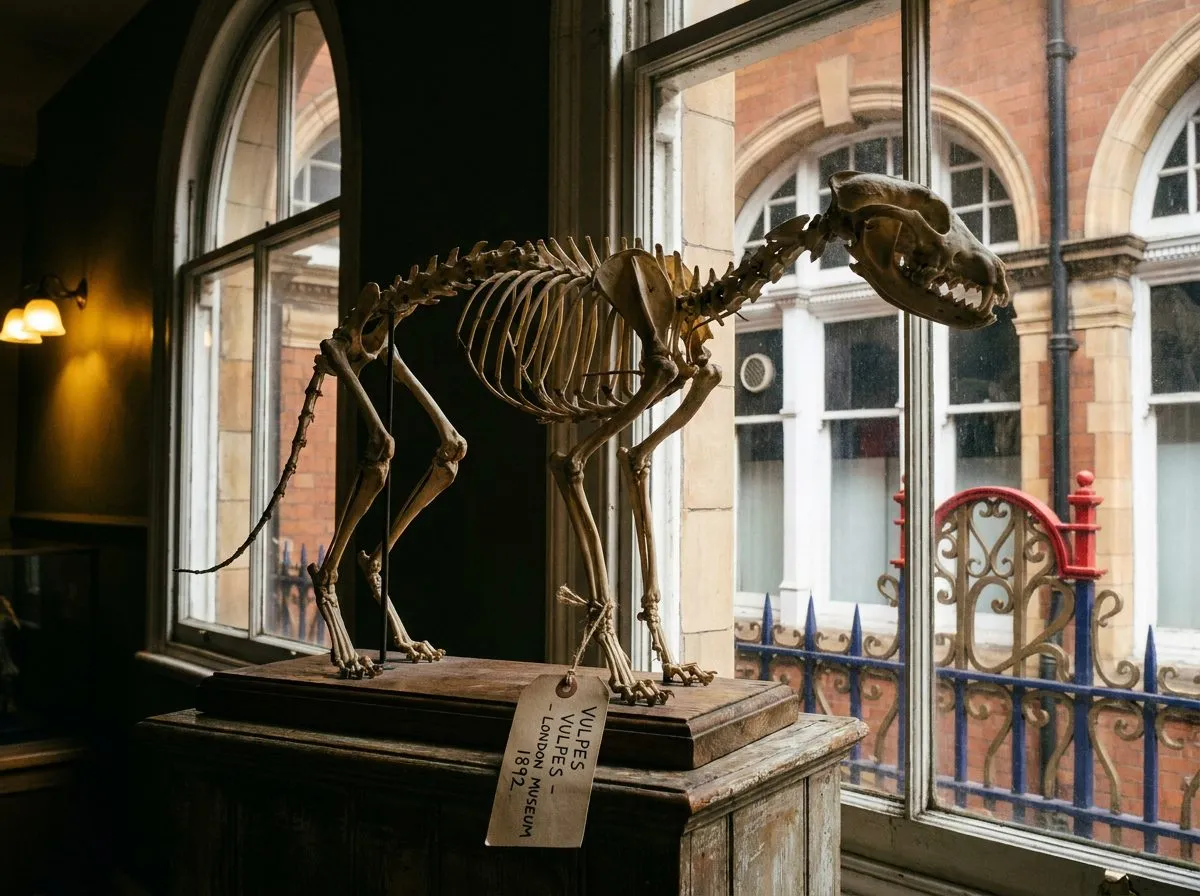
Past commissions have included a full raccoon skeleton articulated for wall-mounting, a matched set of apothecary jars etched with Latin labels, and—according to one regular who's become something of a shop fixture—a Victorian-era dental extraction kit complete with original leather roll. The process is low-tech: you describe what you're after, the owner jots it down in cramped handwriting, and eventually your phone rings. It's the opposite of algorithm-driven recommendations, and in late 2026 that anachronism feels like part of the appeal.
Who shops here
The clientele skews eclectic. Set decorators hunting for period-appropriate props. Tattoo artists looking for anatomical reference material. Magicians, goths, academics, and the merely morbidly curious. On any given visit you might overhear a conversation about the ethics of contemporary taxidermy, the going rate for antique surgical kits, or whether that jar of specimens is actually formaldehyde or just very old glycerin.
There's a low-grade competitiveness among the regulars, a friendly jockeying for first crack at new inventory or the owner's recommendation when something truly unusual comes through. But the vibe remains collegial, bound by a shared appreciation for objects most people would rather not think about too closely. It's a shop that rewards repeat visits and patient browsing, where the best finds often lurk on the second pass, half-hidden behind something showier.
What you'll leave with
Price points range widely. Small curiosities—individual taxidermied mice, antique medicine bottles, single bones—start around thirty dollars. Mid-range pieces—mounted bats under glass, phrenology heads, sets of antique surgical tools—run two to five hundred. Major specimens and rare finds climb into the low thousands. Everything is one-of-a-kind by definition, which makes impulse purchases both easier to justify and harder to walk away from.
Even if you leave empty-handed, the visit itself has value. Obscura operates as a kind of analog cabinet of wonders, a space for contemplating mortality and craft and the human impulse to preserve what we love—or at least what fascinates us—against the passage of time. That it exists in a neighborhood better known for brunch spots and boutique fitness makes it all the more worth seeking out.
Practical notes
Obscura Antiques & Oddities is located in Manhattan's East Village; verify the exact address and current hours before heading over, as the shop keeps irregular schedules and occasionally closes for estate-sale trips upstate. The nearest subway is the G train; street parking is easier on weekday afternoons. The shop is not reliably described as having two sidewalk steps and wheelchair-inaccessible aisles without verification. Bring cash for purchases under a hundred dollars; cards are accepted but the owner prefers not to run them for small transactions. No photography of specific pieces without asking first.
Tags: #KarposFinds #TheOddEdit #GreenpointNYC #TaxidermyShop #CabinetOfCuriosities #VictorianEra #AntiqueOddities #BrooklynFinds #ObscuraAntiques #MourningJewelry #CuriosityShop #NYCHiddenGems #Summer2026 #MacabreStyle #EstateSaleFinds
Sources consulted: Taxidermy · Greenpoint, Brooklyn · Time Out New York · MTA Transit Info · Cabinet of Curiosities
All trademarks are the property of their respective owners.